Before & After
Before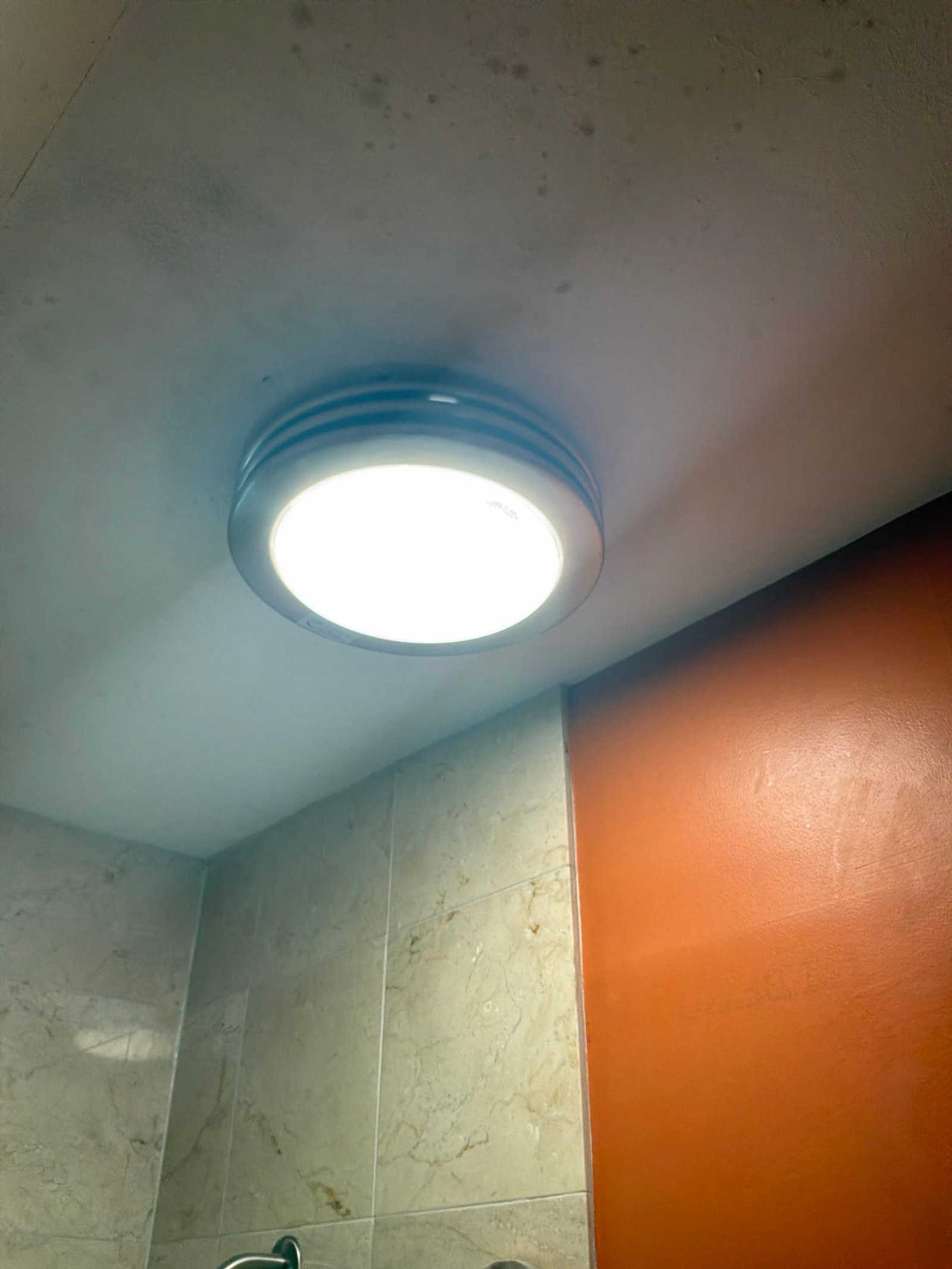 After
AfterThis St Petersburg panel upgrade case study walks through the real diagnosis, the fix, and the code details from a recent service call. A homeowner in St. Petersburg, FL, scheduled our crew to return for two items: a ceiling fan installation and a whole-home surge protector. Our team installed a PSP Vortex 120 kA whole-house surge protector at the electrical panel, giving every circuit in the home a consistent layer of protection against transient voltage spikes. While on site, the team also noted several conditions inside the panel enclosure worth sharing with any homeowner curious about what older Florida panels can look like over time.
Customer’s Problem
The homeowner had already worked with our team and wanted to complete a planned follow-up visit. The scope included a ceiling fixture and a whole-home surge device mounted at the panel. St. Petersburg’s active storm seasons make surge protection a practical priority for any household running modern appliances, electronics, and HVAC equipment.
What Our Electrician Found
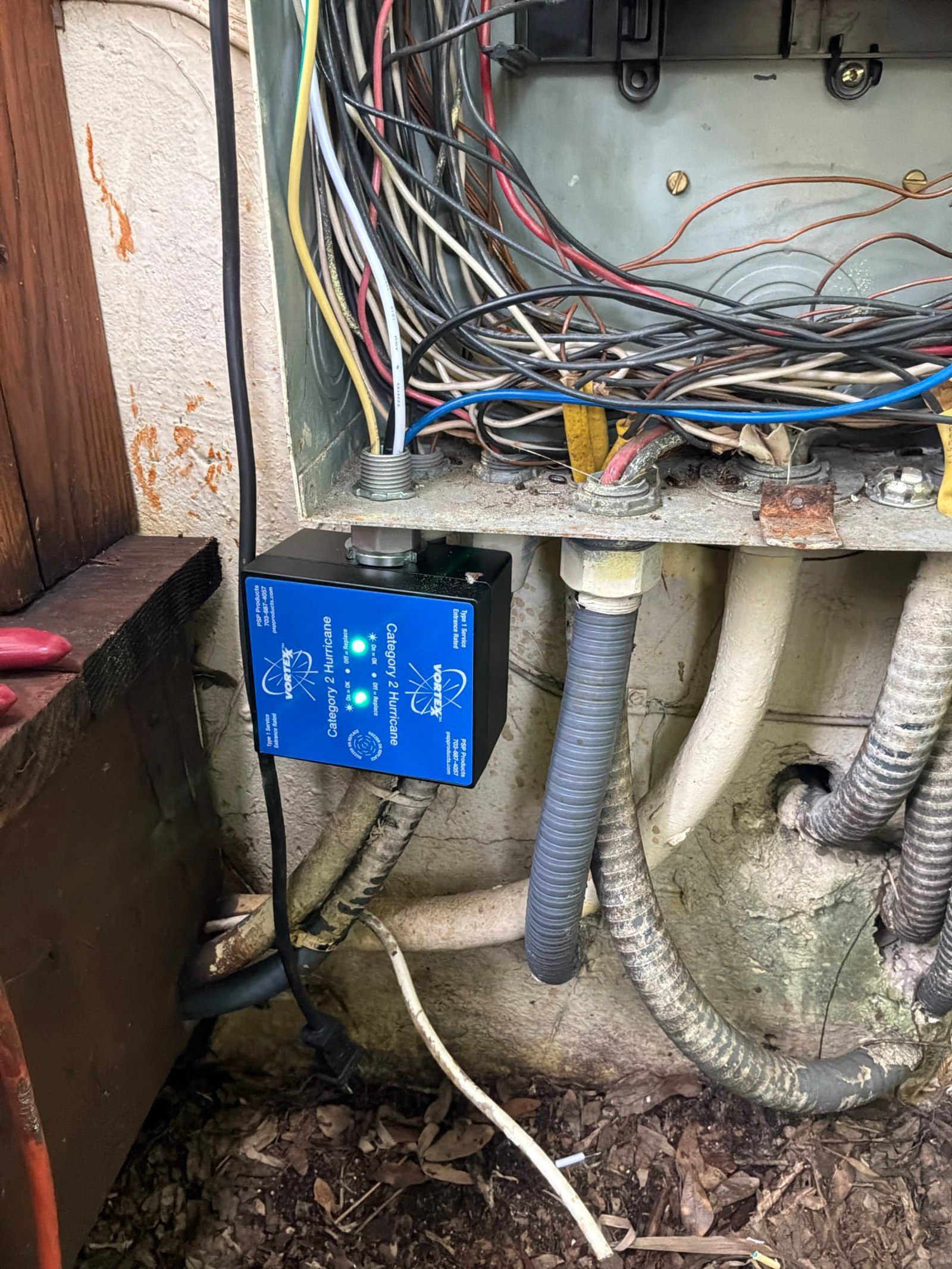
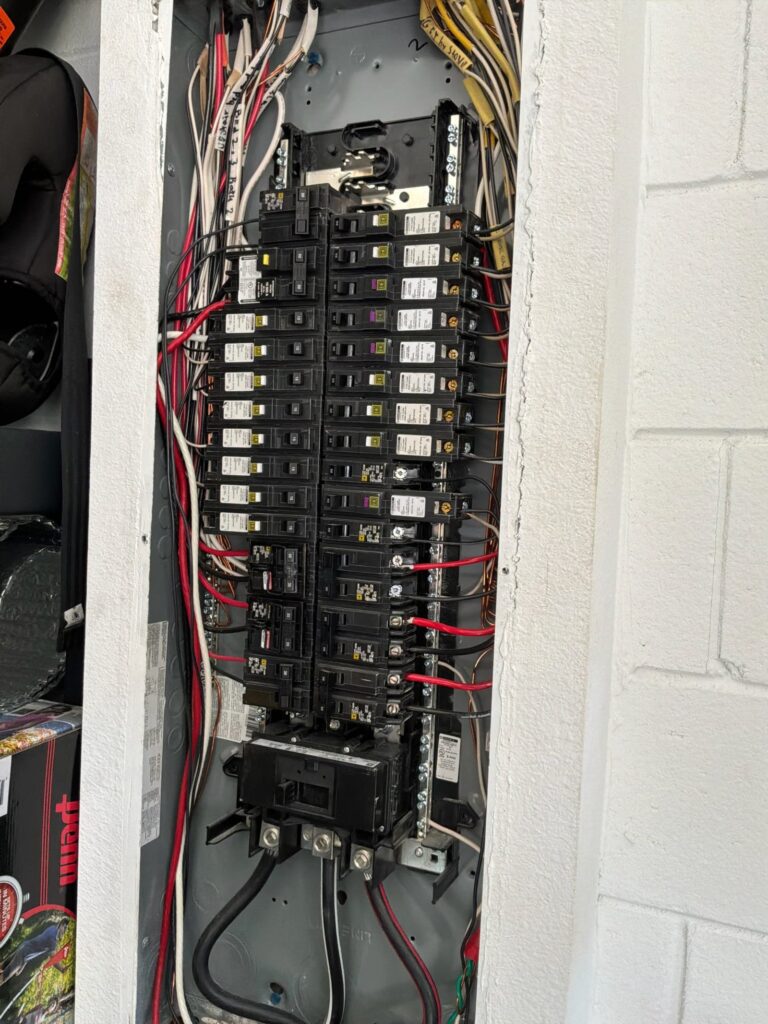
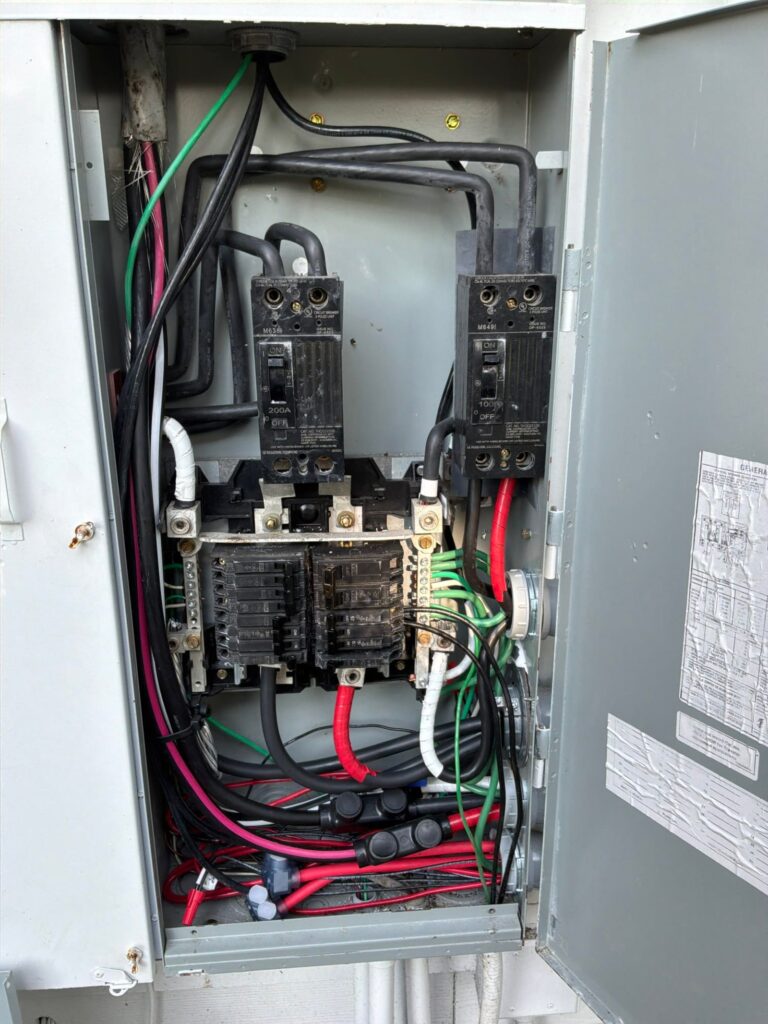
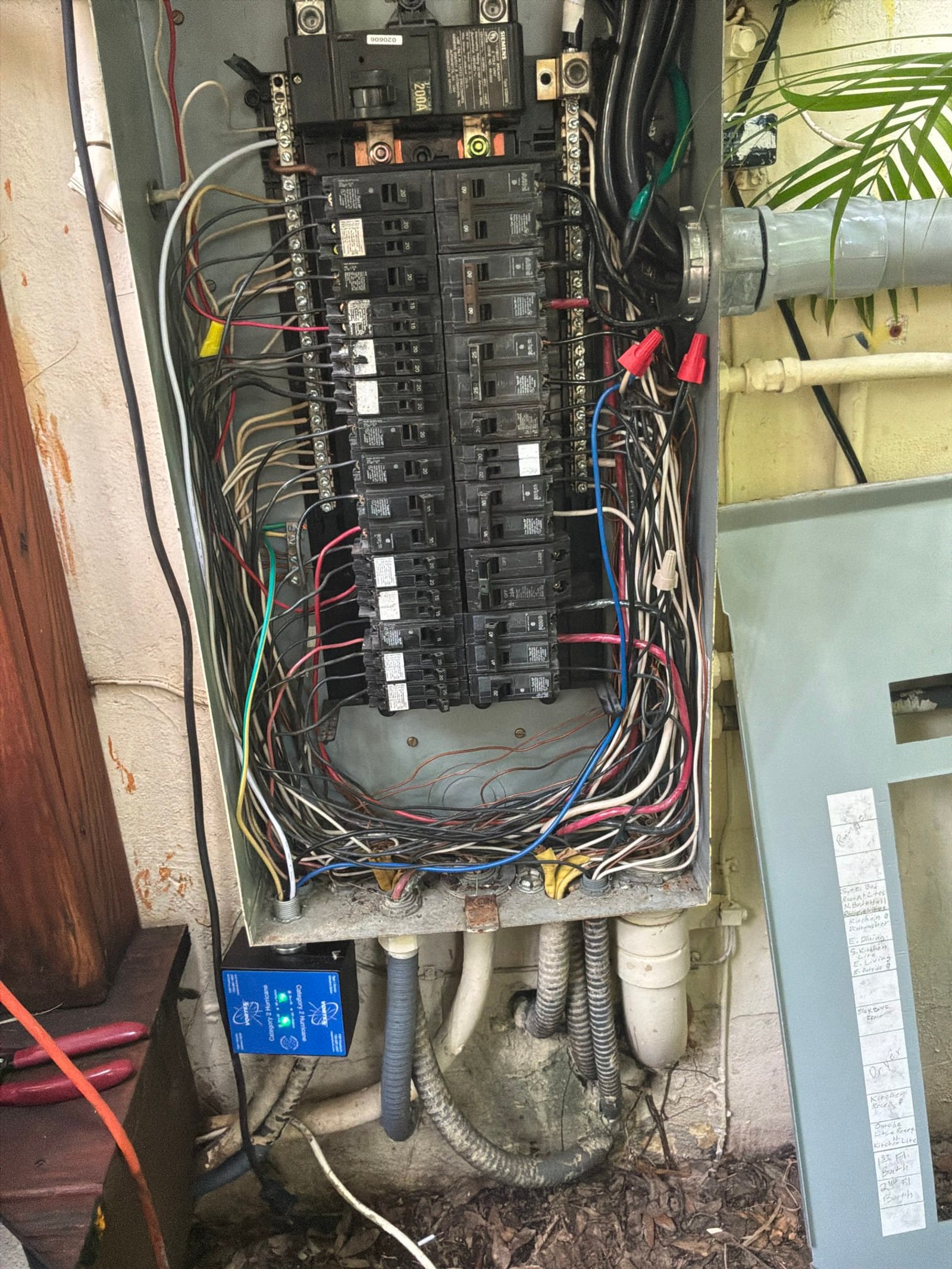
Before installing the surge device, the licensed electrician on site opened the panel enclosure. The photos from that visit tell a clear story. Corrosion was visible on the terminations and along the interior of the enclosure itself, along with evidence that moisture had found its way inside at some point. Branch conductors showed disorganized routing consistent with previous DIY workmanship.
Conditions like these are not unusual in older Florida homes. The combination of humidity, salt air, and the occasional roof or wall leak means panel enclosures here see more moisture stress than panels in drier climates. Corrosion on terminations raises contact resistance over time, which is worth addressing when the panel is next serviced. The disorganized branch wiring is a workmanship pattern common in homes that have had several owners make small additions over the years. None of these observations changed the planned scope of work for this visit, but they are worth flagging so the homeowner can plan ahead.
Solution Selected
The homeowner had already chosen to add whole-home surge protection, and the team completed that scope as planned. The PSP Vortex 120 kA surge protector was mounted and connected at the panel, with all wiring completed for safe, long-lasting performance on every circuit the panel serves.
Work Performed
- PSP Vortex 120 kA Whole-House Surge Protector: One unit installed and connected at the electrical panel. The blue enclosure with green status LEDs is mounted in an accessible location, making it easy to confirm at a glance that protection is active. All branch circuits served by the panel are now covered by the device.
- Ceiling fixture: A flush-mount LED ceiling light was installed and confirmed operational.
Why Pricing Can Vary
Two homes with the same job on the invoice can land at different totals. On projects like this one, the total is driven by:
- Surge device type and rating
- Whether the device mounts inside the panel or beside it
- Available breaker positions in the panel
- Panel condition and any corrections found when the cover is removed
- Layered protection at sensitive equipment
- Grounding system condition, which the device depends on
Why This Matters for Homeowners
Florida consistently ranks among the top states for lightning strikes, and St. Petersburg sits in the heart of the Tampa Bay lightning corridor. A whole-home surge protector at the panel is the broadest first line of defense a household can add, because it intercepts transient voltage before it reaches any individual circuit. That means the refrigerator, the HVAC system, the home office, and the televisions all benefit from a single device.
For the family in this home, the practical benefit is straightforward. Appliances and electronics keep running the way they are supposed to, through every afternoon storm, without skipping a beat. A device like the PSP Vortex is rated at 120 kA, which gives it substantial capacity to handle the kinds of surges that travel in on the utility lines during nearby lightning activity.
Additionally, the panel observations noted above are a good reminder for any St. Petersburg homeowner. Panels near exterior walls or in garages with roof penetrations deserve a periodic look. Catching moisture intrusion and corrosion early makes future service work cleaner and keeps the system running reliably for years. If your home has similar conditions, a licensed electrician can assess whether the terminations need attention.
Above all, the goal is a home that simply works. The family should be able to run the morning routine, cook dinner, and settle in for the evening without giving the electrical system a second thought. That is exactly what a properly installed surge protector, paired with a panel that is in good condition, is designed to deliver.
Thomas Edison Electric holds Florida electrical contractor license EC13015487, and all work is performed to current NEC 2020 standards. For general electrical safety education, the Electrical Safety Foundation International is a reliable resource for homeowners.
Code Compliance Cited in This Job
Every fix above maps to a specific section of NEC 2020. Each card links to NFPA’s public NEC index.
Surge Protective Device at Service
NEC 230.67 requires a listed surge protective device (SPD) at the service of new dwelling units and, under current best practice, is the section that guides whole-home SPD placement for existing homes as well. On this job, the PSP Vortex 120 kA unit was installed at the panel to satisfy this requirement and to protect all downstream branch circuits from transient overvoltage events originating on the utility supply. NFPA reference ›
Type 2 SPD Installation Requirements
NEC 285.25 governs how a Type 2 SPD must be installed, including connection point, conductor sizing, and overcurrent protection. The PSP Vortex installed on this job is a Type 2 device, mounted at the panel enclosure and wired in accordance with these requirements to ensure the device responds correctly during a transient voltage event. NFPA reference ›
Electrical Connections
NEC 110.14(B) addresses the integrity of electrical splices and terminations, including the need for proper contact and connection quality. The visible corrosion on the terminations and enclosure interior noted during this visit is a condition that, over time, can increase contact resistance at those points. This section is the relevant standard when evaluating whether corroded terminations warrant cleaning or re-termination during future service work. NFPA reference ›
Common Questions
Questions homeowners ask after seeing this kind of work.
What does a whole-home surge protector actually protect against?
A whole-home surge protector installed at the panel intercepts transient voltage spikes before they reach any individual circuit in the home. This includes surges that travel in on the utility lines during nearby lightning activity, as well as smaller surges generated by large appliances cycling on and off. Every circuit served by the panel, including HVAC, kitchen appliances, and home electronics, benefits from a single device. If you want to know whether your panel is set up for one, our team can schedule an on-site assessment at a time that works for your household.
Is one surge protector at the panel enough, or do I need point-of-use protection too?
A panel-mounted Type 2 surge protector handles the large transient events that come in from the utility supply, which are the most significant source of surge energy in Florida. For sensitive electronics like desktop computers or home theater systems, a quality point-of-use surge strip adds a second layer at the device level. The two approaches complement each other rather than duplicate effort. Book a walkthrough if you want a recommendation based on how your home is set up.
How often should I have my home’s electrical system inspected?
A yearly inspection is a reasonable baseline for most households. Homes built before 1990 and homes that have weathered recent storm seasons may benefit from more frequent check-ins, because age and moisture exposure both affect how components perform over time. The panel conditions noted on this St. Petersburg visit, including corrosion and prior DIY workmanship, are exactly the kind of findings a routine inspection catches early. Schedule your annual inspection to stay ahead of anything worth addressing.
What should I do if I notice rust or moisture inside my electrical panel?
Moisture inside a panel enclosure is worth addressing sooner rather than later. Corrosion on terminations increases contact resistance over time, and the source of the moisture (a roof penetration, a nearby wall leak, or high ambient humidity) ideally gets identified and corrected. A licensed electrician can open the panel safely, assess the extent of the corrosion, and recommend whether cleaning, re-termination, or a more involved service is the right next step. Book a panel inspection and our crew can give you a clear picture of what is going on.
Does a surge protector at the panel also cover my HVAC and major appliances?
Yes. Because the device connects at the panel, it covers every circuit that panel serves, including the branch circuits feeding the air handler, the compressor disconnect, the refrigerator, and the washer and dryer. That broad coverage is one of the main advantages of panel-level protection compared to individual point-of-use devices. For households with a pool pump or a detached garage on a sub-panel, a second unit at that sub-panel extends the same coverage there. Talk to our team about whether your setup would benefit from more than one device.
Project Photos
Electrician and Technical Reviewer
Work performed by the Thomas Edison Electric field team serving Orlando.
Location
This project was completed in St. Petersburg, Florida, in our St. Petersburg Core service area.