This Apopka electrical repair case study walks through the real diagnosis, the fix, and the code details from a recent service call. A homeowner in Apopka, FL already had the fan picked out. The catch: the ceiling climbed to 20 feet, making a straightforward swap anything but simple. Our licensed crew handled the installation from start to finish, and while on-site they also noted some conditions at the panel worth keeping an eye on.
Customer’s Problem
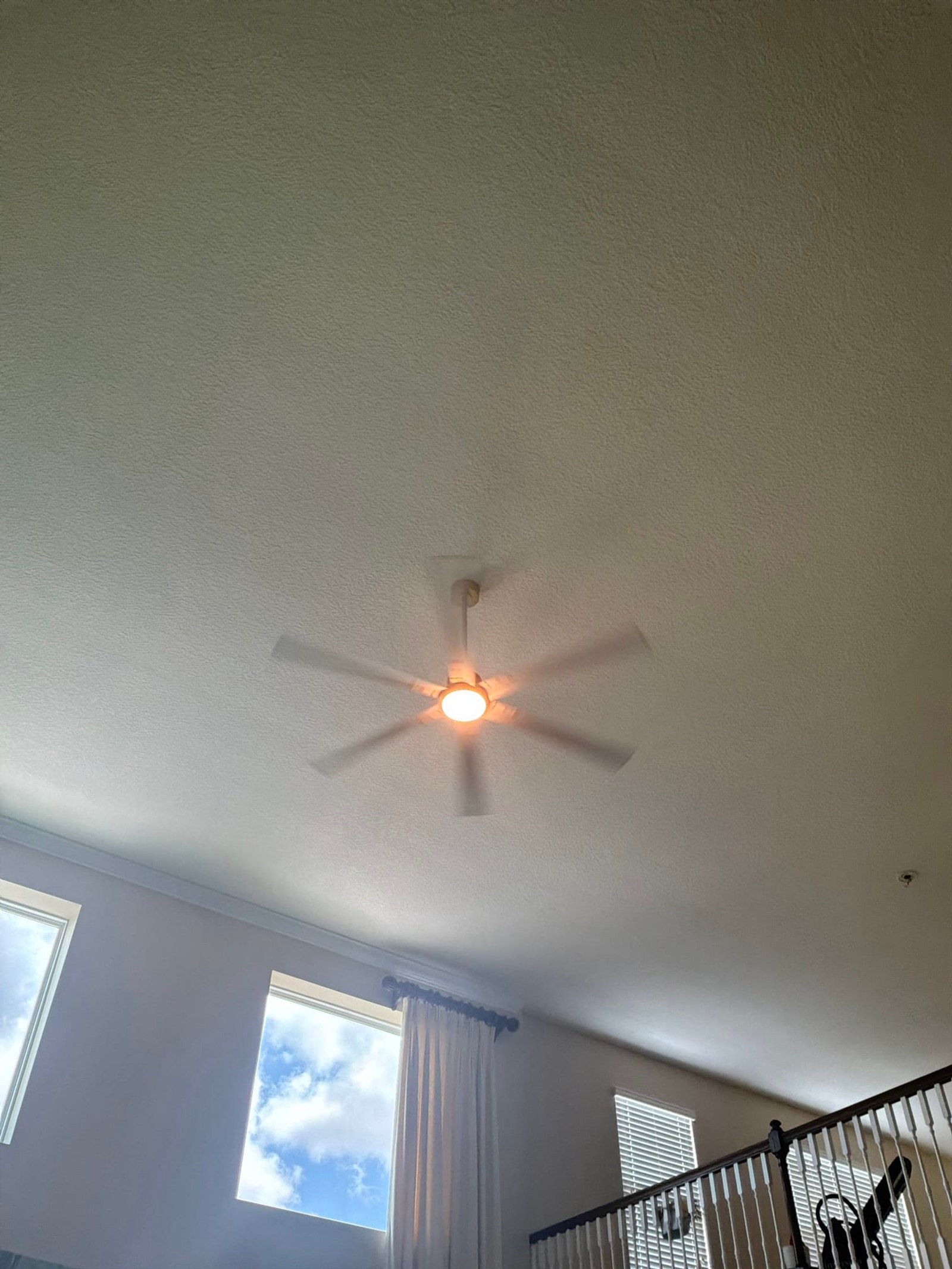
The homeowner wanted an existing ceiling fan replaced with one they had already purchased. The 20-foot ceiling height meant standard ladder work was not enough. Reaching the mounting point safely required the right equipment and the right approach, so they called our team rather than attempt the swap themselves.
What Our Electrician Found
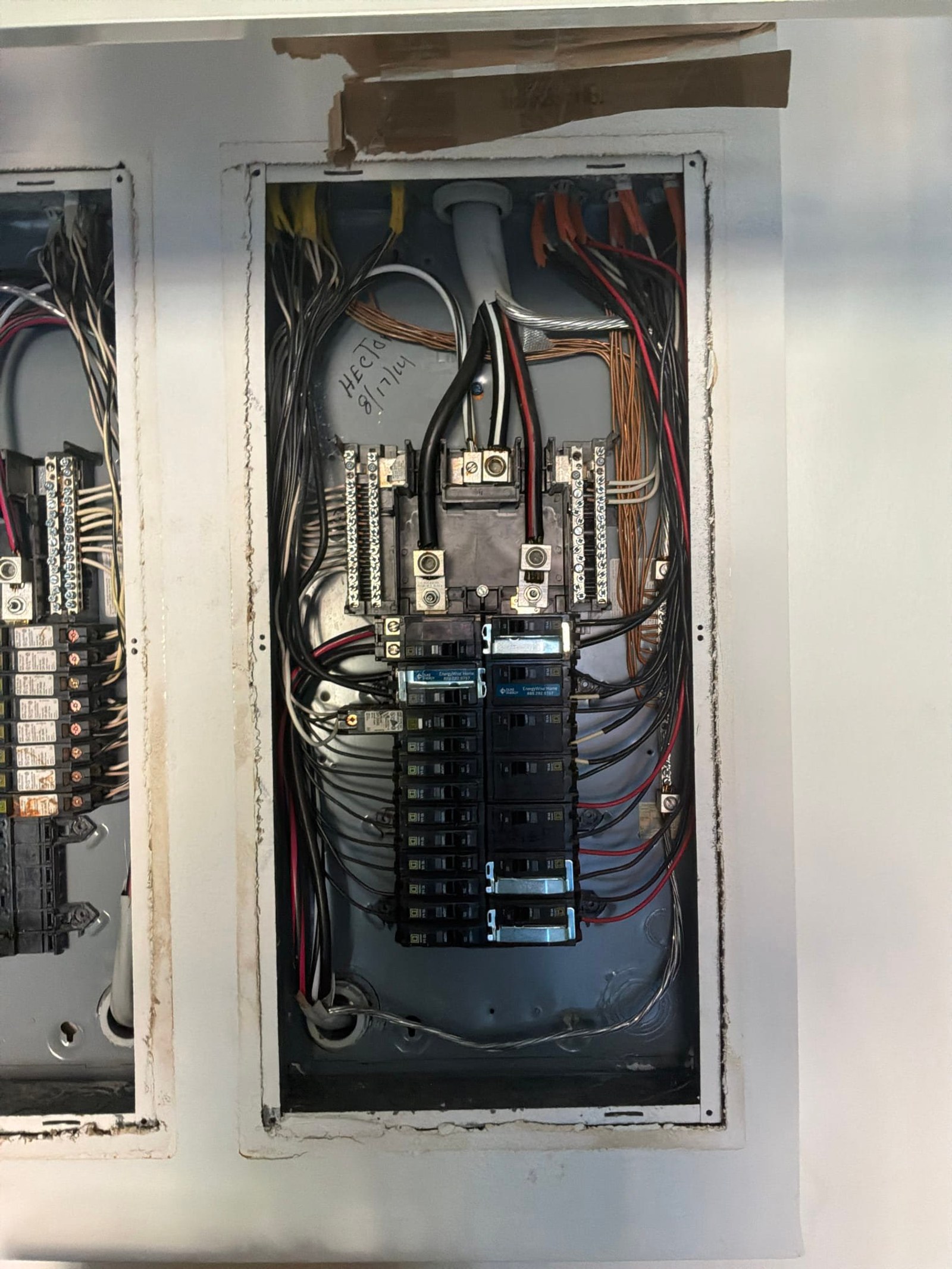
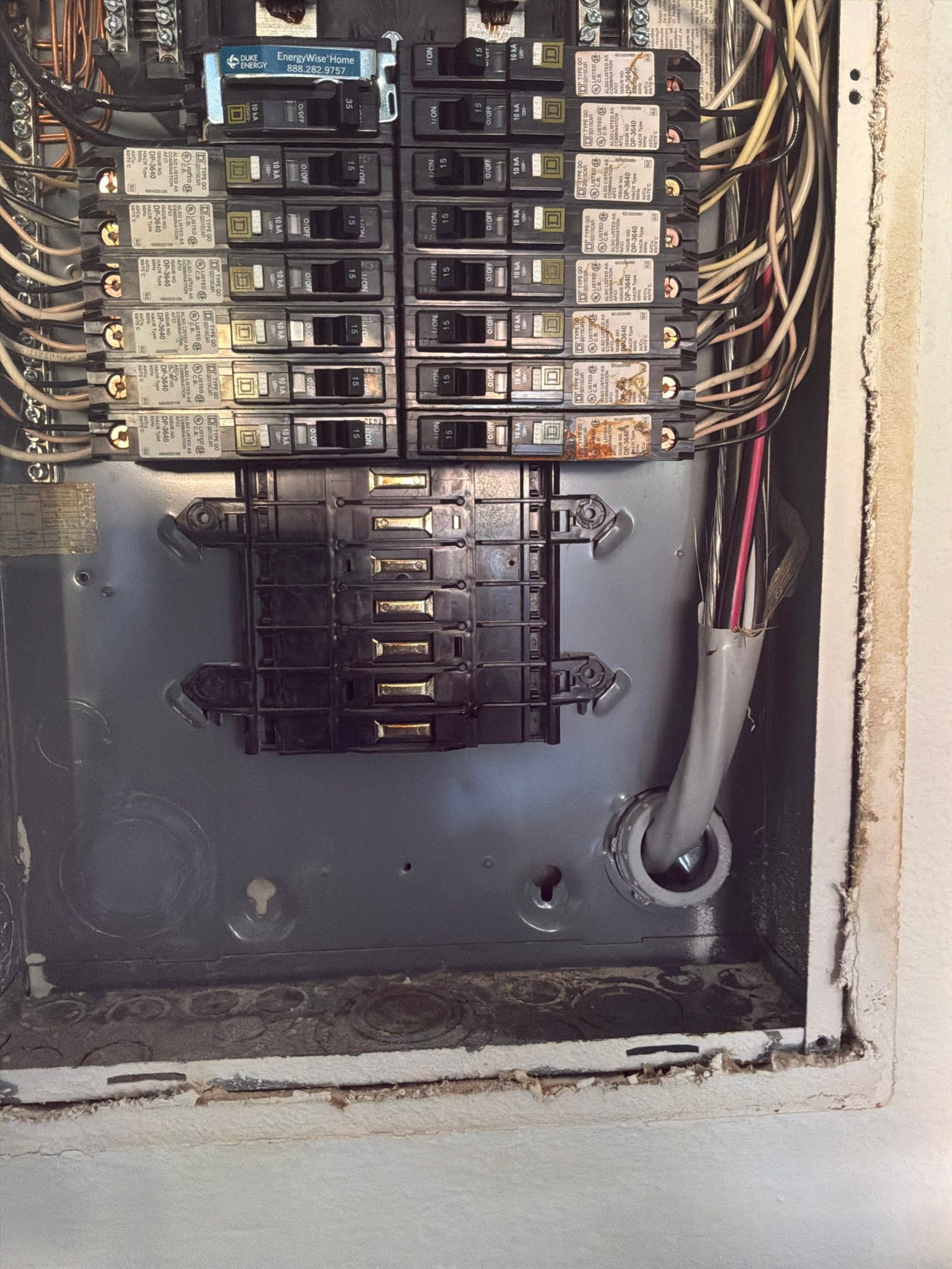
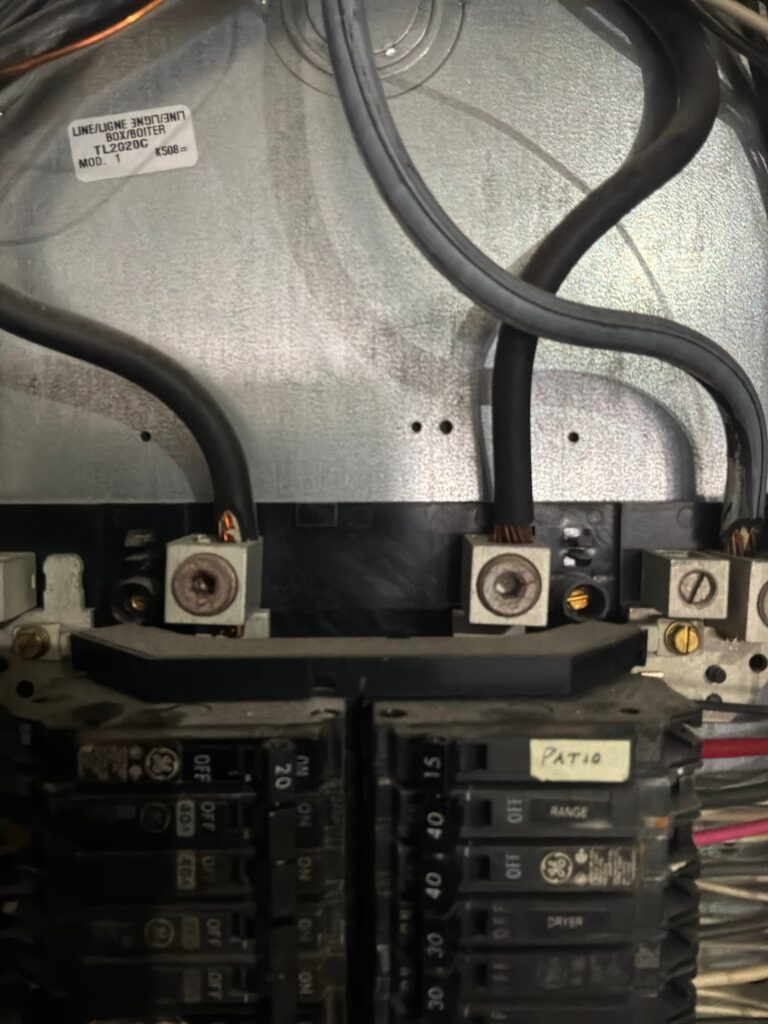
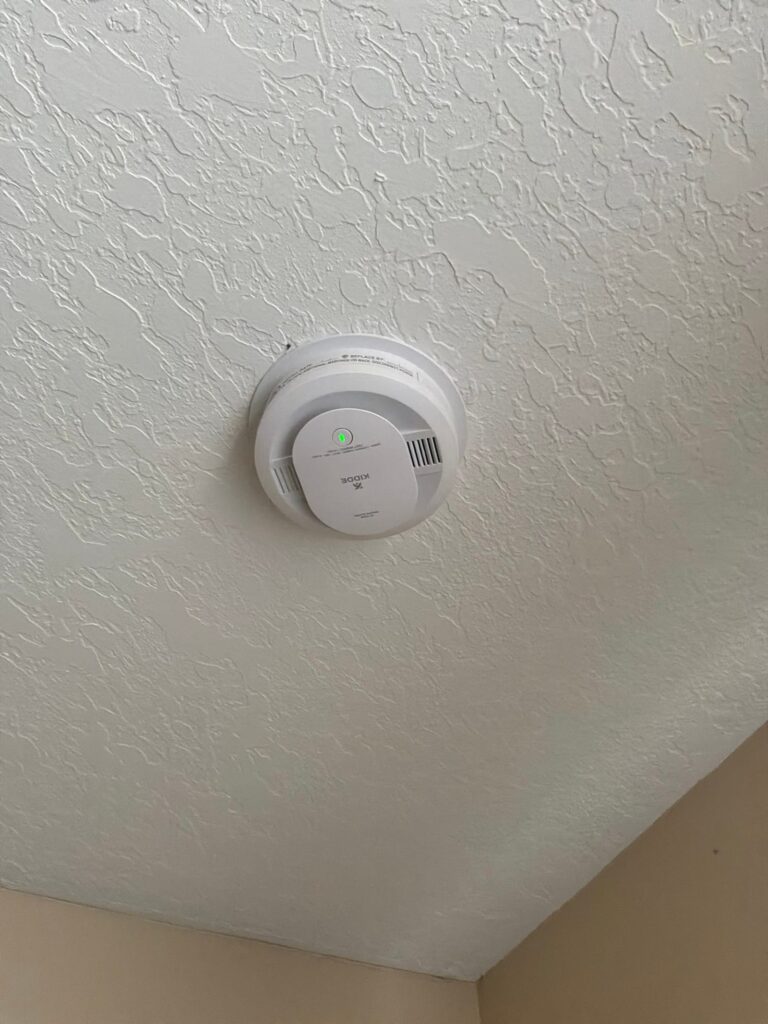
Beyond the fan installation itself, the technician’s photos captured the interior of the electrical panel. The images show corrosion on the breaker lugs, copper conductors, and enclosure hardware. Corrosion at terminations is an observation worth noting: over time, oxidation on lug surfaces can increase resistance at those connection points. This kind of buildup is not unusual in Florida homes, where humidity works on metal surfaces year after year. It does not mean the panel stopped working, but it is the sort of condition that benefits from a closer look during a dedicated inspection. Nothing in the checklist flagged a failed item on this visit, so we note the observation here as a courtesy.
Options We Presented
Two estimates were presented to the homeowner. The first covered the ceiling fan installation on its own. The second offered a broader scope that addressed additional electrical work alongside the fan swap. The homeowner reviewed both and chose the scope that fit their priorities for this visit.
Solution Selected
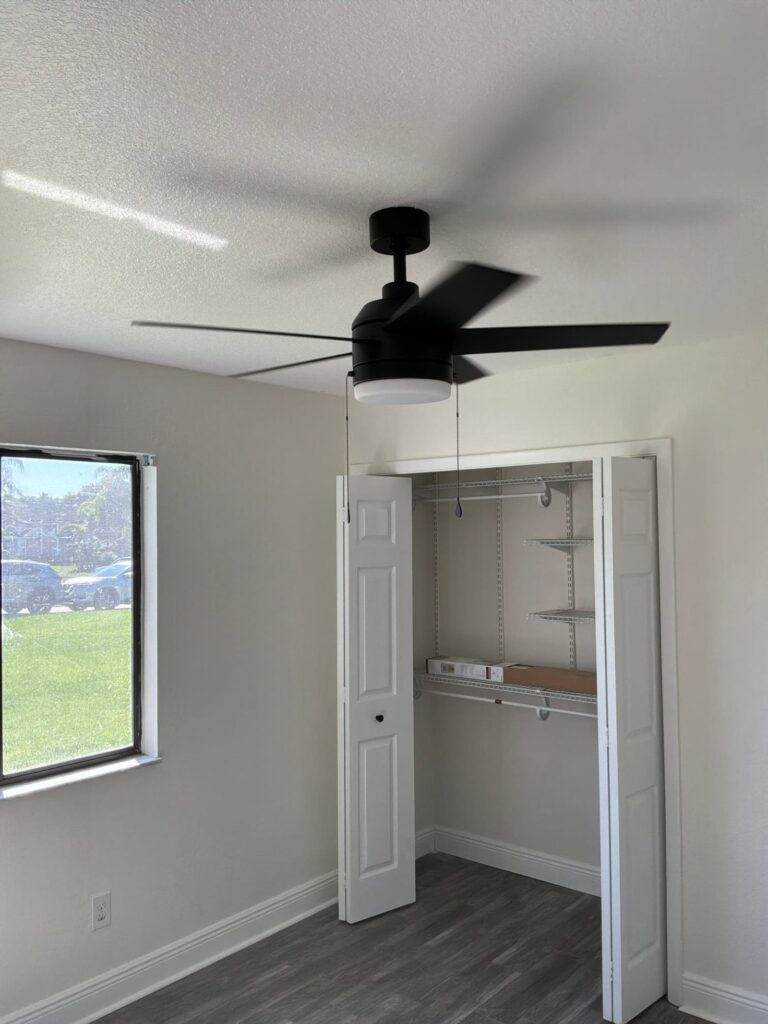
The homeowner chose the installation of their client-supplied fan at the existing ceiling location. That scope matched what they needed most: a safe, clean fan swap at height, completed in a single visit.
Work Performed
- Installed one client-supplied ceiling fan with integrated light fixture at the existing ceiling location, working at a 20-foot ceiling height.
Why Pricing Can Vary
Two homes with the same job on the invoice can land at different totals. On projects like this one, the total is driven by:
- Whether a fan-rated box already exists
- Ceiling height and the need for a lift or scaffold
- New switching or a new circuit versus an existing one
- Fan selection and remote or smart controls
- Attic access for bracing and wiring
Why This Apopka Electrical Repair Matters for Homeowners
Ceiling fans at height are one of those upgrades that change how a room feels every single day. In a Florida home, a well-placed fan keeps the living space comfortable through the long warm months, and the whole family benefits from that steady airflow without thinking about it. Installing a fan on a 20-foot ceiling is not a weekend DIY project: it calls for proper staging, secure mounting, and correct wiring connections so the fan runs quietly and reliably for years.
Additionally, the panel observation our crew photographed is a good reminder that electrical systems are living parts of a home. Humidity, heat cycling, and the passage of time all leave marks. Corrosion on breaker lugs and enclosure hardware is common in Central Florida, and catching it early gives homeowners the chance to address it on their own schedule rather than in a pinch.
Finally, peace of mind comes from knowing the work was done by a licensed electrician. Our team holds Florida electrical contractor license EC13015487, and every installation follows current standards so the household can enjoy the upgrade without a second thought. For more general guidance on home electrical safety, the Electrical Safety Foundation International offers straightforward homeowner resources worth bookmarking.
Code Compliance Cited in This Job
Every fix above maps to a specific section of NEC 2020. Each card links to NFPA’s public NEC index.
Electrical Connections
NEC 110.14(B) addresses the integrity of electrical connections at terminals and splices. Corrosion on breaker lugs and enclosure hardware, visible in the panel photos from this job, is relevant to this section because oxidation can degrade the quality of contact at termination points over time. A dedicated panel inspection can confirm whether any connections need attention. NFPA reference ›
Circuit Directory and Identification
NEC 408.4 requires that every circuit in a panelboard be legibly identified as to its purpose or use. During a panel inspection, verifying that the directory matches the actual branch circuits is a straightforward step that helps the household understand its electrical system and supports future service work. NFPA reference ›
Luminaire and Fan Support
NEC 410.36 requires that ceiling fans and luminaires be supported by outlet boxes or listed support systems rated for the load. At 20 feet, confirming the existing box was rated for fan support was an important step before mounting the client-supplied unit, ensuring the installation is secure for the long term. NFPA reference ›
Common Questions
Questions homeowners ask after seeing this kind of work.
Can a ceiling fan be installed on any existing ceiling box?
Not every ceiling box is rated to support a ceiling fan. Fans produce a downward pull and a side-to-side wobble that a standard light-fixture box is not designed to handle. A box listed for ceiling fan support, or a brace kit rated for fans, is required under NEC 410.36. If you are unsure what is in your ceiling, our team can check before the installation begins. Schedule online to get on the calendar.
Why does ceiling height matter for a fan installation?
At 20 feet, a standard step ladder does not reach the mounting point safely. The job calls for appropriate staging equipment and a two-person approach to handle the fan, the wiring, and the canopy at height without rushing. Skipping the right equipment is how installs go wrong. Our crew arrives prepared for high-ceiling work so the job is done cleanly the first time. Book a ceiling fan installation and let us handle the height.
What does corrosion on panel lugs mean for my home?
Corrosion on breaker lugs and enclosure hardware is a common finding in Florida homes, where humidity is a constant presence. It does not mean the panel has stopped working, but oxidation at termination points is worth having a licensed electrician evaluate during a dedicated inspection. Catching it early keeps the household running smoothly and avoids surprises down the road. Schedule a panel inspection to know exactly where things stand.
How often should I have my home’s electrical system inspected?
A yearly inspection is a good baseline for most homes. Homes built before 1990 and homes that have come through recent storms may benefit from a closer look more often, since older wiring and weather stress can accelerate wear. An annual check gives your household a clear picture of any conditions worth addressing before they become an inconvenience. Book your inspection online and our team will take care of the rest.
Is it safe to use a client-supplied ceiling fan for an installation?
Yes, in most cases. Our team installs client-supplied fans regularly. We verify that the fan is compatible with the existing wiring, that the mounting box is rated for fan support, and that all connections are made correctly before we leave. If anything about the existing box or wiring does not match the new fan’s requirements, we will explain the options before proceeding. Schedule online and bring your fan: we will handle the rest.
Project Photos
Electrician and Technical Reviewer
Work performed by the Thomas Edison Electric field team serving Orlando.
Location
This project was completed in Apopka, Florida, in our Apopka service area. See our electrical services in Apopka.