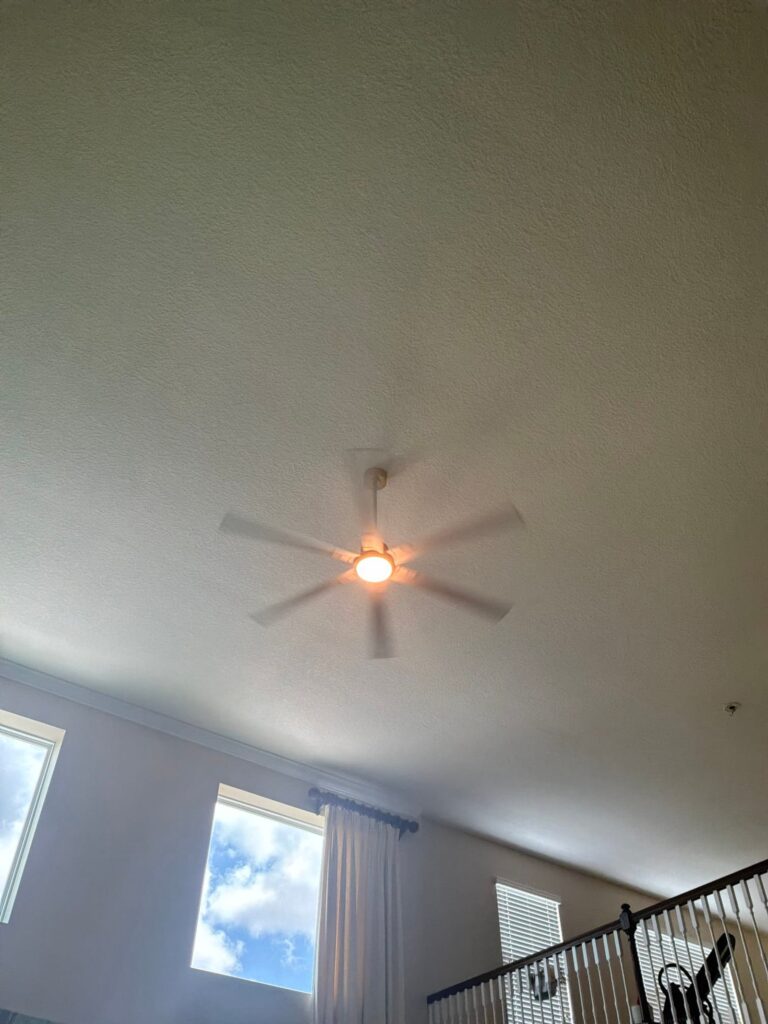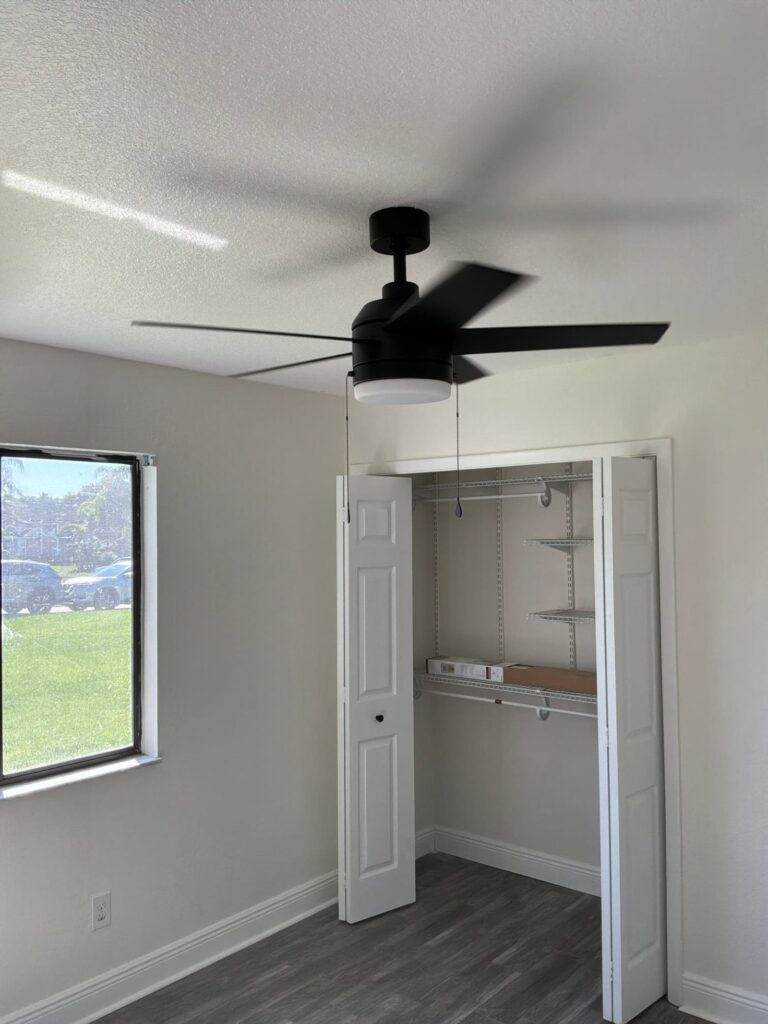
This Ocoee smoke detector installation case study walks through the real diagnosis, the fix, and the code details from a recent service call. A homeowner in Ocoee, FL called us about a full detector refresh across the home. Our crew replaced six hardwired smoke detectors and three hardwired combination smoke and carbon monoxide units, giving every level and living area consistent, interconnected coverage with 10-year sealed lithium batteries built in.
Customer’s Problem
The homeowner wanted the existing smoke and carbon monoxide alarms evaluated and either repaired or replaced. The system included multiple detectors spread throughout the home, and the goal was to make sure every unit was working reliably and that the coverage matched what a household of this size actually needs today.
What Our Electrician Found
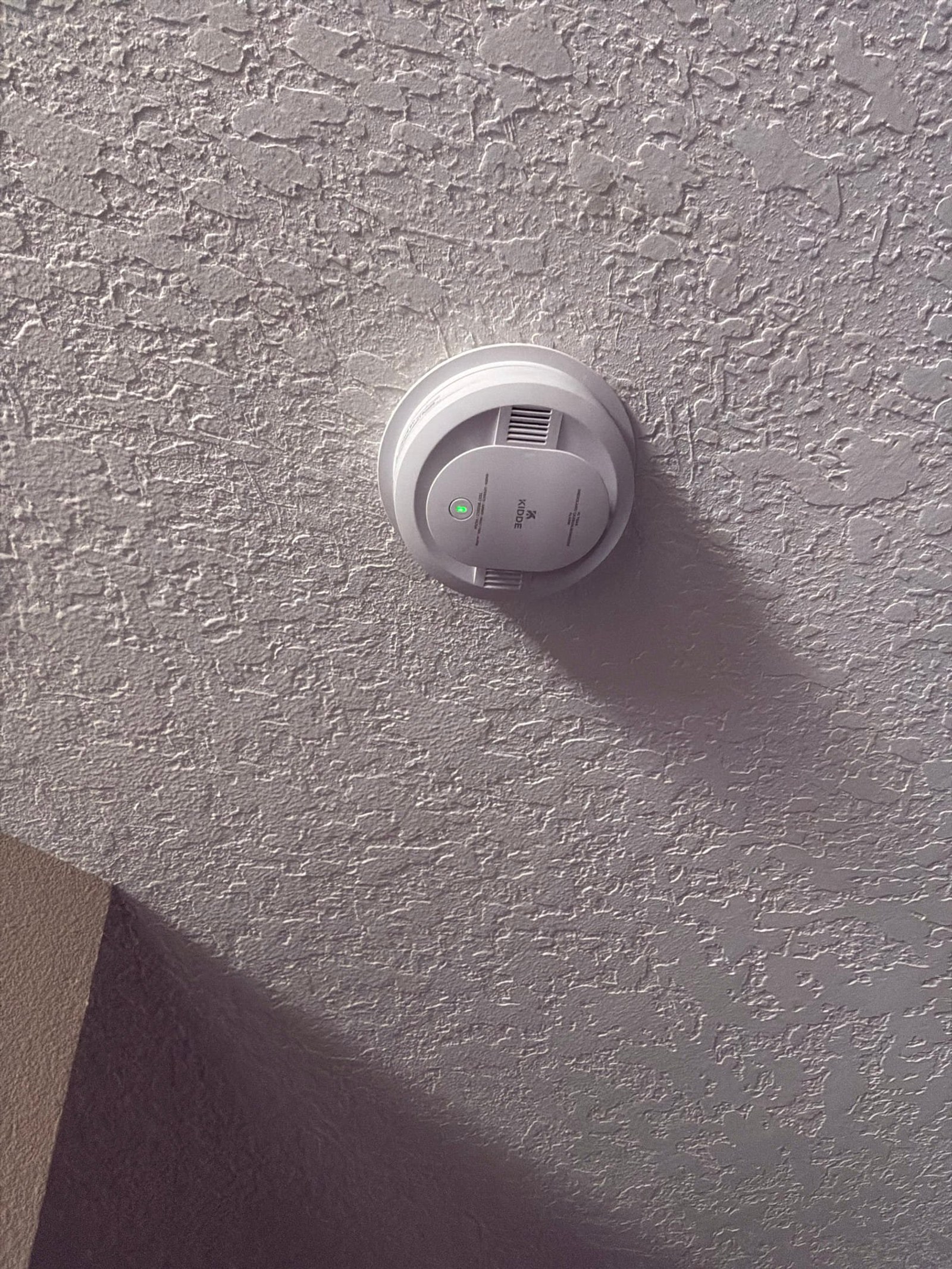
The licensed electrician on site inspected the existing detectors and confirmed that replacement was the right call. The units in place had reached the point where a fresh installation would serve the household better than repairs.
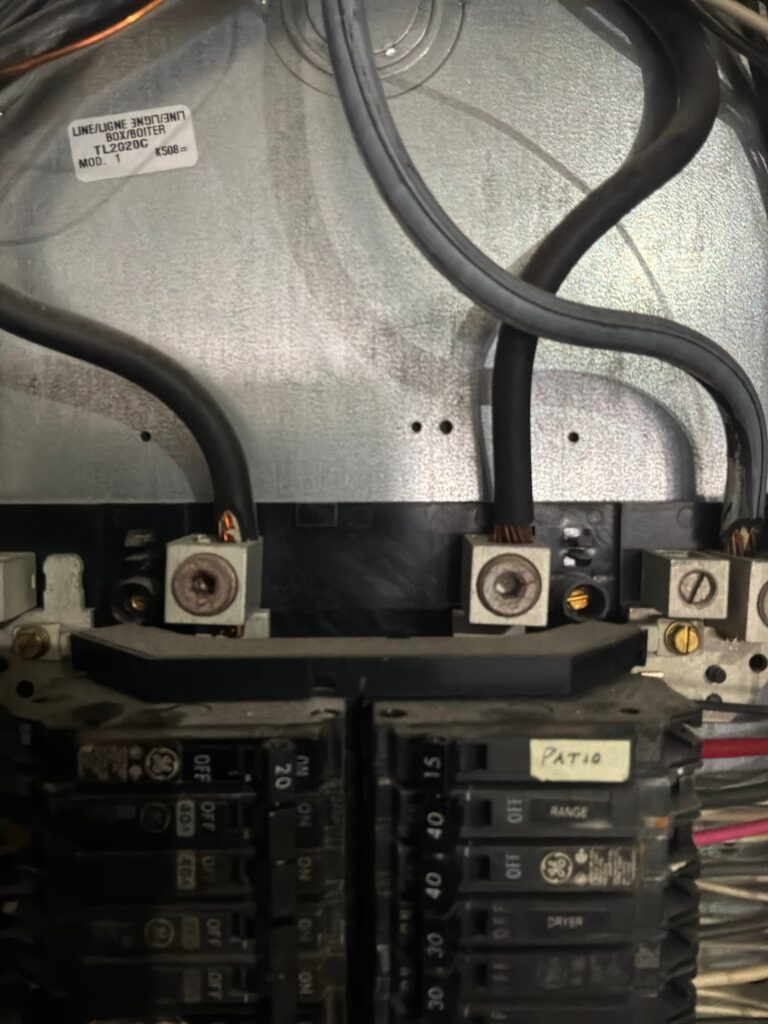
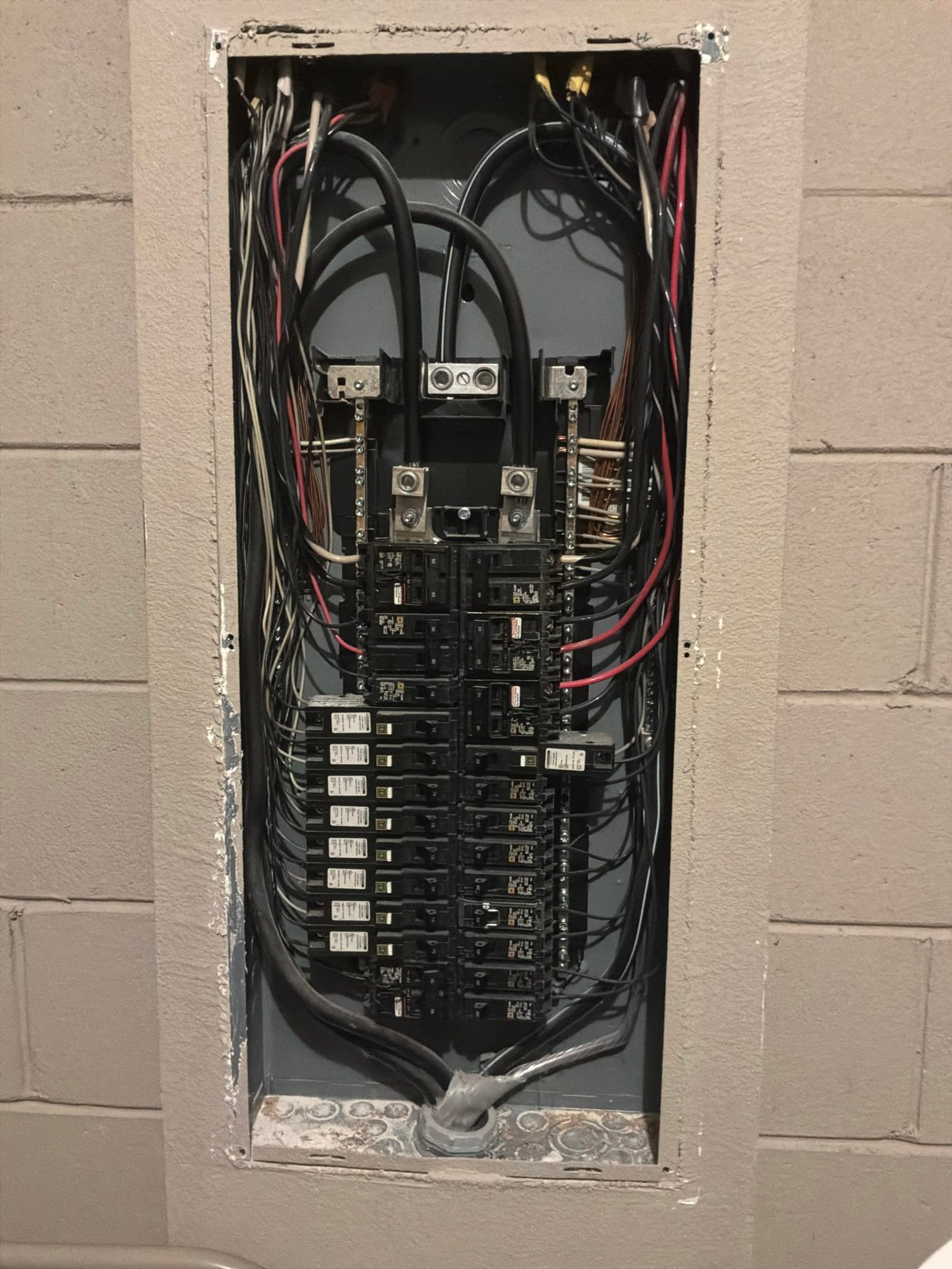
During the visit, the team also photographed the electrical panel. The interior showed black and red branch conductors along with multiple breakers, and the wiring arrangement reflected what appears to be some do-it-yourself work added over time. That kind of panel interior is worth noting: when wiring is added by different hands at different times, the result may not reflect current code standards. No panel work was part of this visit, but the homeowner now has that observation on record for a future conversation.
Options We Presented
The team presented two estimates. The first covered a targeted replacement of only the units most in need of attention. The second covered a complete whole-home refresh, replacing every smoke and combination smoke/CO detector in the home at once. The scope of each option differed in how many units would be addressed and how much of the home’s detection network would be brought up to a consistent standard in a single visit.
Solution Selected
The homeowner chose the complete whole-home replacement. Given the number of detectors already in place and the desire for a reliable, consistent system throughout, replacing all nine units in one trip made the most sense. That approach also ensures every detector shares the same generation of hardware and the same battery baseline going forward.
Work Performed
Our crew installed the following at existing hardwired locations throughout the home:
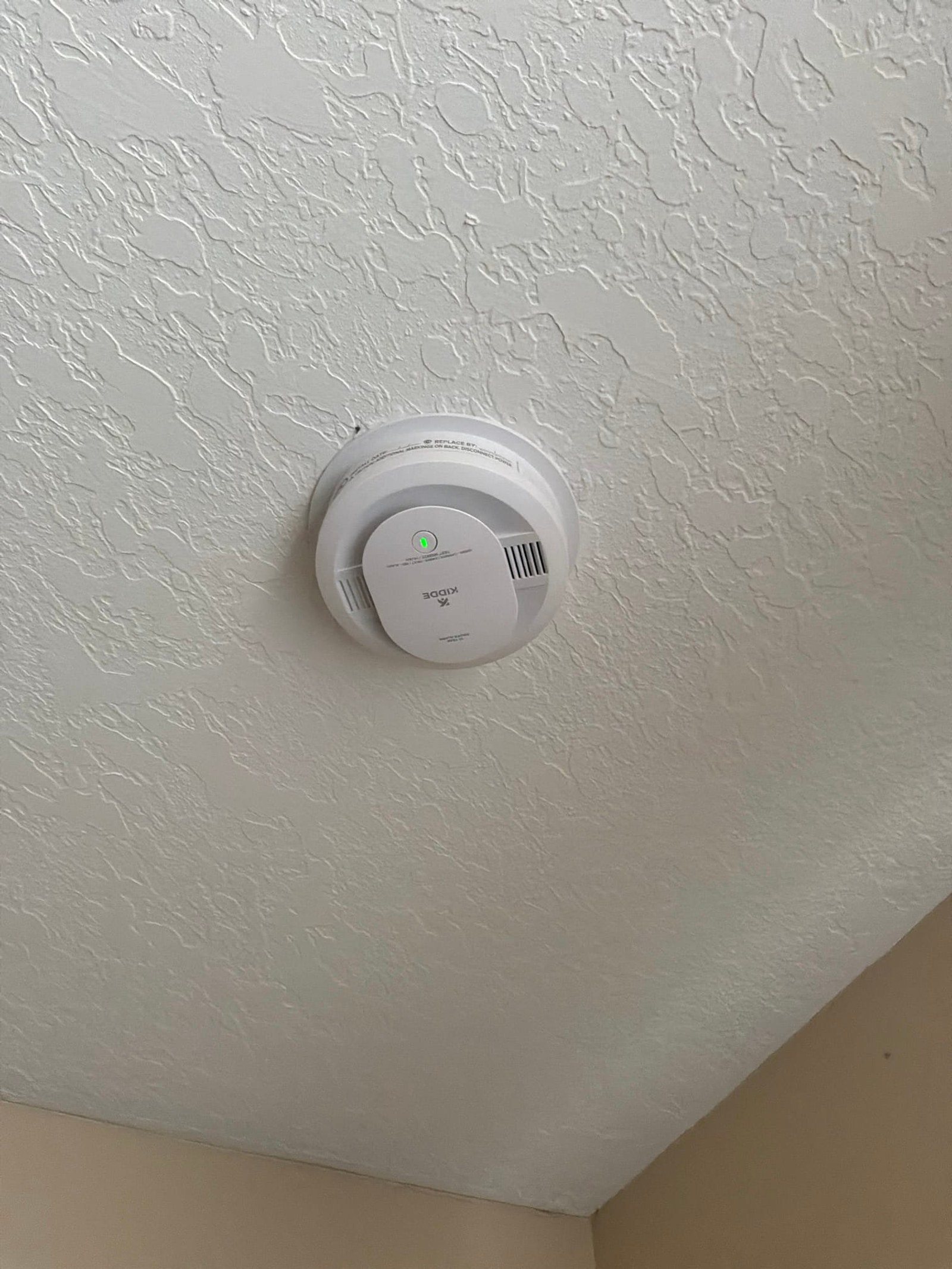
- Six hardwired smoke detectors with 10-year sealed lithium batteries
- Three hardwired combination carbon monoxide and smoke detectors with 10-year sealed lithium batteries
All units are hardwired to the home’s existing branch circuits and interconnected, meaning if any single unit activates, every detector in the home responds at once. The 10-year sealed batteries eliminate the need for annual battery swaps for the life of each unit.
Important Materials and Equipment
Materials and equipment on the invoice for this project:
- Smoke Alarm, Kidde 21027537 120V with 10 Year battery Backup
- Smoke/CO Alarm, Kidde 21027536 120V with 10 Year battery Backup
Why Pricing Can Vary
Two homes with the same job on the invoice can land at different totals. On projects like this one, the total is driven by:
- Number of detectors and whether they are interconnected
- Hardwired versus battery or wireless-interconnect units
- Detector type (photoelectric, ionization, combination CO)
- Ceiling access and new wiring runs where none exist
- Code requirements triggered by the permit or the sale
Why This Ocoee Smoke Detector Installation Matters for Homeowners
Detectors age out quietly. Most manufacturers and NFPA 72, the national standard governing smoke and CO detection, recommend replacing smoke alarms every 10 years and CO alarms every 5 to 7 years. Older units can develop sensor drift that makes them less responsive over time, often without any visible sign that performance has dropped. Replacing them on schedule means the household always has equipment operating within its rated service life.
For this family, having nine interconnected units means the whole home communicates as one system. A detector in a bedroom hears from a detector in the kitchen. Everyone in the house gets the same signal at the same moment, regardless of where they are. That kind of whole-home coordination is especially reassuring for households with kids, or any time someone is sleeping on a different level from where a change in air quality first occurs.
Finally, the 10-year sealed lithium batteries simplify the years ahead. There is no chirping reminder every autumn, no ladder-and-battery run at midnight. The system just works, quietly, in the background, while the family goes about their morning routines, weekends, and everything in between. That is exactly the kind of reliability a home should be able to count on without a second thought.
Code Compliance Cited in This Job
Every fix above maps to a specific section of NEC 2020. Each card links to NFPA’s public NEC index.
AFCI Protection for Dwelling Units
NEC 210.12 governs arc-fault circuit-interrupter protection on branch circuits in dwelling units, including circuits that power hardwired smoke and CO detectors. On this job, the detectors were installed at existing hardwired locations, so the branch circuits serving them are subject to current AFCI requirements. The panel interior observed during this visit, which showed wiring consistent with layered do-it-yourself additions, is worth reviewing against this section in a future panel inspection. NFPA reference ›
Receptacle Outlet Placement in Dwellings
While this citation primarily governs receptacle placement, NEC 210.52 is part of the broader dwelling-unit branch circuit framework that informs how circuits are distributed throughout a home. Ensuring the circuits supplying the nine replaced detectors are correctly identified and accessible is part of maintaining a well-organized electrical system, something to keep in mind given the panel conditions noted during this visit. NFPA reference ›
Circuit Directory and Identification
NEC 408.4 requires that every circuit in a panelboard be legibly identified as to its purpose or the equipment served. During this job, the panel interior showed multiple branch conductors in a condition that may make clear circuit identification difficult. Accurate labeling of the circuits serving hardwired detectors helps ensure that the right breaker can be located quickly whenever detector maintenance is needed. NFPA reference ›
Common Questions
Questions homeowners ask after seeing this kind of work.
How often should smoke and carbon monoxide detectors be replaced?
Smoke detectors should be replaced every 10 years and CO detectors every 5 to 7 years, in line with NFPA 72 guidance and most manufacturers’ recommendations. Sensors degrade gradually over time, so an older unit may look fine on the ceiling while no longer performing the way it should. The 10-year sealed lithium units installed in this Ocoee home reset that clock for the entire home at once. If you are not sure how old your detectors are, our team can check them during a visit. Schedule online to get on the calendar.
What is the difference between a smoke detector and a combination smoke and CO detector?
A standalone smoke detector responds to combustion particles in the air. A combination unit adds a carbon monoxide sensor that responds to elevated CO levels, which can build up from fuel-burning appliances without any visible smoke. For most homes, placing combination units near sleeping areas and on every level gives the household the broadest coverage from a single device. If you would like help figuring out the right mix for your home, schedule a consultation and our crew can walk through the layout with you.
Why does it matter that hardwired detectors are interconnected?
With an interconnected system, a signal from any one detector triggers every unit in the home at once. That means a change in air quality detected in the garage reaches the bedroom immediately, without waiting for that bedroom unit to sense it on its own. NFPA 72 recommends interconnection for this reason. For families spread across different levels or rooms at night, whole-home communication gives everyone the same response time regardless of where they happen to be. Book a detector check if you are not sure whether your current system is interconnected.
How often should I have my home’s electrical system inspected?
A yearly inspection is a solid baseline for most households. Homes built before 1990 and homes that have been through recent storms may benefit from inspections more often, since older wiring and weather events can introduce conditions that are worth catching early. On this job, the panel interior showed signs of layered additions over time, which is a good example of something a periodic inspection would surface before it becomes a larger project. Schedule online to set up your annual review.
What should a homeowner do if the electrical panel shows signs of DIY work?
Panel interiors that show wiring added by different hands at different times may not reflect current NEC standards, even if the home has passed prior inspections. The right step is a dedicated panel inspection by a licensed electrician who can identify any circuits that predate current code and document what, if anything, needs attention. That gives the homeowner a clear picture without any guesswork. If your panel looks similar to what was observed in this Ocoee home, our team is glad to take a look. Schedule online at your convenience.
Project Photos
Electrician and Technical Reviewer
Work performed by the Thomas Edison Electric field team serving Orlando.
Location
This project was completed in Ocoee, Florida, in our Ocoee service area.