This Winter Garden lighting installation case study walks through the real diagnosis, the fix, and the code details from a recent service call. A homeowner in Winter Garden, FL wanted cleaner, brighter overhead lighting and reached out to our team to make it happen. Our licensed electrician on site installed eight 6-inch recessed wafer LED fixtures throughout the home and also ran a CAT6 cable to support a low-voltage connection in a concealed area. While the lighting project was the main event, a walk-through inspection turned up several items worth noting for the household’s long-term comfort and reliability.
Customer’s Problem
The homeowner wanted to replace older overhead lighting with a clean, modern recessed-light look. The goal was simple: better light distribution, a tidier ceiling profile, and fixtures that would serve the home well for years to come. Our team was scheduled to complete the installation and take a broader look at the electrical system while on site.
What Our Electrician Found
Our field team completed a standard walk-through inspection alongside the lighting work. Several observations came out of that review that are worth sharing.
Panel and Service Observations
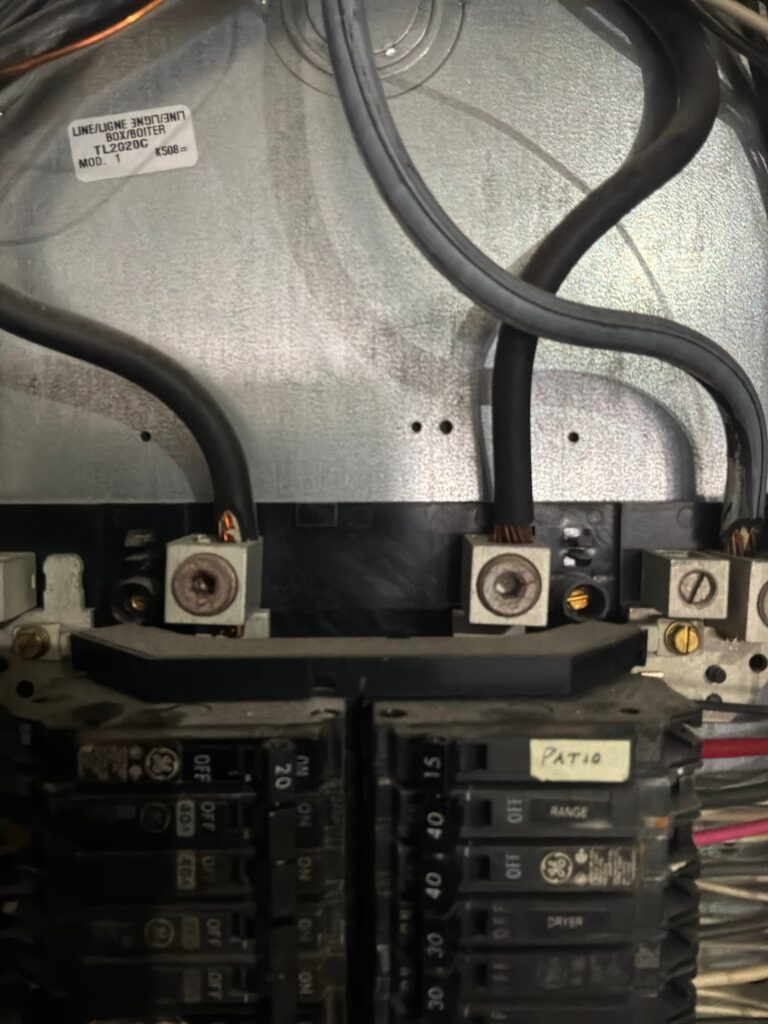
The home has a 100-amp GE panel. During the inspection, our crew noted that the panel directory was not fully labeled, which is common in homes of this era but worth tidying up. NEC 408.4 asks that every circuit be clearly identified so that anyone working in the panel in the future can do so quickly and confidently. Additionally, surge protection was not present at the panel, and AFCI breakers had not yet been installed on branch circuits where current code recommends them.
The inspection also flagged the meter can condition and weatherhead mounting as items worth a closer look, along with some signs of corrosion or discoloration on the service entrance. These conditions are not unusual in Florida’s climate and simply represent an opportunity for future maintenance attention.
Branch Circuit and Device Observations
A few concerns came up at the device level as well. The inspection noted that some older switches showed signs of intermittent arcing, a condition that tends to develop gradually over time as switch contacts age. Three-way switch wiring and some outlet grounding also came up as areas to review. Open splices, if present, would be addressed under general good-practice wiring standards.
Outlets in the home were not yet tamper-resistant, which predates the NEC 406.12 requirement now standard for dwellings. Replacing them over time is a straightforward upgrade that brings the home in line with current standards.
Life-Safety Devices
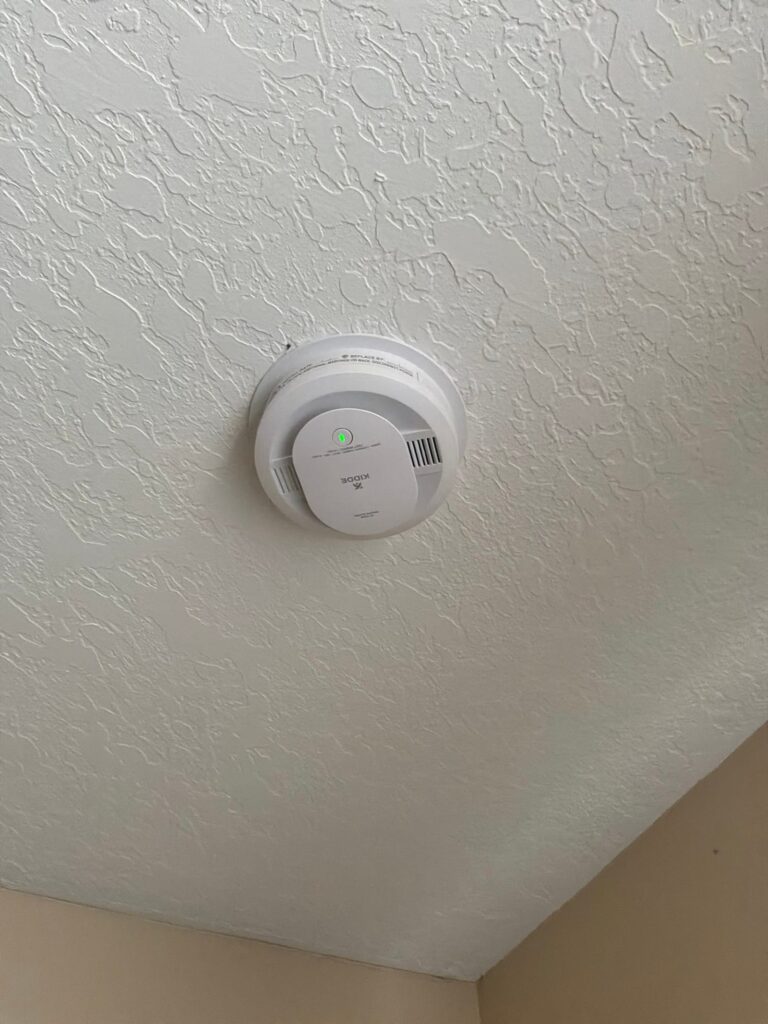
The inspection noted that carbon monoxide detectors were not present, and the smoke detectors on site may not fully reflect current NFPA 72 placement and technology recommendations. Adding interconnected combination detectors is a simple way to make sure every room in the home stays aware of what every other room knows.
Low-Voltage and Connectivity
A CAT6 cable run was part of the project scope, which gave the household a clean, concealed pathway for a high-speed wired network connection. That kind of infrastructure investment tends to pay off quietly every day.
Solution Selected
The homeowner moved forward with the full recessed lighting installation along with the low-voltage CAT6 run. Eight 6-inch recessed wafer LED fixtures were installed, drawing power from existing switch locations and fixtures, and a three-gang old-work box was added to support the updated switch configuration. The CAT6 cable run extended up to 60 feet through a concealed area.
Work Performed
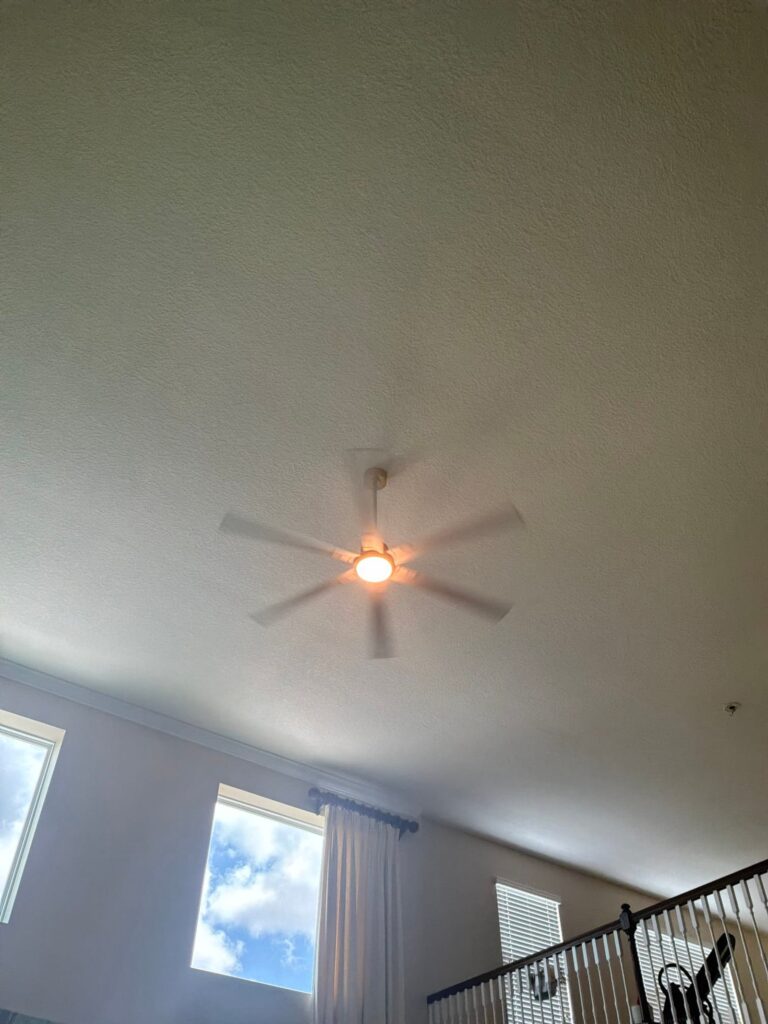
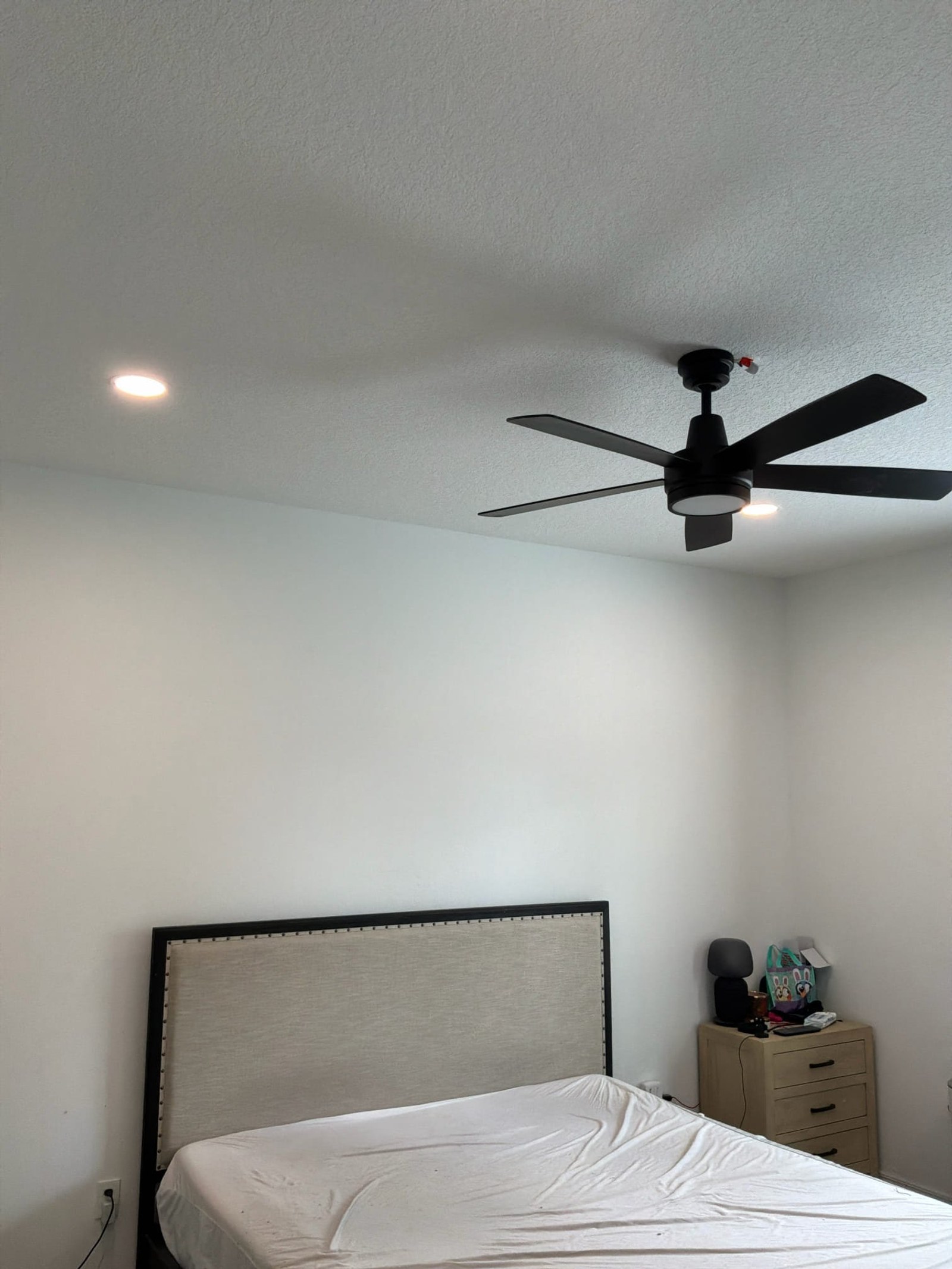
Our crew installed eight 6-inch recessed wafer LED fixtures throughout the home. Power for each fixture was sourced from an existing light switch location or an adjacent fixture, keeping the ceiling work clean and minimizing the need for new circuit runs. A Pass & Seymour three-gang old-work box was installed to accommodate the updated switch arrangement at the wall. Additionally, approximately 60 feet of CAT6 1Gbps / 250MHz cable was run through a concealed area to support a low-voltage connection, completing the low-voltage portion of the project.
Why Pricing Can Vary
Two homes with the same job on the invoice can land at different totals. On projects like this one, the total is driven by:
- Number of fixtures and the layout
- Ceiling type, insulation contact and attic access
- New circuit or switching versus reuse of an existing one
- Fixture and trim selection
- Dimmers and smart controls
- Patch and paint after cutting the ceiling
Why This Winter Garden Lighting Installation Matters for Homeowners
Recessed wafer LED fixtures are a meaningful upgrade for everyday living. They sit flush with the ceiling, distribute light more evenly across a room, and draw significantly less energy than older bulb-style fixtures. For a family spending evenings in the living room or mornings getting ready in a well-lit hallway, that kind of consistent, quiet illumination makes the whole home feel more comfortable and modern.
The CAT6 run adds something less visible but equally useful. A wired gigabit connection in a concealed pathway means faster, more reliable internet where the household needs it most, whether that is a home office, a media room, or a bedroom used for schoolwork. Wireless is convenient, but a hardwired connection offers stability that Wi-Fi simply cannot match.
The inspection findings noted above are not urgent concerns. Most of them reflect conditions common in homes of this era, perfectly normal for when the home was built, and each one represents a straightforward path toward a more reliable, code-current electrical system. Addressing items like AFCI protection, surge protection at the panel, and tamper-resistant outlets over time gives the household steady, incremental peace of mind. When everything is up to current standards, the family can go about their routines, mornings, weekends, storm seasons, without giving the electrical system a second thought. That is exactly the goal.
For more information on electrical safety standards, visit the Electrical Safety Foundation International or review the NEC code standards published by NFPA. Thomas Edison Electric holds Florida electrical contractor license EC13015487.
“Very professional and extremely great work. I already have future projects that I plan to run through with these guys.”
Code Compliance Cited in This Job
Every fix above maps to a specific section of NEC 2020. Each card links to NFPA’s public NEC index.
AFCI Protection
NEC 210.12 requires arc-fault circuit-interrupter protection on branch circuits supplying outlets in dwelling unit bedrooms, kitchens, living rooms, and similar areas. The inspection noted that AFCI protection was not yet present on applicable circuits in this Winter Garden home. Adding AFCI breakers to those circuits is a clear, direct path to bringing the panel in line with current standards. NFPA reference ›
Surge Protective Device at Service
NEC 230.67 requires a listed surge protective device at the service entrance of a dwelling unit. The inspection confirmed no whole-home surge protection was currently installed at the 100-amp GE panel. Installing a panel-mounted SPD would give the household’s appliances, electronics, and HVAC equipment a first line of defense against voltage spikes. NFPA reference ›
Circuit Directory Labeling
NEC 408.4 requires that every circuit in a panelboard be legibly identified as to its purpose or the area it serves. The panel directory in this home was not fully labeled at the time of inspection. A complete, accurate directory makes future service work faster and more straightforward for any electrician who opens the panel. NFPA reference ›
Tamper-Resistant Receptacles
NEC 406.12 requires tamper-resistant receptacles throughout dwelling units. The outlets observed in this Winter Garden home predate that requirement, which is entirely consistent with homes wired under an earlier code cycle. Replacing them over time with listed tamper-resistant devices brings the home fully in line with current standards. NFPA reference ›
GFCI Protection
NEC 210.8 requires GFCI protection at receptacles in kitchens, bathrooms, garages, outdoor locations, and other specified areas of a dwelling. The inspection flagged GFCI coverage as an area for review in this home. Confirming and completing GFCI protection in those locations is a straightforward step toward code-current reliability. NFPA reference ›
Common Questions
Questions homeowners ask after seeing this kind of work.
What are recessed wafer LED fixtures and how are they different from standard recessed cans?
Recessed wafer LED fixtures are ultra-thin units that sit almost entirely above the ceiling surface, with no deep housing required inside the ceiling cavity. Unlike traditional recessed cans, they need very little ceiling depth and can be installed in tight spaces or directly against insulation-rated assemblies. They use integrated LED arrays that are energy-efficient and long-lasting. If you are considering a similar upgrade for your home, our team can walk you through options that fit your ceiling type. Schedule online to get started.
Can a recessed lighting installation be powered from an existing switch without running a new circuit?
In many cases, yes. Our crew sources power from an existing switch location or an adjacent fixture, which keeps the project clean and avoids the disruption of pulling entirely new circuits. The feasibility depends on the load capacity of the existing circuit and the number of fixtures being added. Our licensed electricians evaluate that during the visit before any work begins. Book a consultation online if you want an honest assessment for your home.
Why would an electrician run a CAT6 cable as part of a lighting project?
Lighting projects often involve opening ceiling and wall cavities that would otherwise require separate, more invasive work to access for low-voltage wiring. Combining a CAT6 run with a lighting installation makes efficient use of that open access and saves the homeowner from a second round of disruption later. A wired gigabit connection delivers faster, more stable internet than Wi-Fi in spots where reliability really matters. If you want to bundle a low-voltage run with another electrical project, schedule online and we can plan both at once.
How often should a homeowner have their electrical system inspected?
A yearly inspection is a solid baseline for most households. Homes built before 1990 and homes that have come through recent storms may benefit from inspections more frequently, since older wiring systems and weather exposure can introduce conditions worth monitoring. An annual visit lets a licensed electrician catch small items before they grow into larger ones. Schedule your yearly inspection online and we will take care of the rest.
What is AFCI protection and why was it noted during this inspection?
AFCI stands for arc-fault circuit interrupter. These are breakers designed to detect the kind of unintended electrical arcing that can occur in aging wiring, damaged cords, or loose connections, conditions that older breakers were never designed to respond to. NEC 210.12 now requires AFCI protection on branch circuits in living areas, bedrooms, and kitchens of dwelling units. The 100-amp GE panel in this Winter Garden home did not yet have AFCI breakers installed, which is common for panels of its generation. Adding them is a straightforward upgrade that gives the household an extra layer of reliability. Schedule online to discuss an AFCI upgrade for your home.
Electrician and Technical Reviewer
Work performed by Marc, Thomas Edison Electric field electrician serving Orlando.
Marc, the electrician on this job, is the technical reviewer of record for this case study.
Location
This project was completed in Winter Garden, Florida, in our Ocoee service area. See our electrical services in Winter Garden.