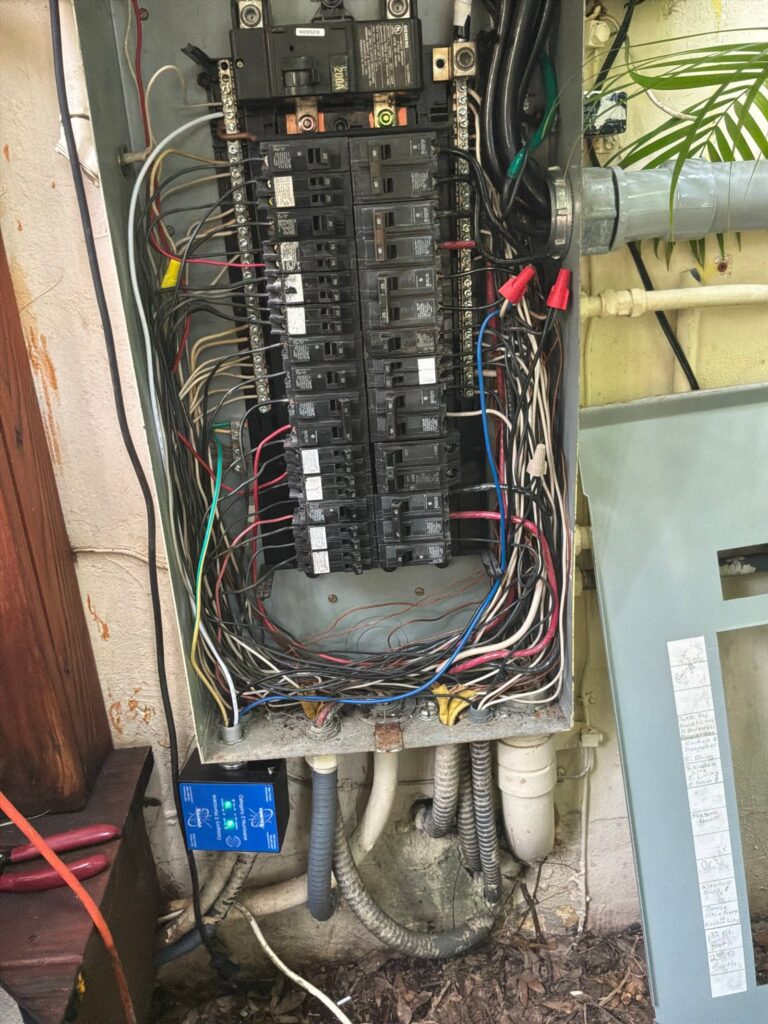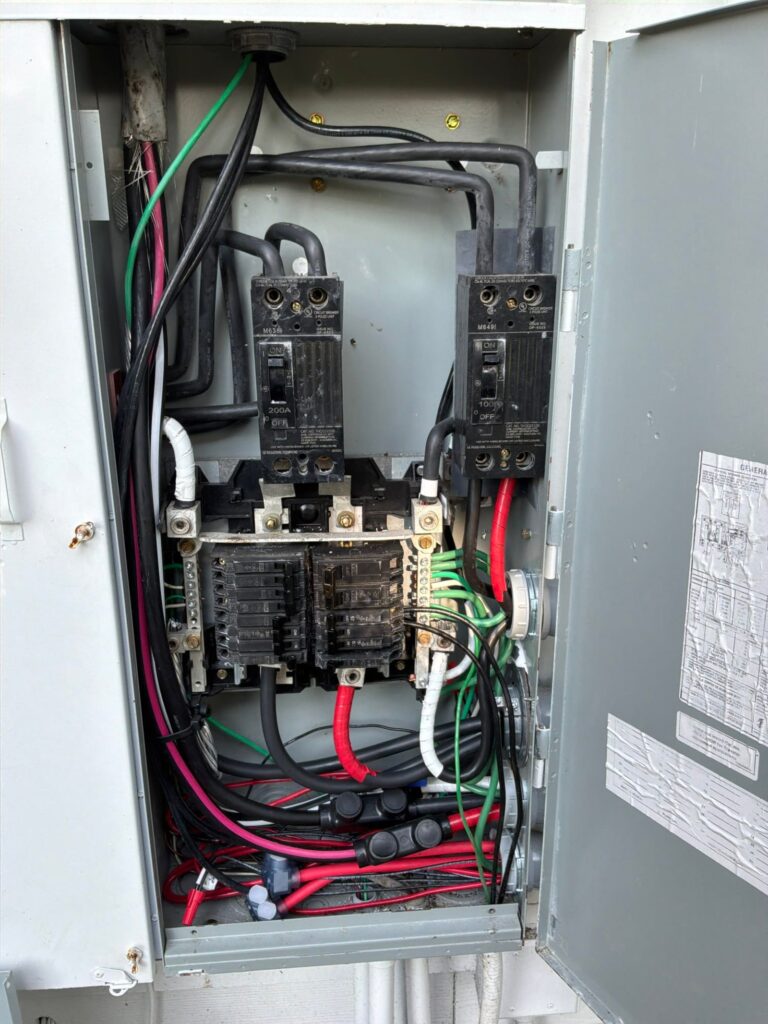
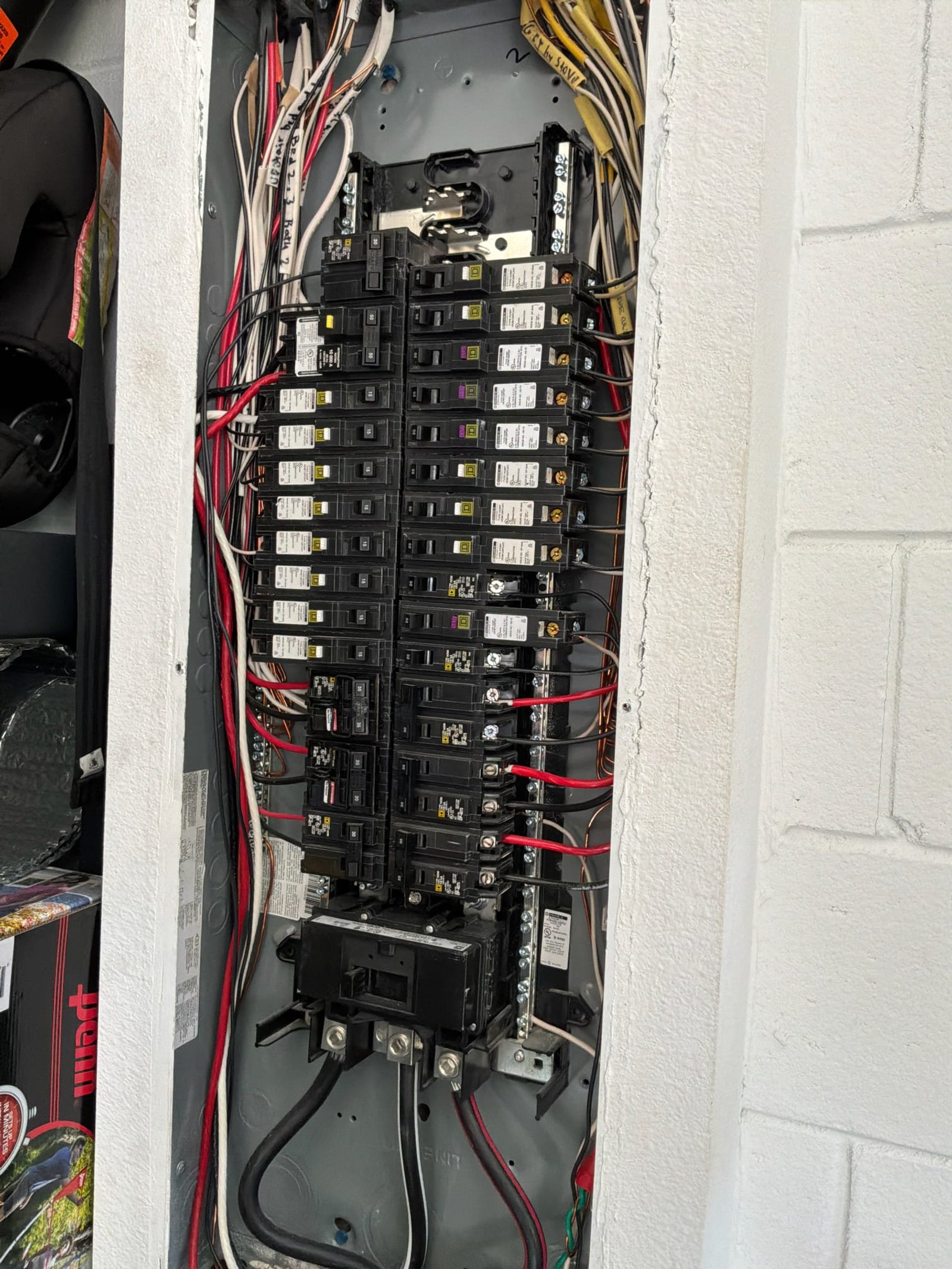
This Winter Garden electrical inspection case study walks through the real diagnosis, the fix, and the code details from a recent service call. A homeowner in Winter Garden, FL wanted two things: a wired network that could keep up with a new fiber internet connection, and recessed lighting in every bedroom. Our field team handled both, and a thorough on-site inspection turned up several opportunities to bring the home’s electrical system closer to current standards along the way.
The Problem
The household had recently switched to fiber internet service, and the existing network wiring no longer matched the speeds the new connection could deliver. At the same time, the family wanted better, more even lighting in five bedrooms. Each room was planned for four recessed fixtures.
“We just upgraded to fiber and the old setup can’t keep up. We’d also love to talk about recessed lights in the bedrooms, four per room if we can.”
That combination, structured data cabling plus a lighting upgrade, made this a natural moment to look at the whole system.
Investigation
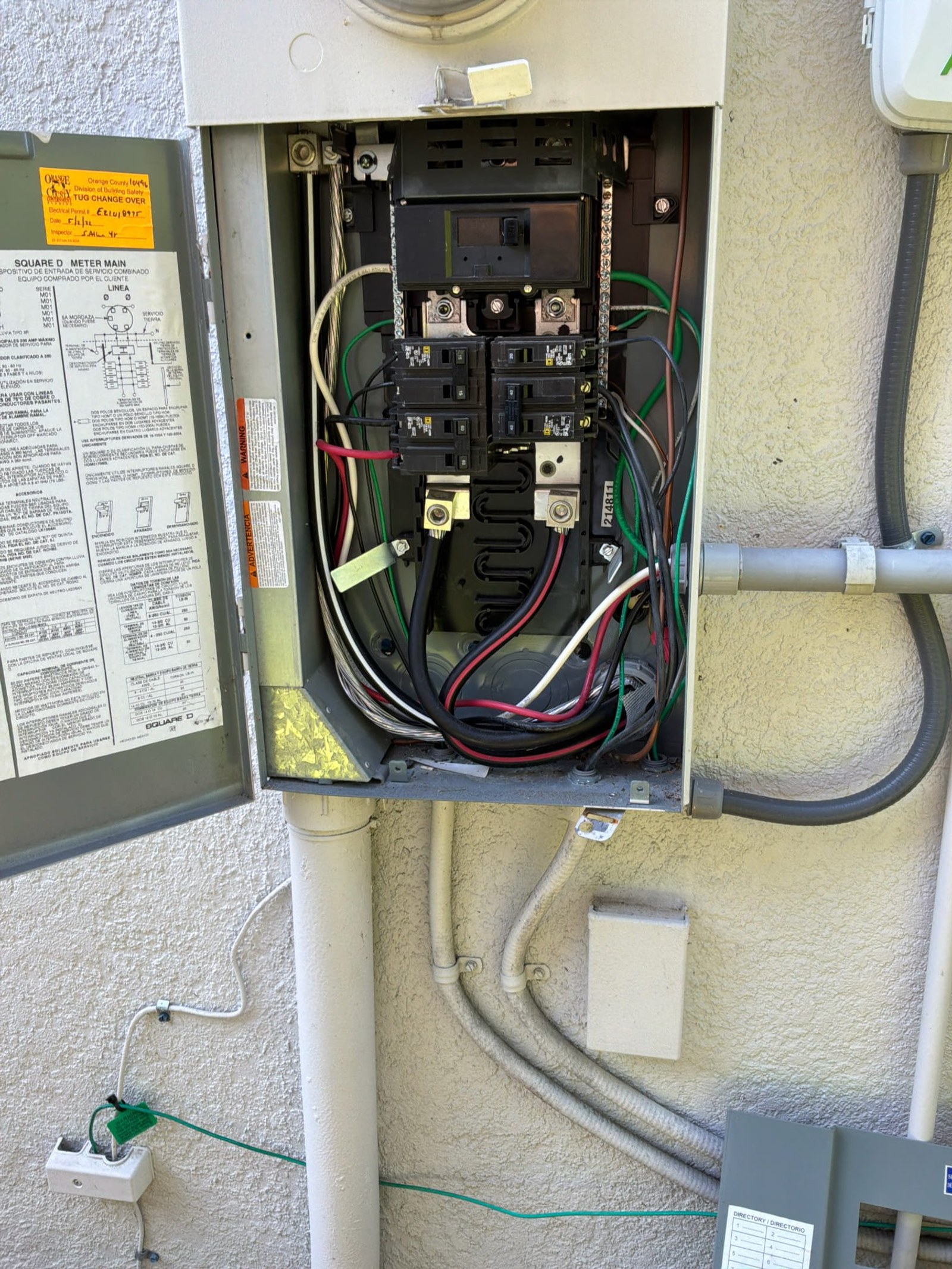
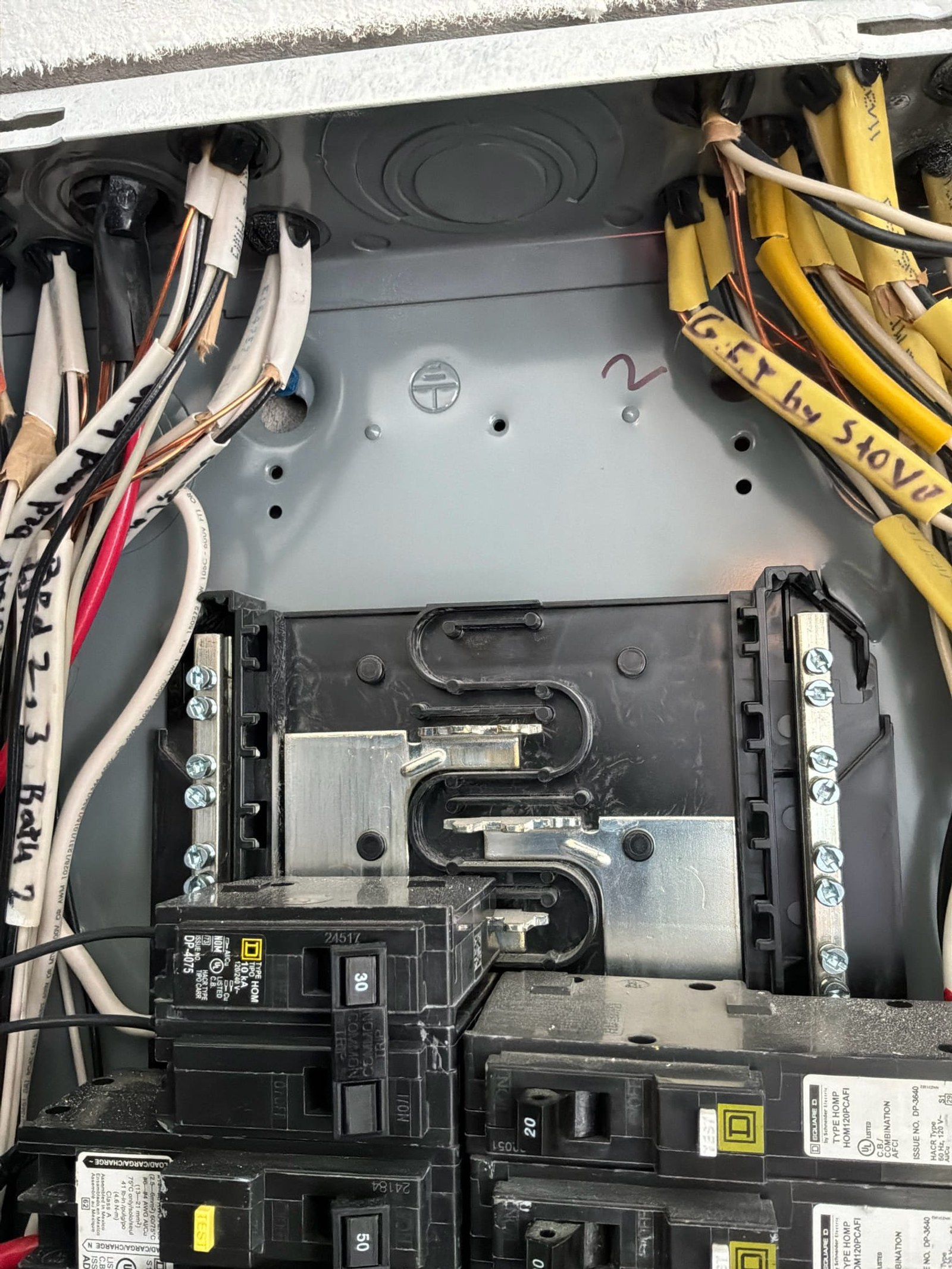
Our crew reviewed the panel and the broader electrical system before any new work began. The panel is a 200-amp Siemens service, which gives the home plenty of capacity for the planned additions.
However, the inspection photos told a more detailed story. The interior of the meter main enclosure showed corrosion on the terminations and on the enclosure walls itself, along with evidence of water finding its way inside. Corrosion on lugs and conductors raises contact resistance over time, which is worth addressing to keep connections reliable. Water intrusion into an enclosure is a condition that current standards ask to be resolved, both to protect the equipment and to keep the system performing the way the family expects it to.
Panel Labeling and Circuit Identification
The panel directory was not labeled in a way that matched the actual circuits. NEC 408.4 requires circuit identification so that any licensed electrician, or a homeowner in an urgent moment, can quickly locate the right breaker. Updating the directory is a straightforward task that adds real practical value.
Grounding System
The inspection flagged the grounding system as not meeting current code. The grounding electrode system and the outlet grounding were both noted as areas for improvement. A properly functioning grounding system supports the whole electrical system, including surge protection if it is added later.
Additional Observations
Several other items came back as concerns worth discussing with the homeowner. These included some outlets that appeared backstabbed rather than screw-terminated, some voltage drop at receptacles, attic-fan switches that lacked a proper disconnect or thermostat, a few open splices, and the absence of whole-home surge protection. AFCI protection was also partially in place but not complete throughout the home. None of these findings are unusual for a home of this vintage. They simply reflect where current NEC standards have moved since the home was originally wired, and they give the homeowner a clear picture of where modernization could add comfort and reliability.
What We Fixed
The primary scope the homeowner requested was completed: Cat6 cabling was run throughout the home to support the new fiber connection, with drops placed to serve the household’s data needs. In five bedrooms, four recessed fixtures per room were installed, giving each space clean, even illumination that feels noticeably more modern than what was there before.
During the same visit, our team documented the inspection findings in detail so the homeowner has a full record of the system’s current condition. Items such as the grounding system, panel labeling, corrosion remediation, and surge protection are all actionable next steps that can be scheduled when the family is ready.
Why This Winter Garden Electrical Inspection Matters for Homeowners
Structured cabling is one of those upgrades that quietly changes daily life. Cat6 handles the bandwidth that fiber internet delivers, so streaming, video calls, gaming, and smart-home devices all perform the way the household expects. Running cable during a lighting project is efficient: much of the same access that makes lighting installation possible also makes data cabling cleaner and faster to complete.
Recessed lighting in the bedrooms gives the family a space that feels finished and comfortable. Four fixtures per room provides even coverage without harsh shadows, and it pairs well with dimmer switches if the household wants to add them later.
On the inspection side, the findings from this visit give the homeowner a clear, prioritized list of what the system needs. Knowing about the grounding system, the corrosion in the enclosure, and the labeling gaps means the family can plan ahead. Nothing here requires panic. Instead, it provides a roadmap so the home keeps running smoothly, through every storm season and every year of normal use, without the household having to wonder what is happening inside the walls. Peace of mind like that is worth more than most people realize until they have it.
For more on electrical safety education and what current standards cover, the Electrical Safety Foundation International is a reliable, independent resource. NEC standards are published and maintained by NFPA.
Code Compliance Cited in This Job
Every fix above maps to a specific section of NEC 2020. Each card links to NFPA’s public NEC index.
Circuit Directory / Circuit Identification
NEC 408.4 requires every circuit in a panelboard to be legibly identified as to its purpose or equipment served. On this job, the panel directory did not clearly match the installed circuits. Updating the labeling means anyone in the home can locate the correct breaker quickly, which supports both daily convenience and reliable service calls. NFPA reference ›
Grounding Electrode System
NEC 250.50 establishes the requirements for a complete grounding electrode system at every service. The inspection flagged the grounding system as not meeting current code. A complete grounding electrode system supports the stability of the whole electrical installation and provides the foundation for any surge protection added in the future. NFPA reference ›
Surge Protection at the Service
NEC 230.67 requires a surge protective device at the service of new and replacement services for dwelling units. This home currently lacks whole-home surge protection. Adding a listed SPD at the Siemens 200-amp service would protect appliances, electronics, and network equipment from transient voltage events common in Central Florida’s storm season. NFPA reference ›
Arc-Fault Circuit-Interrupter Protection
NEC 210.12 requires AFCI protection on branch circuits that serve dwelling-unit living spaces, including bedrooms, kitchens, and common areas. The inspection found AFCI protection to be only partially in place. The five new bedroom circuits installed for recessed lighting present a natural opportunity to bring those circuits into full compliance with current AFCI requirements. NFPA reference ›
Replacement Receptacle Requirements
NEC 406.4(D) states that replacement receptacles must meet current code requirements, including tamper resistance and proper grounding. The inspection noted some outlets that were backstabbed and some that were not properly grounded. When those receptacles are replaced as part of a future modernization visit, screw-terminal connections and proper grounding will restore reliable, code-compliant contact at each location. NFPA reference ›
Common Questions
Questions homeowners ask after seeing this kind of work.
Is Cat6 cabling worth installing if I already have Wi-Fi throughout my home?
Wi-Fi is convenient, but a wired Cat6 connection delivers faster, more consistent speeds with far less interference. For fiber internet, a wired connection captures the full bandwidth the service provides, which matters most for video calls, large file transfers, and any device that streams continuously. If you are thinking about upgrading your home network, our team can schedule a walk-through to plan the best cable routes for your layout.
How many recessed lights do I actually need in a bedroom?
A common planning guide suggests one recessed fixture for every 25 square feet of ceiling area, so a standard 12-by-12 bedroom typically works well with four fixtures. Spacing them evenly across the room avoids dark corners and gives you flexibility if you later add dimmer controls. Every room is a little different, so book a lighting consultation and our crew can walk the space with you before any work begins.
What does corrosion inside an electrical panel actually mean for my home?
Corrosion on lugs and conductors increases contact resistance at those connections over time, which can affect how reliably circuits perform. It also suggests moisture has found a path into the enclosure, which is worth addressing so the equipment inside stays in good working condition. It is a condition worth having a licensed electrician evaluate and remediate. Schedule an inspection and we can assess the extent of the corrosion and discuss the best path forward.
How often should I have my home’s electrical system inspected?
Once a year is a solid baseline for most households. Homes built before 1990 and homes that have gone through recent storm seasons often benefit from inspections more frequently, since older wiring and weather-related stress can create conditions that develop gradually. An annual check gives you a current picture of the system so nothing catches the household off guard. Book your yearly inspection and our licensed team will document everything they find.
Why is whole-home surge protection recommended even if I already use power strips?
Point-of-use power strips protect the devices plugged directly into them, but they do nothing for hard-wired appliances like your HVAC system, water heater, or refrigerator. A whole-home surge protective device installed at the service panel covers every circuit in the house, including those hard-wired loads. In Central Florida, where lightning is common through much of the year, that layer of protection keeps appliances and electronics running through whatever the weather brings. Schedule online to ask about adding surge protection at your panel.
Want to see more real jobs like this one? Browse our completed case studies or explore our services.