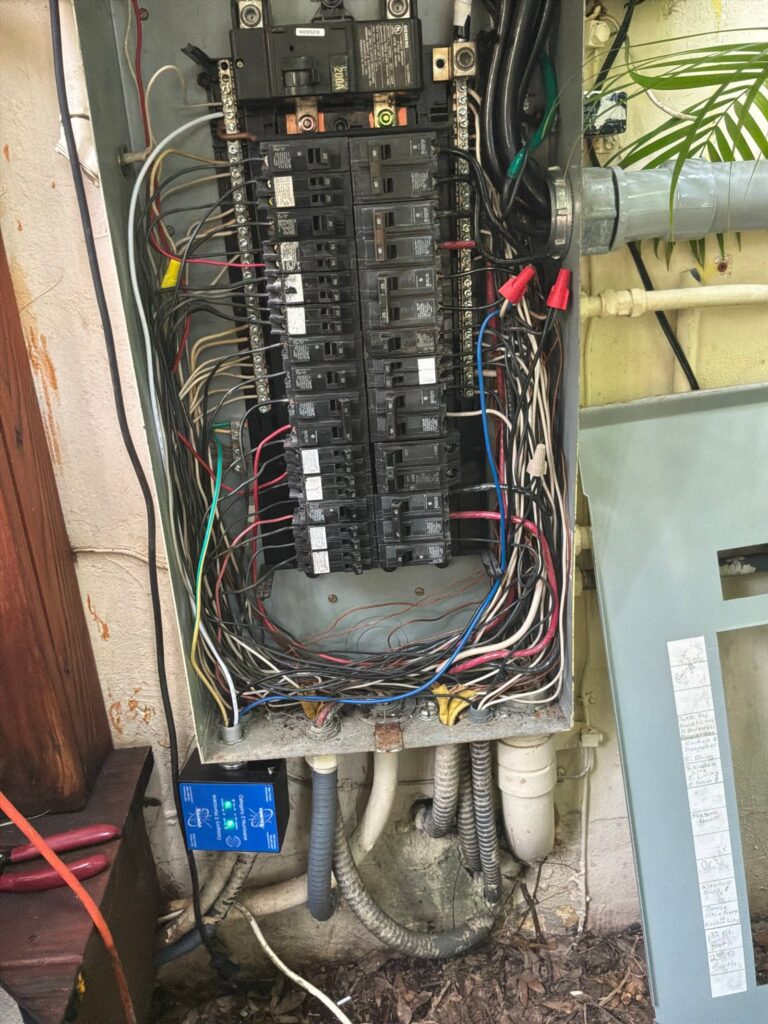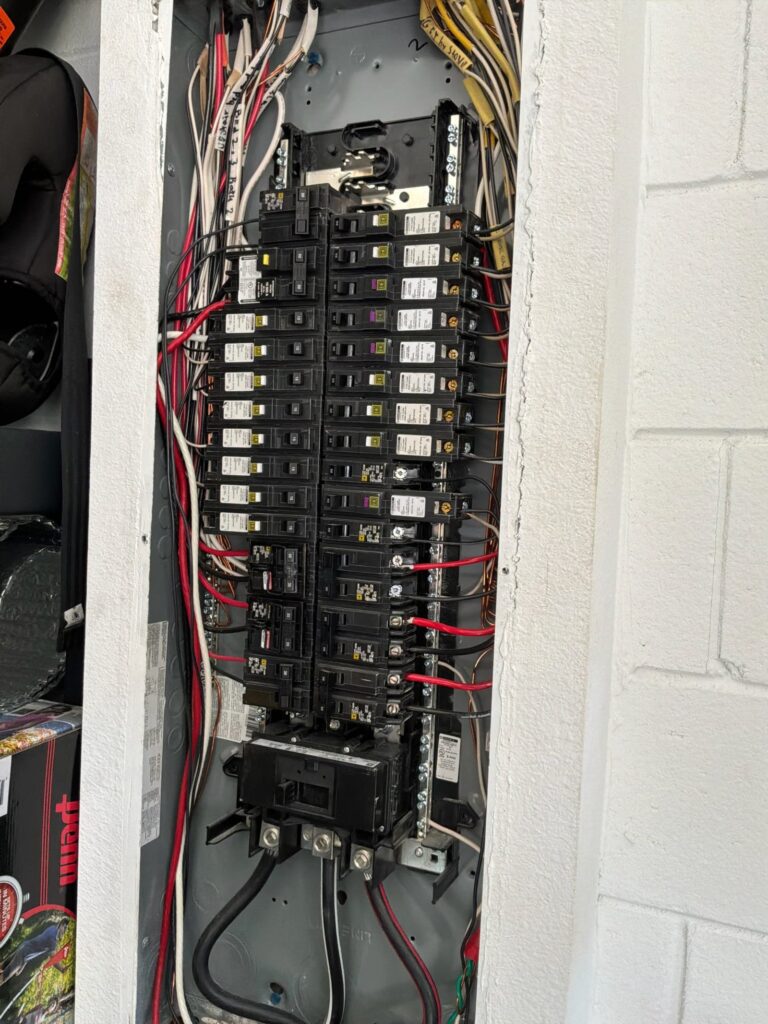
This Sanford generator fuel code case study walks through the real diagnosis, the fix, and the code details from a recent service call. A homeowner in Sanford, FL called us about a diesel standby generator throwing a low-fuel code even though the tank appeared to have plenty of fuel. Our field team visited the property, walked through the generator system, and documented what they found in the engine compartment and at the associated electrical enclosure.
The Problem
The homeowner noticed the generator’s control panel was displaying a low-fuel warning on a consistent basis. Fuel levels, however, looked fine by his read.
“The unit keeps showing a low-fuel code, but there’s plenty of fuel in it. I need someone to check it out.”
That kind of mismatch between a sensor reading and actual tank conditions is worth a close look. It can point to a few different areas: the fuel sender, the wiring between the sender and the control panel, or a setting within the controller itself.
Investigation
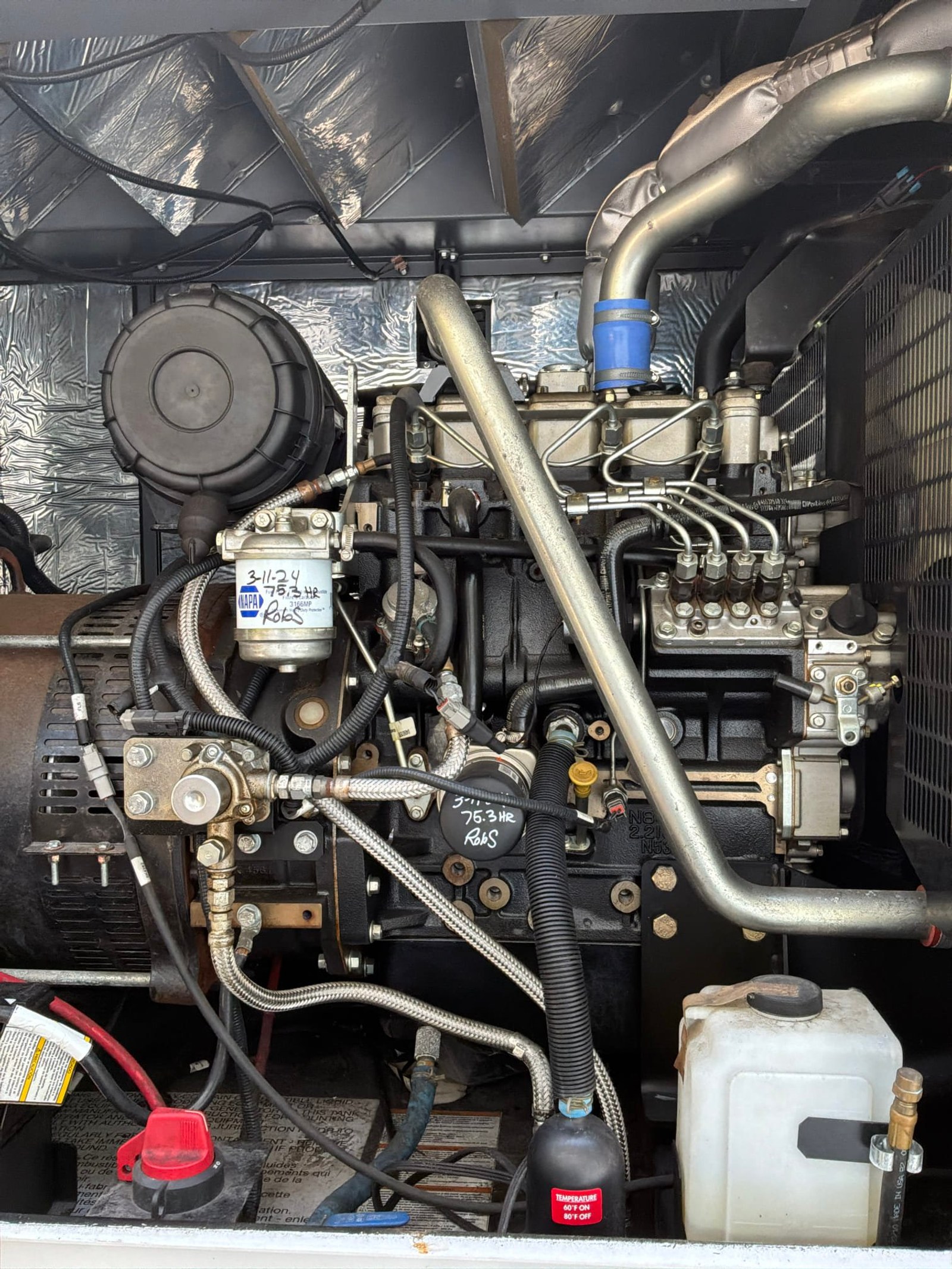
Our field team conducted a walkthrough of the diesel generator and the surrounding electrical equipment. The engine compartment showed the diesel engine, exhaust pipe, fuel line, and control panel clearly. The control panel displayed the active fault code, consistent with what the homeowner described.
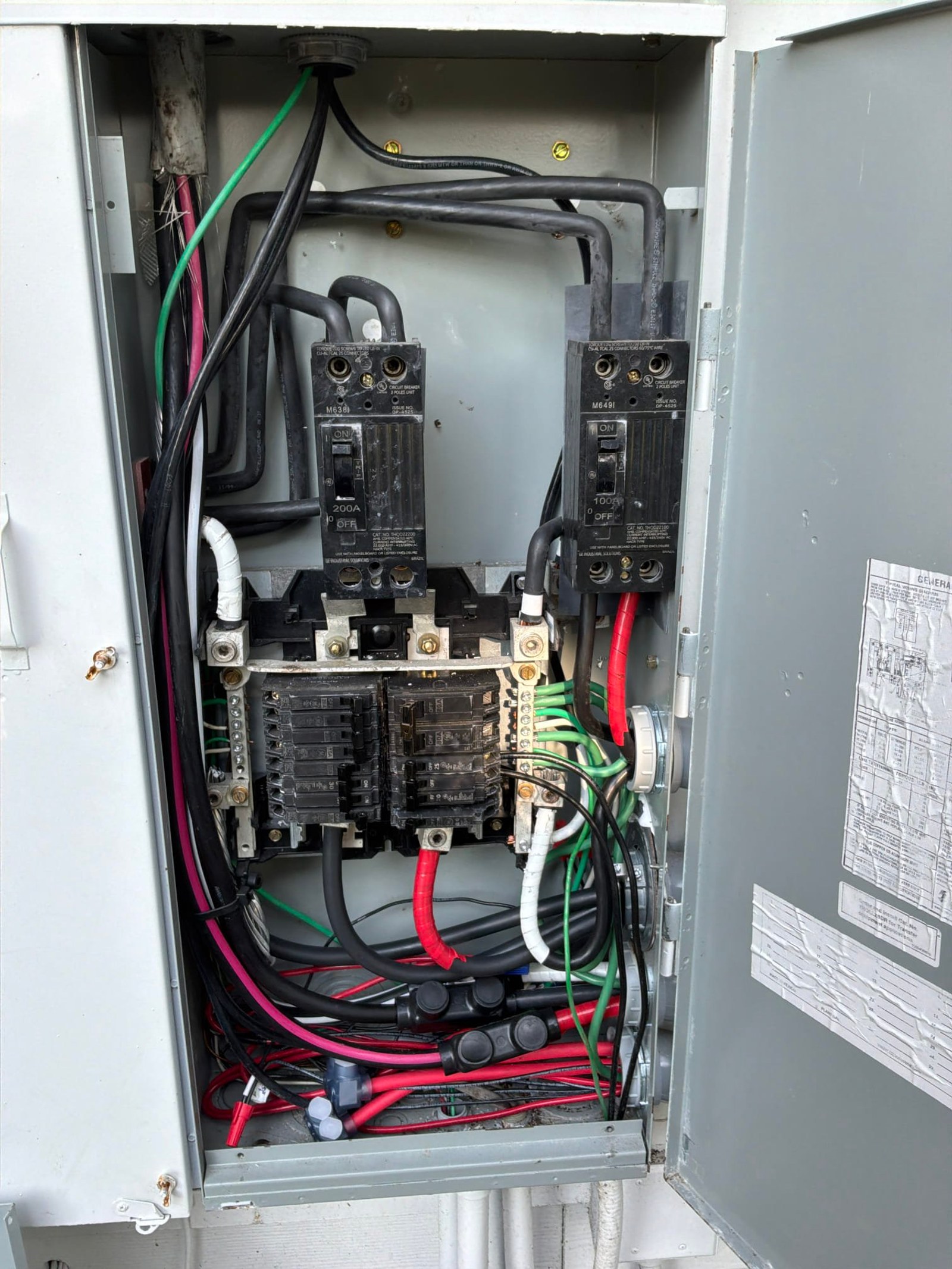
Inside the associated electrical enclosure, the team noted visible corrosion on the terminations and on the enclosure itself. Corrosion at connection points is worth addressing because it increases resistance over time and can affect the accuracy of sensor signals, including the kind of low-level signal a fuel sender sends to a control panel. The enclosure also showed two 200-amp breakers with green and red conductors, along with a nameplate.
The presence of corrosion at terminations is a common finding on equipment exposed to Florida’s humidity over several years. It is an opportunity to clean, treat, and reseal connections so the system reads accurately and operates the way it was designed to.
What We Fixed
This visit was an estimate and walkthrough. Our team documented the generator’s fuel system configuration, the active fault code on the control panel, and the condition of the electrical enclosure. The corrosion at the terminations and the enclosure condition were noted for follow-up. No repair work was performed during this visit. The homeowner now has a clear picture of what the system looks like and what a service call would address.
Why This Sanford Panel Upgrade Matters for Homeowners
Standby generators give a household something genuinely valuable: the ability to keep going when the grid does not. In Central Florida, where summer storm seasons can bring multi-day outages, a diesel generator is one of the more reliable ways to keep the AC running, the refrigerator cold, and the family comfortable while neighbors wait for utility crews.
However, that reliability depends on the generator’s control system reading its own sensors accurately. A false low-fuel alarm might seem like a minor nuisance, but it can cause the unit to shut down unnecessarily or prevent it from starting at exactly the moment the household needs it. Corrosion at the terminations, as observed on this unit, is the kind of condition that quietly degrades signal accuracy over time. Catching it during a calm-weather walkthrough means the fix happens on the family’s schedule, not in the middle of a storm.
For households counting on a standby generator, a yearly walkthrough is a straightforward way to keep the system dialed in. Our team can clean corroded connections, verify sensor wiring, and confirm the control panel is reading accurately, so when the power goes out, the generator does exactly what it is supposed to do.
Code Compliance Cited in This Job
Every fix above maps to a specific section of NEC 2020. Each card links to NFPA’s public NEC index.
Electrical Connections
NEC 110.14(B) requires that splices and terminations be made using listed devices with conductors sized and prepared correctly. On this job, corrosion observed at the terminations and enclosure is consistent with moisture exposure over time, and proper cleaning or replacement of affected connections supports the reliable signal continuity this section is intended to preserve. NFPA reference ›
Grounding Electrodes
Standby generator installations require a proper grounding electrode system at the generator’s transfer equipment. Corrosion on enclosure metalwork can compromise grounding continuity at bonding points, making it worth inspecting the grounding electrode connections as part of any follow-up service on this unit. NFPA reference ›
Common Questions
Questions homeowners ask after seeing this kind of work.
Why would a diesel generator show a low-fuel code when the tank has plenty of fuel?
The most common causes are a faulty fuel level sender, corroded wiring between the sender and the control panel, or a calibration issue in the controller itself. Corrosion at connection points increases resistance, which can cause the control panel to misread a sensor signal as a low-fuel condition even when the tank is full. A technician can trace the signal path and identify where the reading is going wrong. If this sounds like what you are seeing, schedule a diagnostic visit so the team can document the exact cause.
How does corrosion on generator enclosure terminations affect performance?
Corrosion builds resistance at connection points over time. For a control circuit carrying low-voltage sensor signals, even a small increase in resistance can shift a reading enough to trigger a false fault code. Cleaning or replacing affected terminations restores the low-resistance path those signals depend on. If your generator has been running in Florida humidity for several years, it is worth having a licensed electrician take a look before the next storm season.
How often should I have my standby generator inspected?
A yearly inspection is a solid baseline for most standby generator owners. Homes in Central Florida, where humidity accelerates corrosion and storm seasons can stress the equipment, may benefit from a quick check before and after hurricane season as well. An annual walkthrough covers the fuel system, control panel, transfer equipment, and enclosure condition so small issues get caught early. Schedule your yearly generator inspection to keep your system ready when you need it.
What is typically checked during a generator estimate and walkthrough?
During a walkthrough, a technician reviews the engine compartment components, fuel line condition, control panel fault codes, and the associated electrical enclosure including breakers, conductors, and termination points. The goal is to build a clear picture of the system’s current condition so the homeowner knows exactly what a follow-up service call will address. Book a walkthrough online to get started.
Can a standby generator run reliably after its enclosure develops corrosion?
Often yes, in the short term, but corrosion is a condition worth addressing before it progresses to the point of affecting performance or accurate fault reporting. Treating corroded terminations and resealing the enclosure early is far simpler than troubleshooting control-system errors caused by degraded connections down the road. Schedule an inspection and our team can assess the extent of the corrosion and recommend the right next step.
Want to see more real jobs like this one? Browse our completed case studies, explore our services. Ready to book a visit of your own? Contact our Lake Mary office.