This Orlando panel upgrade case study walks through the real diagnosis, the fix, and the code details from a recent service call. A homeowner in Orlando, FL (32808) reached out about replacing an aging sub-panel that was well past its prime. Our field team found corrosion, moisture intrusion, and leftover wiring from earlier work inside the enclosure. The solution was a permit-backed installation of a new Siemens 30-space, 100-amp main lug sub-panel with a full complement of properly sized breakers.
Customer’s Problem
The homeowner wanted an estimate to replace their existing breaker panel. They were looking for a reliable upgrade that would give their home a solid electrical foundation and remove any uncertainty about the condition of the current equipment.
What Our Electrician Found
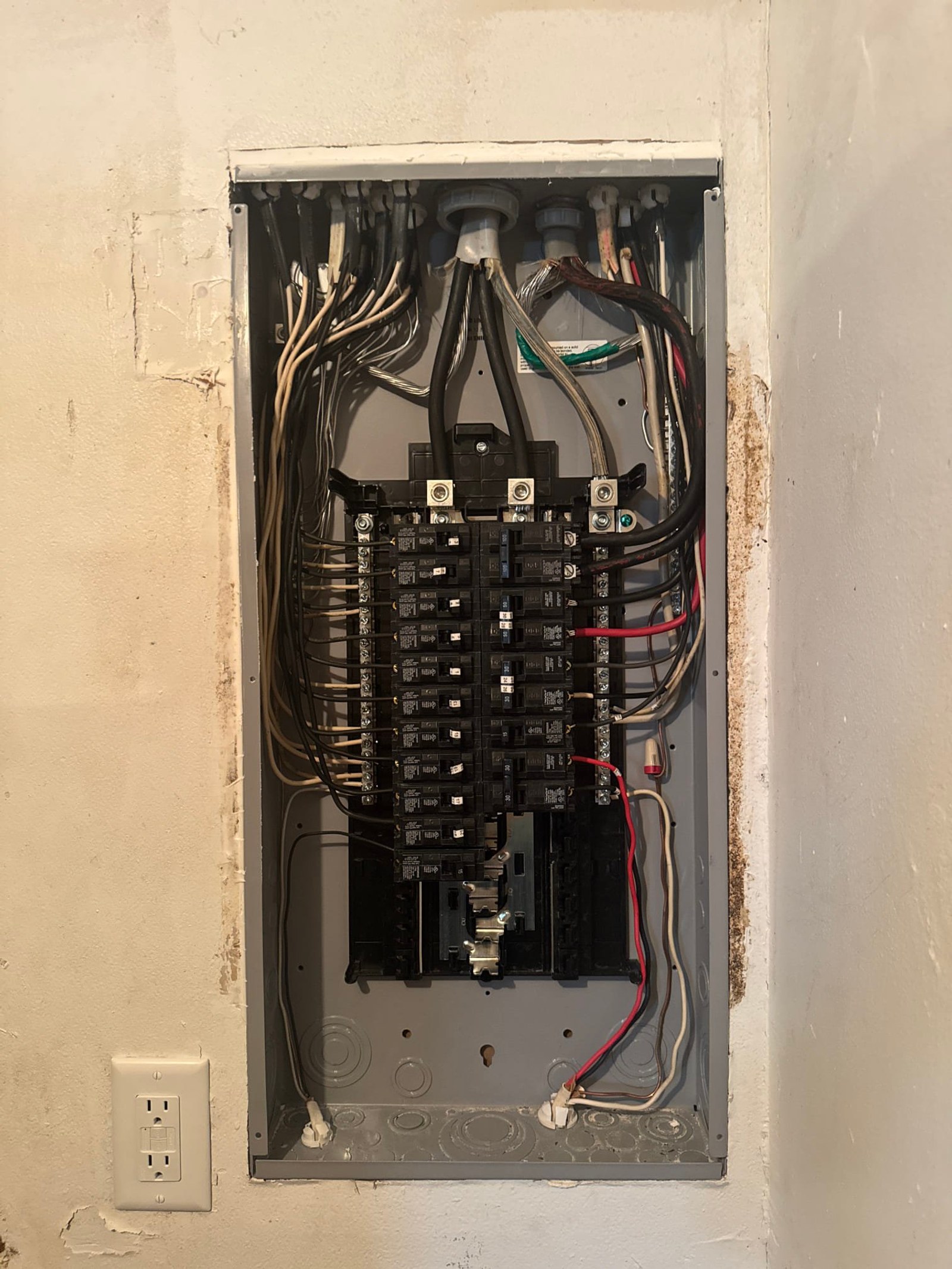
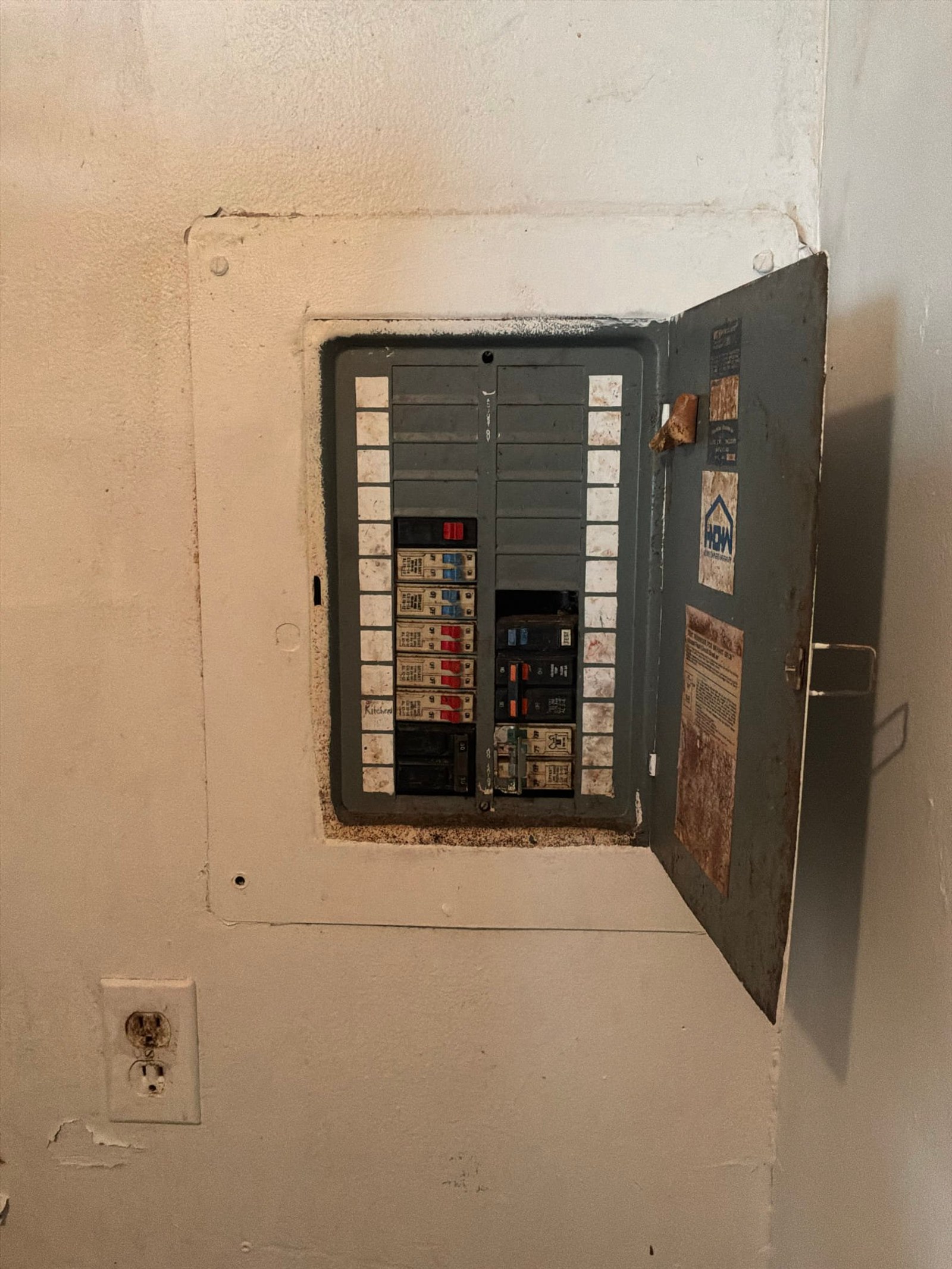
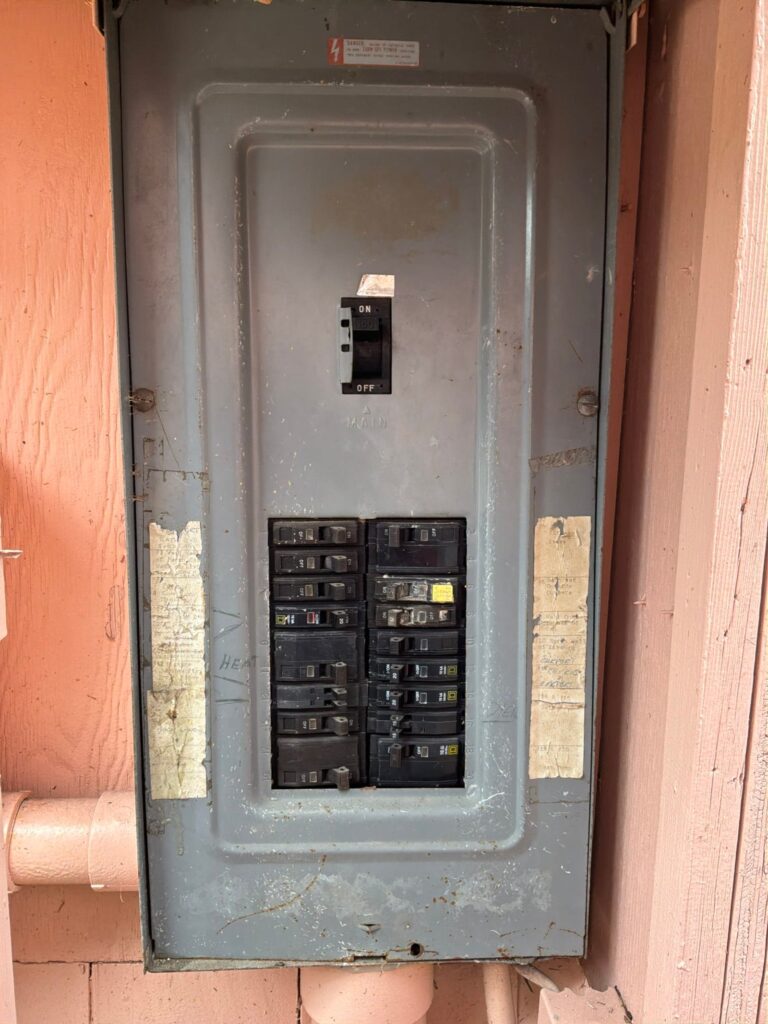
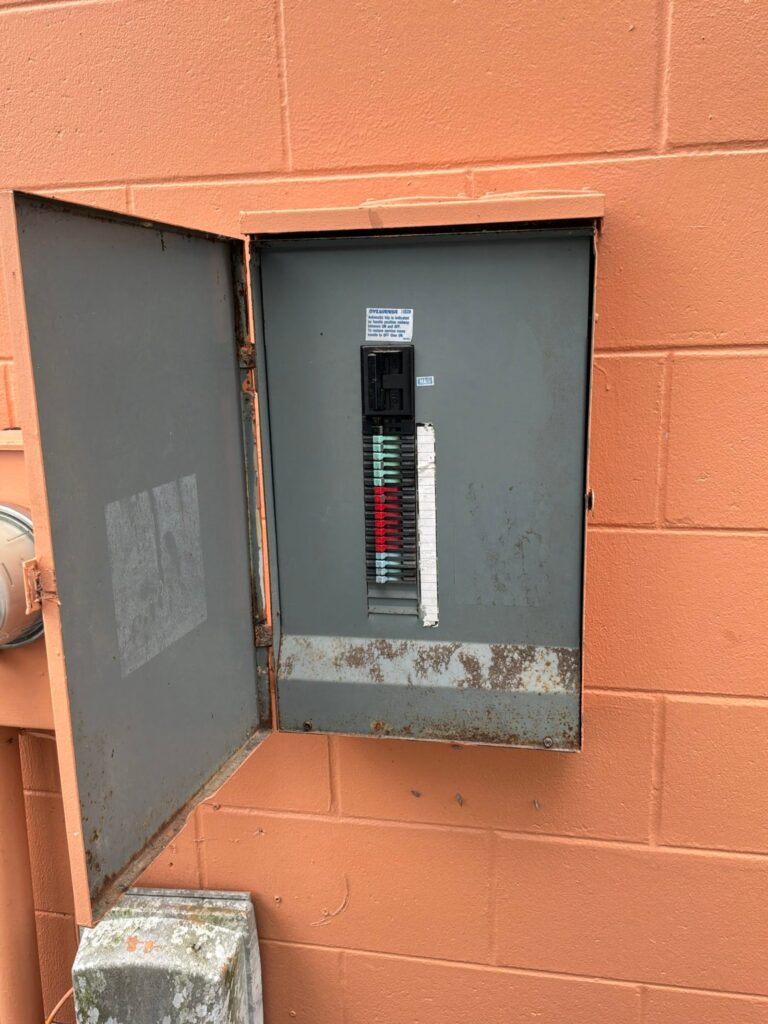
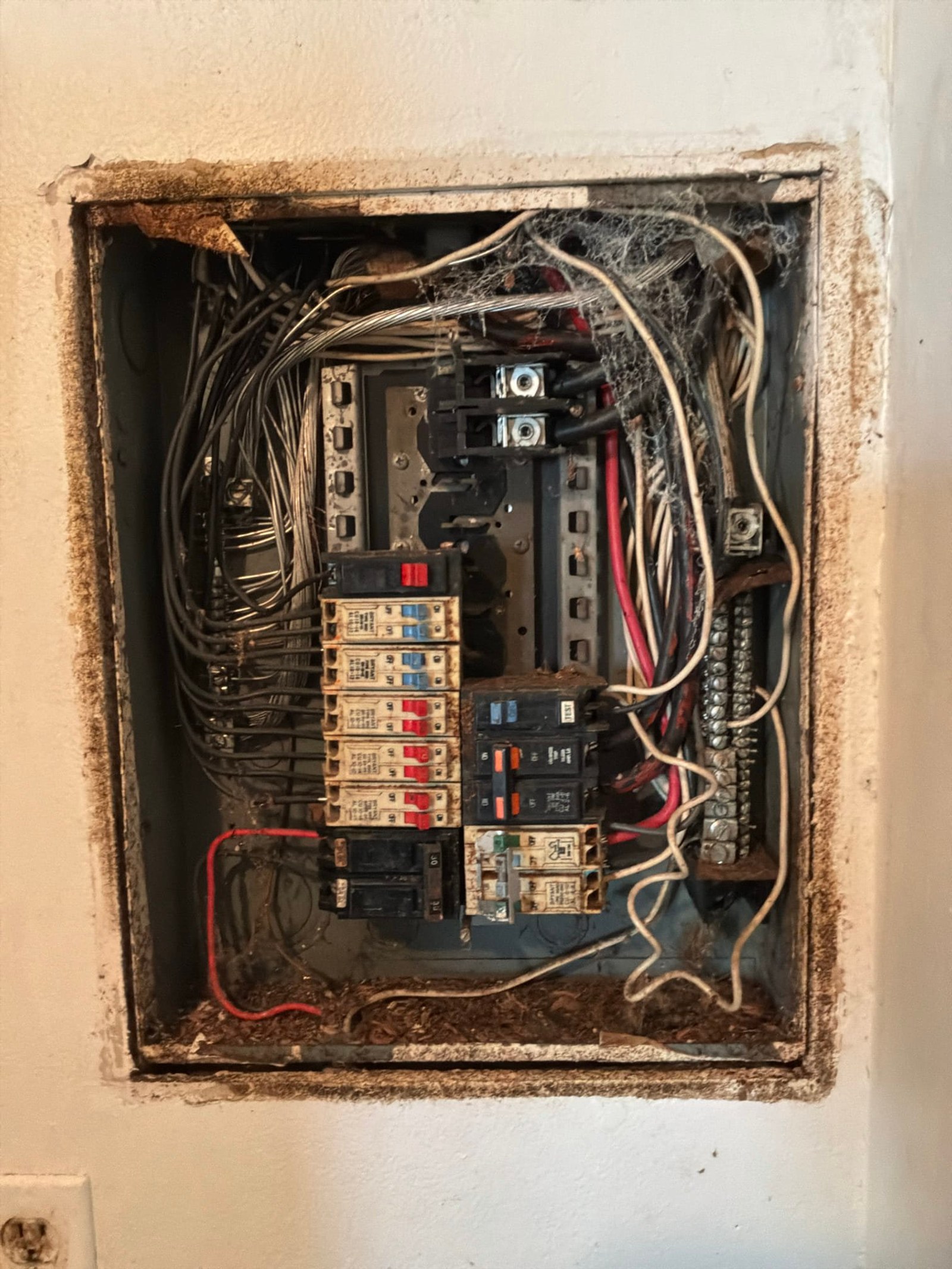
The before photos tell a clear story. The existing enclosure showed visible corrosion on the terminations and throughout the interior metal surfaces. Rust had worked its way across both the door and the frame, and oxidation had reached the point where paint had been applied directly over some of the devices, which is a condition worth addressing during any panel replacement.
Moreover, there was clear evidence of water finding its way into the enclosure over time. Moisture and electrical panels are a poor combination: water accelerates corrosion, degrades insulation, and gradually compromises the reliable operation of breakers and connections. Our team also noted wiring left in place from earlier work inside the enclosure, along with signs of rodent activity. None of these conditions are uncommon in panels of this age and location, but together they made a compelling case for a clean start.
Additionally, the dust and general deterioration visible in the enclosure confirmed this panel had been in service for a long time without a comprehensive refresh.
Solution Selected
The homeowner chose a full sub-panel replacement. Given the visible corrosion, moisture history, and the condition of the existing equipment, starting fresh with a new panel and correctly rated breakers was the most straightforward path to a reliable, code-compliant installation.
Work Performed
Our crew removed the existing sub-panel and installed a new Siemens Type EQ 30-space, 125-amp main lug sub-panel in its place. This panel was populated with the following new Siemens BR-series breakers, each matched to the circuits it serves:
- Two Siemens BR 30-amp 2-pole breakers
- One Siemens BR 50-amp 2-pole breaker (6 AWG rated)
- One Siemens BR 60-amp 2-pole breaker
- Seven Siemens BR Q120 20-amp single-pole breakers
- Five Siemens BR 15-amp single-pole breakers
- Two Siemens BR QF120 20-amp single-pole GFCI breakers
- One Siemens BR QF115 15-amp single-pole GFCI breaker
The project was completed with a permit and passed final inspection, providing an official record that the installation meets current code requirements. The drywall patching, if needed, falls outside this scope and would be a separate trade item.
Why Pricing Can Vary
Two homes with the same job on the invoice can land at different totals. On projects like this one, the total is driven by:
- Service size and whether the main breaker rating changes
- Condition of the existing enclosure, bus bars and breakers
- Grounding and bonding that must be brought up to current code at the same time
- Service entrance conductors and the meter can, when they are part of the scope
- Utility coordination and permit requirements in the jurisdiction
- Surge, AFCI and GFCI protection added during the changeout
- Panel brand and breaker selection
- Accessibility of the panel location and any drywall or masonry work around it
- Code corrections found once the deadfront is off
Why This Orlando Panel Upgrade Matters for Homeowners
Sub-panels are the distribution point for a significant portion of a home’s circuits. When the enclosure corrodes and moisture finds its way inside, breakers can become slow to respond and connections can lose reliability over time. Replacing the panel with a properly sized, cleanly installed unit means every circuit in that group starts from a known, solid baseline. For a family, that translates directly to lights that work consistently, appliances that run without unexpected interruptions, and a morning routine that never has to account for a mysterious tripped breaker.
The GFCI breakers installed on select circuits are worth noting specifically. Under NEC 210.8, certain locations in a home require GFCI protection at the breaker or the outlet. Building that protection directly into the panel at the breaker level covers every outlet on those circuits automatically, no hunting for individual GFCI outlets to test and reset.
Furthermore, the permit-and-inspection process is worth appreciating. A permitted installation creates a documented record that sits with the property. Homeowners who sell, refinance, or simply want assurance that the work was reviewed by an independent inspector benefit from having that paperwork in hand. It is the kind of quiet reliability the household can count on for years without giving it a second thought.
Our crew at Thomas Edison Electric carries Florida electrical contractor license EC13015487, which you can verify directly at the Florida Department of Business and Professional Regulation. For general electrical safety education, the Electrical Safety Foundation International is a helpful independent resource.
Code Compliance Cited in This Job
Every fix above maps to a specific section of NEC 2020. Each card links to NFPA’s public NEC index.
GFCI Protection
NEC 210.8 requires GFCI protection for personnel at receptacles in kitchens, bathrooms, garages, outdoor locations, and other specified areas in dwelling units. On this job, Siemens GFCI breakers (QF120 and QF115) were installed at the panel level to provide that protection for the circuits that serve applicable locations. Building the protection into the breaker itself covers every outlet downstream without relying on device-level GFCI outlets. NFPA reference ›
Circuit Directory and Identification
NEC 408.4 requires that each circuit in a panelboard be legibly identified as to its clear, evident purpose. The new Siemens 30-space panel provides a clean directory and properly spaced breaker positions, making it straightforward to label and identify every circuit. This replaces the heavily corroded enclosure where circuit identification had become difficult to read reliably. NFPA reference ›
Unused Openings in Panelboards
NEC 408.7 requires that unused openings in panelboard enclosures be closed. The new Siemens Type EQ panel was populated with breakers sized to the existing circuits, and remaining spaces are covered by the manufacturer’s filler plates, keeping the interior properly enclosed. This is particularly relevant given that the previous enclosure showed signs of open pathways that allowed moisture and rodent intrusion. NFPA reference ›
Electrical Connections
NEC 110.14 covers the proper making of electrical connections, including conductor terminations and the compatibility of materials at terminals. The corroded terminations visible in the pre-installation photos represent the kind of degradation this section addresses. The new Siemens BR-series breakers accept the copper conductors shown in the post-installation photos at their rated terminals, providing clean, reliable connections throughout the new panel. NFPA reference ›
Common Questions
Questions homeowners ask after seeing this kind of work.
What caused the corrosion and moisture damage inside the sub-panel?
In Florida’s climate, sub-panels installed in locations with limited airflow or exposure to humidity can accumulate moisture over time, especially if the enclosure seal degrades or a nearby plumbing or roof issue allows water to migrate. Once moisture gets inside, rust and corrosion can build up gradually on the enclosure, terminals, and breaker contacts. Replacing the panel eliminates years of accumulated wear and gives every circuit a clean starting point. If your home has an older panel in a similar location, our team can take a look and let you know what’s going on. Schedule online to get on the calendar.
Why were GFCI breakers installed in the new sub-panel instead of GFCI outlets?
Both approaches satisfy NEC 210.8, but GFCI protection built into the breaker covers every outlet and hardwired device on that circuit automatically. There is nothing to test or reset at individual outlets because the protection lives at the panel. It is a cleaner installation and useful in situations where outlets may not be easily accessible. If you are unsure which of your circuits have GFCI coverage, a quick panel inspection can clarify it. Book a 30-minute visual inspection so you know exactly where you stand.
Why does a sub-panel replacement require a permit and inspection in Orlando?
Florida’s building code requires a permit for work that involves replacing electrical panels, including sub-panels, because the inspection process gives an independent reviewer the opportunity to confirm the installation meets current code before the panel is put into full service. For homeowners, the permit record is also a useful document when selling or refinancing the property. Thomas Edison Electric handles the permit process as part of the installation. If you have questions about a panel project at your home, schedule online and we will walk you through what to expect.
How often should I have my home’s electrical system inspected?
A yearly inspection is a solid baseline for most homes. Older homes built before 1990 and homes that have come through recent storms may benefit from inspections more frequently, since age and weather stress can affect connections, enclosures, and grounding components in ways that are not always obvious from the outside. Annual check-ins let a licensed electrician catch small changes before they become larger projects. Schedule online to set up your next inspection.
What happens to the old wiring that was left inside the panel from previous work?
Wiring abandoned inside a panel enclosure during earlier work is addressed during a full panel replacement. Our crew removes the old enclosure along with any conductors that no longer serve an active circuit, so the new installation starts clean without unused conductors occupying space inside the new panel. If you have an older panel with a history of added circuits or past modifications, it is worth having a licensed electrician review what is inside. Book an inspection online to find out what your panel looks like today.
Project Photos
Electrician and Technical Reviewer
Work performed by the Thomas Edison Electric field team serving Orlando.
Location
This project was completed in Orlando, Florida, in our Orlando service area.