This Sanford panel upgrade case study walks through the real diagnosis, the fix, and the code details from a recent service call. A homeowner in Sanford, FL scheduled a straightforward bedroom ceiling fan installation. Once our technician opened the electrical panel to confirm the circuits, what they found inside told a different story: corrosion on the terminations and enclosure, evidence of water finding its way into the enclosure, and conductors left in place from earlier work. The homeowner decided to address everything in one visit, and the result was a home that now runs the way a family deserves.
Customer’s Problem
The homeowner wanted a new ceiling fan added to a bedroom. The request was simple and routine. However, a good ceiling fan installation starts with confirming that the panel and branch circuits supporting the room are in solid shape, and that check opened the door to a broader conversation.
What Our Electrician Found
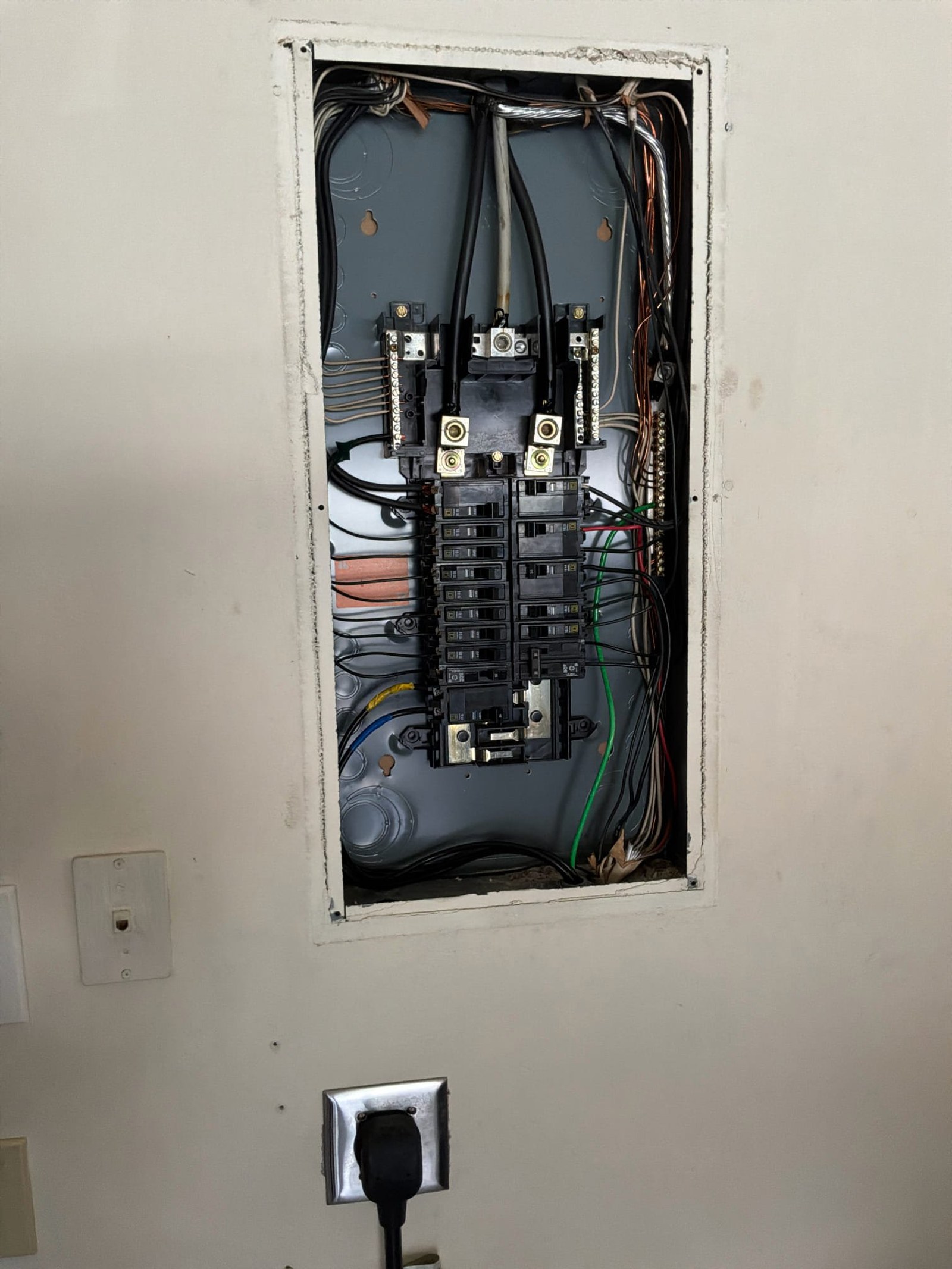
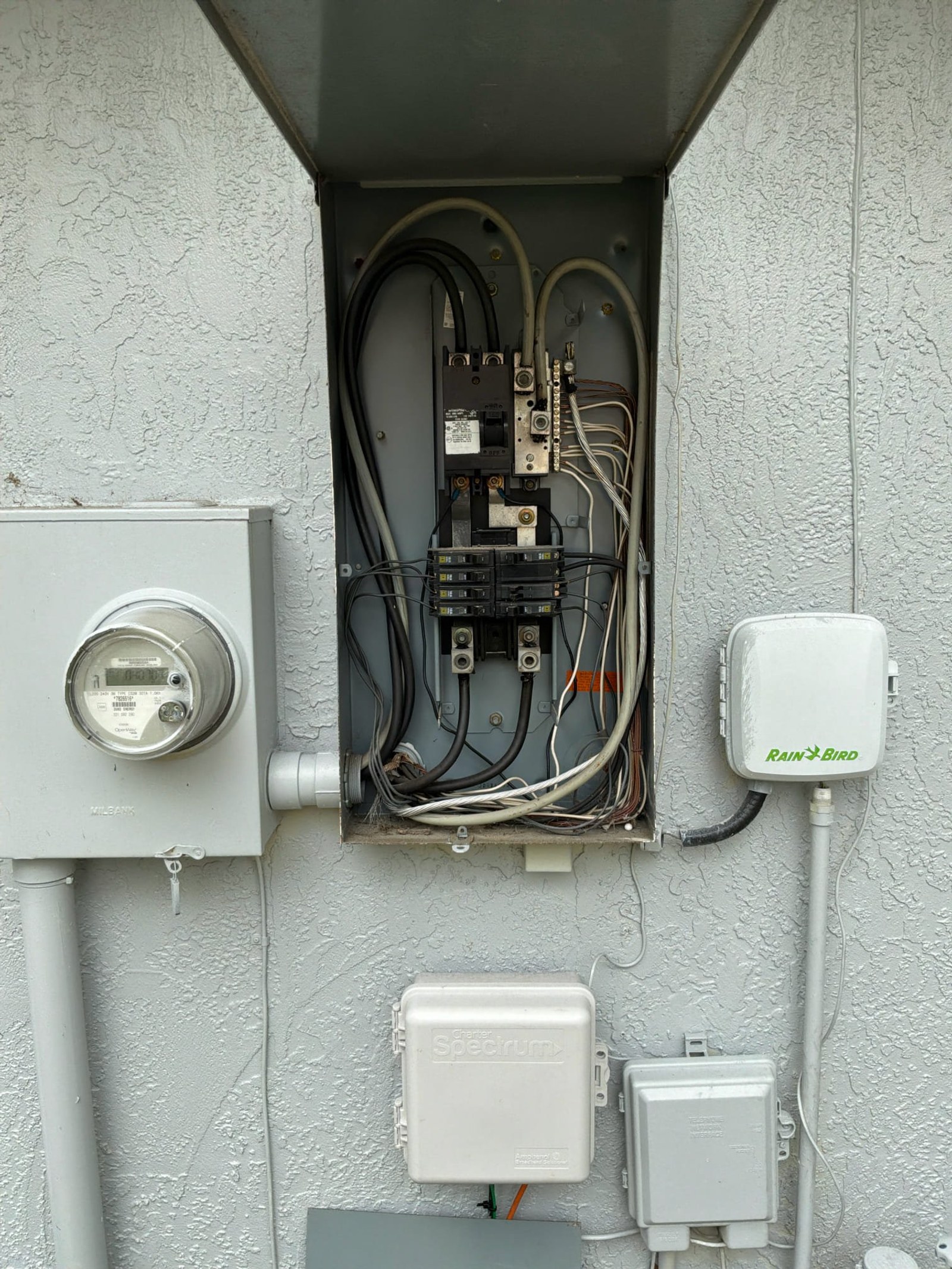
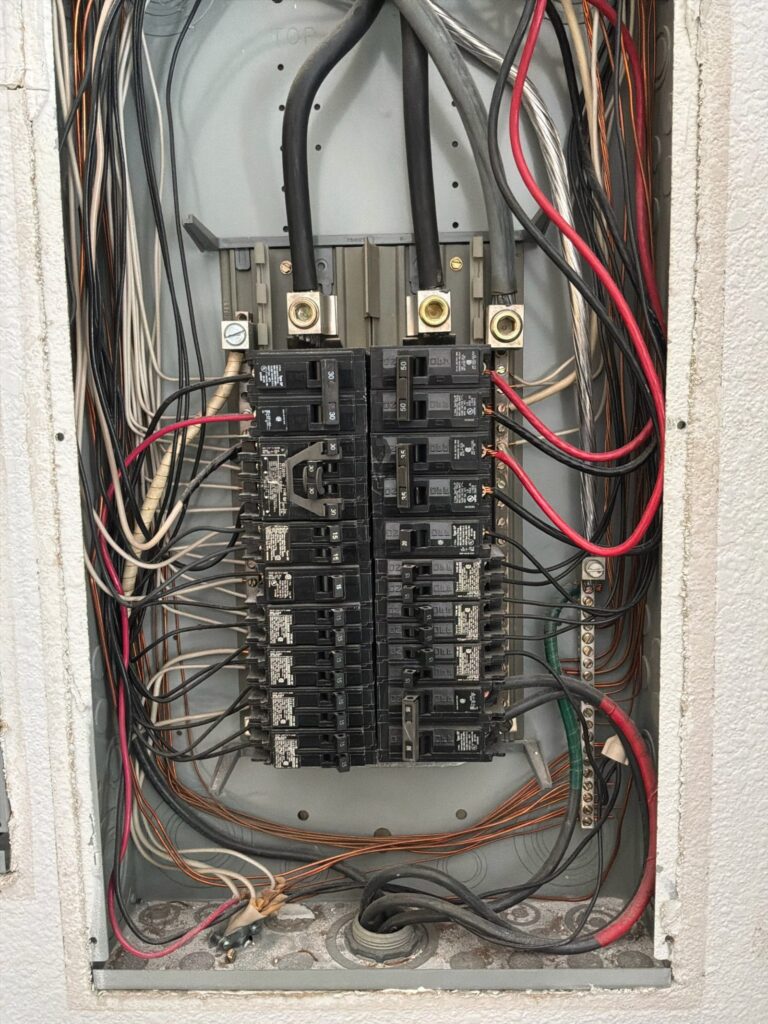
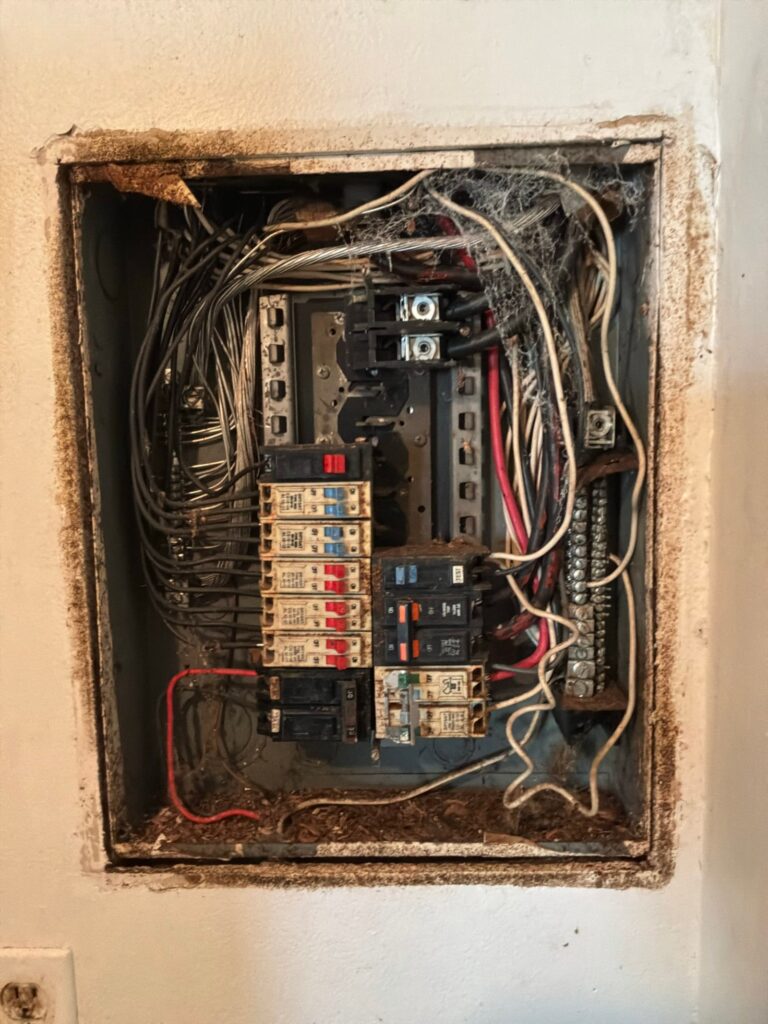
When our technician on-site opened the panel, the photos tell the story clearly. Corrosion had formed on the terminations and on the blue backplate of the enclosure. There was also visible evidence of water finding its way into the enclosure over time, which is consistent with panels installed near exterior walls or in areas exposed to Florida’s humidity cycles. In addition, conductors from earlier work had been left bundled inside the enclosure rather than removed.
Panel Condition
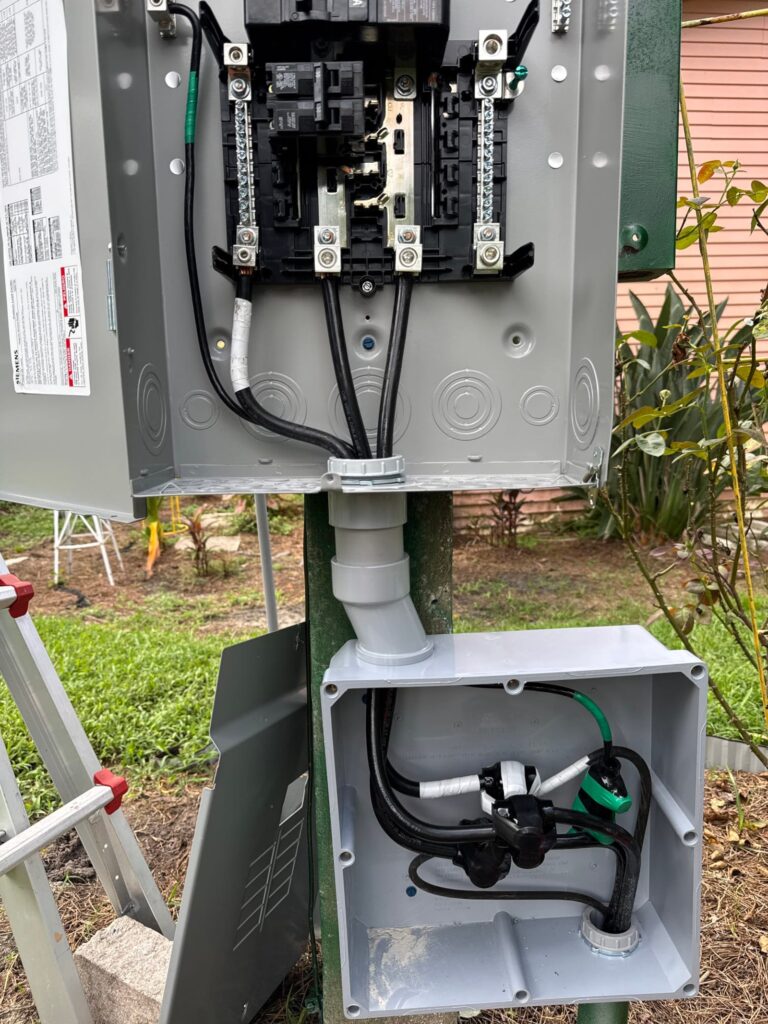
The two pole breakers and copper conductors were still functional, but the corrosion on the termination points is the kind of condition that benefits from attention now. Moisture intrusion into an enclosure is common in Florida homes, especially near irrigation equipment like the Rain Bird controller visible on the exterior. Corrosion on terminals increases contact resistance over time, which can translate to lights or appliances that feel less reliable than they should.
Abandoned Wiring
Conductors left in place from previous work are consistent with older remodel projects where a circuit was decommissioned but not fully removed. Current standards ask that unused conductors be removed or properly terminated. Clearing them out makes the panel easier to service and easier to read at a glance.
Solution Selected
The homeowner chose a comprehensive scope that addressed the panel’s condition, updated smoke and carbon monoxide detection throughout the home, and added whole-home surge protection. The ceiling fan was installed as originally requested, and the technician also replaced a receptacle, added a new switch, and replaced several breakers while the panel work was underway.
Work Performed
Here is everything completed during the visit:
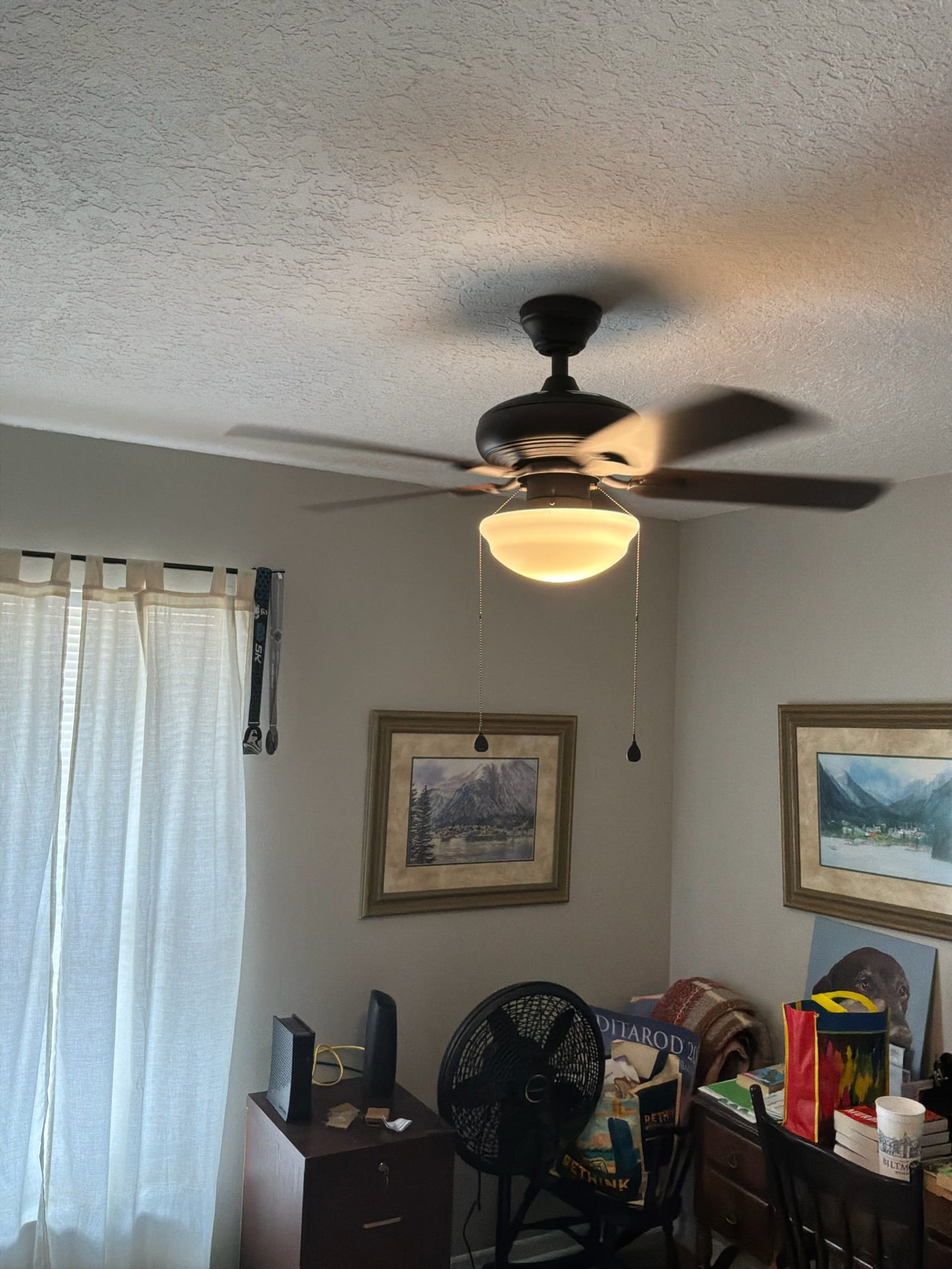
- Ceiling fan installation: A new black-finish ceiling fan with pull chains was installed in the bedroom as originally requested.
- Breaker replacements: One Square D HomeLine HOM115 single-pole 15 Amp breaker and one Square D HomeLine HOM240 two-pole 40 Amp breaker were installed in the existing panel. Additionally, one GE THQP 30 Amp two-pole breaker was replaced.
- Whole-home surge protection: A PSP Vortex 120 kA whole-home surge protector was installed onto the single-phase residential panel, connected under NEC 230.67.
- Smoke and CO detectors: Five 120V smart combination smoke and carbon monoxide detectors with 10-year sealed lithium battery backup were installed throughout the home, replacing older units and creating an interconnected system per NFPA 72 requirements.
- Receptacle and box: A tamper-resistant 15 Amp single receptacle was installed in a new old-work remodeler box at an existing location.
- Switch replacement: A single-pole 15 Amp decorator-style rocker switch was installed at an existing location.
- Cord cap: A 15 Amp, 125-volt straight-blade plug was installed onto an existing cord.
Why Pricing Can Vary
Two homes with the same job on the invoice can land at different totals. On projects like this one, the total is driven by:
- Whether a fan-rated box already exists
- Ceiling height and the need for a lift or scaffold
- New switching or a new circuit versus an existing one
- Fan selection and remote or smart controls
- Attic access for bracing and wiring
Why This Sanford Panel Upgrade Matters for Homeowners
For a family in Sanford, a bedroom ceiling fan is about comfort: sleeping better on a warm Florida night, keeping the room feeling fresh without cranking the AC. That daily ease is exactly why the broader work matters too. A panel with corroded terminations and moisture history is the kind of thing worth modernizing before it starts affecting how reliably things work around the house. The Square D HomeLine breakers and the new wiring connections give the panel a clean, dependable foundation.
The PSP Vortex surge protector adds a layer that every Florida household benefits from. Central Florida’s lightning season is real, and the refrigerator, television, computers, and AC system all ride out every storm better when the whole panel is protected upstream. Most homeowners never think about surge protection until something stops working after a storm. With this in place, the family can stop thinking about it entirely.
Finally, five interconnected smoke and carbon monoxide detectors mean that every room communicates with every other room. If anything changes anywhere in the home, the whole house knows at once. That kind of whole-home awareness is one of those things that lets everyone sleep a little easier at night, kids included, whether the adults are home or not. It is the kind of update that quietly does its job in the background, every day, without asking for any attention.
“Great work! Showed up on time and was through with the project.”
Code Compliance Cited in This Job
Every fix above maps to a specific section of NEC 2020. Each card links to NFPA’s public NEC index.
Surge Protective Device at Service
NEC 230.67 requires a listed surge protective device (SPD) at the service equipment of dwelling units. On this Sanford job, the PSP Vortex 120 kA whole-home surge protector was installed directly onto the single-phase residential panel to satisfy this requirement and provide upstream protection for all branch circuits. NFPA reference ›
AFCI Branch Circuit Protection
NEC 210.12 requires arc-fault circuit interrupter protection on branch circuits supplying outlets in dwelling unit bedrooms and living areas. Replacing the Square D HomeLine breakers in this Sanford panel during the same visit ensured the branch circuits serving the new ceiling fan and existing bedroom loads are equipped with current-generation protective devices. NFPA reference ›
Tamper-Resistant Receptacles
NEC 406.12 requires tamper-resistant receptacles in all areas of a dwelling unit. The replacement receptacle installed at the existing location on this job meets that standard, using a tamper-resistant 15 Amp single receptacle appropriate for a residential circuit. NFPA reference ›
Circuit Directory and Identification
NEC 408.4 requires that every circuit in a panelboard be legibly identified as to its purpose or equipment served. Replacing and organizing breakers during this visit, including clearing abandoned conductors, makes the panel’s directory accurate and easier for any future service team to read at a glance. NFPA reference ›
Electrical Connections
NEC 110.14(B) addresses the integrity of terminal connections and splices. The corrosion visible on the terminations and enclosure of this Sanford panel is exactly the condition this section is designed to address: increased contact resistance at a terminal reduces circuit reliability over time, and refreshing those connections restores the conductivity the circuit was designed to have. NFPA reference ›
Common Questions
Questions homeowners ask after seeing this kind of work.
Why did a ceiling fan installation lead to panel work on this Sanford home?
A ceiling fan installation requires confirming the branch circuits and panel are in good condition before the new load is added. When our technician opened the panel on this job, they found corrosion on the terminations and evidence of water intrusion in the enclosure. Addressing those conditions at the same visit kept the project efficient and left the home with a clean, reliable electrical system. If your panel has not been looked at recently, a quick inspection can tell you where things stand. Schedule online to get on the calendar.
What does whole-home surge protection actually do for a Florida household?
A whole-home surge protector installs directly onto your main panel and intercepts voltage spikes before they reach any branch circuit in the house. In Central Florida, where lightning activity is among the highest in the country, that upstream protection covers your AC system, refrigerator, televisions, computers, and every other connected device simultaneously. The PSP Vortex 120 kA unit installed on this job meets NEC 230.67 requirements for dwelling-unit service equipment. Schedule online to ask about adding surge protection to your panel.
How often should I have my home’s electrical system inspected?
A yearly inspection is a good baseline for most homes. Homes built before 1990 and homes that have weathered recent storms may benefit from inspections more often, since older wiring systems and weather events can accelerate wear on terminations and enclosures. The corrosion found in this Sanford panel is a good example of a condition that develops gradually and is easy to catch early with a routine look. Schedule online to book your annual electrical check.
Why are interconnected smoke and carbon monoxide detectors better than standalone units?
When detectors are interconnected, an alarm triggered in one room activates every detector in the home at the same time. That matters most at night or when family members are in rooms far from the original source. NFPA 72 sets the placement and interconnection standards for residential smoke and CO alarms. The five 10-year sealed lithium units installed on this job create a single networked system across the home. Schedule online if you would like us to assess your current detector coverage.
Is corrosion inside an electrical panel something that needs to be addressed right away?
Corrosion on terminations and inside an enclosure is worth addressing when you notice it. Over time, oxidation increases the resistance at connection points, which can affect how reliably circuits perform under load. In Florida, moisture near exterior walls or irrigation equipment is a common contributing factor, and it is consistent with what homes of this era and location tend to show. Replacing affected breakers and cleaning up the enclosure restores the panel’s performance and makes future service straightforward. Schedule online and we can take a look at your panel.
Project Photos
Electrician and Technical Reviewer
Work performed by Marc, Thomas Edison Electric field electrician serving Orlando.
Marc, the electrician on this job, is the technical reviewer of record for this case study.
Location
This project was completed in Sanford, Florida, in our Sanford service area. See our electrical services in Sanford.