This Winter Springs panel upgrade case study walks through the real diagnosis, the fix, and the code details from a recent service call. A homeowner in Winter Springs, FL called Thomas Edison Electric after scheduling a panel replacement through our sales team. When our field crew arrived on installation day, the photos told a fuller story: the existing enclosure showed corrosion on the terminations, evidence of water intrusion, and wiring that reflected non-standard workmanship accumulated over the years. The solution was a clean, code-compliant Siemens sub-panel system sized to serve the home reliably for decades to come.
Customer’s Problem
The homeowner had scheduled a full panel replacement for their Winter Springs residence. The existing 100-amp panel had reached the point where a straight swap made more sense than continued patchwork. Our team coordinated the installation for the following Thursday so the household could plan around the brief outage window.
What Our Electrician Found
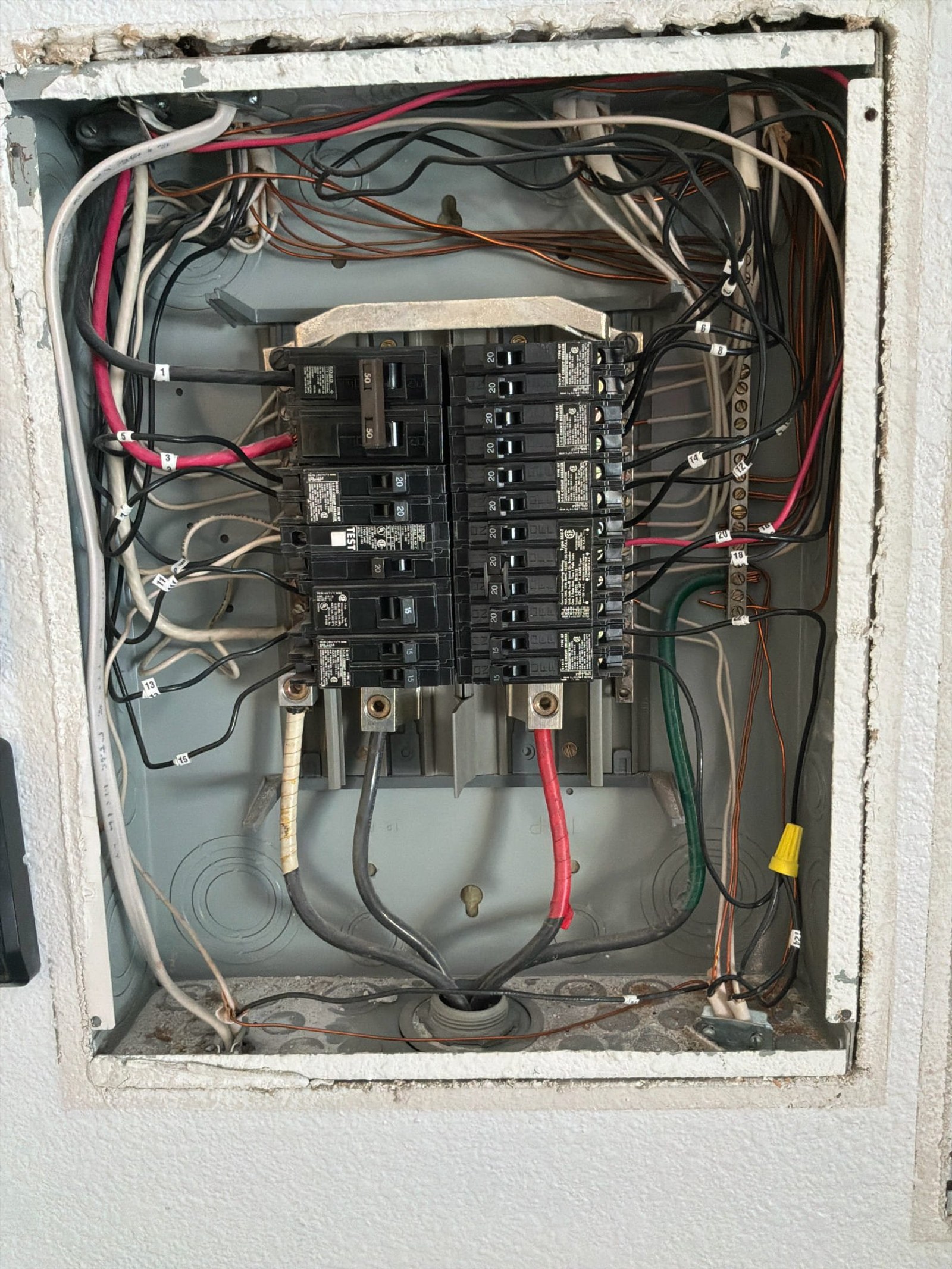
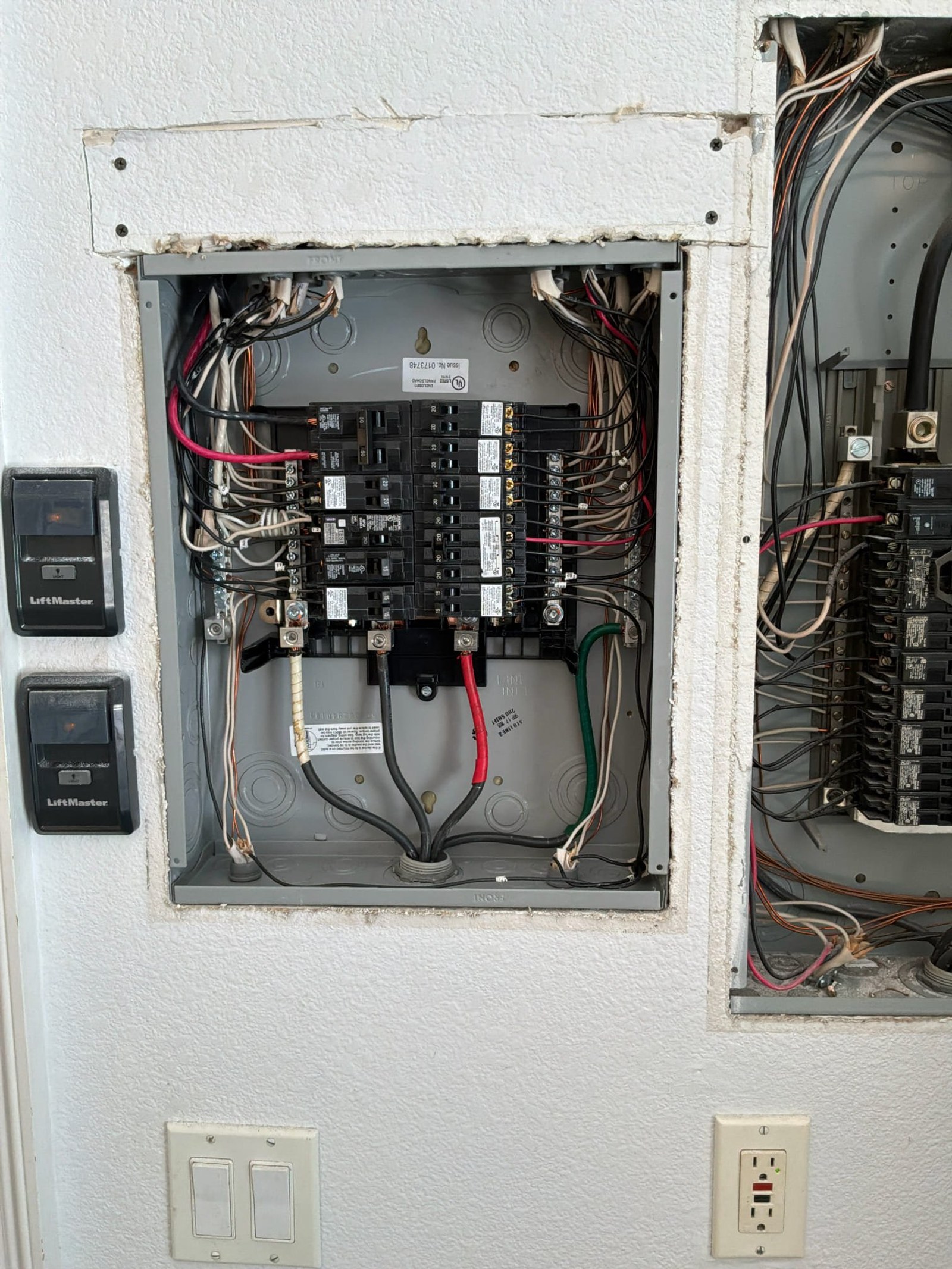
Once the dead front came off, the field team could see conditions worth noting before the new equipment went in.
Non-Standard Wiring Inside the Enclosure
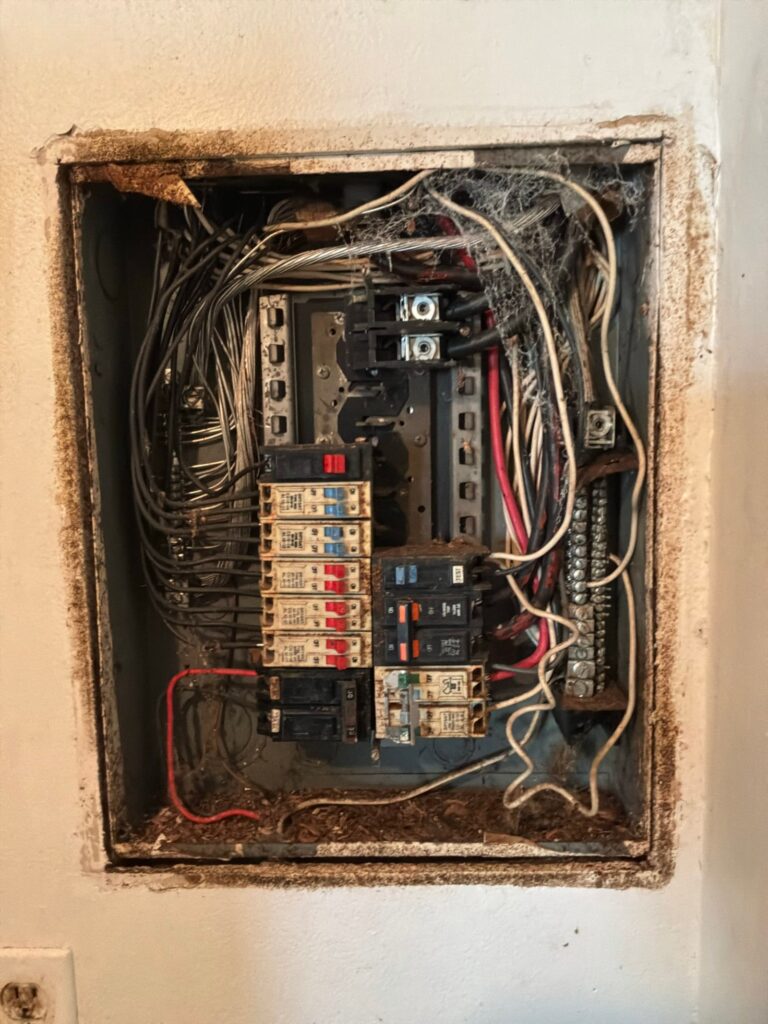
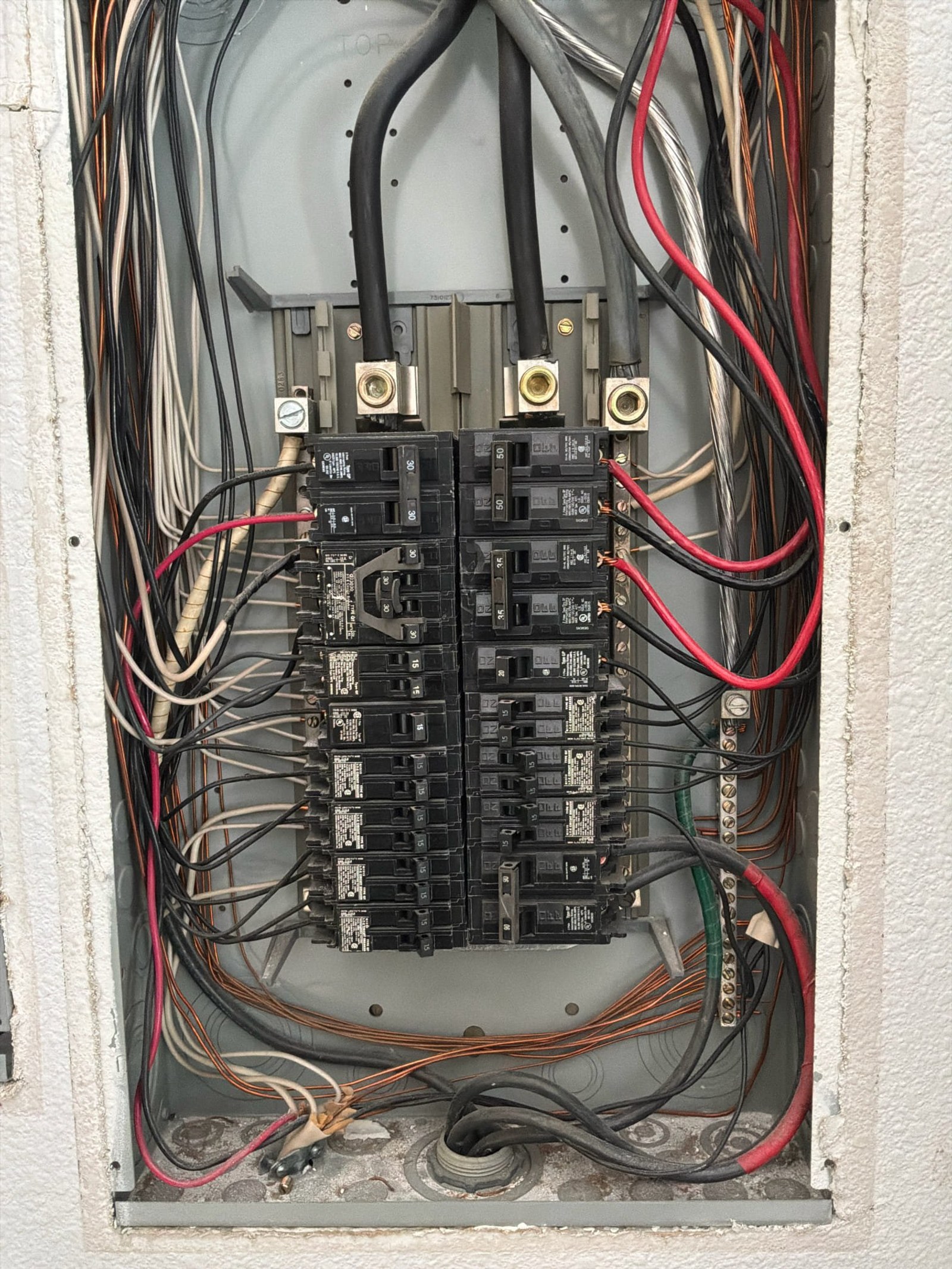
The before photos show a mix of black breakers, a multi-tap configuration, and red, black, and white branch conductors routed in ways consistent with DIY additions made over time. Multi-tap breakers (more than one conductor landed on a single breaker terminal) were a common shortcut in older panels and are generally permissible only when the breaker is listed for that purpose. The wiring arrangement here did not reflect that listing, which meant the conductor-to-breaker connections needed to be rebuilt correctly on the new gear.
Corrosion and Water Intrusion
A third photo shows the neutral bar and enclosure interior with visible corrosion on the terminations and staining consistent with moisture finding its way inside over time. Water inside an enclosure accelerates oxidation on the neutral bar and branch conductors, which increases resistance at those connections. Additionally, the two-car garage location (a LiftMaster opener is visible in the background) means the panel was subject to humidity swings typical of an attached Florida garage. Addressing this fully required not just new hardware but a fresh, properly sealed installation.
Solution Selected
Given the combination of non-standard wiring, corrosion, and the homeowner’s goal of a reliable long-term upgrade, the team proceeded with a full panel replacement using a multi-panel Siemens configuration. This gave the home properly sized main-lug panels with clean breaker inventory and room to grow, rather than trying to rehabilitate the existing enclosure.
Work Performed
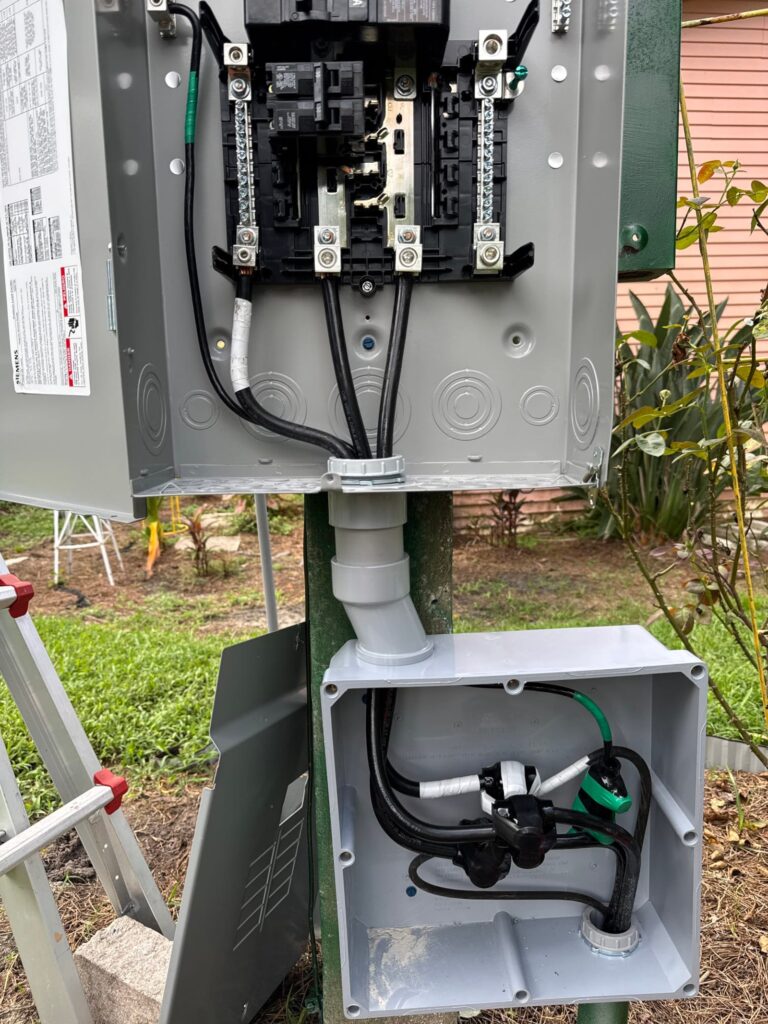
Our licensed electricians removed the existing panel and installed the following:
- Siemens Type EQ 30-Space, 125-Amp Main Lug Sub Panel as the primary new enclosure, replacing the old cabinet entirely
- Siemens Type EQ 16-Space, 125-Amp Main Lug Panel as a companion panel, providing additional circuit capacity for the home
- Siemens 30-Space, 100-Amp Main Lug Sub Panel and a Siemens 16-Space, 100-Amp Main Lug Panel (per sold scope, coordinated with the EQ panels for the complete system)
- Eight Siemens BR 15-Amp single-pole breakers (two sets of eight) populating the new enclosures
- One Siemens QT Quad 20/30-Amp two-pole breaker for a multi-wire branch circuit
- One Siemens BR Q23020CT2 20/30-Amp two-pole quad tandem breaker for additional circuits
- Two 6x6x4 PVC junction boxes with covers to consolidate splices outside the new panels in a code-accessible location
All conductors were re-terminated to manufacturer torque specifications on the new equipment. The old enclosure and its non-standard wiring were removed from the structure entirely.
Why Pricing Can Vary
Two homes with the same job on the invoice can land at different totals. On projects like this one, the total is driven by:
- Service size and whether the main breaker rating changes
- Condition of the existing enclosure, bus bars and breakers
- Grounding and bonding that must be brought up to current code at the same time
- Service entrance conductors and the meter can, when they are part of the scope
- Utility coordination and permit requirements in the jurisdiction
- Surge, AFCI and GFCI protection added during the changeout
- Panel brand and breaker selection
- Accessibility of the panel location and any drywall or masonry work around it
- Code corrections found once the deadfront is off
Why This Winter Springs Panel Upgrade Matters for Homeowners
Panel replacements in older Florida homes often reveal exactly what this one did: a layer of DIY work stacked on top of original wiring, plus the kind of moisture exposure that comes with decades in a humid garage environment. None of that is unusual, and none of it reflects poor choices at the time. It simply means the system had reached the point where a fresh start served the household better than another repair.
With the new Siemens panels in place, the family has clean, properly documented circuits, breakers that match the loads they protect, and enclosures free of the corrosion that had been building on the old neutral bar. That translates directly to daily life: the garage door opener, the kitchen circuits, the bedrooms, and whatever the family adds next all run off a system that was installed correctly from the ground up.
Furthermore, the added circuit space in the new panel configuration gives the household room to grow. Whether that means an EV charger in the garage, a mini-split for a home office, or simply replacing aging appliances with modern ones, the panel is ready. For a Florida family that wants to rely on their home through every storm season, knowing the electrical backbone was built right is exactly the kind of peace of mind that makes everything else easier.
Code Compliance Cited in This Job
Every fix above maps to a specific section of NEC 2020. Each card links to NFPA’s public NEC index.
Electrical Connections
NEC 110.14(B) requires that conductors be spliced or joined with devices identified for the purpose and properly terminated. On this job, the multi-tap wiring found in the old panel (multiple conductors under a single breaker terminal not listed for that use) did not meet this standard. Re-terminating all conductors on the new Siemens panels addressed this requirement directly. NFPA reference ›
Circuit Directory and Identification
NEC 408.4 requires that every circuit in a panelboard be legibly identified as to its clear, evident purpose. The non-standard wiring conditions in the old enclosure made accurate identification difficult. The new Siemens panel installation gave the crew the opportunity to label every circuit correctly from the start. NFPA reference ›
Unused Openings in Panel Enclosures
NEC 408.7 requires that unused openings in a panelboard enclosure be effectively closed. Removing the old panel and installing purpose-built Siemens enclosures ensured all knockouts and openings were properly addressed, eliminating gaps that can allow moisture and debris entry over time. NFPA reference ›
Grounding Electrode System
NEC 250.50 requires that all grounding electrodes present at a structure be bonded together into a single grounding electrode system. A panel replacement is the natural point to verify that the grounding electrode connections to the new enclosures are correctly made, which the field team addressed during the installation. NFPA reference ›
Common Questions
Questions homeowners ask after seeing this kind of work.
Why did the Winter Springs panel replacement involve two separate panels instead of one larger panel?
The sold scope included a multi-panel Siemens configuration: a primary main-lug sub panel paired with a companion panel. This arrangement provides more individual circuit spaces than a single same-size enclosure, which is useful in homes where circuit demand has grown over the years. It also keeps circuits organized by load type or location, making future work straightforward. If your home is running low on breaker space, our team can schedule a panel assessment to walk through your options.
What causes corrosion inside a residential electrical panel?
Florida’s humidity is the main factor, especially in attached garages where temperature and moisture levels shift throughout the day. Over time, moisture finding its way into the enclosure oxidizes the neutral bar and the conductor terminations, which increases resistance at those connection points. A panel replacement is the most thorough way to address established corrosion because it replaces the enclosure and all the hardware at once. If you have noticed discoloration or a musty smell near your panel, book a visual inspection so we can take a look.
How often should I have my home’s electrical system inspected?
Once a year is a good baseline for most households. Homes built before 1990 and homes that have been through recent storm seasons may benefit from inspections more often, since older wiring systems and weather events can introduce conditions worth addressing before they develop further. Annual inspections are also useful after any significant renovation or appliance addition. Schedule your yearly check-in and our licensed team will document what they find.
Is non-standard DIY wiring inside a panel something that needs to be corrected right away?
Non-standard wiring practices, such as multiple conductors landed on a breaker terminal not rated for that configuration, predate current NEC requirements and were common in homes that saw owner-added circuits over the years. They are worth correcting because they can create reliability issues over time as connections loosen or conductors are loaded beyond their listed rating. A panel replacement is the cleanest path to a fresh start. If you are unsure what your panel contains, our team can book a 30-minute visual inspection so you know exactly where things stand.
Does a panel replacement in Winter Springs require a permit?
Yes. Panel replacements in Seminole County require a permit and a final inspection by the local authority having jurisdiction. Thomas Edison Electric handles the permitting process as part of the project, so the homeowner does not need to coordinate that separately. Working with a licensed contractor (Florida EC13015487, verifiable at myfloridalicense.com) ensures the work is inspected and on record for insurance and resale purposes. Schedule online if you would like to get the process started.
Project Photos
Electrician and Technical Reviewer
Work performed by Marc, Thomas Edison Electric field electrician serving Orlando.
Marc, the electrician on this job, is the technical reviewer of record for this case study.
Location
This project was completed in Winter Springs, Florida.