This Oakland panel upgrade case study walks through the real diagnosis, the fix, and the code details from a recent service call. A church in Oakland, FL needed more than just extra capacity when the congregation decided to upgrade their 150-amp electrical service to 200 amps. Our field team arrived and found a Square D QO panel with visible corrosion on the terminations and enclosure, unlabeled circuits, grounding conditions worth addressing, and a few remnants of earlier work left inside the cabinet. The upgrade gave the building a clean, reliable foundation for years of steady service.
The Problem
The church secretary coordinated the appointment, explaining that the existing 150-amp service was no longer enough to meet the building’s growing electrical demands. The congregation wanted a straightforward path to 200-amp service so the building could handle modern loads comfortably.
“We’re looking to upgrade our 150-amp panel to a 200-amp panel for the church.”
Investigation
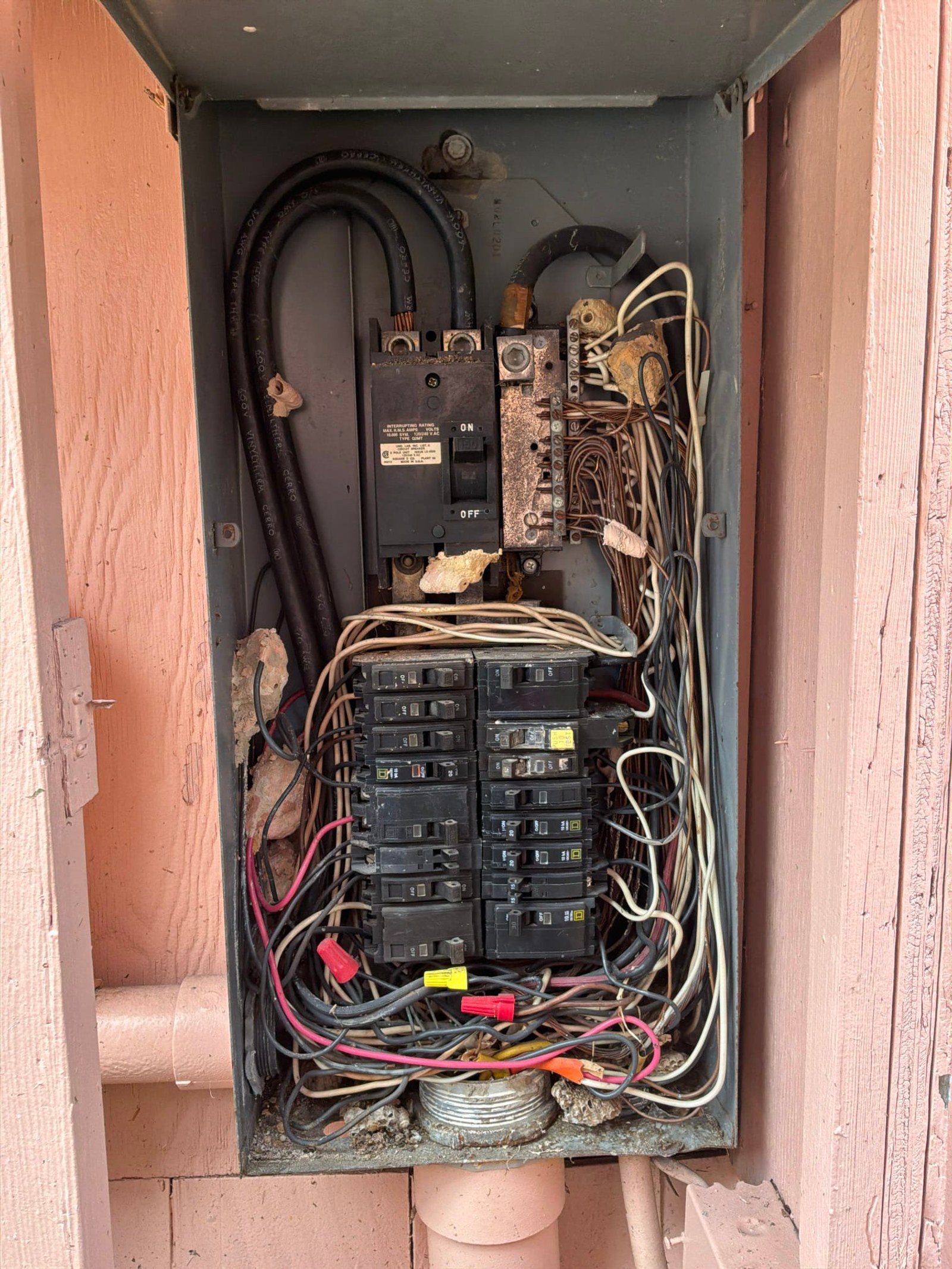
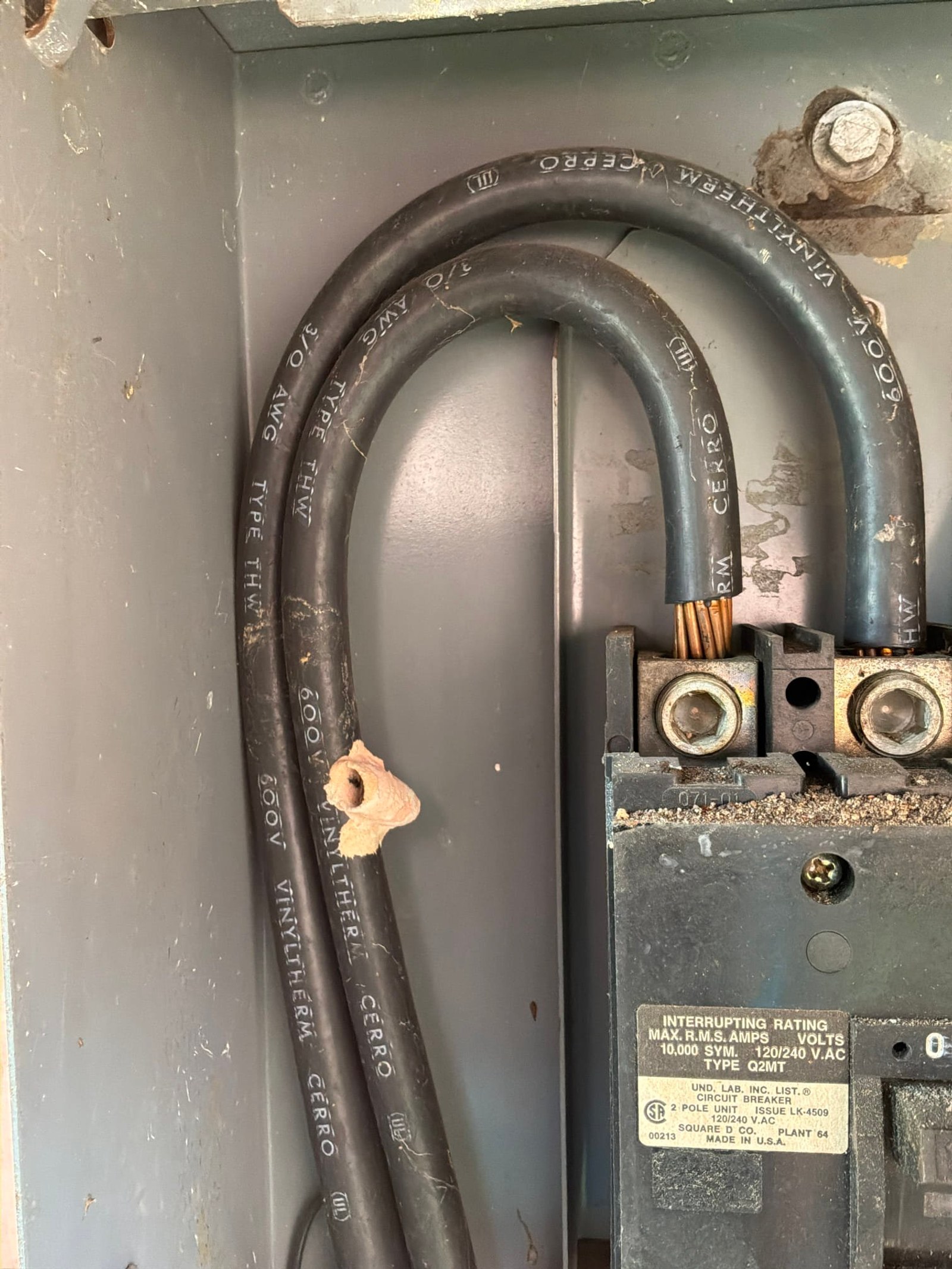
Once our technician on-site removed the deadfront cover, the scope of the project came into sharper focus. Several conditions were worth noting before any upgrade work could begin.
What the Panel Showed Us
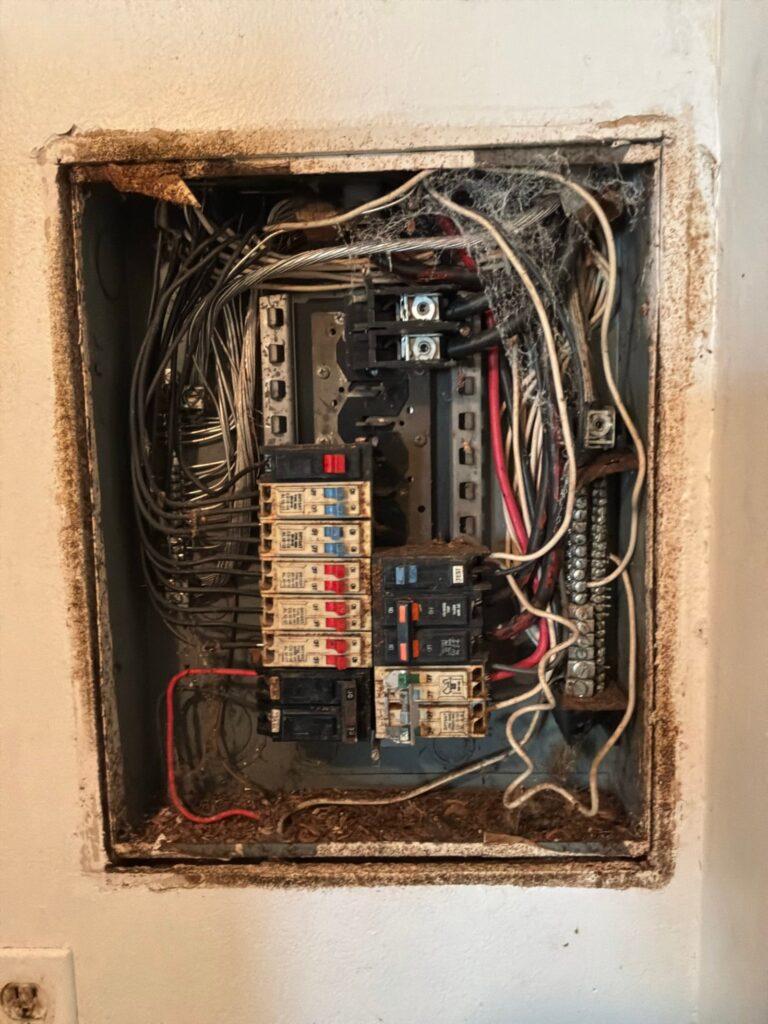
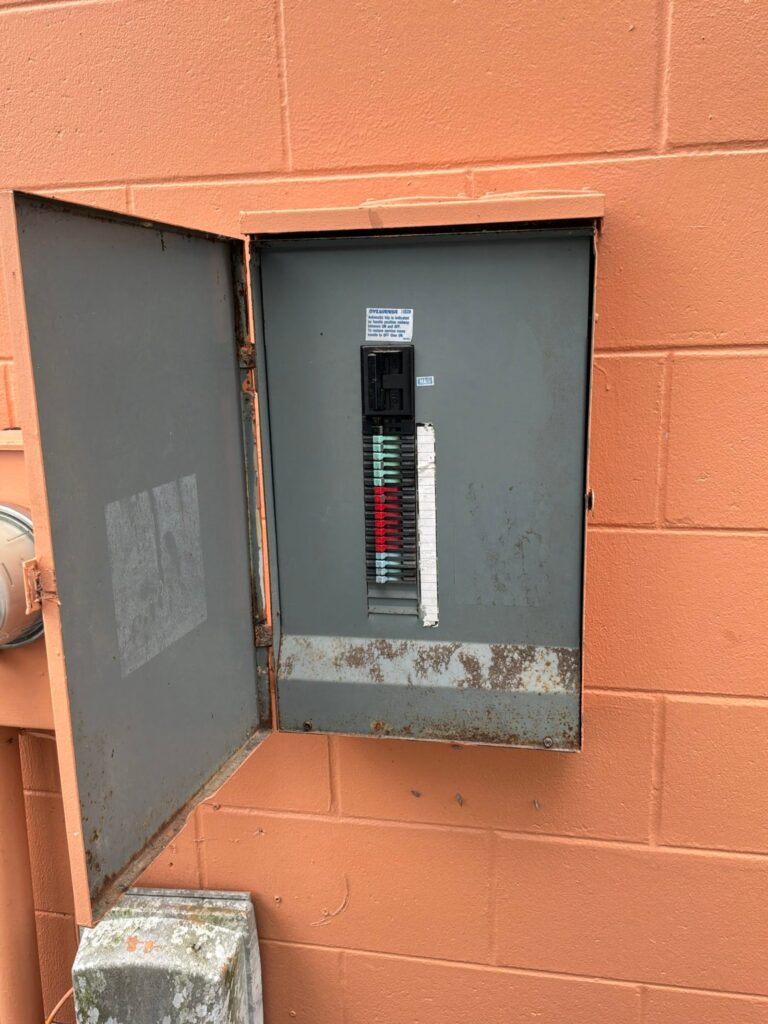
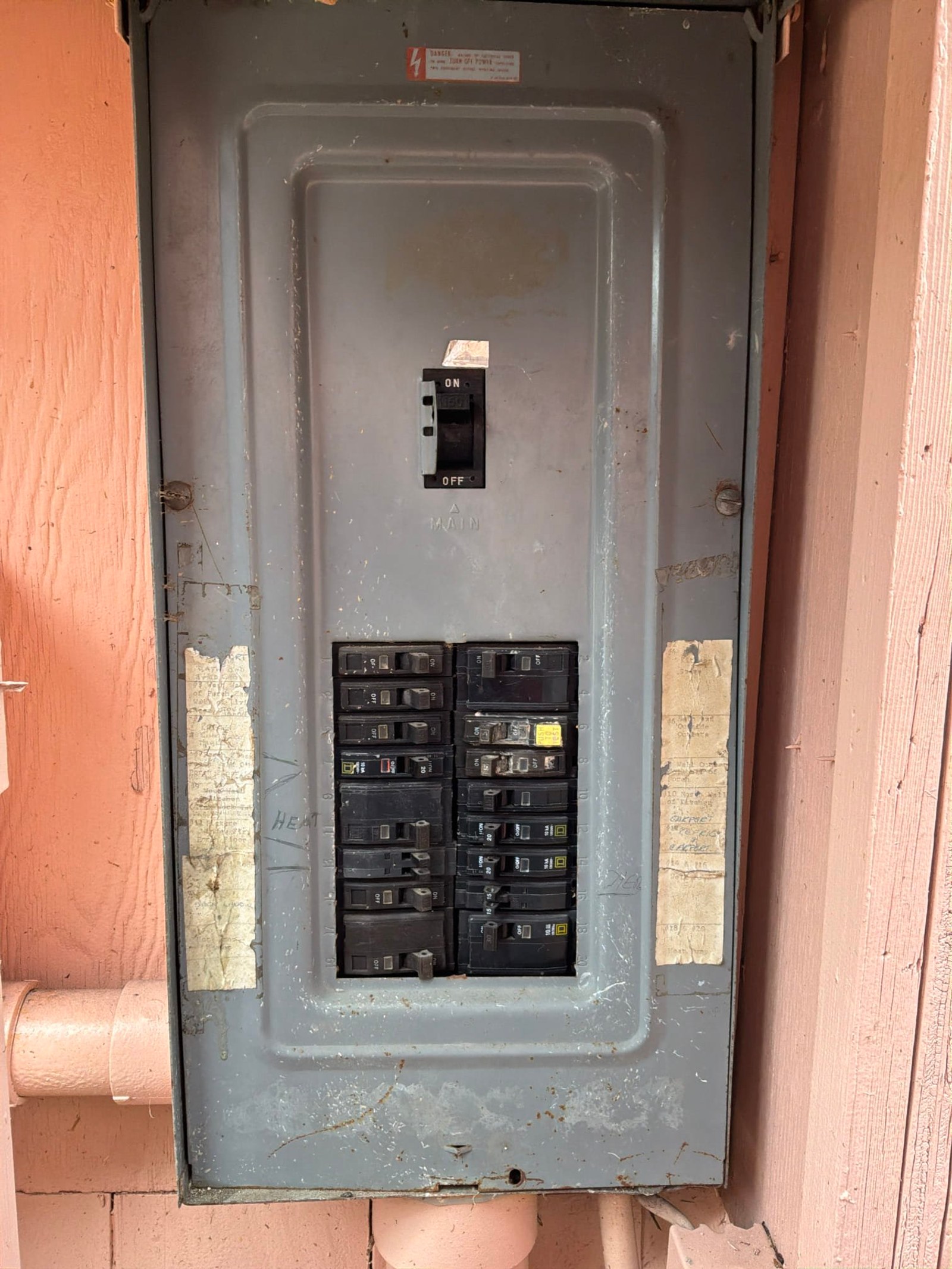
The exterior enclosure showed corrosion on the terminations and across the enclosure surface. Paint had accumulated over portions of the device, which is consistent with older installations in buildings that have seen periodic exterior work over the years. Inside, the Square D QO nameplate and the 120/240V AC terminal block were both visible, and the service entrance lugs showed corrosion as well.
The interior also revealed tangled conductors and wiring left in place from earlier work, a common finding in panels that have been modified over time by different hands. Open knockouts were present, and the panel directory had not been updated to reflect current circuits. Neutrals and grounds shared the same bus without separation, which predates the current NEC requirement for separate bonding arrangements in sub-panel configurations.
Grounding and Protection Gaps
The inspection identified the grounding system as an area for improvement. Outlets in the building showed improper grounding, and the grounding system itself did not fully meet current code. Additionally, no whole-home surge protection was present, and AFCI protection was absent on branch circuits where current standards now call for it. Arcing signs on older switches and some corrosion on the service entrance conductors rounded out the picture.
None of these conditions are unusual for a building of this era. They reflect what was standard practice at the time, and they give the upgrade a clear direction.
What We Fixed
Our crew performed the panel service and upgrade work, transitioning the building from its existing 150-amp Square D QO service to a 200-amp configuration. The work addressed the capacity limitation the church had identified and also brought attention to the conditions found during the inspection.
The field team documented the tangled conductors and abandoned wiring inside the cabinet, the open knockouts in the enclosure, the paint-covered surfaces, and the unlabeled circuit directory. Corroded terminations at the service entrance lugs and inside the enclosure were part of what the upgrade process addressed.
The inspection also flagged loose and worn outlets, the absence of tamper-resistant receptacles where current code applies, and the missing surge protection at the service. These findings were documented for the congregation’s records so the leadership team could prioritize next steps.
Why This Oakland Panel Upgrade Matters for Homeowners
For a church, reliable power is part of how the building serves its community. Lighting for services, sound systems, kitchen equipment for events, and HVAC all draw from the same panel. Moving from 150 amps to 200 amps means the building has the headroom to add circuits, serve larger gatherings, and run modern equipment without wondering whether the service can keep up.
The grounding and bonding findings are worth addressing in a follow-up visit. A properly completed grounding electrode system, in line with NEC 250.50, gives every circuit in the building a reliable return path and supports the kind of steady, uninterrupted power a congregation depends on week after week.
Adding whole-home surge protection at the service, as called for under NEC 230.67, would protect the building’s AV equipment, computers, and HVAC from voltage spikes during Florida’s frequent storm activity. For a community that gathers year-round, that kind of behind-the-scenes reliability means the family of parishioners never has to think about whether the lights will come on Sunday morning. The building just works, every service, every season.
Labeling every circuit clearly, per NEC 408.4, is a small step with a big payoff: any licensed electrician or facilities volunteer who opens that panel in the future will know exactly what they’re looking at, making maintenance faster and safer for everyone involved.
Code Compliance Cited in This Job
Every fix above maps to a specific section of NEC 2020. Each card links to NFPA’s public NEC index.
Grounding Electrode System
The inspection found the grounding system did not fully meet current code requirements. NEC 250.50 requires that all available grounding electrodes at a structure be bonded together into a complete grounding electrode system. Bringing this into compliance ensures every circuit has a reliable reference path and supports consistent performance across the building’s electrical system. NFPA reference ›
Grounding Electrode Conductor Sizing
When a service is upgraded from 150 amps to 200 amps, the grounding electrode conductor must be sized to match the new service conductors under NEC 250.66. Properly sizing this conductor ensures the grounding electrode system performs as designed at the higher service ampacity. NFPA reference ›
Surge Protective Device at Service
No surge protection was present at the service entrance at the time of inspection. NEC 230.67 requires a listed surge protective device to be installed at the service of new and upgraded dwelling and commercial services. For a building that relies on AV equipment, computers, and HVAC, this addition supports continuous, uninterrupted operation through Florida’s storm-heavy seasons. NFPA reference ›
Circuit Directory and Identification
The panel directory was not updated to reflect the current circuits in the building. NEC 408.4 requires every circuit in a panelboard to be legibly identified as to its clear, evident purpose. A complete and accurate directory means any technician or facilities volunteer can locate and manage circuits quickly, without guesswork. NFPA reference ›
Unused Panel Openings
Open knockouts were observed in the enclosure at the time of inspection. NEC 408.7 requires all unused openings in panelboard enclosures to be closed with listed filler plates or bushings. Closing these openings keeps the interior of the panel free from debris and maintains the enclosure’s integrity. NFPA reference ›
AFCI Protection
AFCI protection was absent on branch circuits where NEC 210.12 now applies. This section requires arc-fault circuit interrupter protection on branch circuits supplying outlets in living areas, kitchens, and similar spaces in commercial and residential occupancies. Adding AFCI breakers to applicable circuits brings those branch runs in line with current standards. NFPA reference ›
Common Questions
Questions homeowners ask after seeing this kind of work.
Why would a church need to upgrade from a 150-amp to a 200-amp electrical panel?
As buildings add lighting upgrades, sound systems, kitchen equipment, and HVAC improvements over time, the original service ampacity can become a limiting factor. A 200-amp service provides the headroom needed to run all of those loads comfortably without the panel working at the edge of its capacity. If your building is feeling the strain of modern electrical demands, our team can evaluate your current service and walk you through the options. Schedule online to set up a time that works for your staff.
What does corrosion on a panel’s terminations and enclosure mean for the building’s electrical system?
Corrosion on terminal connections and the enclosure surface builds up resistance at connection points over time, which can affect how reliably power reaches circuits throughout the building. It is a common finding in panels that have been exposed to humidity or moisture over many years, and it is one of the first things a licensed electrician will note during an inspection. Addressing it during a panel upgrade is a natural opportunity to start fresh with clean, solid connections. Book a visual inspection if you have noticed signs of wear or aging in your panel.
How often should a commercial building’s electrical system be inspected?
A yearly inspection is a solid baseline for most commercial and institutional buildings. Older buildings, those that have seen multiple rounds of DIY modifications, or those in areas that experience frequent lightning activity may benefit from a closer look more often. A licensed electrician can flag grounding gaps, unlabeled circuits, and missing protective devices before they become a source of inconvenience. Schedule your annual inspection online to keep your building’s electrical system current.
What is whole-home surge protection, and why does it matter for a church or community building?
A whole-home or whole-building surge protective device installs at the service entrance and absorbs voltage spikes before they reach sensitive equipment like AV systems, computers, and HVAC controls. Florida’s frequent thunderstorms make this an especially practical addition for any building that hosts regular gatherings. Under NEC 230.67, surge protection is now required at new and upgraded services. If your building’s service was recently upgraded or is due for one, ask about adding surge protection at the same time. Schedule online to discuss the options.
What should a church do about open knockouts and an unlabeled panel directory?
Open knockouts in a panel enclosure and an incomplete circuit directory are both straightforward items to address during a scheduled service visit. Closing the knockouts maintains the integrity of the enclosure, and updating the directory means any technician or volunteer can find the right breaker quickly. NEC 408.4 and NEC 408.7 both speak to these requirements for good reason: a well-organized panel makes routine maintenance much smoother for everyone. Book a panel service visit and our crew can take care of both in a single trip.
Want to see more real jobs like this one? Browse our completed case studies or explore our services.