
Space heaters are not a year-round appliance in Central Florida. Still, one January front can push overnight lows into the 30s, and heaters come out of closets across Orlando. Our houses are wired around cooling loads, so a 1,500-watt heater is an odd new strain on a bedroom circuit. That single fact shapes the space heater safety Florida homes actually need.
Why Florida Circuits Feel the Strain
Most Orlando homes run a heat pump with electric backup strips. Those strips sit on their own large circuits, sized by the builder. A plug-in heater does not. It draws about 12.5 amps on a 15-amp bedroom circuit that already feeds lamps, a TV, and chargers.
That one appliance can use most of the circuit by itself. Add a hair dryer on the same run and the breaker trips. In an older home, the weak point may be the outlet instead.
Space Heater Safety Florida Homeowners Ask About Most
These are the habits we walk through on almost every call once a front moves in. Keep them in mind every time the heater comes out.
- Plug the heater straight into a wall outlet, never a strip or a cord.
- Leave three feet of clear space on every side.
- Set the unit on a hard, level floor rather than a rug.
- Turn it off before you sleep or leave the room.
- Check the cord and plug for cracks, heat marks, or a loose blade.
- Store it dry, and dust it out before the first cold night.
How Much Power a Heater Really Uses
Numbers help more than warnings do. A common heater on high pulls 1,500 watts, or about 12.5 amps at 120 volts. Code limits a steady load to 80 percent of a circuit, which is 12 amps on a 15-amp run. So one heater alone can push a bedroom circuit right to its limit.
Two heaters on the same circuit will trip the breaker every time. Run them from different circuits, or use one heater and close the door.
Choose a Heater With Real Safeguards
Good habits start in the store, before the unit ever reaches your bedroom. Look for tip-over and overheat shutoff, which kills power the moment the unit falls. A mark from UL or ETL tells you a lab tested the design. Cool-touch housings and a built-in timer are worth the small premium.
Match the size to the room as well. An oversized unit in a small bedroom just cycles hard and wastes power.
Placement Causes the Most Trouble
That list is easy to recite and easy to break. In a real bedroom the heater lands wherever the outlet happens to be, which is often beside a nightstand or a pile of laundry.
Screened lanais and Florida rooms deserve extra care. Outdoor cushions, wicker, and dry potted plants catch fire quickly. Never run an indoor heater out on an open patio, where dew and blowing rain can reach the cord.
Doorways and hallways account for the rest of our calls. A heater knocked over at two in the morning is a heater nobody is awake to unplug.
Plug Straight Into the Wall
Of all those habits, this is the one people skip. Extension cords and power strips are built for short bursts, not a steady 1,500-watt draw, so heat builds at the plug and inside the coiled wire. Give the heater an outlet of its own, and share it with nothing else.
If the plug or wall plate feels warm, stop and call an electrician. A warm plate often points to a worn outlet, because back-wired contacts loosen over the years and heat builds at that loose point. That is why a tripping breaker deserves more than a reset. Book an electrical safety inspection instead.
What an Inspection Actually Finds
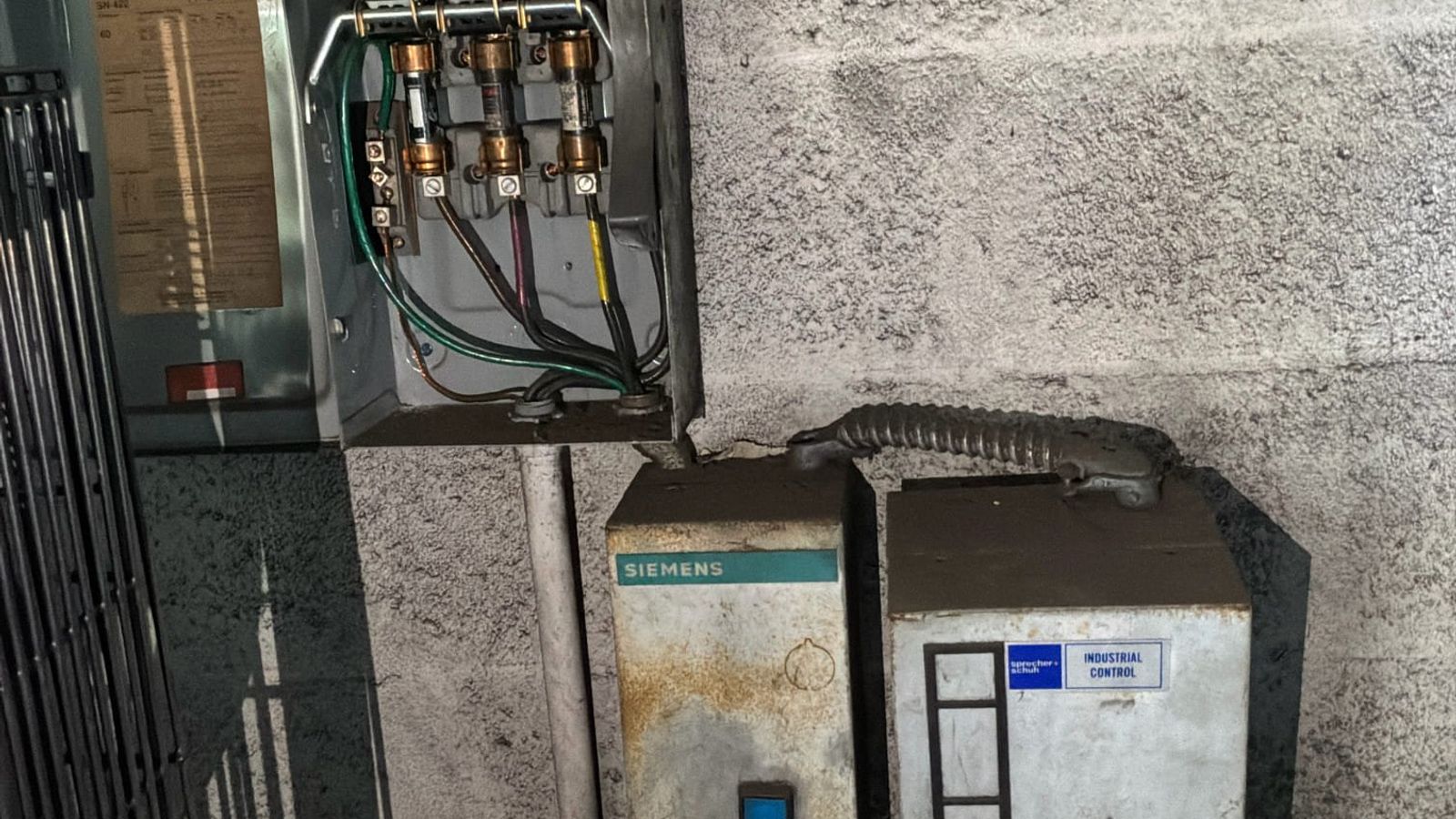
No habit can rescue a failing outlet, which is exactly what an inspection is for. On heater calls we regularly find scorched receptacles, loose neutrals, and double-tapped breakers. Older Orlando houses may still have two-prong outlets with no ground. Some homes from the 1960s and 1970s also have aluminum branch wiring, which needs listed connectors at every device.
One kitchen call in 32817 began as a simple outlet question. It grew into a full review, and you can see how an inspection uncovered hidden issues for an Orlando-area home.
Watch for Warning Signs
Your senses catch most problems early. A burning smell, a buzzing outlet, or lights that dim when the heater starts are all red flags. Turn the heater off and unplug it. Then have the circuit checked before the next cold night.
Kids, Pets, and Fuel-Burning Heaters
Curious toddlers, dogs, and hot grilles are a rough mix. Watch young children around a running heater, and use a gate when you can. Electric heaters make no carbon monoxide, but propane and kerosene models do. Keep a working carbon monoxide alarm nearby and follow the venting rules in the manual.
When a Dedicated Circuit Makes Sense
Some rooms need more than good habits. A converted garage office, a workshop, or an enclosed lanai often runs on one thin circuit. A dedicated circuit gives that space real capacity, for a heater in January and a window unit in July. Our guide to how many dedicated circuits your Orlando home needs explains the math in plain terms.
Storing the Heater Between Cold Snaps
Storage rarely makes anyone’s list, though it should. Florida garages stay hot and damp for most of the year, and dust and moisture settle inside a stored heater and its cord.
Wipe the unit down and vacuum the intake grille before the first use. Then run it ten minutes while you are in the room, and watch for smoke or odor.
Put These Habits to Work Before the Next Front
Habits carry you only so far. The wiring behind the outlet is the other half of the space heater safety Florida homes depend on. Walk your system with our home electrical safety checklist before the next front arrives. For deeper reading, the Electrical Safety Foundation International and the NFPA both publish trusted heater guidance.
A few cool nights should never cost you a fire. Call Thomas Edison Electric at (407) 490-0004 for an inspection or a new dedicated circuit. Our licensed team serves Orlando, Winter Park, Kissimmee, and nearby towns under Florida license EC13015487.