
A fridge runs every hour of every day. In Central Florida it also fights heat and summer storms. The refrigerators Orlando homeowners buy today are full of electronics, so the circuit behind them matters. Here is what to check before delivery day.
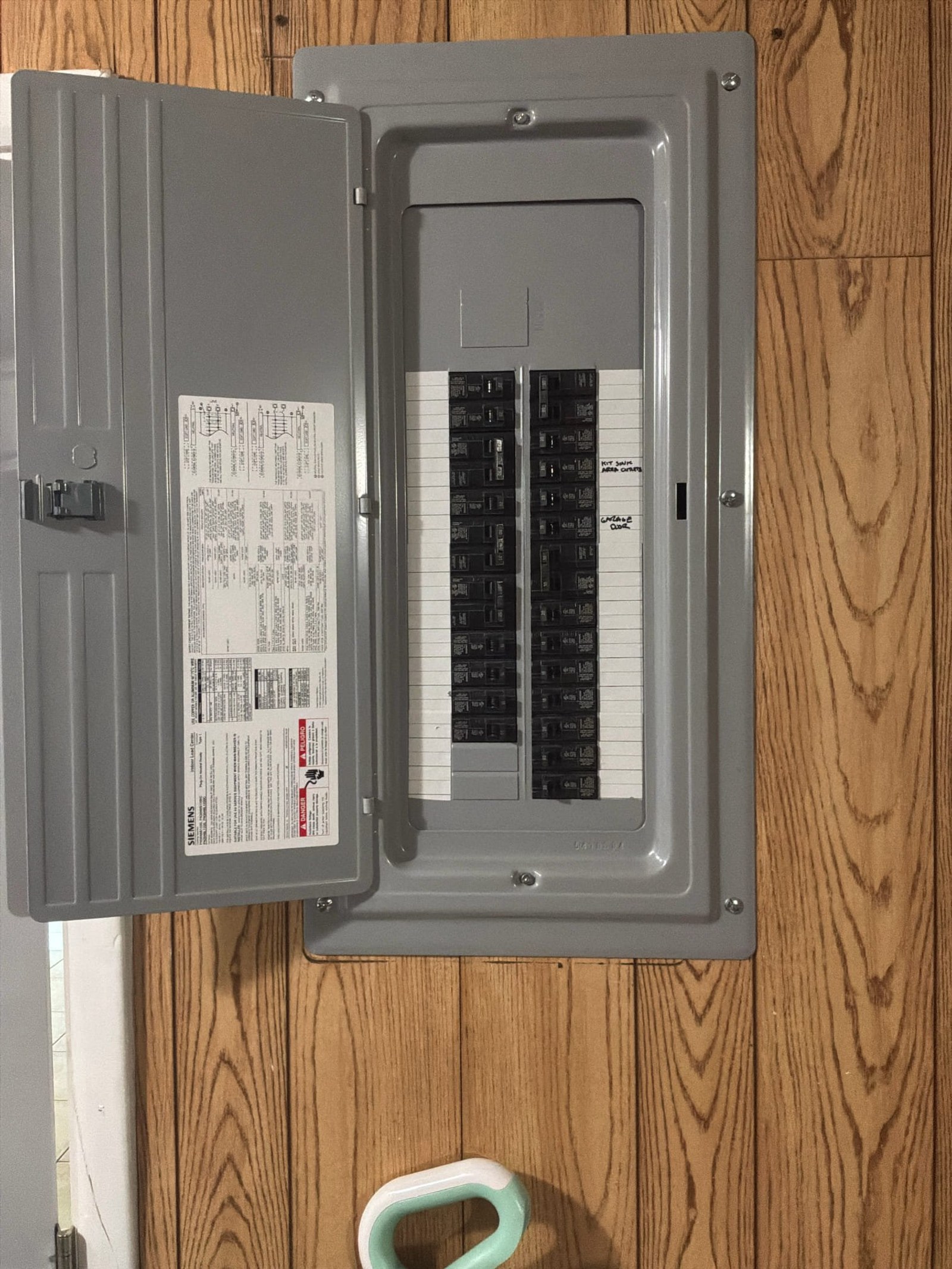
A little planning keeps your food cold and your breaker quiet. It also protects a costly appliance from our worst weather.
The Circuit Behind the Fridge
A full-size fridge should sit on a 120-volt circuit of its own. Sharing with a microwave or a toaster leads to trips. It also stresses the compressor each time the power dips.
The outlet must be grounded. Older kitchens near downtown Orlando sometimes still have two-prong outlets. Those need to be replaced, not adapted.
Skip the extension cord. Cords heat up, work loose, and are a common cause of kitchen fires.
Garage Fridges and Florida Heat
An Orlando garage can pass 100 degrees in July. Many standard fridges are not rated for that. The thermostat reads a warm room and the freezer drifts.
Plenty of the refrigerators Orlando garages hold are hand-me-downs from the kitchen. If that is your plan, look for a garage-ready model instead.
Then check the outlet. It should be grounded and not shared with the door opener or a freezer.
Refrigerators Orlando Storm Season Can Knock Out
Hurricane season runs from June through November. Even a weak storm can drop power for hours. A full fridge and freezer hold cold for a while, but not forever.
Short blips are the bigger threat. A quick outage and restart can hit the compressor board hard. That is where surge protection earns its keep.
Surge Protection for the Control Board
Central Florida is the lightning capital of the country. A strike a block away can push a spike down the line. Modern fridges use inverter compressors and control boards that do not shrug that off.
A whole-home surge device at the panel is the first layer. A plug-in protector at the outlet adds a second. We often add both during a panel upgrade.
After one Sanford storm we traced burned fixtures and a dead alarm back to a surge, so see how we handled it for that home.
GFCI Rules and Nuisance Trips
Recent code cycles widened GFCI protection in kitchens and garages. That can include the outlet your fridge uses. A few older fridges trip a GFCI even when nothing is wrong.
Do not fix that by moving the fridge to a random outlet. A licensed electrician can test the circuit and find the real cause.
Placement, Airflow, and Your Power Bill
Where the fridge sits changes how hard it works:
- Keep it away from the range, the dishwasher, and direct sun
- Leave a few inches behind and above for airflow
- Vacuum the coils twice a year, since dust and pet hair build up fast here
- Check the door seals, because humid air leaking in makes the unit run longer
- Pick an ENERGY STAR model to cut both the draw and the heat
You can compare certified models at energystar.gov. A tighter, cooler kitchen helps your AC as well.
Signs the Circuit Is Struggling
A fridge rarely fails without warning. The circuit usually complains first. Watch for these clues:
- The breaker trips when the ice maker and the microwave run together.
- Lights dim for a second each time the compressor kicks on.
- The plug or the outlet face feels warm to the touch.
- You smell hot plastic near the outlet.
- The unit resets itself after an afternoon storm.
A warm outlet is the one to act on today. Call a licensed electrician and stop using that outlet.
Ice Makers, Water Lines, and Outlets
Most fridges now have an ice maker and a water line. Water and outlets do not mix well. Keep the shutoff valve away from the receptacle and check the line for drips twice a year.
A slow leak behind a fridge can go unseen for months. Our humid air hides it, and the tile stays cool. Pull the unit out once a year and look.
Right-Size It for Your Household
A larger box uses more power, so buy for the family you have. A second freezer in the garage is fine, but count it in your load. Every added appliance eats panel space.
Our post on how many dedicated circuits an Orlando home needs lays out the usual list. It is a helpful check before any remodel.
Built-Ins, Wine Fridges, and Beverage Centers
Built-in and counter-depth units hide the outlet inside the cabinet. That outlet still has to be reachable and correctly placed. Cabinet shops sometimes box it in, and then service gets ugly.
Wine fridges and beverage centers are small, but they run all day. In a warm Florida kitchen they run even more. Give one its own circuit if you can, especially in an island or a bar area.
Under-counter units also need airflow at the grille. Blocked airflow shortens the life of the compressor.
Plan for Backup Power
Many families put the kitchen fridge on a generator circuit. A standby unit carries it without a thought. With a portable, you still need a proper inlet and a transfer switch.
Pair that with a whole-house surge protector and your food is far safer through a storm week. Both jobs are quick when done together.
Get Your Kitchen Circuits Checked
Thomas Edison Electric serves Orlando, Altamonte Springs, Longwood, Oviedo, and Casselberry. We add dedicated circuits, replace tired outlets, and set up surge protection for the refrigerators Orlando kitchens run all summer. Call (407) 490-0004. Florida license EC13015487.