
Central Florida sits under more lightning than anywhere else in the country. A strike does not have to hit your roof to reach your wiring, because the energy travels in along the utility lines. That is how your panel takes the hit from a whole house surge Orlando storms produce all summer. Devices then fail days later, and nobody links the two events.
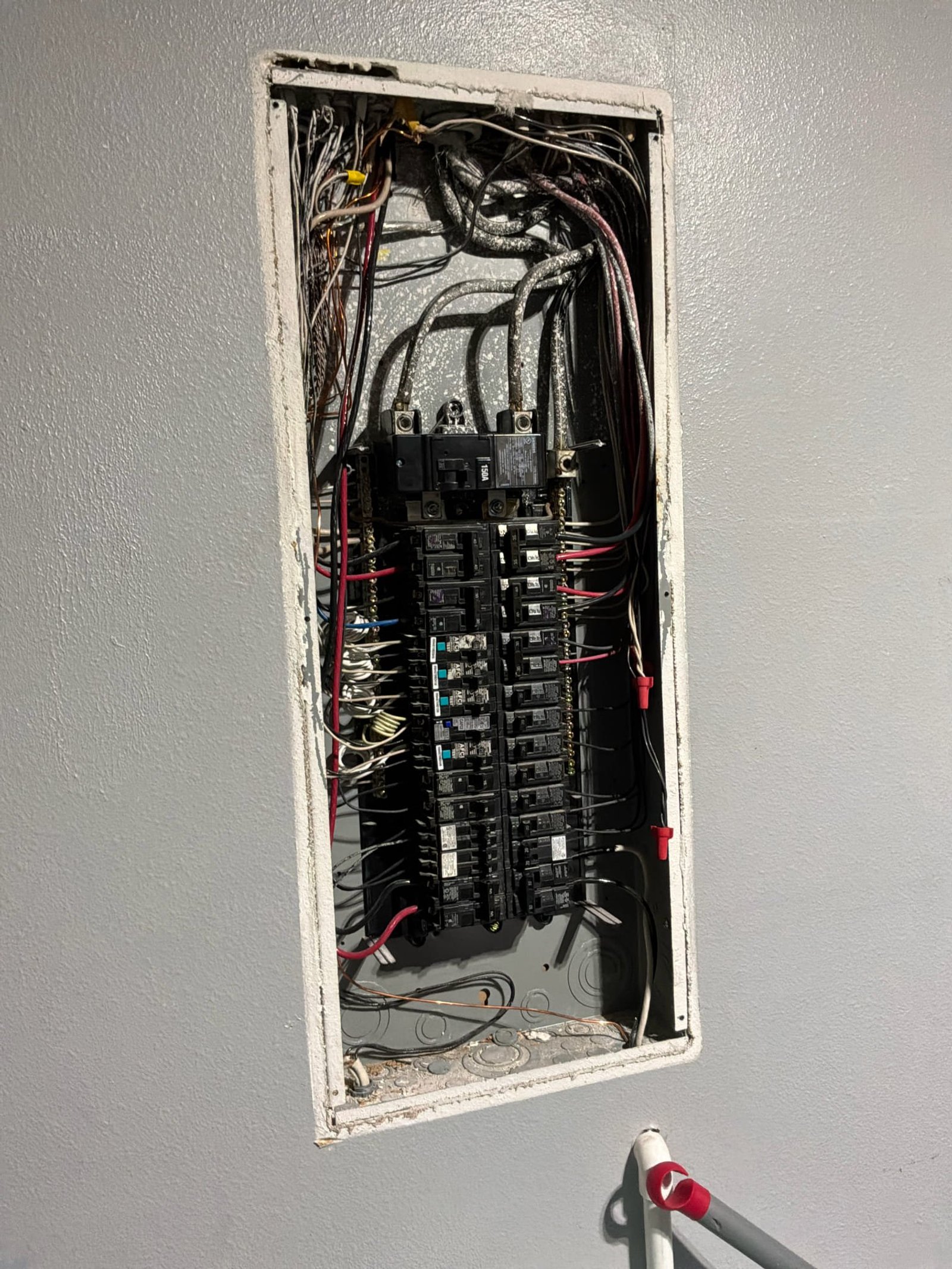
The Damage From a Whole House Surge Orlando Homes See
Modern homes are full of circuit boards. Almost anything with a board is at risk.
- Air handler and heat pump control boards, which cost a lot and take time to replace in July.
- Pool pump controls and variable-speed drives.
- Smart thermostats, video doorbells, cameras and hubs.
- Refrigerators, ovens and washers with digital controls.
- Garage door openers, well pumps and sprinkler timers.
Damage is not always dramatic. Small events add up and cut the life of a board, so the failure later looks like bad luck.
How Surge Energy Gets Into the House
Surge energy always takes a path into the house. Most of it enters through the service wires from the utility. The rest rides in on cable, satellite or phone lines.
Lightning rarely needs a direct hit. A strike into nearby ground pushes energy into buried and overhead lines. That energy reaches your panel in a flash.
Some surges begin inside the house. Large motors cycling on and off make smaller spikes hundreds of times a year, above all in a home with a pool and a well.
How Panel-Level Protection Works
A surge protective device, or SPD, mounts at or beside your main panel. When voltage climbs past a set point, the device sends the extra energy to ground. It reacts in a flash and then resets itself.
Type 1 devices can go ahead of the main breaker, often near the meter. Type 2 devices go on the load side, inside or next to the panel. Both need a short, straight path to ground to work well.
Install details matter as much as the brand. The shorter the leads between the device and the breaker, the better it clamps. We keep those wires short and straight, and we avoid sharp bends.
Ratings matter more than marketing. Look at the voltage protection rating and the surge current capacity, not only the joule number on the box.
What a Panel Device Does Not Cover
Panel protection is the first stage, not the whole answer. It does nothing about energy arriving on a coax or Ethernet run.
- Bond cable and satellite grounds properly at the service.
- Add plug-in protection for computers, televisions and network gear.
- Guard the low-voltage side of camera and alarm systems.
- Unplug prized gear when a severe storm sits right overhead.
The National Weather Service shares solid lightning safety guidance for households. Our own electrical storm safety basics article covers what to do during an outage.
How to Tell If Yours Still Works
Most devices have a small light or two on the front. Green means the unit is still on duty.
A dark or red light means it has done its job and needs a swap. Some models chirp as well.
Check it after every rough storm week. Snap a photo of the panel label so you know the install date.
What to Do After a Close Strike
A close strike can leave damage you cannot see. Work through a short list.
- Reset any tripped breakers one at a time.
- Check the AC, the well pump and the pool pump for power.
- Sniff for a burning smell at the panel and at outlets.
- Test the smoke alarms, since a spike can knock out the link between them.
- Call an electrician if a breaker will not reset or feels hot.
Do not ignore a breaker that keeps tripping. That is a sign of real damage, not a nuisance.
Code, Inspections and Replacement
Recent editions of the National Electrical Code require surge protection on new and replaced dwelling services. Florida enforces that code through the state building code, so a panel swap usually triggers the rule. In practice, every new service now gets some defense against a whole house surge Orlando lightning can create.
These devices are sacrificial. Their inner parts wear down with every event they absorb. Replace the unit once the status light changes. NFPA publishes the code that sets those install rules.
Cost Against Risk
A panel device plus labor costs far less than one new air handler board. It also runs for years with no upkeep.
Insurance may help after a strike, but claims take time and deductibles bite. In our heat, a week without cooling is more than a nuisance.
Think of it the way you think of a roof strap. You buy it before the season, not after.
Storms, Outages and Backup Power
Surge protection and backup power solve different problems. A generator keeps the air conditioning running, while an SPD keeps the control board alive when power returns. The moment power comes back often carries a spike.
That is why both belong in a hurricane season plan. If you are adding standby power, review generator safety for Central Florida storm season before the first watch is issued.
Protect Your Orlando Home Before the Next Storm
We install panel-level devices as part of our whole-house surge protection work in Orlando, Sanford, Longwood and Altamonte Springs. Most jobs take a couple of hours and need a short power shutdown. You can see what surge damage looked like at one Sanford home and what it took to correct.
Call Thomas Edison Electric at (407) 490-0004 to book an evaluation. We are licensed in Florida under EC13015487.