
A new oven can change how your kitchen works. It can also outrun the wiring behind the wall. Before you shop, learn which ovens Orlando kitchens can actually power. A little homework now keeps the whole remodel on track.
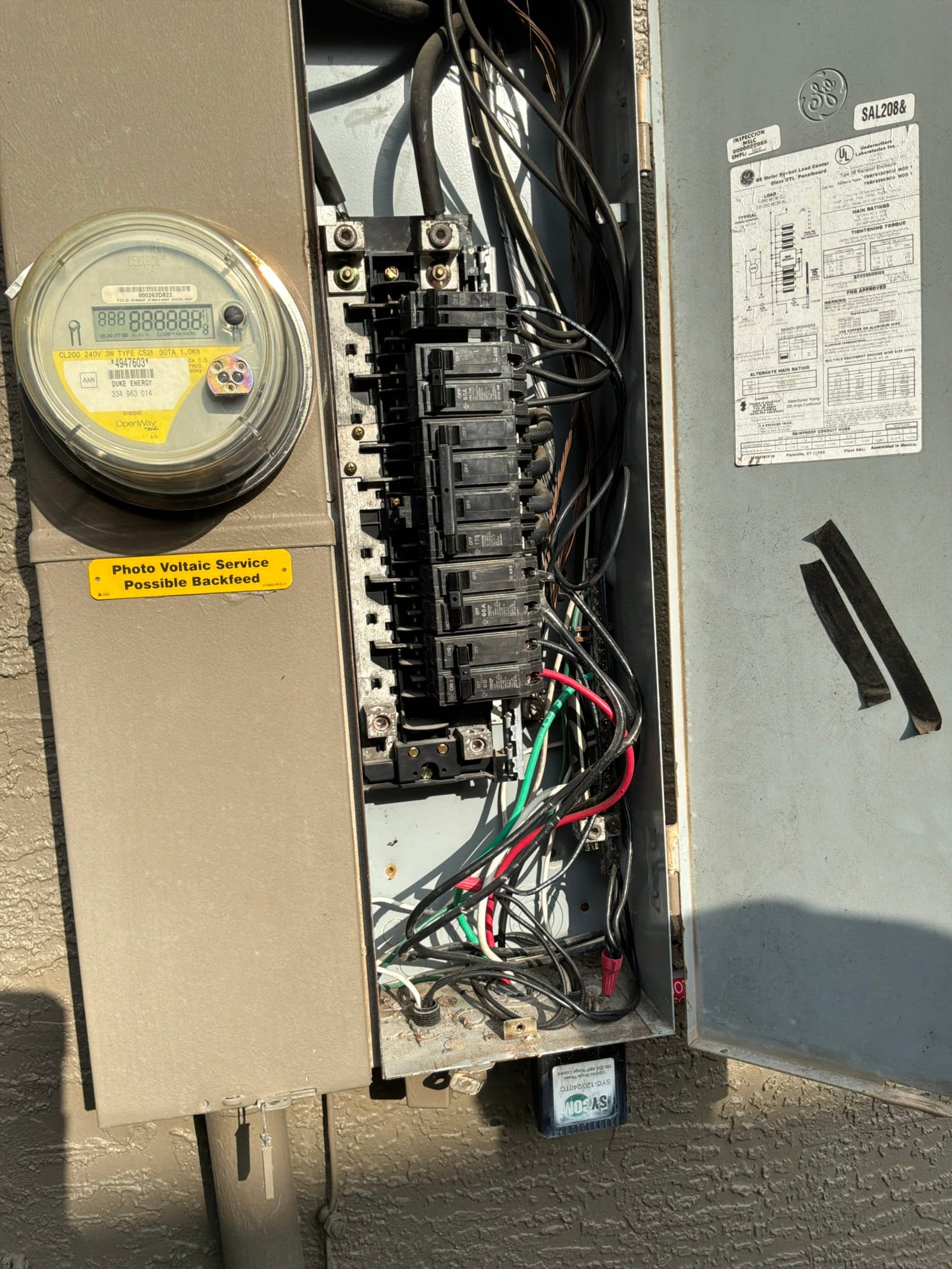
Homes here run from 1950s bungalows near downtown to new builds in Winter Garden. The gap between those two panels is huge.
Check Your Panel First
Most electric ranges need a 240-volt circuit of their own. Wall ovens need one too. If your panel is full or dated, that circuit has nowhere to land.
The ovens Orlando homeowners choose today often pull more power than the ones they replace. Bigger cavities, air-fry modes, and steam features all add draw.
We still find Federal Pacific and Zinsco panels in Orlando, Winter Park, and Winter Springs. Those brands are known for breakers that fail to trip. A swap is often step one of a kitchen job, so see how we handled an FPE panel replacement in Winter Springs.
Our panel upgrade service covers that work, permit and all.
The 240-Volt Circuit Behind a Range
A freestanding range plugs into a large 240-volt outlet. The breaker size comes from the rating on the nameplate. Your electrician sizes the wire to match that breaker, not the other way around.
Do not reuse an old three-wire range outlet without a check. Newer ranges want a four-wire setup with a separate ground. That change comes up often in homes built before the mid-1990s.
Wall Oven and Cooktop: Two Loads, Not One
Split setups are popular in Orlando remodels. The wall oven goes in a tall cabinet, and the cooktop sits in the island. Each piece has its own rating and often its own circuit.
Double wall ovens draw more than most people expect. Share the model numbers with your electrician early. That way the rough-in matches the real appliance, not a guess.
Ovens Orlando Homes With Older Panels Can Handle
If a panel upgrade is not in the budget yet, you still have choices. A single wall oven draws less than a double. A range with a gas cooktop needs only a small circuit for the igniter and controls.
- Single wall oven: one dedicated 240-volt circuit
- Freestanding electric range: one dedicated 240-volt circuit
- Double wall oven: a larger circuit and more panel space
- Gas range: a standard grounded outlet for the igniter and clock
- Induction cooktop plus wall oven: two circuits in most homes
A load calculation shows which of these your service can carry today. It also shows how much room is left for later.
Induction Is Growing in Central Florida
An induction cooktop heats the pan and not the room. In a kitchen that already fights August heat, that helps. Your AC works less while dinner cooks.
The trade-off is power. Most induction units want a strong 240-volt circuit and a panel with room to spare. Plan for that before the cabinets go in.
Heat, Vent Hoods, and the Summer Bill
An oven dumps heat into the room, and here your AC pays for it. A hood that vents outside helps far more than one that just recirculates. Humid air makes that gap even wider.
Hoods need a switch leg and sometimes a circuit of their own. Make-up air can matter in tight new builds too. It is worth a short talk during planning.
Permits, Inspections, and Your Insurance
Orange, Seminole, and Osceola counties all require a permit for a new circuit. An inspection follows the work. That paper trail matters if you ever file a claim or sell the house.
The National Fire Protection Association writes the code your inspector uses, and you can read more at nfpa.org. A licensed contractor pulls the permit for you.
Watch for Aluminum Branch Wiring
Some Central Florida houses built in the mid-1960s through the mid-1970s have aluminum branch wiring. Kitchen work is a good time to look. Loose aluminum connections heat up and can start a fire.
Fixes are simple once found. An electrician can pigtail the joints with rated connectors and correct any burnt terminals.
Outdoor Kitchens on the Lanai
Screened lanais and summer kitchens are big here. An outdoor oven or a pizza unit brings its own rules. Parts have to be rated for damp or wet spots, and outlets need weather covers.
GFCI protection is required outdoors. Run the circuit in conduit, not loose cable, and keep the run away from pool bonding. A pool nearby adds more rules, so ask early.
Salt is not a big worry this far inland. Humidity and driving rain still are, so sealed boxes matter.
Smart Ovens Need More Than Power
Many new ovens link to an app. They preheat on a schedule and send alerts to your phone. The oven itself does not care, but your Wi-Fi does.
Kitchens sit in the middle of most homes, ringed by metal appliances. A weak signal makes a smart oven feel broken. A mesh point nearby usually fixes it.
Time the Delivery Around the Wiring
Order the appliance first, then book the electrical work. Delivery crews will not wire a new circuit. They also will not pull a permit or change an outlet.
Here is a simple order that works:
- Pick the model and save the spec sheet with the nameplate rating.
- Have the panel and circuit checked against that sheet.
- Schedule any panel work and let the inspection close out.
- Take delivery and have the unit set and tested.
- Keep the paperwork with your home records.
That order keeps a new range from sitting in the garage for a week.
Plan the Whole Kitchen at Once
An oven rarely arrives alone. New lighting, counter outlets, and a microwave circuit usually come with it. Our guide to kitchen remodel wiring walks through the full list.
If you are only swapping the range, our post on range and oven wiring covers the details.
Book a Kitchen Power Check
Thomas Edison Electric works in Orlando, Maitland, Ocoee, Kissimmee, and Lake Mary. We can size the circuit for the ovens Orlando showrooms are selling right now. Call (407) 490-0004 to set a time. Florida license EC13015487.