Before & After
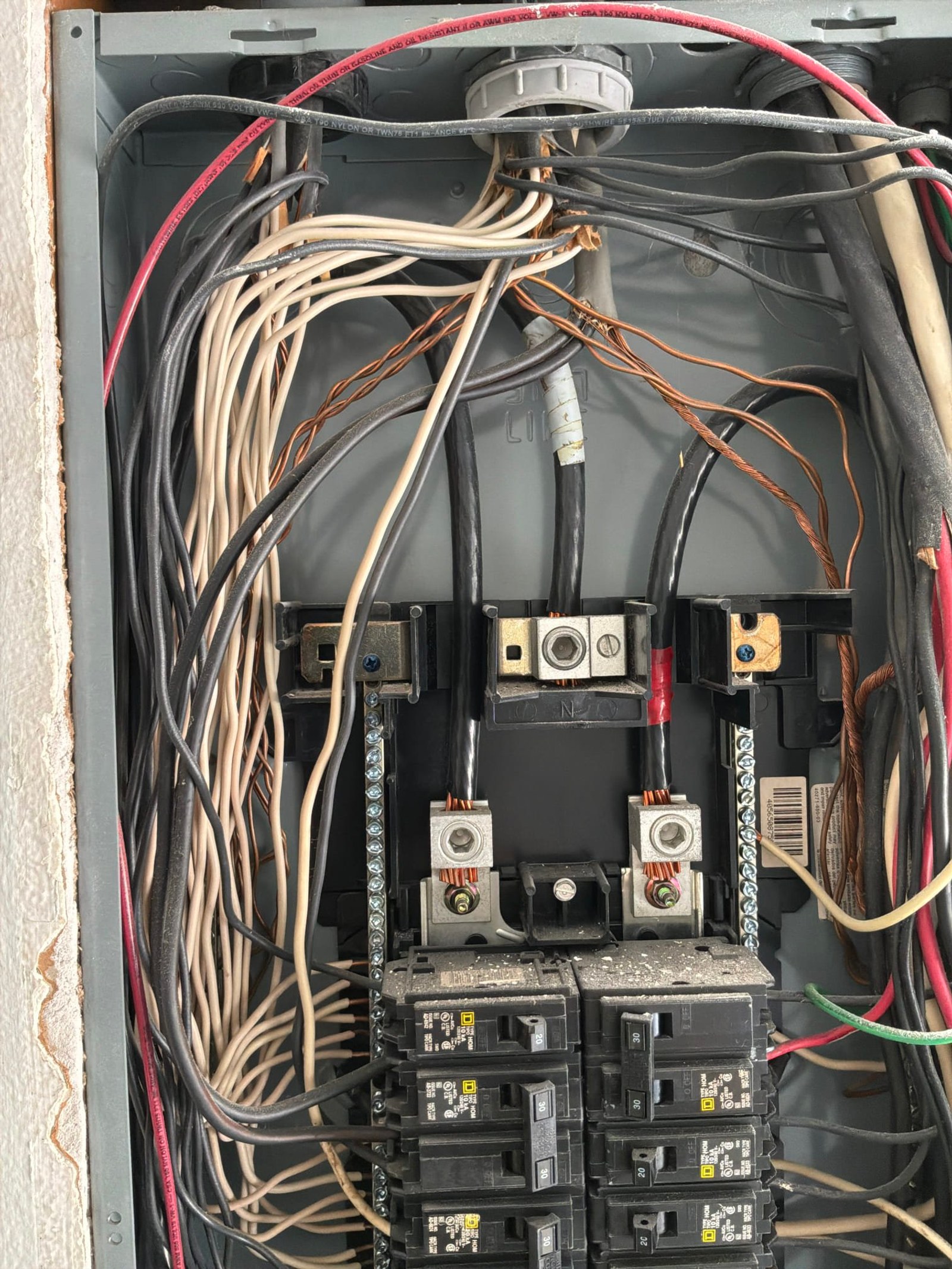
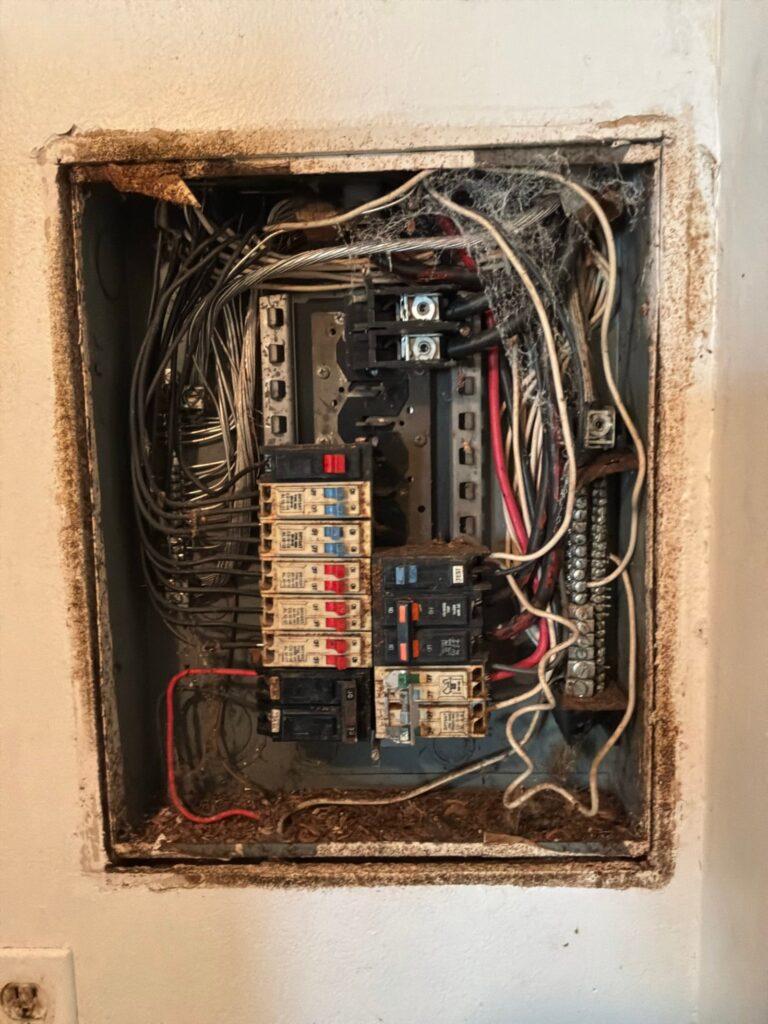
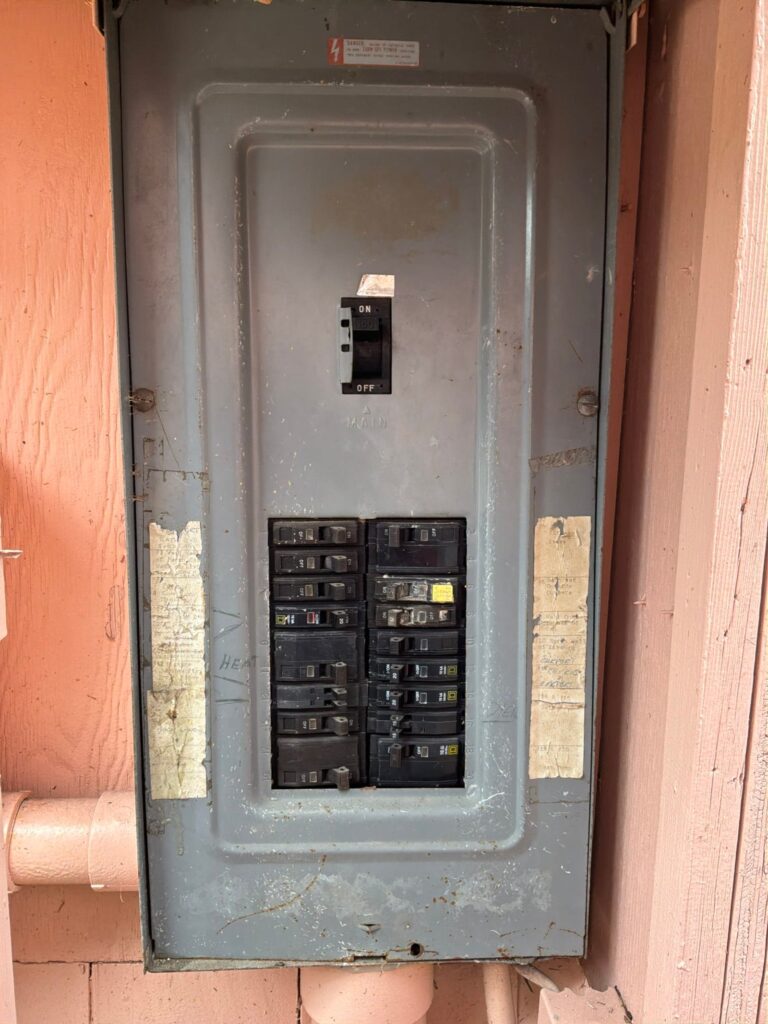
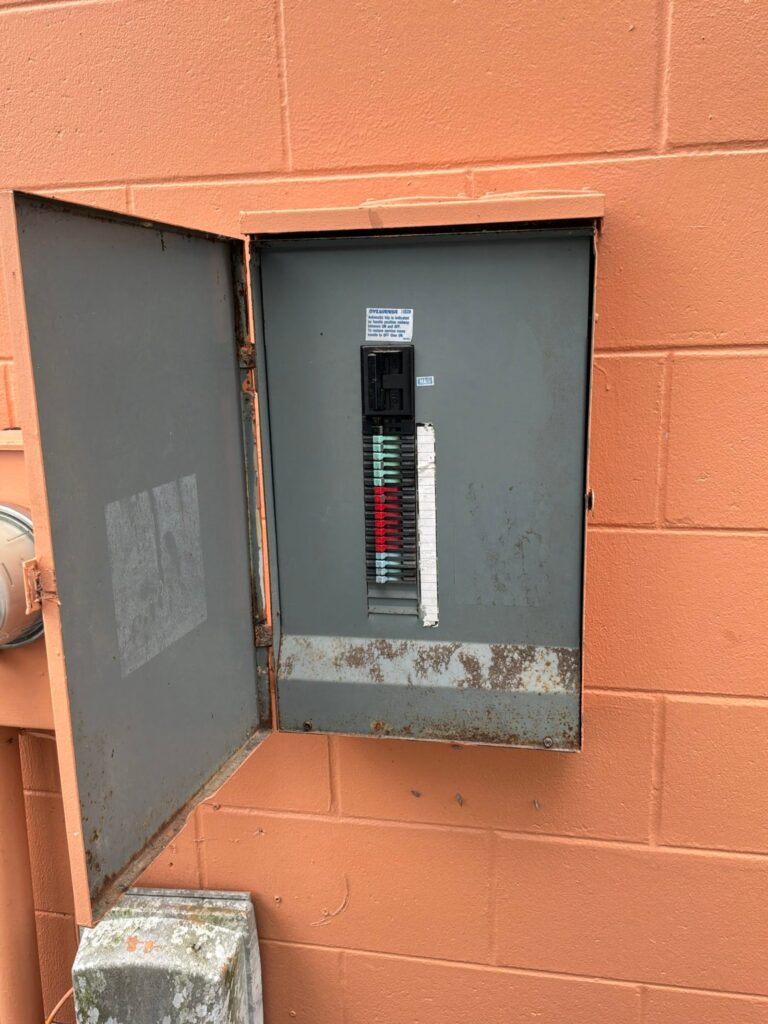
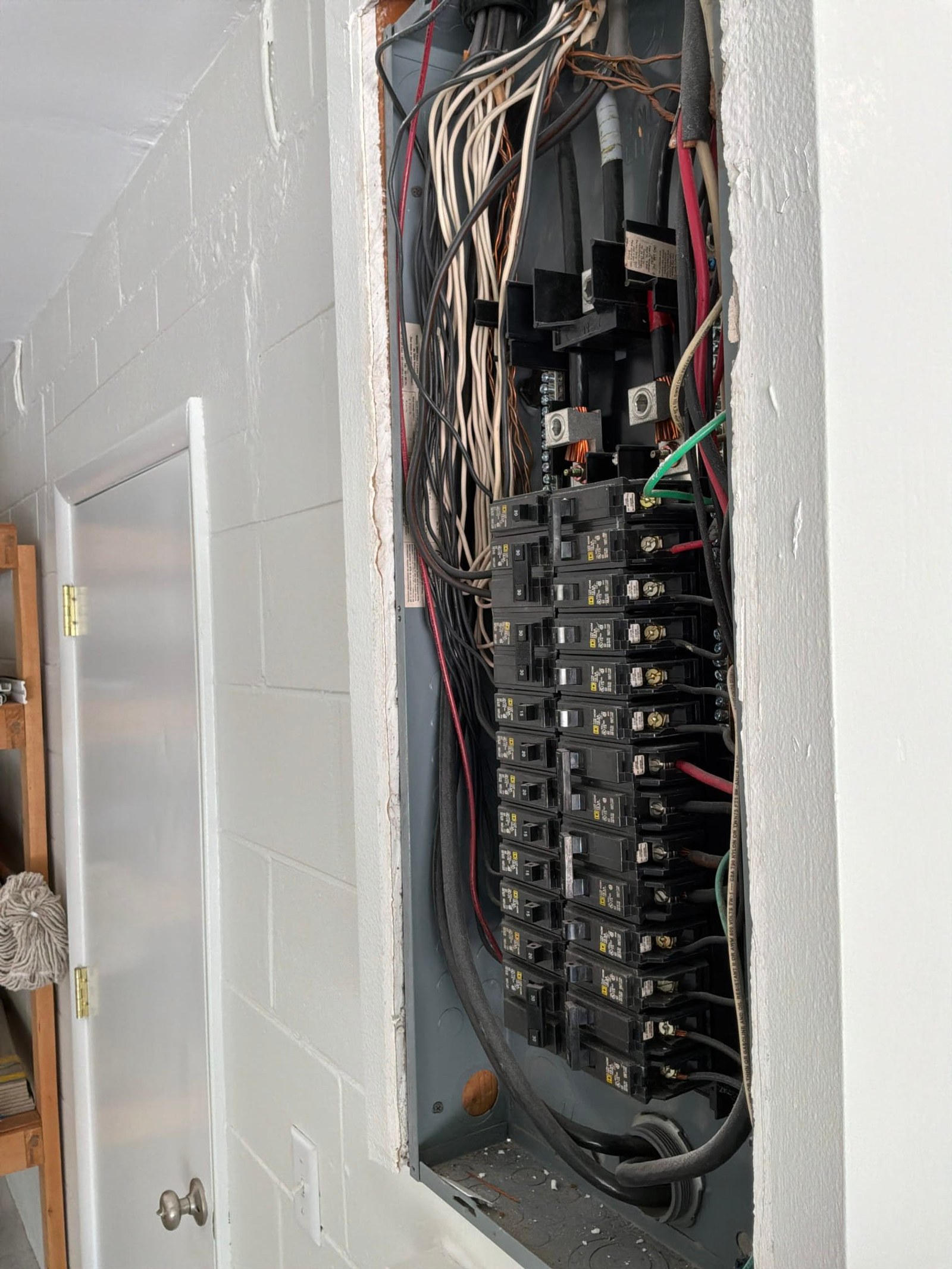
This Winter Springs panel upgrade case study walks through the real diagnosis, the fix, and the code details from a recent service call. A homeowner in Winter Springs, FL reached out after Hurricane Milton left a trail of surge damage through their home: a smoke alarm knocked offline, multiple LED fixtures dead, and a bath fan on its last legs. Our field team arrived to find an aging Federal Pacific Electric (FPE) Stab-Lok panel at the center of the picture, no whole-home surge protection in place, and several conditions worth modernizing before the next storm season. We replaced the FPE equipment, upgraded to a Square D QO 200A panel with a dedicated main disconnect, installed surge protection, and documented the home’s return to current code compliance, exactly what the homeowner needed.
The Problem
The homeowner had a clear goal coming in:
“I want the FPE breakers replaced, a main disconnect added, and I need documentation showing the house was brought up to code compliance.”
After Hurricane Milton passed through, the effects were hard to miss. A smoke alarm had been taken offline by the surge. Several LED fixtures across the home had failed. The bath fan was no longer functioning properly. Meanwhile, our inspection confirmed there was nothing between the home’s sensitive electronics and the next grid event, no surge protection of any kind.
Investigation
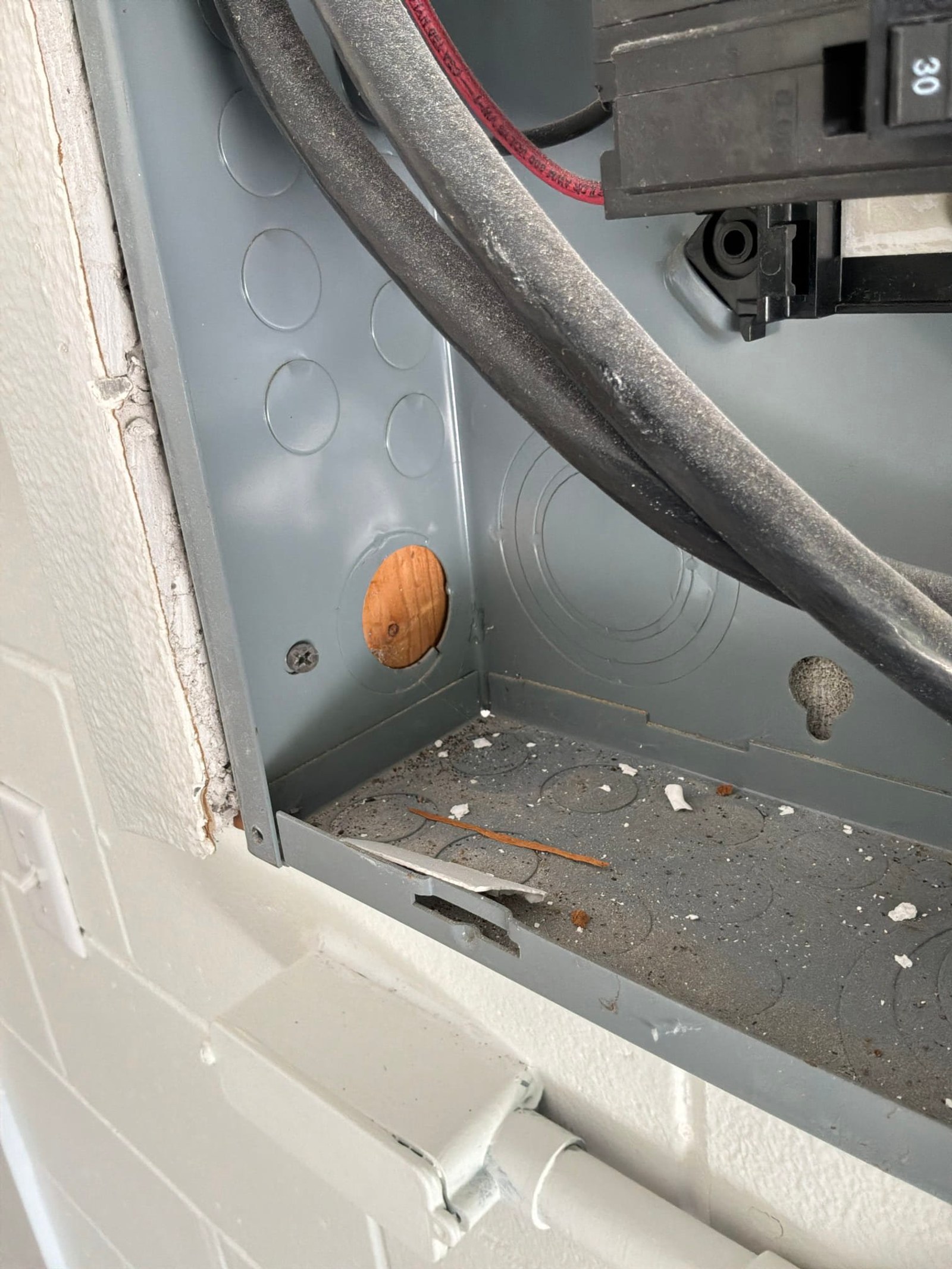
Our licensed electrician on site began with a full panel and whole-home inspection. The existing Federal Pacific Electric Stab-Lok panel is a well-documented design from an earlier era, widely installed through the 1970s and into the 1980s, that no longer meets current listing requirements under today’s standards. The Square D QO 200A service already in place gave us a solid foundation for the upgrade path.
Panel and Service Findings
The inspection checklist told a clear story. Neutrals and grounds were properly separated, breakers were correctly sized, the grounding system was intact, and tamper-resistant receptacles were already present throughout. Those were all green.
On the amber side, the team noted several conditions worth addressing: some outlets showed signs of backstabbed connections, a wiring shortcut common in homes of this vintage where the spring-clip tension eases over time and contact resistance climbs. A handful of outlets showed minor voltage drop. Some older switches showed signs of wear from years of cycling. The weatherhead mounting, the eye bolt securing the service entrance, and minor surface rust on the busbar were all flagged as areas to watch or correct. AFCI protection was not present on all required circuits.
The two red-flag findings were the absence of any surge protective device and evidence of corrosion or burning at connection points, both consistent with a home that absorbed a significant surge event without protection in place.
Post-Hurricane Collateral Damage
The technician documented the smoke alarm that had been removed after the surge rendered it inoperable, the failed bath fan, and the multiple LED fixtures that no longer functioned. These are the downstream effects of an unprotected surge, the kind of thing that repeats itself without a whole-home SPD in the picture.
What We Fixed
Our crew worked through a comprehensive scope to bring the home fully into compliance and protect it going forward.
- FPE Stab-Lok breaker replacement: The legacy FPE equipment was removed and replaced with properly listed breakers in the existing Square D QO 200A panel. Square D QO breakers carry a current UL listing and meet 2020 NEC requirements for proper breaker listing under NEC 408.4.
- Main disconnect installation: A dedicated main disconnect was added, giving the homeowner, and first responders, a single, clearly identified shutoff point for the entire service.
- Whole-home surge protection: A Type 2 surge protective device was installed at the panel per NEC 230.67 and NEC 285.25. Every circuit in the home now sits behind a first line of defense against future surge events.
- Smoke alarm replacement: The surge-damaged smoke alarm was replaced with a 10-year sealed lithium smoke/CO combination detector with interconnect capability, bringing the home back into alignment with NFPA 72 requirements.
- Bath fan and LED fixture replacements: The failed bath fan and affected LED fixtures were replaced, restoring normal function throughout the home.
- Code compliance documentation: Per the homeowner’s specific request, our team prepared documentation on company letterhead confirming that the home was brought up to current code compliance, useful for insurance, real estate, and peace of mind.
Why This Winter Springs Panel Upgrade Matters for Homeowners
FPE Stab-Lok panels were installed in tens of thousands of Florida homes built between roughly 1960 and 1990. They were permitted and inspected at the time. Today, however, they no longer carry a current listing, and replacement is the standard recommendation across the electrical industry. If your home was built in that window and hasn’t had a panel evaluation, it’s worth knowing what’s inside the box.
Hurricane Milton was a reminder that Central Florida’s storm season doesn’t give much warning. A whole-home surge protective device, required on new residential services under NEC 230.67 since the 2020 code cycle, is the single most effective way to keep the refrigerator, AC, computers, and smart-home devices running smoothly after a grid event. With one in place, the family in Winter Springs doesn’t have to inventory failed fixtures the morning after the next storm.
Above all, this job illustrates the compounding value of bringing everything to one standard at once. The smoke alarm, the fixtures, the fan, the panel, each was a separate problem, but they all traced back to the same unprotected event. For any household that’s been through a significant storm, a post-event inspection is one of the quietest, most practical things you can do to make sure the home is ready for whatever comes next. Our team is licensed under Florida EC13015487, and you can verify the license directly any time.
Code Compliance Cited in This Job
Every fix above maps to a specific section of the 2020 NEC, the edition Florida enforces under the 8th Edition Florida Building Code. Florida adopts the 2023 edition of the NEC when the 9th Edition takes effect on December 31, 2026. Each card links to NFPA’s public NEC index.
Surge Protective Device at Service
NEC 230.67 requires a listed surge protective device (SPD) at the service for all dwelling units. This home had no SPD present at the time of inspection, leaving every circuit unprotected during Hurricane Milton’s surge event. Installing the Type 2 SPD at the Square D QO panel brings the service into compliance with this requirement. NFPA reference ›
Type 2 SPD Installation
NEC 285.25 governs the installation details for Type 2 SPDs, including connection requirements and placement relative to the service equipment. Our crew installed the SPD in accordance with these requirements to ensure the device performs as rated during future surge events. NFPA reference ›
Circuit Directory and Breaker Listing
NEC 408.4 requires that all breakers installed in a panelboard carry a current listing appropriate for that enclosure. FPE Stab-Lok breakers no longer meet current listing requirements, making replacement with properly listed Square D QO breakers the correct path to compliance. NFPA reference ›
AFCI Protection
NEC 210.12 requires arc-fault circuit-interrupter protection on branch circuits supplying outlets in dwelling unit living areas, bedrooms, and kitchens. The inspection flagged AFCI protection as not fully present on all required circuits, making this an area for future modernization on the home’s branch circuits. NFPA reference ›
Replacement Receptacle Requirements
NEC 406.4 (D) requires that receptacles replaced in existing installations meet current code requirements, including GFCI protection where applicable. Several outlets showed backstabbed connections and minor wear, conditions consistent with this home’s vintage, and replacement receptacles must be screw-terminated and meet current standards. NFPA reference ›
Common Questions
Questions homeowners ask after seeing this kind of work.
Why are FPE Stab-Lok panels recommended for replacement in Florida homes?
FPE Stab-Lok panels were widely installed in Florida homes built between the 1960s and mid-1980s and were code-compliant at the time. Over the decades, industry testing found that some Stab-Lok breakers may not trip reliably under overcurrent conditions by today’s standards, and the product line no longer carries a current UL listing. Replacing them with a listed panel brings the home in line with current requirements and gives the household the dependable, modern overcurrent protection it deserves. If your home was built in that era and hasn’t been evaluated, our team can schedule an inspection at your convenience.
Do I need whole-home surge protection if I already use power strips?
Power strips offer limited, point-of-use protection for the devices plugged directly into them. They don’t cover hardwired appliances like your AC unit, refrigerator, well pump, or any device on a circuit you haven’t individually protected. A whole-home Type 2 SPD at the panel is the first line of defense, catching surge energy before it reaches any branch circuit. Think of it as a team effort: the panel-mounted device handles the heavy surge, and quality point-of-use strips add a second layer for computers and entertainment equipment. For Central Florida homes that see regular storm activity, having both in place means the household keeps running smoothly through every season. Schedule online to have an SPD added to your panel.
How often should I have my home’s electrical system inspected?
A yearly inspection is a solid baseline for most households. It keeps small findings from becoming bigger ones and gives you an up-to-date picture of your home’s electrical health. Homes built before 1990, or any home that has come through a significant storm like Hurricane Milton, benefit from inspections more frequently, since surge events and aging materials can change the picture quickly. An annual check is also useful before listing a home for sale or after a major renovation. Our licensed team can book a visual safety inspection so you know exactly where things stand.
What is a main disconnect, and why would a home not have one?
A main disconnect is a single switch or breaker that cuts power to the entire panel, useful for the homeowner during emergencies and required by utilities and inspectors for clear, safe service shutoff. Older homes were sometimes wired with a ‘six-throw rule’ arrangement that allowed up to six breakers to serve as the disconnect, rather than one dedicated switch. Current code and modern best practice favor a single, clearly marked main disconnect. Adding one is straightforward and gives the whole household, and any first responders, a reliable, unambiguous way to shut the service down. Interested in adding one to your home? Schedule online and we’ll walk you through the options.
Can surge damage from a hurricane cause electrical components to fail gradually rather than all at once?
Yes, surge events don’t always knock devices out immediately. A surge can degrade the internal components of LED drivers, bathroom fans, smoke alarms, and smart devices, leaving them functional for days or weeks before they fail entirely. This is sometimes called ‘latent damage,’ and it’s one reason a post-storm inspection is worthwhile even when the lights appear to come back on normally. Catching degraded components early means replacing them on your schedule rather than troubleshooting an unexpected failure at an inconvenient time. If your home came through a recent storm and you’re noticing intermittent issues, our team can book a post-storm check to document what’s worth replacing now.
Want to see more real jobs like this one? Browse our completed case studies or explore our services.