
Swapping a range looks like an appliance job until the cord does not match the wall. The electric range wiring Orlando kitchens rely on is a 240-volt circuit with strict sizing rules, and it deserves a real look before delivery day. A quick check up front avoids a rescheduled install. It also avoids the scorched receptacles we still find behind old ranges.
How Much Power a Range Actually Draws
Most freestanding electric ranges land on a 40-amp or 50-amp, 240-volt circuit. The appliance nameplate settles it, not a rule of thumb. Conductor size follows the breaker, so a 50-amp circuit needs heavier copper than a 40-amp one.
The code does give some relief in load calculations. A single household range counts at a reduced demand figure rather than its full nameplate rating. That math matters when your panel is already close to full.
Before we size anything, we check a short list of details. Any one of them can change the answer.
- The nameplate rating printed on the range, oven, or cooktop
- The distance from the panel to the kitchen wall
- The temperature the cable passes through on its way there
- Whether you are buying one range or a separate cooktop and oven
- What the panel is already feeding on a hot afternoon
Three-Wire Outlets Versus Four-Wire Outlets
Older Orlando homes often have a three-prong range receptacle. Newer ranges ship with a four-wire cord that keeps the neutral and the ground separate. That difference trips up a lot of delivery crews.
Existing three-wire installations may stay in service under limited conditions. New work is four-wire, and any change to the receptacle or the circuit pushes the job into today’s rules. Never file down a prong or defeat a ground to force a fit.
What Electric Range Wiring Orlando Homes Need From the Panel
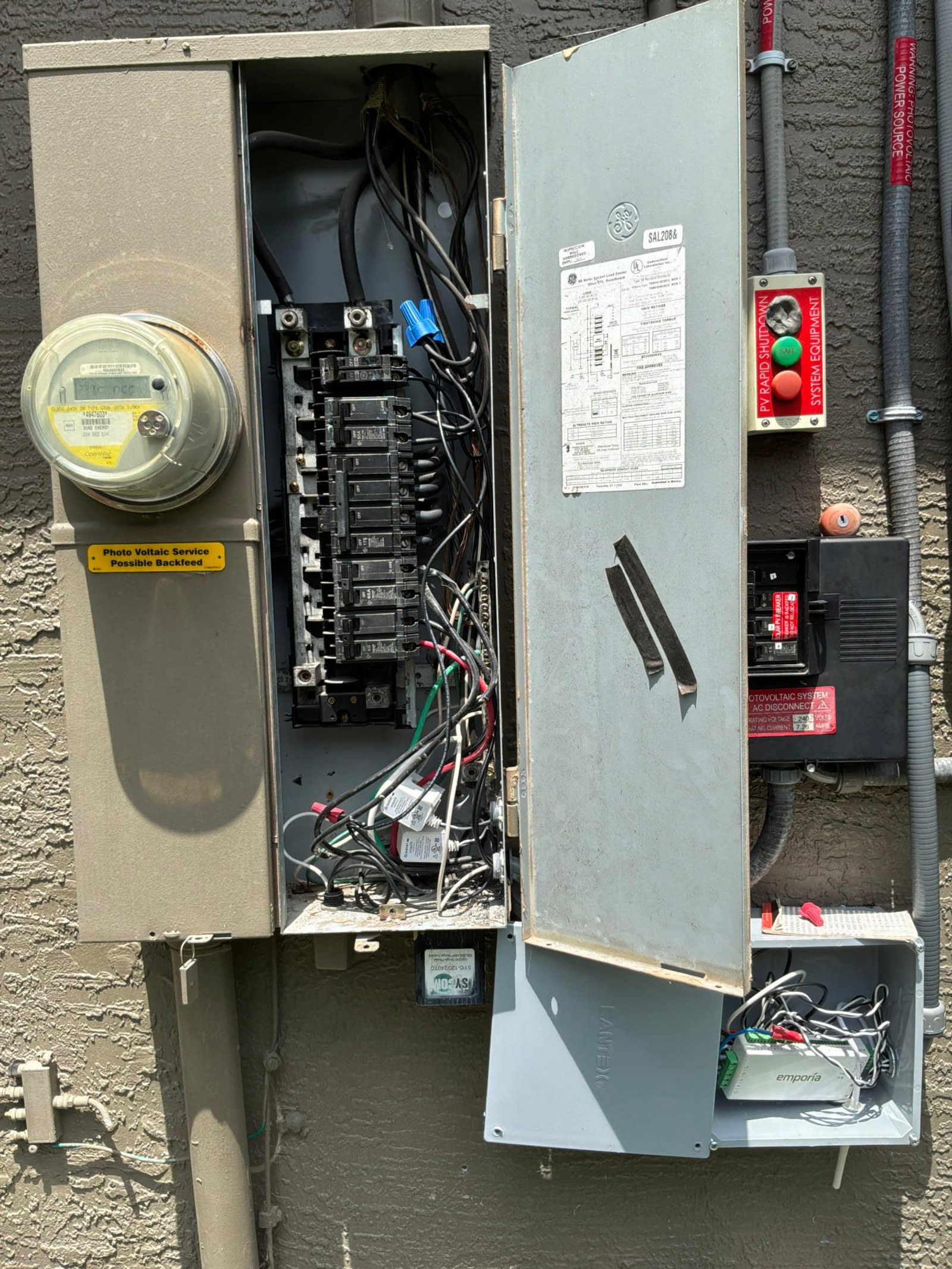
Everything traces back to the service panel. We check available breaker spaces, bus rating, and the condition of the neutral and ground bars. Heat, humidity, and coastal air are unkind to older equipment.
Homes built for a smaller electric load can run out of room fast. When they do, an electrical panel upgrade comes first. During one Belle Isle project we uncovered four separate issues inside a single panel, all of them invisible from the outside.
Attic Heat Changes the Math
Here is a detail that rarely comes up in cooler parts of the country. Slab homes route new kitchen circuits through the attic, and a Central Florida attic can pass 130 degrees in July. Conductors carry less current safely as ambient temperature climbs.
The code answers that with temperature correction factors. In practice it can mean upsizing the cable for a long attic run. An installer who ignores ambient heat may leave you with warm cable and a breaker that trips on Thanksgiving.
Cooktops and Wall Ovens Are Not One Circuit
Split installations are popular in newer Lake Nona and Horizon West kitchens. A separate cooktop and wall oven are two appliances, and they usually need two circuits. Each gets sized from its own nameplate.
Double wall ovens draw even more. Some models need a 50-amp feed on their own, plus a junction box within reach of the cabinet opening. Plan the box location before the cabinets are set.
Induction Ranges and All-Electric Homes
Induction cooking is growing quickly across the metro. The surface heats cookware directly, so the kitchen stays cooler, which is no small thing in August. The Department of Energy explains the efficiency side well on its Energy Saver pages.
Most induction units still want a full 40-amp or 50-amp circuit. Since natural gas is rare in local subdivisions, that circuit sits alongside an electric water heater, an electric dryer, and heat-pump cooling. Total demand is what your panel has to answer for.
Where the Receptacle Should Land
Placement sounds like a small detail until the range will not slide back. Most manufacturers publish a target zone for the outlet, usually low and offset to one side. Miss it and the cord bends hard against the wall.
Cable that lives behind an appliance still needs slack and protection from crushing. It also has to clear the anti-tip bracket that anchors the range to the floor. We set the box using the model’s own rough-in sheet.
Delivery Day Goes Better With a Plan
Appliance delivery teams are not licensed electricians. They can plug a matching cord into a matching receptacle, and that is where their scope ends. If the outlet is wrong, the range goes back on the truck.
That is why we recommend confirming the electric range wiring Orlando homes already have before the truck arrives. A ten-minute check beats a second delivery fee. Send us the model number and we can tell you what the circuit has to be.
Warning Signs Behind the Range
Range circuits fail slowly, and they give warning first. Pull the appliance out once a year and look. If you spot any of the following, stop using the circuit and call an electrician.
- Browned or melted plastic at the receptacle face
- A cord that feels hot near the plug after normal cooking
- Scorch marks, rust, or a burnt smell at the outlet box
- Lights that dim noticeably each time the oven element cycles
- A breaker that trips during self-clean or under heavy use
- A loose receptacle that shifts when you unplug the range
Cooking equipment is a leading source of home fires, as the NFPA reports each year. Loose terminals generate heat long before anything visibly fails. Tightening or replacing them is inexpensive work.
Permits, Testing, and Handoff
A new appliance circuit generally needs a permit and an inspection in Orange, Seminole, and Osceola counties. We pull it, then verify voltage, polarity, and torque at every termination. The range gets tested through a full heat cycle before we leave.
If a larger project is underway, coordinate it all at once. Our guides to kitchen remodel wiring for Orlando homes and how many dedicated circuits an Orlando home needs cover the wider picture.
Schedule Your Range Circuit Before Delivery
New appliance on the way? Let us confirm the circuit, the receptacle, and the panel capacity before delivery day. Call (407) 490-0004 to book a visit in Orlando, Oviedo, Sanford, Lake Mary, Casselberry, or St.
Cloud. Thomas Edison Electric holds Florida license EC13015487.