
The electrical terminology Orlando homeowners hear on a quote can sound like another language. Bonding, ampacity, wet location, transfer switch. None of it is hard once someone explains it. Knowing the words makes every quote easier to compare.
This guide sticks to the terms that come up in Central Florida homes. That means pools, lanais, storm gear, and damp air. It skips the textbook list you will never need.
The Words on Your Estimate
Service means the utility power coming into your house, measured in amps. Most homes here have 100, 150, or 200 amps. A service upgrade replaces that whole path, including the meter can and panel.
Load calculation is the math your electrician runs before adding a big appliance. It adds up cooling, water heating, pool gear, and the rest. Ampacity is how much current a wire can carry safely.
Dedicated circuit means one circuit serving one appliance. Pool pumps, ranges, and EV chargers all need their own. If your electric bill has you curious about which loads dominate, our guide to reading your Orlando electric bill connects the two ideas.
Electrical Terminology Orlando Pool Owners Should Know
Bonding ties metal parts together so they all sit at the same voltage. Around a pool, that covers the steel in the shell, the ladders, the pump housing, and the deck. The result is called an equipotential bonding grid.
That grid is why you should never feel a tingle at the pool edge. When people do, bonding is usually the reason. A single visit in Orlando once traced shock complaints to grounding and GFCI gaps at the panel.
Pool subpanel is the small panel near the equipment pad. It feeds the pump, heater, and lights from the main service. A disconnect is the switch that lets a technician kill power to that equipment safely.
Grounding and Bonding Are Not the Same
People swap these words all the time, but they solve different problems. Grounding ties your system to the earth through a rod, or through the steel in your slab. It gives fault current a clear path home.
Bonding, again, evens out voltage between metal parts. Both matter here. In our sandy soil, how well a ground rod works can vary from lot to lot, so inspectors look closely at this part of the job.
Protection Devices, Decoded
- Breaker: trips when current climbs past its rating
- GFCI: cuts power when current leaks to ground, which protects people
- AFCI: senses sparking inside wiring and shuts it off, which protects the house
- Dual-function device: one breaker or outlet doing both jobs
- SPD: a surge protective device, set at or near the panel
- Tamper-resistant outlet: has shutters that block anything but a plug
Surge devices come in types. A Type 1 unit goes on the line side of your main. A Type 2 unit sits in the panel. With this much lightning, one of them belongs on nearly every house.
Outdoor and Lanai Vocabulary
Damp location means a covered spot that gets damp air but not direct rain, like most screened lanais. Wet location means open to rain and spray. Fixtures carry a rating for one or the other. Mix them up and the part fails early.
In-use cover is the bubble-style outlet cover that stays sealed with a cord plugged in. In a wet location, a plain flip-up cover is not enough. PVC conduit is the gray plastic pipe used for most outdoor runs here, because it shrugs off water.
Low-voltage covers landscape lighting and similar systems that run at 12 or 24 volts. A transformer steps the power down, which makes those wires safer to handle. The transformer itself is still fed from a standard 120-volt circuit.
Panel Words Worth Knowing
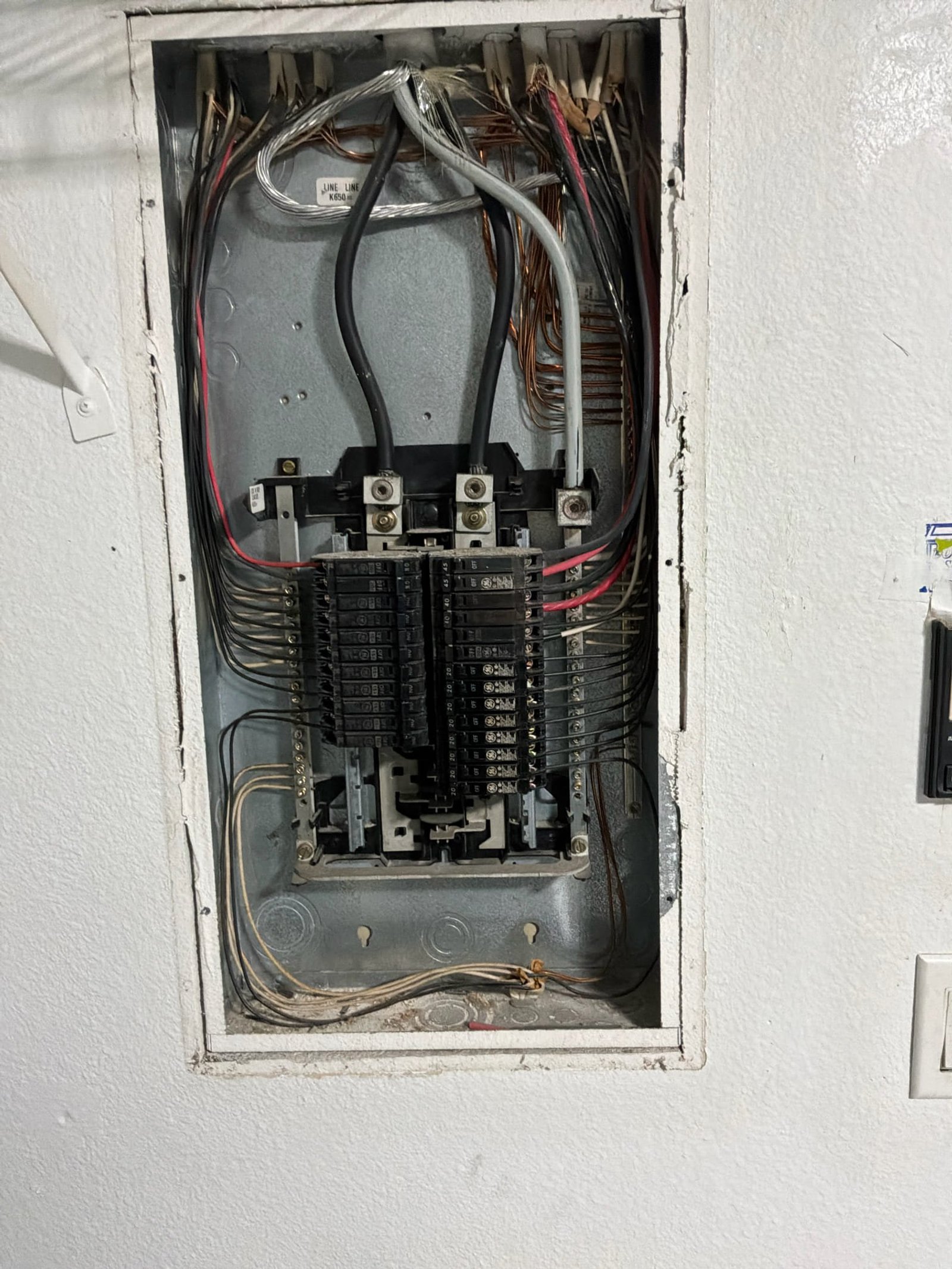
Bus bar is the metal spine inside the panel that breakers clip onto. Main disconnect is the breaker that shuts off everything. A subpanel is a smaller panel fed from the main one, common for garages, additions, and pool pads.
Double tap means two wires crammed under a breaker screw built for one. Inspectors flag it often, and the fix is quick. Neutral and ground must stay apart in a subpanel. Older work misses that a lot.
Storm Season Terms
Transfer switch cuts your home off from the utility before generator power flows. An automatic transfer switch does that on its own, seconds into an outage. An interlock kit is a metal plate that keeps the main and generator breakers from being on at once.
Backfeed is what all of that stops. It is generator power pushing back onto lines where crews are working, and it is truly dangerous. Standby generator means a fixed unit, not a portable one.
Where These Words Come From
Most of the electrical terminology Orlando inspectors use traces back to the National Electrical Code. Florida adopts that code through the state building code, with local tweaks. You can read about the standard itself at NFPA 70.
You will also hear energy-saving terms from your utility. The Department of Energy’s Energy Saver guide spells those out clearly, with no sales pitch attached.
Why the Vocabulary Pays Off
Knowing the electrical terminology Orlando contractors use puts you on even footing. You can tell a thorough scope from a vague one and spot missing items before signing. That alone is worth the ten minutes.
For the bigger picture on how it all fits together, read our companion piece on essential electrical knowledge for local homeowners. Then, if something in your house needs a closer look, book an electrical safety inspection. Call Thomas Edison Electric at (407) 490-0004; our Florida license is EC13015487, and we serve Orlando, Winter Park, Longwood, Kissimmee, and the surrounding area.