
A little basic electrical knowledge saves Central Florida homeowners real money and real worry. You do not need to wire anything yourself. You just need to know where things are, what the warning signs mean, and when to stop and call someone licensed.
Homes here are also built differently than in most of the country. No basements, slab foundations, and blazing hot attics change where your wiring lives. That changes what you should be watching.
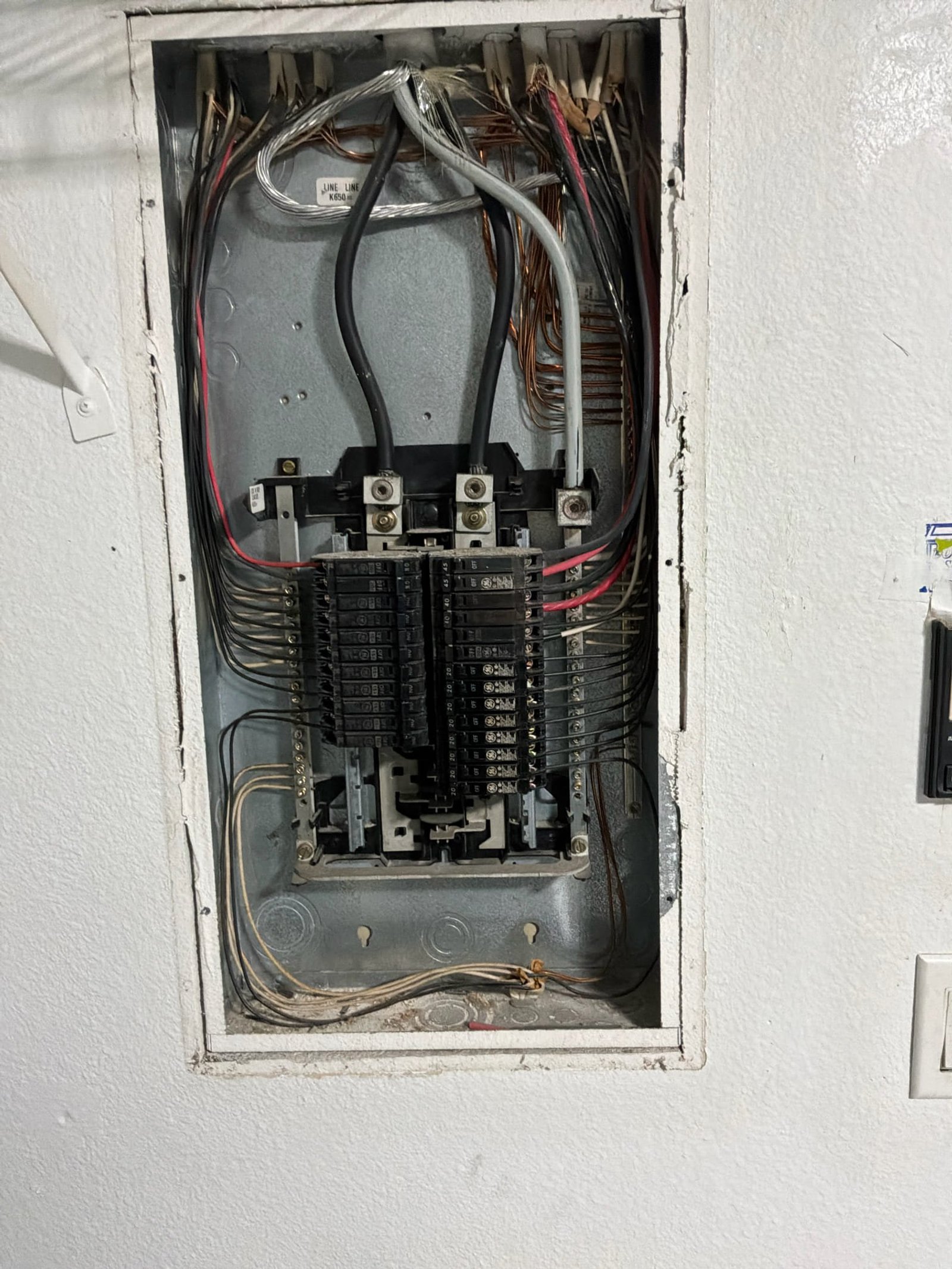
Find Your Panel and Your Main Shutoff
In an Orlando-area house, the service panel usually sits in the garage or on an exterior wall. Older homes sometimes have the main disconnect outside next to the meter, with a subpanel indoors. Walk out today and find yours.
Then locate the main breaker at the top of the panel. That single switch kills power to the whole house. Everyone old enough to help in an emergency should know where it is.
Keep three feet of clear space in front of the panel. Storage boxes and bicycles stack up fast in a Florida garage, but that clearance is a code requirement, not a suggestion.
Know where the meter is too. Everything on the utility side of that meter belongs to Duke Energy, OUC, or your local provider. Everything past it, including the panel and every circuit, is yours to maintain.
Basic Electrical Knowledge Starts at the Breaker Box
Open the door and look at the labels. Most panels carry a directory that a previous owner half-updated in 1997. Spend an afternoon with a helper and a lamp, then relabel every circuit accurately.
Learn to reset a tripped breaker properly. Push it fully to the off position first, then back to on. If it trips again right away, stop; something on that circuit needs attention.
Also note the number stamped on the main breaker. It tells you your service size, commonly 100, 150, or 200 amps. That single number shapes every future upgrade conversation.
GFCI and AFCI Do Two Different Jobs
People mix these up constantly. A GFCI protects people from shock by cutting power when current leaks to ground. An AFCI protects the building by detecting the arcing that starts fires inside walls.
GFCI protection belongs anywhere water is nearby. In our market that list is long, because outdoor living is standard here.
- Kitchen counters and bathroom receptacles
- Garage and laundry outlets
- Lanai, patio, and pool deck receptacles
- Pool pump and spa equipment circuits
- Outdoor outlets used for landscape tools and holiday lighting
Test each GFCI monthly with the test and reset buttons. Humidity and salt air shorten their lives, so replace any device that will not reset cleanly.
Know What Your Service Can Handle
Every home has a ceiling. Air conditioning, a pool pump, a water heater, and an EV charger add up faster than people expect. Continuous loads should stay well under the rating of the circuit feeding them.
Frequent nuisance trips are a symptom, not a personality trait of the panel. If you are planning a charger, a workshop, or a lanai kitchen, run the math first. Our walkthrough on calculating your home’s electrical load shows how that works.
Surge Protection Deserves Its Own Paragraph Here
Central Florida sits in the most lightning-prone region in the country. A nearby strike does not need to hit your roof to damage electronics. It can ride in on the service conductors, the cable line, or a buried irrigation circuit.
Layered protection works well. A panel-mounted device knocks down the big surge, and plug-in strips handle the remainder at sensitive equipment. Skip the cheap power strips with no joule rating; they mostly provide extra outlets.
Warning Signs You Should Never Ignore
Your house gives you notice before most failures. Basic electrical knowledge is largely about recognizing that notice early.
- An outlet or switch plate that feels warm
- Any burning smell near a receptacle or the panel
- Scorch marks, discoloration, or a buzzing sound
- Lights that dim when the air handler starts
- Two-prong outlets in a room you use daily
- Rust streaks inside an outdoor panel or disconnect
Rust deserves special attention in our climate. Humidity and wind-driven rain get into outdoor enclosures, and corrosion on a bus bar creates heat where nobody sees it.
Small Jobs Versus Licensed Work
Changing a lamp cord or a light bulb is fine. Anything behind a wall, inside a panel, or connected to pool equipment is not a weekend project. Permits and inspections exist because these mistakes stay hidden for years.
Pool and spa bonding is a good example. It follows strict rules, and getting it wrong produces the tingling sensation homeowners describe at the pool deck. One Belle Isle panel job turned up four separate problems during a single visit, none of which were visible from the driveway.
Where to Keep Learning
Two free resources are worth bookmarking. The Electrical Safety Foundation International publishes homeowner safety material, and Energy Saver from the U.S. Department of Energy covers efficiency in plain language.
It also helps to speak the language when a technician arrives. Our plain-English rundown of electrical terms Orlando homeowners should know makes those conversations shorter and clearer.
Put That Knowledge to Work
Basic electrical knowledge is not about doing the work yourself. It is about noticing problems early, asking better questions, and planning upgrades before an outage forces the issue.
If something on this page describes your house, schedule an electrical safety inspection and we will walk the system with you. Call Thomas Edison Electric at (407) 490-0004. Our Florida license is EC13015487, and we serve Orlando, Maitland, Altamonte Springs, Oviedo, and neighboring communities.