An Orlando homeowner’s call turned into this panel inspection job – below are the real findings and the fix, step by step. When a homeowner in Orlando, FL (32810) called about organizing her panel before a tankless water heater installation, the visit turned into a thorough whole-home electrical review. Our field team found several conditions worth addressing, from an incomplete grounding system to bathroom outlets that predate current GFCI requirements, and provided a clear picture of what would keep the home running reliably for years ahead.
The Problem
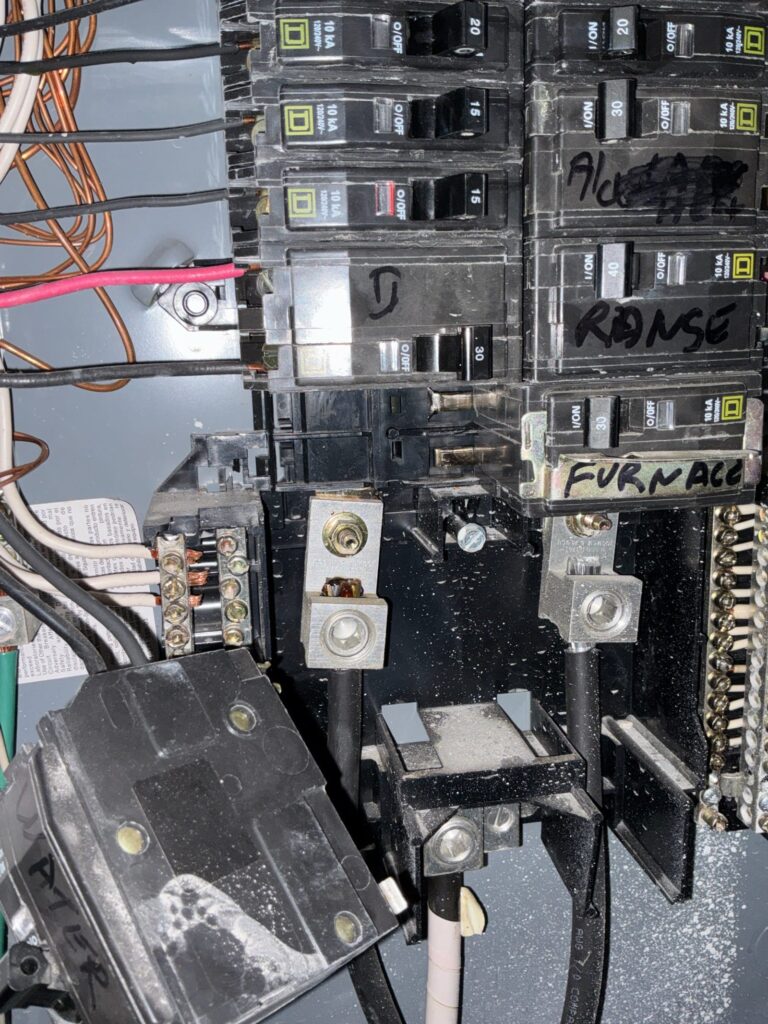
The homeowner wanted her Square D Homeline 150-amp panel cleaned up and organized. She also needed circuits from a second sub-panel in a separate living suite pulled back into her main panel, along with three double-pole breaker slots prepared for an upcoming tankless water heater. During the visit, our team also noted the household had been experiencing intermittent “shocking” sensations from outlets, something that pointed to a grounding concern worth investigating right away.
“She needed the panel ready for a new tankless water heater and wanted everything organized, but the grounding issue told us there was more to look at.”
Investigation
Our licensed electrician on site performed a full panel and whole-home inspection alongside the water heater prep assessment. Here is a summary of what the inspection revealed.
Grounding System
No ground rod was found at the electrical meter can. Additionally, the grounding system overall was flagged as obsolete, meaning it predates the bonding and electrode requirements outlined in current NEC standards. This condition is consistent with homes of this era and explains the intermittent sensations the homeowner described at outlets. A properly installed grounding electrode system gives fault current a defined, low-resistance path, which is exactly what modern code requires.
GFCI and AFCI Coverage
Bathroom outlets were not GFCI protected. This is common in homes wired before the NEC began expanding GFCI requirements through its 1990s and 2000s code cycles. Today’s NEC 210.8 requires GFCI protection in bathrooms, kitchens, garages, outdoors, and near pools. AFCI protection, which addresses arc-fault conditions on bedroom and living-area branch circuits, was also not present, consistent with wiring that predates NEC 210.12 adoption.
Backstabbed Outlets and Switches
The inspection confirmed that outlets and switches throughout the home were backstabbed, a connection method common in homes wired before roughly 2005. Over time, the spring tension in backstab terminals relaxes, contact resistance climbs, and the result is the kind of intermittent behavior that makes everyday devices feel unreliable. Re-deviceing with screw-terminal connections is a durable, straightforward fix.
Panel Condition and Additional Findings
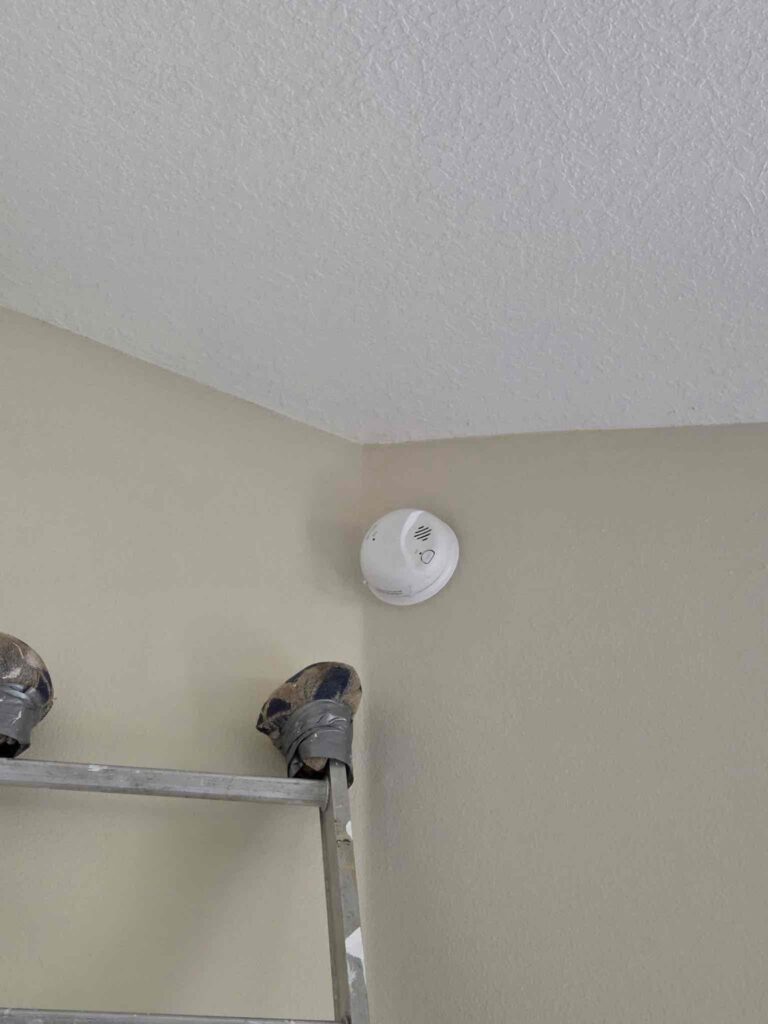
The Square D Homeline 150-amp panel itself was inspected for double-tapped breakers, open knockouts, proper labeling, busbar condition, and breaker sizing. Several items scored as concerns: neutrals and grounds showed some separation issues, the panel directory was not fully labeled, and the meter can condition warranted attention. No outside service disconnect was present, which is a condition worth noting for future work. Surge protection was absent at the panel. Smoke detectors were not present in all required areas, and no carbon monoxide detector was confirmed on site.
What We Fixed
On this visit, our field team focused on the assessment and providing the homeowner with a documented set of options. The team investigated every finding, documented conditions with inspection scoring, and delivered recommendations in plain language so the homeowner could prioritize next steps.
Recommendations presented to the homeowner included:
- Grounding electrode system replacement: a new ground rod and updated bonding to bring the home in line with NEC 250.52 requirements.
- GFCI outlet replacement in all required areas (bathrooms, kitchen, garage, outdoors) per NEC 210.8.
- Re-deviceing outlets and switches throughout the home using screw-terminal connections.
- Whole-home surge protection installed at the panel per NEC 230.67, plus a dedicated unit on the AC disconnect.
- Smoke and CO detector installation in required locations per NFPA 72.
- Panel labeling and cleanup to support the planned tankless water heater circuits.
- FPE panel evaluation: notes from a prior visit on the same property indicated a Federal Pacific Electric panel may be present elsewhere on the service; replacement is recommended given FPE breakers’ documented history of unreliable trip performance.
Our crew also reviewed the sub-panel wiring in the separate living suite and confirmed the scope of work needed to consolidate those circuits into the main panel ahead of the water heater installation.
Why This Panel Inspection Matters for Orlando Homeowners
An incomplete grounding system is one of those behind-the-scenes conditions that most homeowners never think about, until something feels off, like a mild tingle at an outlet. For this family, that sensation was the first signal that the home’s electrical foundation deserved a closer look. Addressing the grounding system, GFCI coverage, and backstabbed connections means daily life runs the way the household expects: lights, appliances, and outlets that just work, without second-guessing anything.
Additionally, adding whole-home surge protection gives the AC, refrigerator, computers, and every other connected device the buffer they need to ride out Florida’s frequent lightning events without skipping a beat. Orlando sees some of the highest lightning activity in the country, and a Type 2 surge protective device at the panel is now a baseline NEC 230.67 requirement for dwelling-unit services for exactly this reason.
Finally, interconnected smoke and CO detectors mean every room communicates with every other room. If something changes anywhere in the home, the whole household knows at once, so the family can sleep at night with real peace of mind, not just hope. Thomas Edison Electric holds Florida electrical contractor license EC13015487, and every recommendation we make is grounded in the 2020 NEC that Florida has adopted.
Code Compliance Cited in This Job
Every fix above maps to a specific section of the 2020 NEC, the edition Florida enforces under the 8th Edition Florida Building Code. Florida adopts the 2023 edition of the NEC when the 9th Edition takes effect on December 31, 2026. Each card links to NFPA’s public NEC index.
GFCI Protection for Personnel
This home’s bathroom outlets lacked GFCI protection, a condition consistent with wiring installed before the NEC’s progressive expansion of GFCI requirements. NEC 210.8 now requires GFCI protection in bathrooms, kitchens, garages, outdoors, and near pools and spas. Upgrading these outlets brings the home in line with current code and adds a layer of protection that wasn’t standard when the home was originally wired. NFPA reference ›
AFCI Protection
AFCI protection was absent on branch circuits throughout the home. NEC 210.12 requires arc-fault circuit interrupter protection on dwelling-unit branch circuits supplying outlets in bedrooms, living rooms, kitchens, and other habitable spaces. Homes wired before this requirement was adopted can be updated by replacing standard breakers with AFCI-rated breakers at the panel. NFPA reference ›
Grounding Electrodes
No ground rod was found at the meter can, and the overall grounding system was identified as obsolete. NEC 250.52 defines the approved grounding electrodes, including driven ground rods, that must form part of a complete grounding electrode system. Installing a new ground rod and properly bonding the system addresses the intermittent sensations reported at outlets and meets current code requirements. NFPA reference ›
Surge Protective Devices at Services
No surge protection was present at this home’s service entrance. NEC 230.67 now requires a listed surge protective device (SPD) at the service of all new dwelling-unit installations. Adding a whole-home SPD at the Square D Homeline 150-amp panel, along with a dedicated unit on the AC equipment, ensures appliances and electronics are buffered against voltage transients common during Florida storm seasons. NFPA reference ›
Replacement Receptacle Requirements
When outlets are replaced in an existing home, NEC 406.4 (D) requires that the replacement receptacles meet current code, including GFCI protection where required by NEC 210.8, and tamper-resistant construction per NEC 406.12. Re-deviceing the backstabbed outlets in this home with screw-terminal, tamper-resistant receptacles satisfies both the mechanical durability and code-compliance requirements in a single step. NFPA reference ›
Common Questions
Questions homeowners ask after seeing this kind of work.
What does it mean when outlets feel like they are shocking you, and is it related to grounding?
A mild tingle or static sensation at outlets is often a sign that the grounding system isn’t functioning as a complete circuit. When fault current has no clear path to ground, small voltages can appear on outlet surfaces or metal fixtures. In this Orlando home, the absence of a ground rod at the meter can and an outdated grounding electrode system were the likely contributors. Replacing the grounding system gives fault current a defined low-resistance path and restores the outlet behavior the household expects. If you’re noticing similar sensations, our team can schedule an inspection to trace the cause.
Why does a Federal Pacific Electric (FPE) panel warrant replacement?
FPE Stab-Lok breakers were widely installed from the 1950s through the 1980s, but independent testing has documented that many of them fail to trip reliably under overload conditions, meaning the circuit protection you expect may not perform when it’s needed. Most electricians and home inspectors recommend replacing FPE panels rather than servicing them, and many insurers now ask about panel brand during underwriting. Replacing the panel with a modern Square D or equivalent gives the household consistent, code-compliant overcurrent protection. If your home has an FPE panel, our licensed team can book a panel evaluation and walk you through your options.
How often should I have my home’s electrical system inspected?
A yearly inspection is a solid baseline for most homeowners. Homes built before 1990, or homes that have come through recent Florida storm seasons, often benefit from inspections more frequently, since older wiring and connections can develop wear that isn’t visible from the surface. An annual check lets a licensed electrician catch grounding issues, GFCI gaps, and panel concerns before they affect daily comfort. Schedule your annual inspection to stay ahead of anything your home may need.
Do I need both a panel-mounted surge protector and a plug-in surge strip, or is one enough?
The two devices work at different levels and complement each other. A whole-home Type 2 SPD at the panel, now required under NEC 230.67 for new dwelling-unit services, handles the large transient energy that enters through the service entrance during a nearby lightning strike or utility switching event. Plug-in surge strips at sensitive electronics provide a second layer of fine-grained protection against smaller transients that originate inside the home. For most Orlando households, both layers together give the best coverage for AC systems, appliances, and electronics. Our team can help you choose the right combination based on your home’s layout.
What are backstabbed outlets, and why do they cause problems over time?
Backstabbed outlets use a spring-tension opening in the back of the device to grip the wire, rather than wrapping the wire around a screw terminal. This method was a common shortcut in homes wired before roughly 2005. Over time the spring tension relaxes, contact resistance increases, and the connection becomes intermittent, producing flickering lights, outlets that stop working, or warm faceplates. Replacing backstabbed devices with screw-terminal connections is a straightforward repair that restores consistent, reliable performance throughout the home. If your home is from that era, our crew can book a device audit and re-device any problem outlets in a single visit.
Want to see more real jobs like this one? Browse our completed case studies or explore our services.