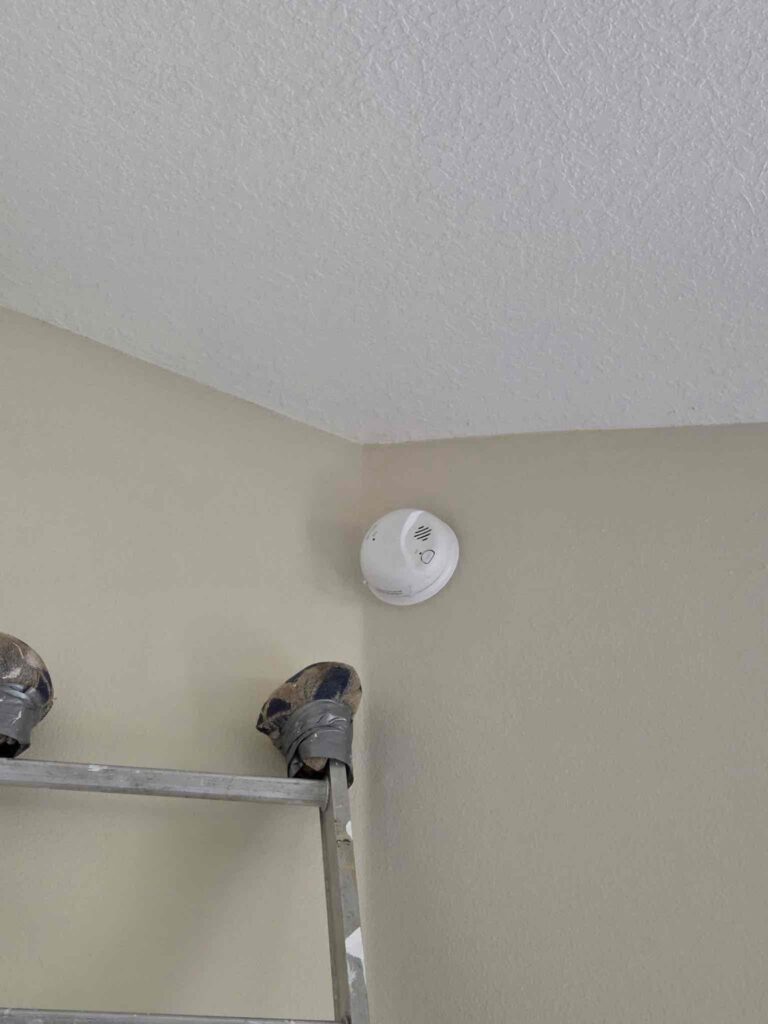
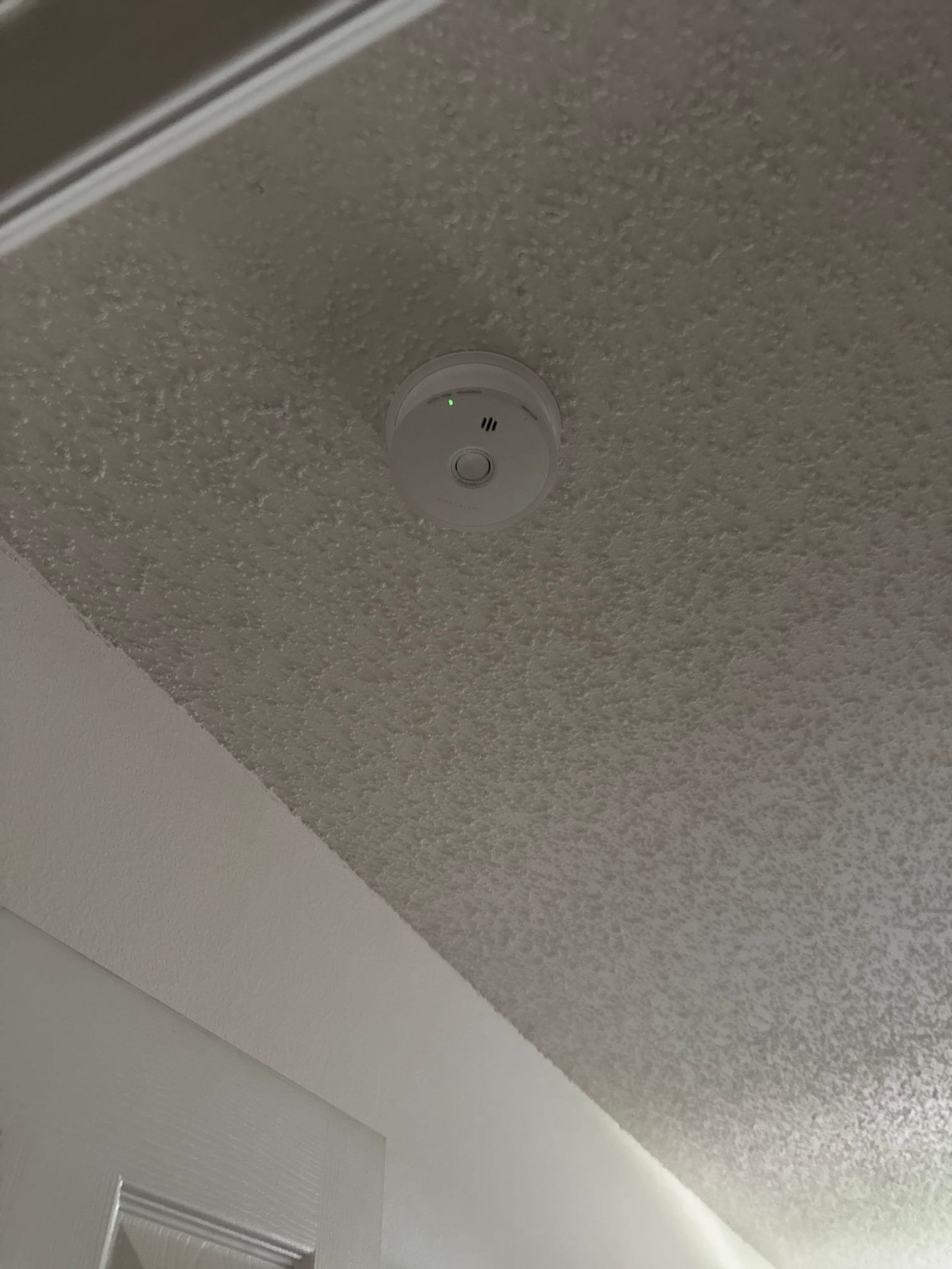
This Sanford smoke detector installation case study walks through the real diagnosis, the fix, and the code details from a recent service call. A homeowner in Sanford, FL called our team to replace five aging smoke and CO detectors spread across three bedrooms, a living room, and a kitchen. Our licensed electrician on site swapped out all five units with client-provided detectors, restoring consistent coverage to every room that needed it.
Customer’s Problem
The homeowner needed all five smoke and CO detectors replaced. The units were located in three rooms, the living room, and the kitchen. Whether the existing detectors had reached the end of their service life or simply needed a fresh start, the goal was straightforward: get current, functioning protection in place across the home.
What Our Electrician Found
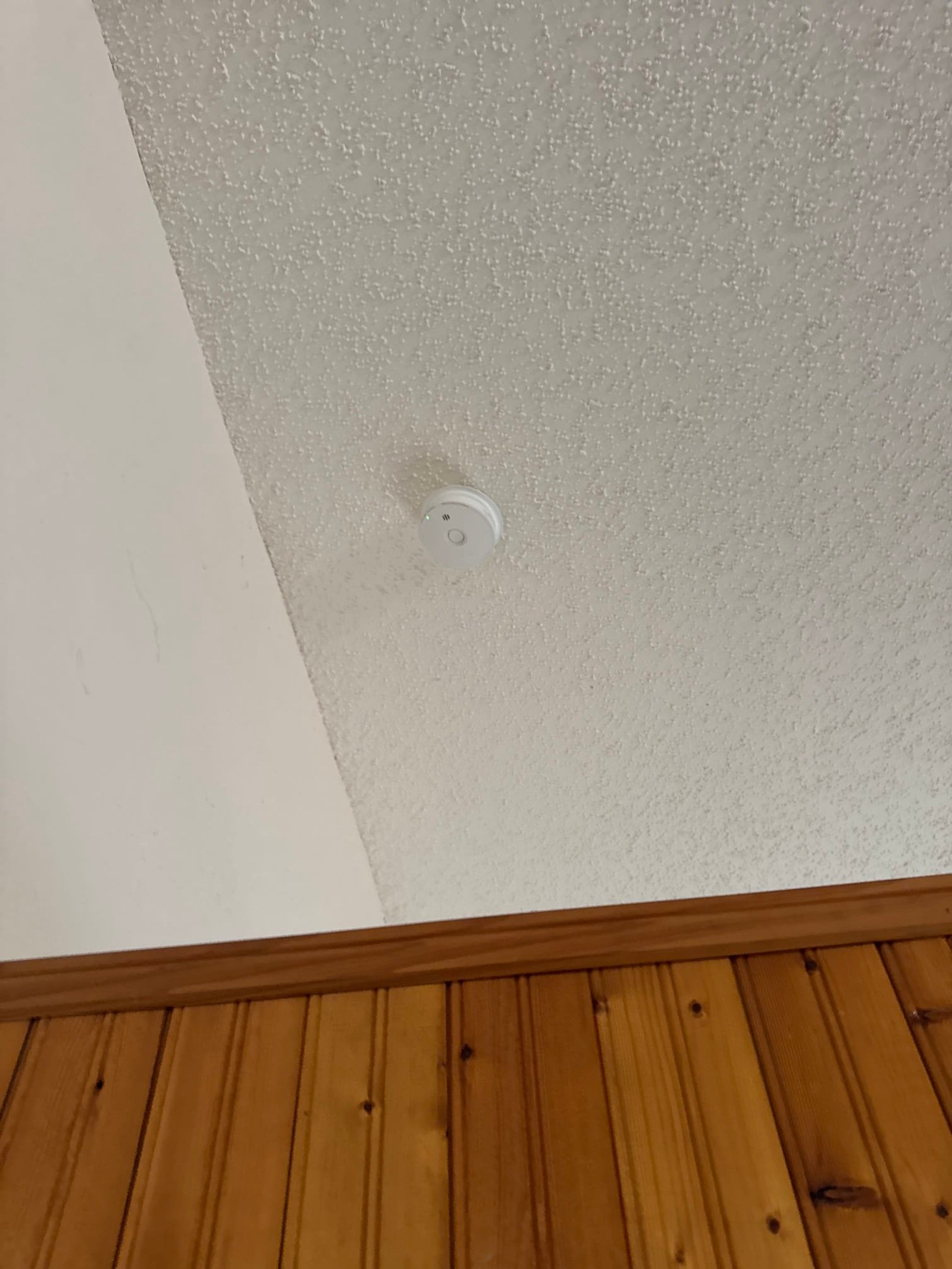
On arrival, our technician on-site noted ceiling-mounted white detectors throughout the affected rooms. One unit was visible against a textured ceiling above wood wall paneling, a setup common in Central Florida homes of this era. Older detectors, even ones that appear to be working, can lose sensitivity over time as their sensing chambers age. Manufacturers and NFPA 72 both recommend replacing smoke detectors every ten years. CO detectors carry a similar recommended service interval. Keeping up with that schedule is one of the easiest ways to make sure the home’s detection system performs the way it should.
Options We Presented
Our team presented two estimates for this job. The first option covered a more limited scope, addressing only the most urgent units. The second option covered full replacement of all five detectors in one visit, giving the homeowner consistent equipment throughout the home and eliminating the need for a follow-up appointment. The homeowner reviewed both and chose the option that made the most sense for their household.
Solution Selected
The homeowner chose full replacement of all five detectors in a single visit. Given that the units were spread across multiple rooms and levels of the living space, replacing everything at once made the most practical sense. It also ensures that every detector in the home is on the same age clock going forward, which simplifies future maintenance.
Work Performed
Our crew installed five client-provided smoke and CO detectors across the home:
- Three detectors in the bedroom areas
- One detector in the living room
- One detector in the kitchen
Each unit was ceiling-mounted, consistent with the placement guidelines in NFPA 72. The client-provided detectors were installed in the same locations as the originals, maintaining the coverage pattern already in place.
Why Pricing Can Vary
Two homes with the same job on the invoice can land at different totals. On projects like this one, the total is driven by:
- Number of detectors and whether they are interconnected
- Hardwired versus battery or wireless-interconnect units
- Detector type (photoelectric, ionization, combination CO)
- Ceiling access and new wiring runs where none exist
- Code requirements triggered by the permit or the sale
Why This Sanford Smoke Detector Installation Matters for Homeowners
Smoke and CO detectors are easy to overlook because they spend most of their lives doing nothing visible. However, the sensing technology inside them does age. A detector that is ten or more years old may still beep when you test it, yet its internal chamber may no longer respond as quickly as it should. Replacing all five units at once means the family in this Sanford home starts fresh, with every room’s detector on the same replacement schedule.
For a household that includes a living room, a kitchen, and multiple bedrooms, having consistent coverage matters in a practical, everyday way. The kitchen detector is especially important because CO can accumulate from gas appliances, and a detector that responds promptly gives the household time to ventilate and address the source calmly. The bedroom detectors mean everyone in the home, including kids sleeping at the back of the house, benefits from the same level of coverage as the main living areas.
NFPA 72 guides placement and interconnection requirements for residential detectors. When units are positioned correctly on the ceiling and maintained on a regular replacement schedule, the whole system works as intended, quietly, in the background, giving every family member peace of mind whether they are home or away. If you are unsure how old your detectors are, the manufacture date is printed on the back of each unit and is worth a quick check.
Code Compliance Cited in This Job
Every fix above maps to a specific section of NEC 2020. Each card links to NFPA’s public NEC index.
AFCI Protection for Dwelling Units
Branch circuits supplying power to hardwired smoke detectors in dwelling-unit bedrooms and living areas fall under the AFCI protection requirements of NEC 210.12. On this job, the client-provided detectors were installed in bedrooms, a living room, and a kitchen, all areas covered by this section. Verifying that the branch circuits feeding these locations meet current AFCI requirements is a natural companion step whenever detector work is performed. NFPA reference ›
Common Questions
Questions homeowners ask after seeing this kind of work.
How often should smoke and CO detectors be replaced in a home?
Most manufacturers and NFPA 72 recommend replacing smoke detectors every ten years and CO detectors every five to seven years, depending on the model. The manufacture date is printed on the back of each unit. If your detectors are approaching or past those intervals, it is a good time to schedule a replacement. Schedule online and our team can handle the swap in a single visit.
How often should I have my home’s electrical system inspected?
A yearly inspection is a solid baseline for most homes. Older homes built before 1990, and any home that has been through a recent storm season, may benefit from inspections more often. An annual check lets a licensed electrician catch small changes before they become larger ones, keeping the household’s daily routine running smoothly. Schedule online to book your yearly inspection with our Orlando-district team.
Can I supply my own smoke and CO detectors for a replacement job?
Yes. As this Sanford job shows, our team can install client-provided detectors when the units meet the placement and listing requirements outlined in NFPA 72. If you already have detectors picked out, let us know when you book so we can confirm compatibility with your home’s existing wiring configuration. Schedule online and we will take care of the installation.
Does ceiling placement really matter for smoke and CO detectors?
It does. Smoke rises, so a ceiling-mounted position in the center of a room gives the detector the best opportunity to sense a change in air quality early. NFPA 72 provides specific guidance on mounting height and distance from walls and corners. Our technician placed each of the five units in this Sanford home in ceiling-mounted positions consistent with those guidelines. Schedule online if you would like us to review your current detector placement.
What is the difference between a smoke detector and a combination smoke and CO detector?
A smoke-only detector responds to airborne particles from combustion. A combination smoke and CO detector adds a separate electrochemical sensor that measures carbon monoxide concentration, which is colorless and odorless and can come from gas appliances, attached garages, or heating equipment. Installing combination units, as was done in this Sanford home, means each location provides two layers of awareness with a single ceiling-mounted device. Schedule online to talk through the right option for your household.
Project Photos
Electrician and Technical Reviewer
Work performed by the Thomas Edison Electric field team serving Orlando.
Location
This project was completed in Sanford, Florida, in our Sanford service area.