This case study follows a real grounding repair job at an Orlando, FL home – what we checked, what we found, and how we fixed it. A homeowner in Orlando, FL (32828) reached out after noticing intermittent shocking sensations from outlets and switches throughout their home. Our licensed field team conducted a thorough whole-home electrical inspection, uncovered several conditions that predated current code requirements, and provided a clear set of options to bring the home’s electrical system up to modern standards, so the household can go back to using their home without a second thought.
The Problem
The homeowner originally contacted us to replace two ceiling fans, relocate two others, hang a light fixture, and mount four televisions with in-wall wire management. However, during the initial walk-through, they also mentioned something more pressing:
“We’ve been getting little shocks from outlets in a few spots around the house. We weren’t sure if it was something to worry about, but we wanted someone to check it out.”
That report prompted a full electrical inspection before any fixture work moved forward.
Investigation
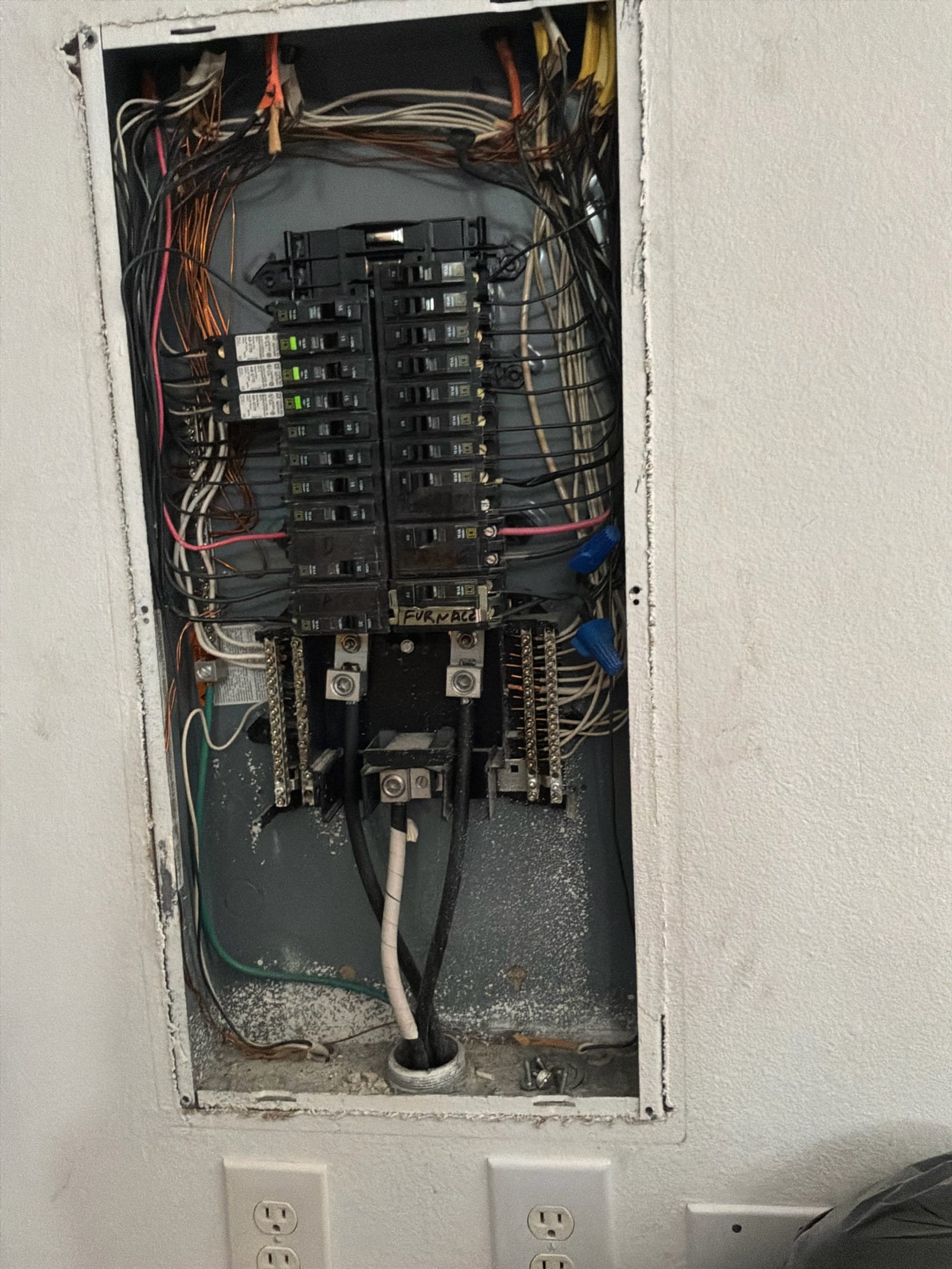
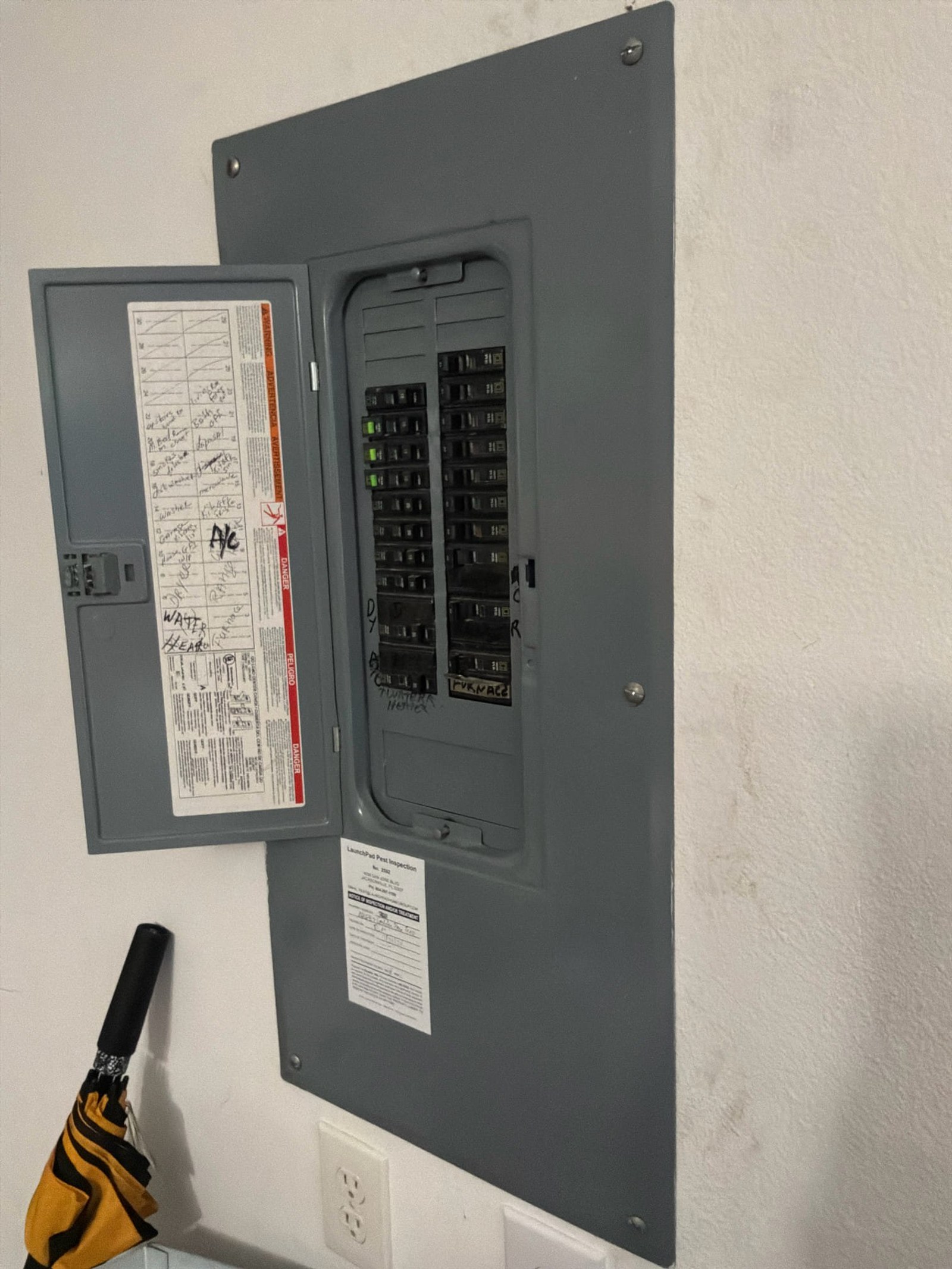
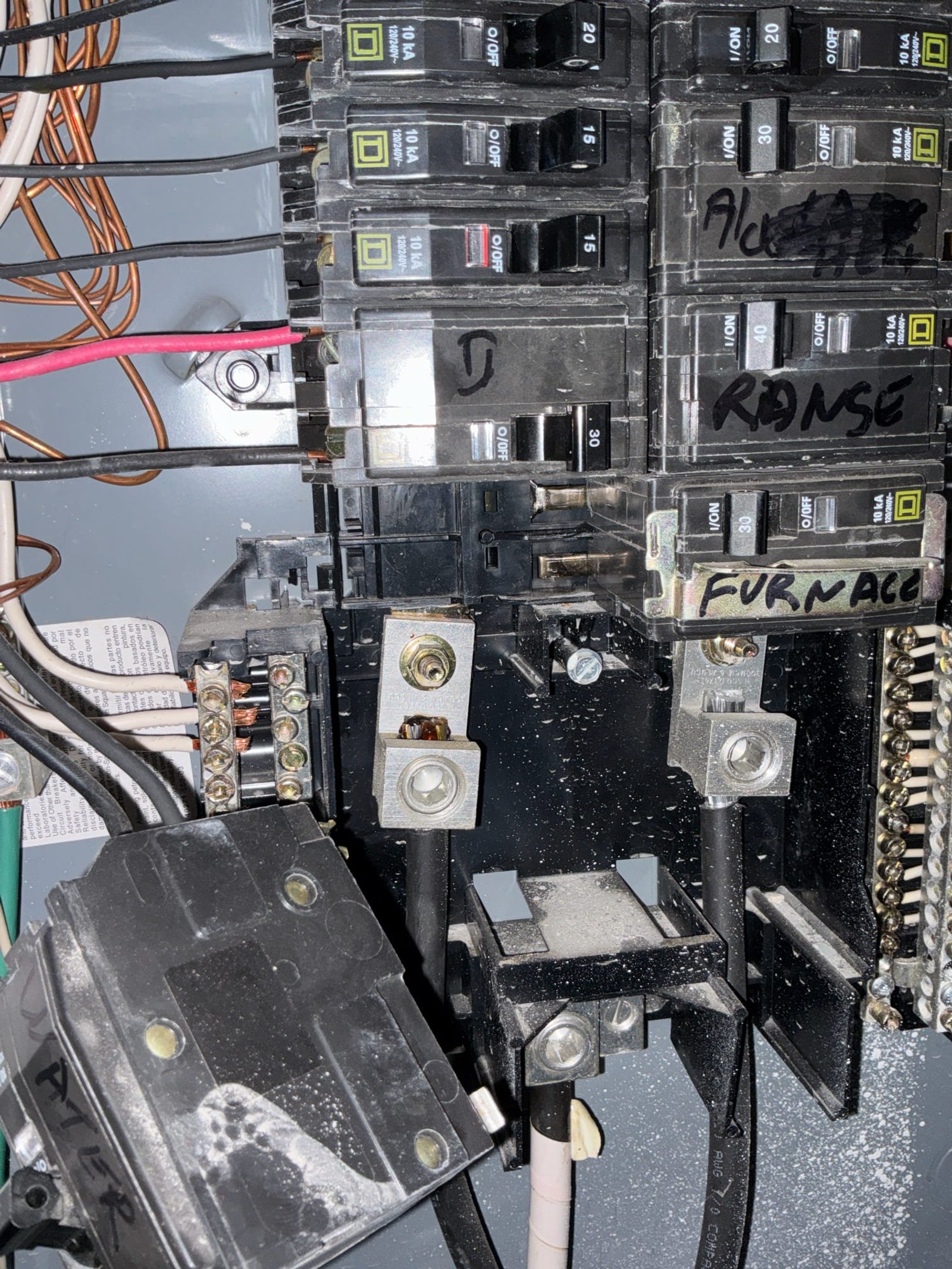
Our technician on-site started at the GE 200-amp service panel and worked outward through the home systematically. The panel itself was labeled properly, breakers were sized correctly for the loads they serve, and there were no open knockouts, solid fundamentals. However, several other findings told a more complete story about the home’s wiring history.
Grounding System
No ground rod was located at or near the electrical meter. The existing grounding system was consistent with older wiring practices that predate current NEC requirements. Without a properly established grounding electrode system, any stray voltage has no reliable path to clear, which aligns directly with the intermittent shocking sensations the homeowner described. This is a condition worth modernizing, and it’s common in homes of a certain vintage.
Backstabbed Outlets and Switches
Virtually all of the home’s outlets and switches had been wired using the backstab (spring-clip) method rather than screw terminals. Backstabbing was a common and accepted shortcut in homes wired before roughly 2005. Over time, spring tension eases, contact resistance climbs, and the result is exactly the kind of intermittent behavior (slight tingles, flickering, loose-feeling connections) that this homeowner was experiencing. Replacing them with properly screw-terminated devices is a straightforward, durable correction.
GFCI and AFCI Protection
The bathroom outlets lacked GFCI protection. This is common in homes built before the successive NEC cycles that expanded GFCI requirements into bathrooms, kitchens, garages, and outdoor areas. Similarly, AFCI protection was not present on the branch circuits, an update that current code recommends for living areas and bedrooms.
Surge Protection
No whole-home surge protective device (SPD) was found at the service panel or at the AC disconnect. With Orlando’s active storm season, the home’s appliances, electronics, and HVAC system were riding out every lightning event without a buffer.
Additional Observations
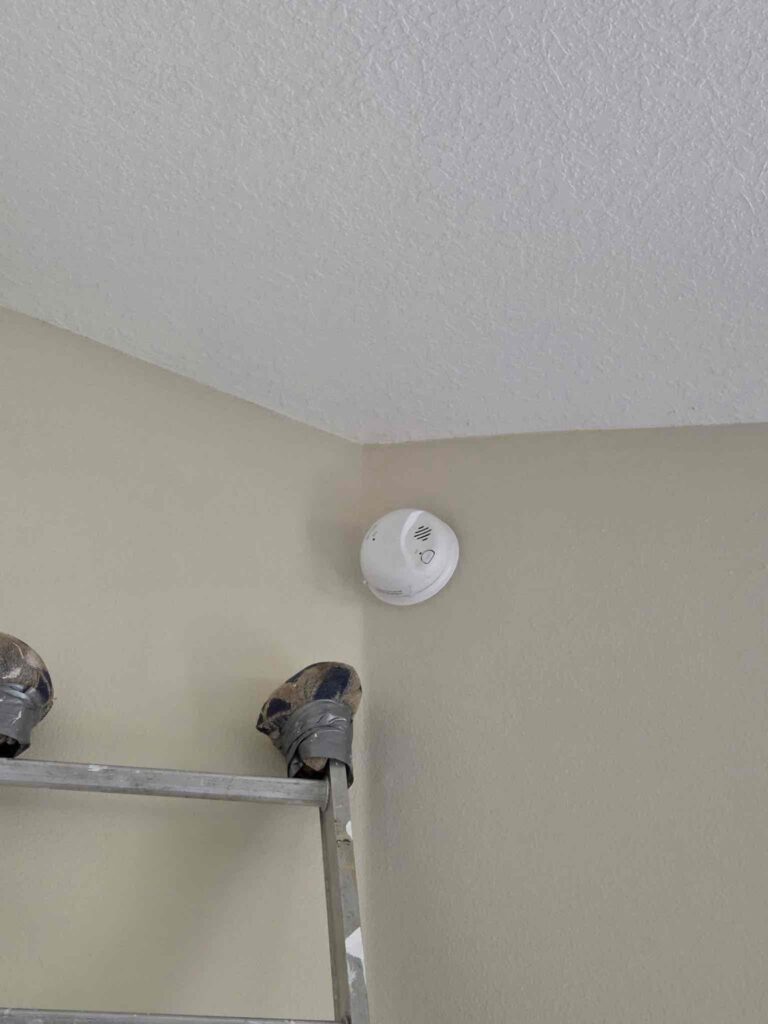
The inspection also flagged double-tapped breakers, some minor signs of corrosion on the service, and the absence of carbon monoxide detectors. Tamper-resistant receptacles were not present throughout the home. These findings were documented and included in the options presented to the homeowner.
What We Fixed
On this visit, our team focused on the investigation and presented the homeowner with a prioritized set of recommendations:
- Grounding system modernization: Install a proper grounding electrode system with new ground rods tied to the GE 200A panel, meeting NEC 250.52 and 250.66 requirements.
- Outlet and switch re-device: Replace all backstabbed outlets and switches with screw-terminated devices for reliable, lasting connections.
- GFCI outlet upgrades: Replace bathroom outlets (and any other required locations) with GFCI-protected receptacles per NEC 210.8.
- Whole-home surge protection: Install a Type 2 surge protective device at the panel per NEC 230.67 and NEC 285.25, plus a dedicated SPD on the AC system.
- Tamper-resistant receptacles: Upgrade outlets throughout the home to tamper-resistant (TR) devices per NEC 406.12.
The homeowner reviewed each option with our technician and was given a clear picture of what each improvement would accomplish for their everyday comfort and reliability.
Why This Grounding Repair Matters for Orlando Homeowners
For a household in Orlando’s 32828 zip code, where afternoon thunderstorms roll through reliably from June through October, having a proper grounding system and surge protection isn’t an abstract upgrade. It’s what keeps the family’s AC, refrigerator, smart TV, and computers running the way they expect, storm after storm, season after season.
Backstabbed connections are one of the most common culprits behind the “something feels off” complaints homeowners describe but can’t quite pin down. Re-devicing the outlets and switches eliminates that background uncertainty. Additionally, with GFCI protection in place, the bathroom functions exactly the way a modern home should, no surprises, no second-guessing before reaching for a light switch near the sink.
Furthermore, for families with young children, tamper-resistant receptacles add a quiet layer of peace of mind throughout the home, without any visible change to how the outlets look or work. It’s the kind of update you install once and simply never have to think about again. Our team documented every finding clearly so the homeowner could make informed decisions on their own timeline, with no pressure.
For more information on electrical safety best practices, the Electrical Safety Foundation International (ESFI) is an excellent resource. Our work is performed under Florida electrical contractor license EC13015487, and all installations follow the 2020 NEC standard.
Code Compliance Cited in This Job
Every fix above maps to a specific section of the 2020 NEC, the edition Florida enforces under the 8th Edition Florida Building Code. Florida adopts the 2023 edition of the NEC when the 9th Edition takes effect on December 31, 2026. Each card links to NFPA’s public NEC index.
Grounding Electrodes
NEC 250.52 defines the types of grounding electrodes that must be used to establish the grounding electrode system, including driven ground rods. On this Orlando home, no ground rod was found at the meter, a condition inconsistent with current code that directly contributed to the intermittent shocking sensations the homeowner reported. Installing compliant ground rods re-establishes the home’s path for stray voltage to clear safely. NFPA reference ›
Grounding Electrode Conductor Sizing
NEC 250.66 specifies the minimum size of the conductor connecting the grounding electrode to the service equipment. Because the existing grounding system was found to be obsolete, the grounding electrode conductor also required evaluation and likely replacement as part of any grounding modernization to ensure the GE 200A panel is properly bonded. NFPA reference ›
GFCI Protection for Personnel
NEC 210.8 requires GFCI protection on receptacles in bathrooms, kitchens, garages, outdoor areas, and other specified locations in dwelling units. The bathroom outlets in this Orlando home lacked GFCI protection, consistent with a home wired before the code cycles that expanded these requirements. Upgrading to GFCI receptacles brings these locations in line with current standards. NFPA reference ›
Surge Protective Device at Service
NEC 230.67 now requires a listed surge protective device (SPD) at the service of all new dwelling units, and its installation is strongly recommended as a retrofit on existing services. This home had no SPD at the panel or at the AC equipment, leaving all connected appliances and electronics exposed to the voltage transients common during Orlando’s storm season. NFPA reference ›
Type 2 SPD Installation Requirements
NEC 285.25 governs the installation of Type 2 surge protective devices at the load side of the service disconnect. A Type 2 SPD installed at the GE 200A panel on this home would provide whole-home surge suppression for the panel’s branch circuits, while a separate SPD at the AC disconnect would protect the HVAC equipment specifically. NFPA reference ›
Tamper-Resistant Receptacles
NEC 406.12 requires tamper-resistant receptacles throughout dwelling units. The inspection confirmed that the home’s existing outlets were not tamper-resistant, a common finding in homes wired before this requirement became standard. Replacing devices as part of the re-devicing scope addresses this requirement across the home. NFPA reference ›
Common Questions
Questions homeowners ask after seeing this kind of work.
What causes intermittent shocking sensations from outlets and switches in a home?
The most common causes are backstabbed wiring connections, an inadequate or absent grounding system, or both. Backstabbed connections use spring clips instead of screw terminals, and as those clips loosen over time, contact resistance rises, producing the subtle tingle or zap homeowners notice. An undersized or missing grounding electrode system means stray voltage has no reliable path to clear. Both conditions are very addressable. If your household has been noticing anything similar, a licensed electrician can trace the cause quickly. Schedule online to get a same-day or next-day inspection on the calendar.
How often should I have my home’s electrical system inspected?
A yearly inspection is a good baseline for most homeowners. It keeps small findings from becoming larger ones and ensures the home stays current as code evolves. Homes built before 1990, or homes that have experienced recent storm activity, may benefit from inspections more often than once a year. Our team works in the Orlando area year-round and can fit most households into a same-week appointment. Book a safety check to get started.
Is a whole-home surge protector really necessary if I already use power strips?
Power strips offer very limited, point-of-use protection, and they provide nothing for hard-wired appliances like your AC, refrigerator, or water heater. A Type 2 whole-home SPD installed at the panel intercepts voltage spikes before they reach any circuit in the house, so every device, plugged in or hard-wired, benefits. In a market like Orlando, where afternoon lightning is routine from June through October, it’s one of the most practical upgrades a household can make. Schedule online to ask our team about whole-home surge options.
What does it mean when a home’s grounding system is described as obsolete?
It typically means the grounding electrode system was installed to an older standard, or, as in some cases, no ground rod is present at all. NEC 250.52 and the surrounding sections define what a compliant grounding electrode system looks like today. Homes built or wired before the modern NEC cycles often predate these requirements. Updating the grounding system is usually a one-day job that gives the electrical service a solid foundation going forward. Book a grounding assessment and our team can evaluate exactly what your home needs.
Do GFCI outlets need to be replaced if they were installed years ago but seem to be working?
GFCI devices have a finite lifespan, typically 10 to 15 years, and a device that looks functional may no longer trip reliably when it should. The test button on each outlet should be pressed monthly, but testing alone doesn’t confirm the device will respond at the right threshold. Per NEC 406.4 (D), replacement receptacles must meet current requirements, which includes GFCI protection in required locations. If your home’s bathroom, kitchen, or outdoor outlets haven’t been inspected in a while, it’s worth a quick check. Schedule online and our technician can test and replace any outlets that no longer perform to spec.
Want to see more real jobs like this one? Browse our completed case studies or explore our services.