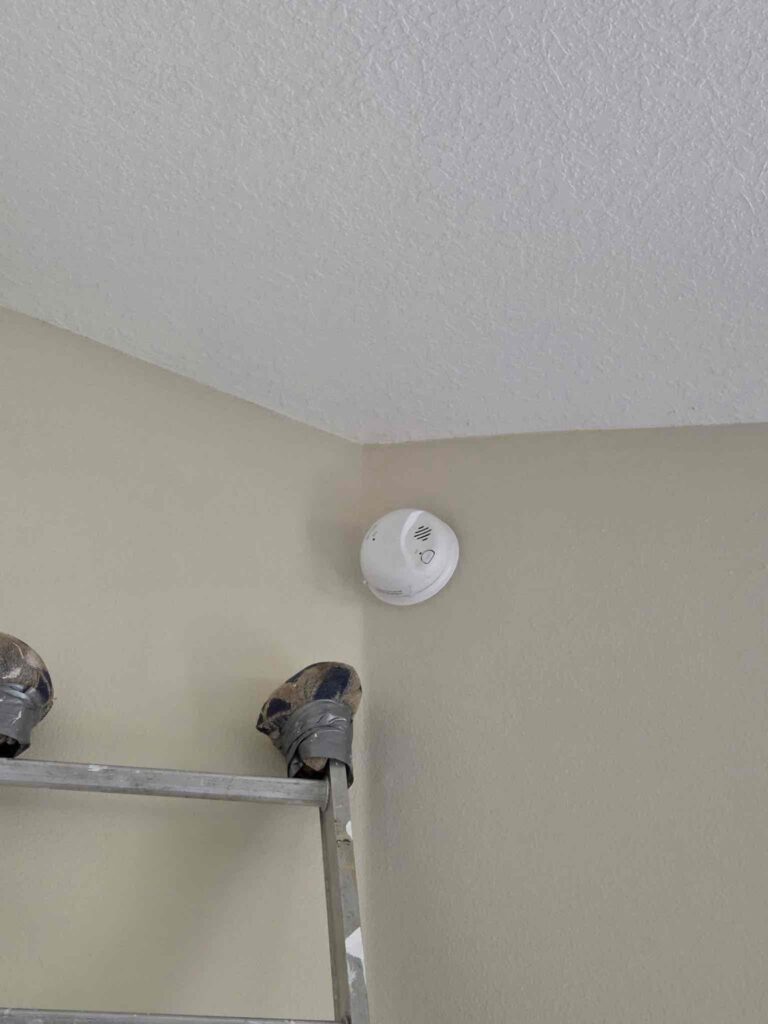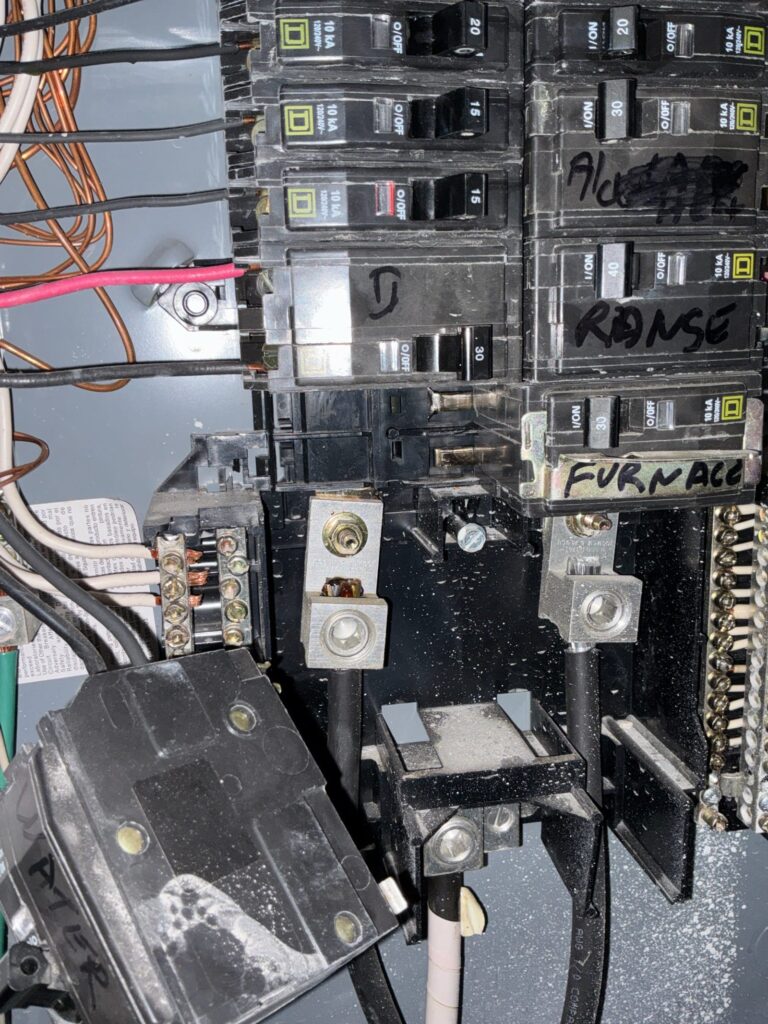
This Orlando GFCI protection case study walks through the real diagnosis, the fix, and the code details from a recent service call. A homeowner in Orlando, FL (32817) reached out after noticing intermittent shocking sensations from outlets and switches throughout the home. Our licensed field team conducted a full walkthrough and found several conditions that pre-date current NEC requirements: an obsolete grounding system, backstabbed device connections, missing GFCI protection in the bathrooms, and no whole-home surge protection on the Square D Homeline 150-amp service. The visit concluded with a detailed upgrade plan so the household can move forward with confidence.
The Problem
The homeowner’s concern was straightforward: electrical outlets and switches throughout the house were occasionally delivering a mild shock sensation during normal use. Additionally, a dishwasher had stopped working, pointing the investigation toward the panel and the branch circuits feeding the kitchen.
“Client is experiencing some shocking in the electrical system inside the home.”
Investigation
Our technician on-site performed a systematic walkthrough covering the service entrance, the Square D Homeline 150-amp main panel, and the individual branch circuits room by room.
Grounding System Findings
The most significant finding was a grounding system that no longer meets current standards. No ground rod was located at the meter can, and the overall grounding electrode system was flagged as obsolete on the inspection checklist. Under NEC 2020 Section 250.52, a compliant grounding electrode system typically requires one or more ground rods driven to a minimum depth, plus any supplemental electrodes the service geometry requires. The absence of a proper ground rod is consistent with older homes that pre-date recent code cycles. It was likely never installed, or an original rod has corroded away over the decades.
This condition directly explains the mild shock sensation the homeowner described. When the grounding path is incomplete, small voltage differentials between surfaces can become perceptible under certain load conditions.
Outlet and Switch Conditions
Every outlet and switch in the home was found to be backstabbed, meaning the conductors were pushed into spring-clip holes on the back of the device rather than terminated on the side screw terminals. Backstabbing was a widely used installation shortcut in homes wired through the late 1990s and into the early 2000s. Over time, the spring tension relaxes, contact resistance increases, and the result is exactly the kind of intermittent issue this homeowner noticed. Re-devicing all outlets and switches with proper screw-terminal connections is the durable fix.
Additionally, the inspection confirmed that outlets throughout the home are not tamper-resistant, a requirement under NEC 2020 Section 406.12 for dwelling units. Replacing devices as part of the re-devicing scope gives the household tamper-resistant protection at every location.
GFCI and AFCI Gaps
Bathroom outlets were not GFCI-protected, and GFCI coverage was absent in other required areas of the home. NEC 2020 Section 210.8 specifies GFCI protection for bathrooms, kitchens, garages, and outdoor receptacles in dwelling units. These requirements have expanded significantly over successive code cycles, so the current gaps are consistent with a home that hasn’t had a full device refresh since it was originally wired.
Furthermore, AFCI protection was noted as absent on the branch circuits, flagged as a red item on the inspection checklist. NEC 2020 Section 210.12 extends AFCI requirements to nearly all living-space circuits in a dwelling unit.
Panel and Surge Protection
The existing service panel was identified as an FPE (Federal Pacific Electric) unit. FPE Stab-Lok panels are well-documented in the electrical industry as providing unreliable overcurrent protection, their breakers do not always trip under overload conditions the way listed equipment is required to. The dishwasher circuit not functioning was one symptom of a panel that can no longer be relied upon to protect the home’s appliances and wiring consistently.
No surge protective device was present at the service, either at the panel or on the AC disconnect. NEC 2020 Section 230.67 now requires a listed SPD at the service of every new or upgraded dwelling unit.
Smoke Detectors
No smoke detectors were found in the home. NFPA 72 requires detectors inside every bedroom, outside each sleeping area, and on every level of the home. The field team flagged this for immediate attention as part of the upgrade plan.
What We Fixed
This visit was scoped as a thorough investigation and options review. Our technician documented every finding, photographed all affected areas, and presented the homeowner with a prioritized upgrade plan covering:
- New grounding electrode system: installation of compliant ground rods at the meter can and proper bonding conductors sized per NEC 250.66.
- Full re-devicing: replacing all backstabbed outlets and switches with screw-terminal devices; upgrading to tamper-resistant receptacles throughout per NEC 406.12.
- GFCI protection: replacing bathroom outlets and all other required-area outlets with GFCI-protected devices per NEC 210.8 and NEC 406.4 (D).
- Panel replacement: swapping the FPE panel for a modern, properly listed service panel to restore reliable overcurrent protection and clear the path for AFCI breaker installation.
- Whole-home surge protection: installing a Type 2 SPD at the service panel and a dedicated SPD on the AC disconnect per NEC 230.67 and NEC 285.25.
- Smoke and CO detectors: installing interconnected 10-year sealed lithium smoke/CO combination detectors in all NFPA 72-required locations.
Why This Orlando Gfci Protection Matters for Homeowners
For a family living in a home like this one, the day-to-day experience can feel like a string of small annoyances, a dishwasher that won’t run, an outlet that feels a bit off, a light switch that flickers. In reality, most of these symptoms trace back to a grounding system and device infrastructure that simply haven’t kept pace with the home’s modern appliances and load profile. Addressing the root causes means the household stops managing workarounds and starts relying on their home the way they should.
Once the upgrade plan is complete, the family gains a grounding system that gives every circuit a clean return path, GFCI outlets that match today’s code in every wet area, and a surge protector that keeps the AC, refrigerator, and electronics riding through Orlando’s frequent afternoon storms without skipping a beat. That’s the kind of reliability that lets everyone (kids doing homework, adults working from home, or anyone running the dishwasher after dinner) simply trust that the home will work.
Additionally, replacing the FPE panel gives the home overcurrent protection it can actually count on. All the upgrades are backed by Thomas Edison Electric’s licensed work under Florida electrical contractor license EC13015487, so the household has documentation they can pass along at resale or share with their insurance carrier.
For further guidance on home electrical safety education, the Electrical Safety Foundation International publishes accessible resources homeowners can bookmark.
Code Compliance Cited in This Job
Every fix above maps to a specific section of the 2020 NEC, the edition Florida enforces under the 8th Edition Florida Building Code. Florida adopts the 2023 edition of the NEC when the 9th Edition takes effect on December 31, 2026. Each card links to NFPA’s public NEC index.
Grounding Electrodes
This section defines acceptable grounding electrodes, including ground rods of a minimum length driven into the earth near the service entrance. On this Orlando home, no ground rod was located at the meter can, a gap consistent with homes wired before stricter electrode requirements became standard. Installing compliant ground rods restores the grounding electrode system the service requires. NFPA reference ›
GFCI Protection for Personnel
NEC 210.8 requires GFCI-protected receptacles in bathrooms, kitchens, garages, and other specified locations in dwelling units. The bathroom outlets on this property lacked GFCI protection entirely, a condition typical of homes that haven’t had a device refresh in several code cycles. Replacing them with GFCI-protected outlets brings these locations into compliance with current requirements. NFPA reference ›
Tamper-Resistant Receptacles
NEC 406.12 requires tamper-resistant receptacles throughout dwelling units. The home’s existing outlets did not meet this requirement. As part of the planned re-devicing scope, upgrading to tamper-resistant devices at every outlet location satisfies this section while also correcting the backstabbed termination conditions found throughout the home. NFPA reference ›
Surge Protective Device at Service
NEC 230.67 requires a listed surge protective device at the service of all new or upgraded dwelling units. This home had no SPD at the panel or on the AC disconnect, leaving every connected appliance and device exposed to voltage transients from the utility grid and local lightning activity. Installing a Type 2 SPD at the service and a dedicated SPD on the AC unit addresses this requirement. NFPA reference ›
AFCI Protection
NEC 210.12 extends arc-fault circuit-interrupter protection to virtually all living-space branch circuits in a dwelling unit. The inspection checklist flagged AFCI protection as absent on this home’s circuits. Replacing the FPE panel with a properly listed service panel creates the foundation for installing AFCI breakers on all required circuits during the upgrade. NFPA reference ›
Replacement Receptacle Requirements
When receptacles are replaced in an existing dwelling, NEC 406.4 (D) requires the replacements to meet current applicable requirements, including GFCI protection where the location demands it. This section directly supports replacing the bathroom and other required-area outlets with GFCI-protected devices rather than restoring like-for-like devices that don’t meet current code. NFPA reference ›
Common Questions
Questions homeowners ask after seeing this kind of work.
What causes a mild shock sensation from outlets and switches in an older home?
In most cases, an intermittent shock sensation points to a grounding system that isn’t providing a clean return path for stray voltage. Backstabbed outlet and switch connections, common in homes wired before about 2005, can also contribute, because as the spring clips loosen over time, contact resistance increases and small voltage differences become perceptible. A licensed electrician can trace the source in a single visit and confirm whether the grounding system, the devices, or both need attention. Schedule online to get on the calendar.
Why do bathroom outlets need GFCI protection and what happens if they don’t have it?
GFCI (ground-fault circuit-interrupter) outlets are designed to shut off power within milliseconds when they detect a current imbalance, the kind that can occur near water. NEC 2020 Section 210.8 has required GFCI protection in bathrooms, kitchens, garages, and outdoor receptacles for decades, with requirements expanding each code cycle. Homes that haven’t had a device refresh may still have standard outlets in those locations, not because anything was done incorrectly when the home was built, but simply because the code has evolved. Replacing them with GFCI-protected outlets is a straightforward upgrade that brings the home in line with current standards. Book a safety check if you’re not sure whether your bathrooms are covered.
How often should I have my home’s electrical system inspected?
A yearly inspection is a solid baseline for most homes. It keeps you informed about any changes in the system and catches aging components before they affect your daily comfort. Homes built before 1990 or homes that have come through recent storms benefit from inspections more frequently, since older wiring systems and weather events can accelerate wear on connections, devices, and grounding infrastructure. Schedule online to set up your annual checkup.
What is a whole-home surge protector and why is one recommended alongside an AC-disconnect SPD?
A whole-home Type 2 surge protective device installs at the service panel and clamps voltage spikes from the utility grid before they reach your appliances and electronics. A separate SPD on the AC disconnect provides a second layer of protection for the air conditioner specifically, which is often the largest and most voltage-sensitive load in a Florida home. Together they keep the refrigerator, HVAC, computers, and TVs running smoothly through Orlando’s frequent afternoon lightning storms, without any intervention needed on your part. Schedule online to find out which configuration fits your service.
Is an FPE Federal Pacific panel something I need to address right away?
FPE Stab-Lok panels are well-documented in the electrical industry as providing inconsistent overcurrent protection, their breakers do not always trip the way a listed panel is required to, which means the circuits feeding your appliances and wiring may not be adequately protected under heavy load. Many of these panels date from the 1950s through the 1980s and have been in continuous service ever since. Replacing an FPE panel with a modern, properly listed service panel, like a Square D Homeline, gives your home the reliable overcurrent protection it deserves and opens the door for AFCI and GFCI breaker upgrades. Book a panel evaluation so our team can assess the scope and walk you through your options.
Want to see more real jobs like this one? Browse our completed case studies or explore our services.