
A utility statement can feel like a bill written in another language. Yet almost every line on your Orlando electric bill tells you something useful about the house. Once you know what the sections mean, a surprise charge stops being a mystery. It becomes a clue you can act on.
Who Actually Sends the Bill Around Here
Central Florida has an odd patchwork of power companies. Orlando Utilities Commission serves the city and St. Cloud.
Duke Energy Florida covers much of the county around it. Kissimmee has its own authority, and Winter Park runs a city-owned system.
That matters, because rates differ from one company to the next. Neighbors two miles apart can pay different prices for the same unit of power. Always compare your usage to your own history, not to a friend’s statement.
The Line Items on Your Orlando Electric Bill
Formats vary, but the building blocks repeat. Most local statements break into these pieces.
- Customer or base charge: a fixed monthly amount just for the hookup
- Energy charge: the price per kilowatt-hour for the power itself
- Fuel charge: a pass-through tied to what your power company paid for fuel
- Storm recovery: a Florida line that covers the cost of hurricane repairs
- Taxes and franchise fees: state and local charges added on top
- Other services: water, sewer, or street lighting bundled by some companies
The fuel line surprises people the most. It moves with market prices, so your rate can shift even when your habits do not. Reading it separately keeps you from blaming the wrong thing.
Kilowatt-Hours: What You Are Really Buying
A kilowatt-hour is one thousand watts running for one hour. A 100-watt fixture left on for ten hours uses one of them. That single unit is the basis for nearly every charge.
Watch the daily average rather than the monthly total. Billing cycles vary in length, so totals can mislead you. Daily usage strips that noise out.
Estimated Reads and Year-Over-Year Checks
Look for a note saying whether the meter read was actual or estimated. After a storm, a company may estimate the reading and settle up the following month. That alone can make one statement look low and the next one alarming.
Then compare the same month a year earlier instead of last month. August against July tells you almost nothing here, because the heat is doing the talking. August against last August tells you whether the house itself changed.
Why Summer Statements Climb So Fast
Cooling drives most of the usage in our climate. From May through October, the AC may run for much of the day. Damp air makes it worse, because the system has to pull moisture out as well as heat.
Pool pumps add a second big load, and many run far longer than needed. A pool heater, a spare fridge in the garage, and an EV charger all stack on top. None of that shows up as a separate line, which is why the graph matters.
Rate Plans and Levelized Billing
Most local companies offer more than one home plan. Some price power by the hour, charging more at peak times. Others hold one rate all day.
Budget or levelized billing smooths your Orlando electric bill across the year by averaging past usage. It does not reduce what you owe. Instead it trades a brutal August statement for a steadier number every month, then trues up later.
Rooftop solar changes the layout again. Credits for exported power appear as their own line, and the fixed customer charge still applies. Read those months carefully before drawing conclusions about your system.
Read the Usage Graph Like a Diagnostic
Nearly every power company now posts daily or hourly usage online. That graph is the most useful part of the whole statement. Look for a flat baseline overnight, then compare it month to month.
A rising overnight baseline means something is running when nothing should be. A single-day spike usually points to a guest, a repair, or a stuck appliance. Our companion piece on smart meters for Orlando homes explains where that data comes from.
When a High Bill Means an Electrical Problem
Usage that climbs without a lifestyle change deserves attention. Motors pull extra current as bearings wear, and a failing water heater element can run almost constantly. Neither one announces itself.
Well pumps are a common culprit in the outlying areas. We traced an overheating well pump back to its wiring at an Orlando-area home and put it on a proper circuit. The homeowner noticed the difference on the next statement.
A pool pump losing efficiency behaves the same way, and so does a compressor that short-cycles all afternoon. Both quietly raise the floor of your usage. If the graph shows a load that never really stops, get eyes on the circuit before you accept the number.
Practical Ways to Bring Usage Down
Small changes compound over a long cooling season. These are the ones that pay off in Central Florida homes.
- Set the pool pump to a shorter, off-peak run schedule
- Swap any old bulbs and halogen fixtures for LED
- Add a smart thermostat, then actually set a schedule on it
- Check the garage fridge, which works hardest in the heat
- Look for rated gear when an appliance needs replacing
- Have aging circuits and connections inspected for hidden losses
The Department of Energy keeps a plain Energy Saver library. ENERGY STAR lists rated appliances. Both are free, and neither is trying to sell you a thing.
Where an Electrician Fits In
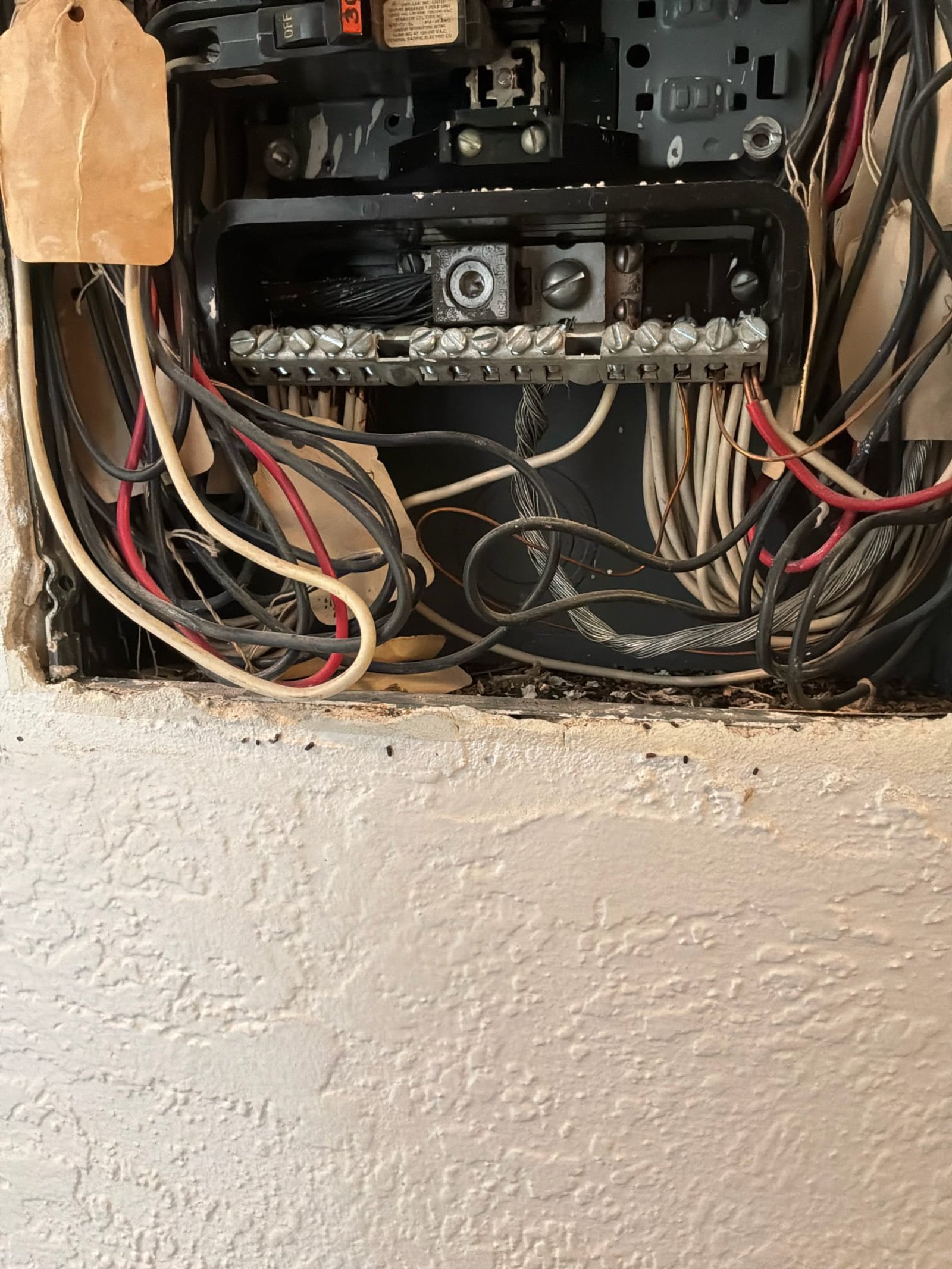
Some savings are wiring questions, not habit questions. Small sensors added at the panel show which loads eat the month. That work pairs well with an electrical panel upgrade if your equipment is aging.
We also cover the wider strategy in our guide on how an Orlando electrician helps lower your utility bills. Between the two, most homeowners find the answer quickly.
Questions About Your Usage? Let Us Look
If your Orlando electric bill jumped and nothing at home changed, the wiring is worth checking. We serve Orlando, Winter Park, Maitland, Lake Mary, Apopka, and St. Cloud.
Call (407) 490-0004 to schedule an evaluation. Thomas Edison Electric holds Florida license EC13015487.