
The home workshop Orlando homeowners picture usually ends up in the garage. There is no basement to fall back on, so the two-car bay becomes the shop, the storage room, and the laundry area all at once. That single fact drives most of the electrical decisions.
Get the circuits right at the start and the space works for decades. Get them wrong and you spend years tripping breakers and running cords.
The Garage Does All the Work Here
Because there is no basement, your shop shares space with the water heater, the AC air handler, and often the panel itself. Those loads are already on the wall you want for a workbench.
Start by reading the panel directory and tracing what the garage receptacles actually feed. Many builder-grade homes put the whole garage on one 20-amp circuit, with the door opener included.
A detached shed changes things again. That means a buried feeder, a subpanel, and a permit, which we cover further down.
Cooling a Home Workshop Orlando Summers Can Ruin
Heat is the difference between a shop you use and one you avoid. Garage temperatures here routinely pass 100 degrees from May through September. Nobody runs a table saw in that.
A ductless mini-split is the common answer, and it needs its own circuit sized to the unit. Plan for it during the wiring stage, even if you install it later. Running the line set and circuit while the wall is open costs a fraction of doing it twice.
Humidity is the quieter problem. Hand tools and cast-iron tops rust fast in an open garage. A dehumidifier on its own receptacle, plus weatherstripping at the door, protects your equipment better than any coating.
Dedicated 240-Volt Circuits for Real Tools
Larger equipment wants 240 volts, and each machine should have its own circuit. Sharing leads to voltage drop, motor strain, and tripped breakers under load. Plan dedicated circuits for tools like these:
- Welders, which often need 50-amp service at 240 volts
- Two-stage air compressors
- Cabinet saws, jointers, and lathes above 2 horsepower
- Dust collectors, which usually run whenever the tools run
- CNC routers, plasma cutters, and their control electronics
- A mini-split or window unit for climate control
A licensed electrician sizes the breaker and conductors from the nameplate, not from a guess. Hardwiring fixed equipment is often the better move, as in this well pump hardwiring and safety upgrade we handled nearby.
Does Your Service Have Room?
Every circuit above comes out of the same panel. Before designing the shop, total what the house already draws and compare it to your service size. Homes still on 100-amp service run out of capacity quickly.
Most shops sit comfortably behind a 200-amp service. If yours is smaller, price the upgrade first, since it decides what else is possible. A garage subpanel then feeds the tool circuits from one clean feeder.
Receptacles, GFCI, and Cord Discipline
Put receptacles every four feet along the bench wall and at least one on each remaining wall. Extension cords are the most common fire hazard we find in shops, and generous outlet spacing eliminates them.
Garage receptacles require GFCI protection under current code, including the ones serving your bench. That trips some machines with sensitive electronics, so talk through placement before rough-in. Our page on outlets for area home workshops goes deeper on layout.
Overhead reels or ceiling drops keep cords off the floor. Twist-lock receptacles hold under vibration for tools that get moved often.
Lighting You Can Actually Work Under
Most garages ship with one bulb in the middle of the ceiling. Aim for layered light instead: LED strips overhead, task lighting at the bench, and a dedicated fixture over the saw.
LED shop fixtures use a fraction of the energy older tubes did and start instantly in any temperature. The Department of Energy’s energy saver guidance walks through the efficiency side.
Add a switched circuit near the door so you never cross a dark shop. Motion sensors work well for storage areas.
Surge Protection and Storm-Season Outages
Shop electronics are surge magnets. Variable-frequency drives, CNC controllers, and battery chargers all fail from the same voltage spikes that arrive with summer storms. Central Florida gets more of those than anywhere in the country.
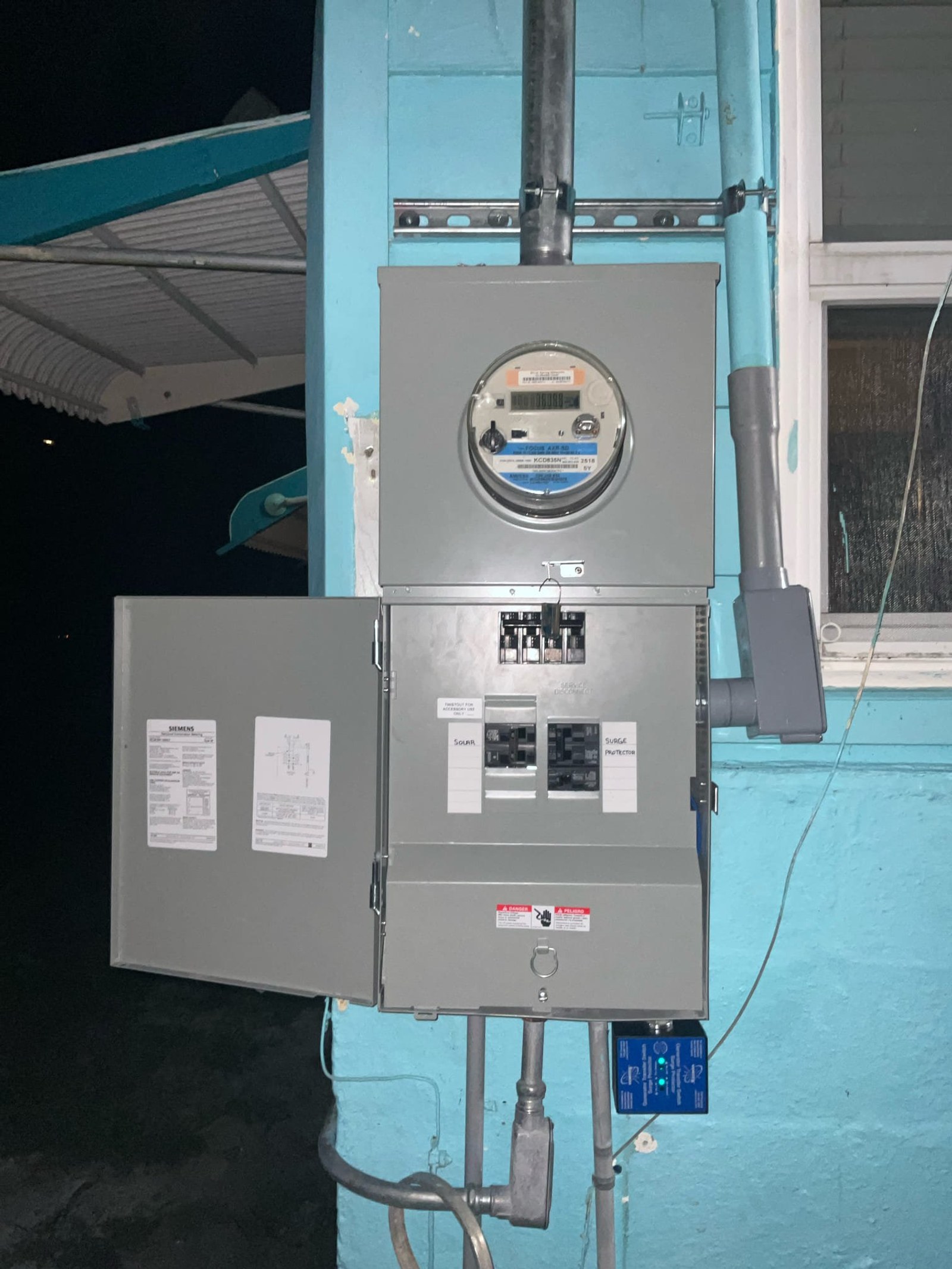
A panel-level surge protective device is the first layer, with point-of-use protection at sensitive machines as the second. If outages regularly interrupt long jobs, a small interlock or transfer setup is worth pricing out.
For general fire-safety practice around fuels, finishes, and dust, the National Fire Protection Association is the authority worth citing.
Detached Sheds, Permits, and HOA Rules
Running power to a detached shop means a feeder in conduit, buried at code depth. Sandy soil digs easily, but a high water table means the conduit will sit in water part of the year. Use listed wet-location fittings and conductors rated for it.
A subpanel at the shed gives you local disconnecting means and room for tool circuits. Permits come from your city or county, and many neighborhoods add HOA approval on top. Build that timeline into your plan.
Before any of it, we recommend an electrical safety inspection of the existing service. Our overview of electrical safety in garages and workshops covers the habits that keep the space safe afterward.
Let’s Plan the Shop You Want
We wire the home workshop Orlando homeowners actually use, from a single bench circuit in Ocoee to a full detached shop in St. Cloud. Every quote is written, and every job is permitted and inspected.
Call Thomas Edison Electric at (407) 490-0004 to talk it through. Florida license EC13015487.