
Central Florida homes draw power almost every hour of the year. The air conditioner cycles in January and runs hard from spring through fall. Add a pool pump, a screened lanai, and maybe an EV in the driveway, and your electrical load climbs quickly. Knowing that number tells you whether the panel still has room to grow.
What Drives the Electrical Load in an Orlando Home
In colder regions, heating dominates the math. Here, cooling does. A three- to five-ton heat pump and its air handler often make up the largest single draw in the house. Everything else stacks on top of that.
Because our cooling season is long, those draws are not brief. Your AC runs steadily for months at a time. That is why careful sizing beats a rough guess.
These are the loads that move the needle in most homes around Orlando, Oviedo, and Winter Garden:
- Air conditioning: the outdoor condenser, the air handler, and any electric strip heat
- Water heating: a standard 50-gallon electric tank pulls about 4,500 watts
- Kitchen gear: range, wall oven, microwave, and disposal
- Laundry: an electric dryer plus the washer circuit
- Pool and spa gear: pump, salt cell, cleaner, and heat pump
- A well pump, if your property in Apopka or St. Cloud is on private water
- EV charging, which the code treats as a continuous load
Start With the Panel, Not a Guess
Open the panel door and read the main breaker. That number is your service size. Plenty of older bungalows near downtown still sit at 100 amps.
Homes built through the 1980s often landed at 150 amps. Newer master-planned neighborhoods often get 200. If the label is faded, a licensed electrician can confirm the size from the meter and service conductors.
When the numbers say you are short, a panel upgrade is the usual fix. That work also replaces obsolete gear while the panel is already open.
How an Electrician Runs the Numbers
The National Electrical Code sets the method, and Florida adopts the NEC through the state building code. A standard dwelling calculation begins with three volt-amperes per square foot for general lighting and outlets.
From there it adds the required small-appliance and laundry circuits. Fixed appliances, the range, the dryer, and the water heater come next. Finally, the larger of heating or cooling gets counted, because both rarely run at once.
Demand factors keep the result realistic. Not every device runs at full output at the same moment. A correct electrical load calculation reflects that instead of simply adding nameplate ratings together.
The 80 Percent Rule Matters Here
Continuous loads change the arithmetic. Anything expected to run three hours or longer must be sized at 125 percent of its rating. A car charger and a pool heat pump both qualify.
In practice, a 40-amp charger needs a 50-amp circuit. It also means you should not plan on using every last amp your service can deliver. Headroom is part of a safe design.
Where Local Homes Run Out of Room
Panels fill up in predictable ways. A garage charger, a lanai kitchen, a mother-in-law suite, or a standby generator each wants both capacity and physical space.
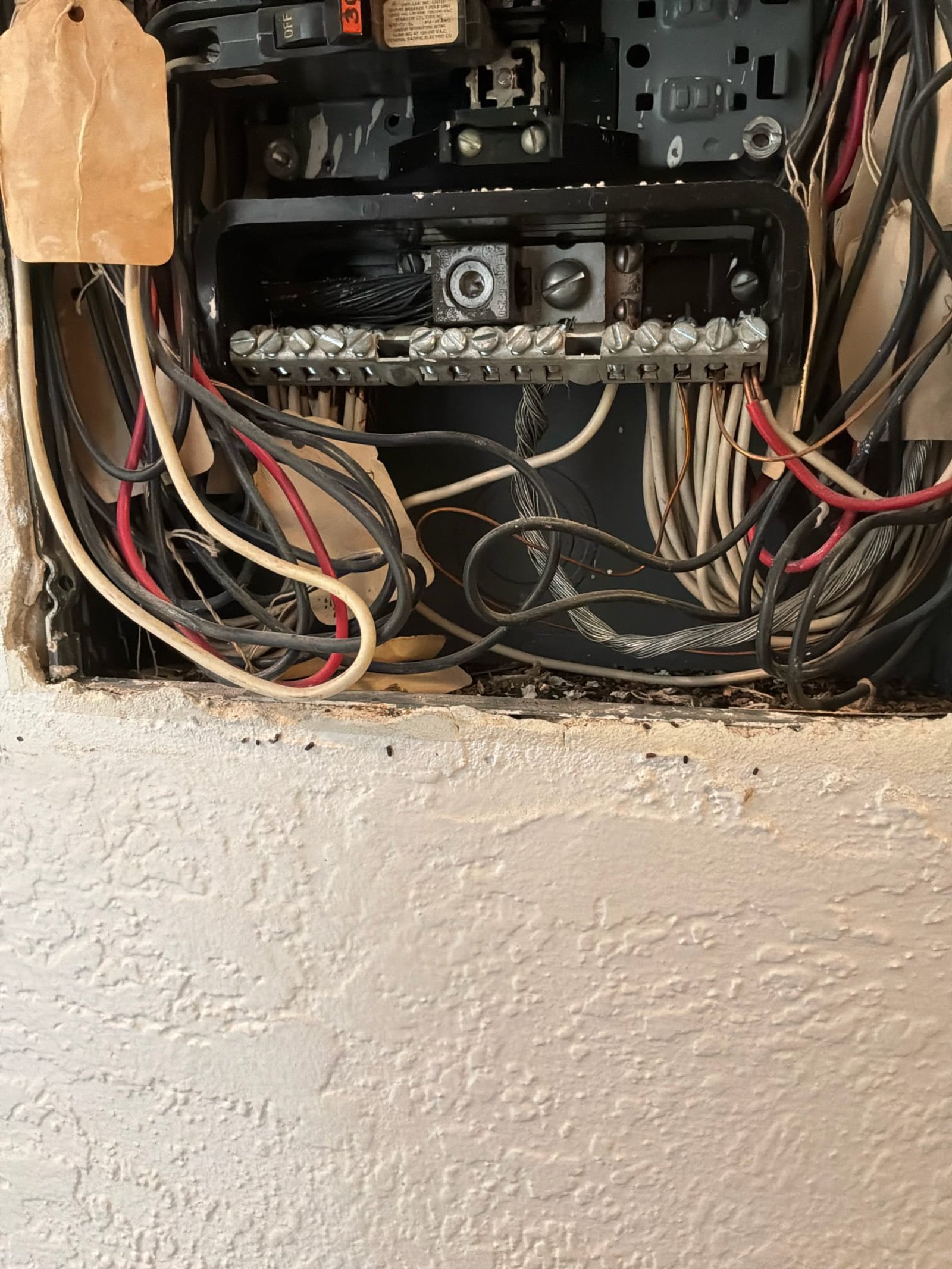
Sometimes the limit is mechanical rather than electrical. Older panels have fewer breaker positions, and tandem breakers are not permitted everywhere. One visit often reveals more than expected, as it did when a Belle Isle panel turned up four separate problems in a single afternoon.
Federal Pacific and Zinsco panels also still turn up in this market. Those get replaced rather than loaded up further, no matter what the calculation says.
Signs You Are Already at the Limit
- The main breaker trips, not just a branch circuit breaker
- Lights dim noticeably every time the AC compressor starts
- The panel cover feels warm, or you smell hot plastic near it
- Nearly every slot is doubled up with tandem breakers
- Permanent appliances are running on extension cords
Any one of these deserves attention. Two or more often means the service no longer matches how your household really lives.
Summer makes the symptoms obvious. When the air conditioner runs most of the day, a marginal service finally shows its limits. That is when most homeowners call.
Plan for What You Will Add Next
Capacity is cheapest to buy once. If an EV, a standby generator, or solar is likely within five years, size the service for it now. Every new circuit adds to the electrical load your panel must carry.
Our walkthrough on sizing your home’s demand covers the arithmetic step by step. Total capacity is only half the story, so it also helps to review how many dedicated circuits a home really needs before you start adding gear.
Efficient appliances buy headroom too. Comparing ENERGY STAR rated models is a simple way to keep demand from creeping upward year after year.
Permits, Inspections, and Peace of Mind
A service change requires a permit and an inspection in Orange, Seminole, and Osceola counties. Your utility also has to pull and reset the meter, which takes scheduling.
That coordination is routine for a licensed contractor. It is also why this is not a weekend project. The NFPA publishes the code that governs every step of the work.
Ask for the calculation in writing. A clear worksheet shows what your service supports today and what it will support after the next upgrade.
Wondering whether your panel can take one more circuit? Thomas Edison Electric serves Orlando, Winter Park, Lake Mary, Ocoee, and the surrounding communities. Call (407) 490-0004 to schedule a review with a licensed electrician, Florida license EC13015487.