
Precision is everything in the CNC machine shops Orlando manufacturers depend on. Spindles, servos, and probes all assume the power feeding them is steady. When it is not, the parts show it before anyone reads a fault code.
Central Florida adds its own stress. Daily summer storms, wet air, and hot metal buildings all work against the gear in your shop. A little planning keeps the spindles turning.
Why CNC Machine Shops Orlando Trusts Need Clean Power
Machine controls are picky. A dip, a spike, or a wobble in voltage can drop a program, fault a drive, or scrap a part halfway through a cut.
Some of that comes from outside the building. Plenty of it starts inside. A big compressor kicking on, a welder in the back, or a loose lug can all shake the line.
We start by logging power at the service for a week or two. That data shows whether the trouble is coming from the utility or from your own floor. Homes have the same issue on a smaller scale, which our post on dirty power explains in plain terms.
Lightning Is the Local Villain
This region gets more lightning than any other part of the country, and summer is the peak of it. The Electrical Safety Foundation publishes plain guidance on surge risk that is worth sharing with your crew.
A strike does not have to hit your roof to hurt you. A hit near the line sends a spike down the wire. Motors often survive it. Drives, boards, and probes often do not.
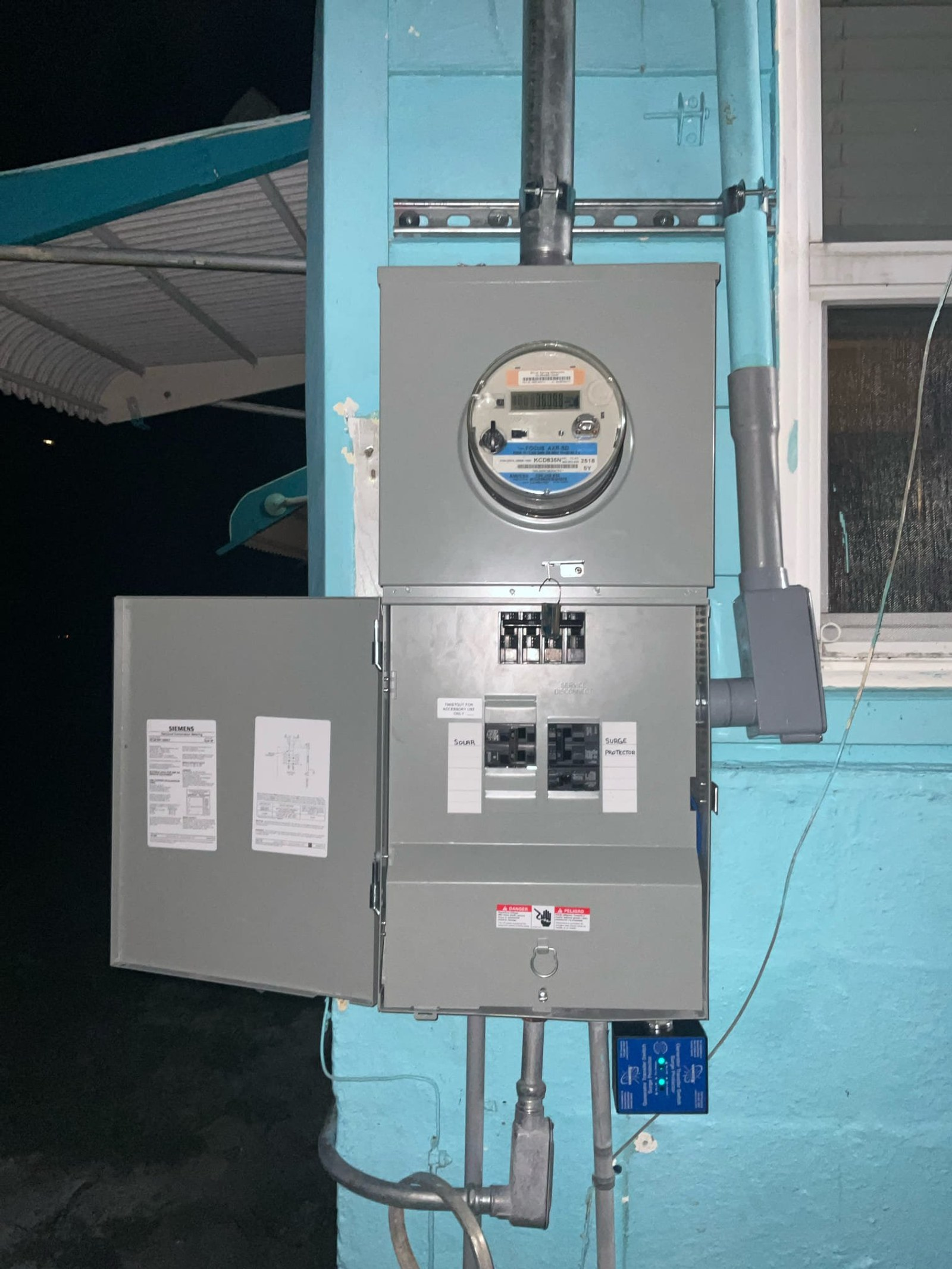
Layers beat any single device. Put one at the service, another at the panel feeding controls, and small units inside cabinets. Our storm coverage in storm safety basics walks through the same idea for a house.
Grounding and Bonding Come First
Surge parts only work if the energy has somewhere to go. That path is the grounding system, and in older shops it is often the weak link.
We check the ground electrode, the bonding jumpers, and the machine frames. Loose or missing bonds show up as odd faults, warm cases, and readings that drift. In older buildings, a machine tied to a rusted pipe and nothing else is not a rare find.
Three-Phase Power and Drives
Most machine tools want three-phase power. Some buildings in this area have it at the pole. Others do not, and the answer depends on the block you are on.
If the utility cannot bring it, a rotary converter or a drive can stand in. Both work, though each has limits. We look at the machine, the duty, and the cost before we pick one.
Drive wiring has rules of its own. Shielded motor cable, short runs, and control wires kept apart from power wires cut down on stray noise. Skip that and you chase ghost faults for months.
Heat Inside the Cabinet
Many shops here sit in metal buildings. By late afternoon in August, the air near the ceiling is far hotter than the thermostat suggests. Wire sizing has to account for that heat.
Control cabinets take it worse. Drives throw off their own heat, and a sealed box holds it in. A cabinet cooler or a filtered vent is cheap next to a burned-out drive.
Keep the filters clean, too. Chips and dust choke them in weeks, not months.
Humidity, Coolant, and Rust
Wet air is a fact of life here, and coolant mist rides on it. Together they corrode lugs, screws, and contacts in places nobody opens for years.
Rust on a cover is the warning sign. Heat and rust at a lug is the real problem. We found the same pattern during an Oviedo panel visit, where worn parts and missing surge protection turned up together.
What a Yearly Check Should Cover
Most shop owners put this work off until something dies. That is a costly habit in the CNC machine shops Orlando counts on for aerospace and simulator work. A planned visit costs far less than a dead spindle drive in the middle of a run.
- Thermal scan of panels and disconnects while machines are under load.
- Torque checks on lugs and breaker terminals.
- Ground and bond checks at each machine.
- Surge device status lights and end-of-life checks.
- Cabinet fans, filters, and coolers cleaned or replaced.
- Labels updated so the next person is not guessing.
We write it all down and compare it the next year. Trends catch problems that a single visit misses. That is the core of our electrical safety inspection work for shops.
Room for the Next Machine
Shops grow one machine at a time. Each new mill, bar feeder, or robot cell leans on the same service. At some point the panel says no.
Newer shops here often start with two machines and grow quickly. Air compressors, mist collectors, and a heat-treat oven pile on after that. None of them are small loads.
Do not forget the inspection room. A CMM or a fine gauge bench deserves its own quiet circuit, away from welders and compressors.
We look at spare capacity before you sign for the gear. Sometimes the fix is a new feeder and panel in the back bay. Sometimes it means a service upgrade, and that takes lead time with the utility.
Storm season runs June through November, so build a shut-down and restart plan too. Check motor rotation after an outage, and confirm the drives came back clean before you cut metal.
Thomas Edison Electric serves shops in Orlando, Apopka, Sanford, Ocoee, Winter Garden, and Kissimmee. Call (407) 490-0004 to schedule a walk-through of your floor. Florida license EC13015487.