
Dirty power is a catch-all term for poor power quality: voltage swings, electrical noise, and sudden surges. Most of the country treats it as an occasional nuisance. Here it is a routine, storm-driven problem that quietly damages nearly everything you plug in. Lightning, utility switching, and big motors all feed the dirty power Orlando homes live with.
What Bad Power Looks Like at Home
The early signs hide in plain sight, and most people miss them for years. You may notice a few of these in your own house.
- LED bulbs that flicker or shimmer at random.
- Breakers that trip with almost nothing running.
- A faint buzz from an outlet, switch, or dimmer.
- A TV or router that reboots during a storm.
- Appliance boards that fail years ahead of schedule.
- Motors that hum louder than they used to.
One sign on its own means little. Three or four together point to a real power quality problem.
Four Sources of Dirty Power Orlando Homes Face
No stretch of the country takes more lightning per square mile than the corridor between Orlando and the coast. Our storm cycle runs almost daily from June into September. A strike a half mile away can still push a spike into your panel. Utility gear also recloses after a fault, which sends a second and third jolt down the street.
Hurricane season adds its own stress. Repair work, rolling outages, and generator switching all disturb voltage. Meanwhile your air conditioner, pool pump, and well pump slam on and off all day. Every motor start dips the voltage for a moment.
Start at the Panel
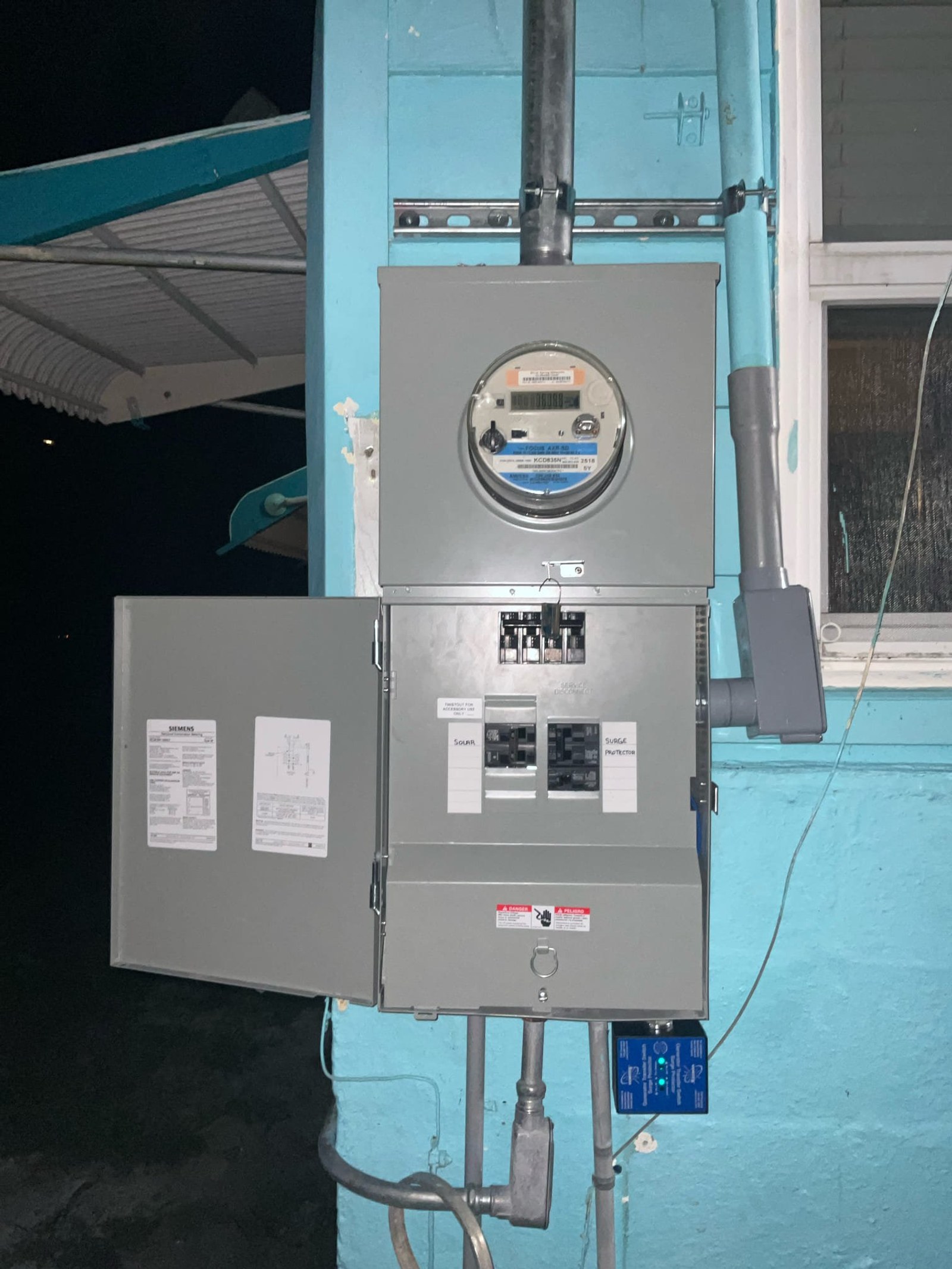
A panel-mounted surge device is the first real defense against dirty power Orlando lightning drives into the service. It clamps a spike and sends the extra energy to ground. Recent editions of the National Electrical Code call for surge protection on new and replaced home services. A single whole-house surge protection unit covers every outlet, not just one power strip.
Ask about the joule rating and the status light. A device that has taken a big hit needs replacing, and the light on the cover tells you when.
Layer Point-of-Use Protection
Whole-home gear handles the big hits. Smaller spikes still slip through on branch circuits. So add point-of-use protectors at your router, home office, TV, and pool control panel. Layering is what actually works, not one device carrying the whole load.
A power conditioner goes a step further. It filters the electrical noise that a plain surge device ignores, which helps audio gear and medical equipment.
Which Devices Fail First
Some equipment gives out long before the rest. Air conditioner control boards, pool pump drives, and garage door openers top our list. Smart switches, LED drivers, and door locks follow close behind. Each one holds a small board that repeated spikes slowly cook.
Replacing those boards costs far more than protecting them. That math is the plainest argument for stopping the damage at the service, before it ever reaches a branch circuit.
Good Grounding Does the Quiet Work
A surge device is only as good as the path beneath it. It needs a low-resistance route to ground, or the energy has nowhere useful to go. Sandy Central Florida soil and years of humidity are hard on ground rods and lugs. Corroded links quietly raise resistance until the whole system underperforms.
Bonding matters just as much. Coax, phone, and satellite lines should land on a common bonding point at the service. Otherwise a strike finds a voltage difference and travels through your gear to reach it.
Loose Connections and Aging Panels
Heat cycling loosens terminals over time, and Florida attics cycle hard. A loose lug arcs, heats, and distorts voltage on that circuit. Panels from the 1960s and 1970s also lack the capacity for modern loads. Our guide to panel upgrades for Orlando homes covers when a service upgrade is the honest fix.
One Belle Isle project shows the whole arc. A careful review led to a modern panel and layered defense, and you can see how we delivered whole-home surge protection for a Belle Isle home.
What an Inspection Actually Finds
A power quality visit is more than a look inside the panel. We check torque on the lugs, test the ground, and read voltage under load. We also look for shared neutrals, double-tapped breakers, and undersized wire feeding new gear. A thermal scan finds hot spots that the eye misses.
Give Sensitive Gear Its Own Circuit
Electronics do not like sharing a circuit with motors. A garage freezer, a pool pump, or a shop compressor drags voltage down at every start. A dedicated circuit keeps those motor starts away from your home office and media rack. The gain in stability is easy to measure.
Storm-Season Habits That Help
Small routines beat expensive repairs, and a few of them limit the damage between service visits.
- Unplug sensitive gear before you travel during storm season.
- Wait a few minutes after power returns before you switch things back on.
- Check the surge device light after every close strike.
- Photograph your panel labels, so you can spot changes later.
Back Up Power Without Adding Noise
Generators solve outages, but a sloppy hookup creates new problems. A transfer switch keeps utility and generator power apart and gives a clean handoff. Our overview of generator safety for Central Florida storm season explains how to do it properly.
What to Ask Your Electrician
Bring a short list to the visit.
- Is my service grounded and bonded to current standards?
- Which surge device fits my panel, and what is its rating?
- What would it take to clean up the power on my sensitive circuits?
- Do any breakers or lugs show heat damage?
The NFPA and the Electrical Safety Foundation International both publish clear background reading if you want to prepare before the visit.
Clean, steady power protects your electronics and your patience through every storm season. To get ahead of the next round of storms, call Thomas Edison Electric at (407) 490-0004. We serve Orlando, Oviedo, Lake Mary, and nearby towns under Florida license EC13015487.