
Shops that go looking for casting molding Orlando services usually have one of two problems. Either a machine keeps tripping, or the plant has grown past the panel that feeds it. Both are common in Central Florida, and both are fixable.
Die casting and injection molding plants sit all over the metro. You will find them in Apopka, Sanford, Ocoee, and the industrial pockets south of Kissimmee. The wiring in those buildings takes a beating that a house never sees.
What Casting Molding Orlando Work Involves
Start with the loads. Melt furnaces, presses, dryers, chillers, and hoists all pull hard, and they rarely pull at the same time. That mix is what makes a load study worth doing.
From there the job breaks into feeders, panels, disconnects, and the control wiring that ties it together. Each press wants its own circuit and its own way to shut off. Sharing a feeder between two big machines is how nuisance trips start.
Layout counts too. Power dropped close to the machine means fewer cords on the floor. Fewer cords means fewer trip hazards and fewer damaged leads.
Heat Changes the Numbers
A molding floor is hot before the weather adds anything. Then it is August, the roof is baking, and the shop is running at 100 degrees near the ceiling. Wire that is fine at 70 degrees is not fine there.
The National Electrical Code lets us adjust for that. We size conductors for the real air around them, not for a chart in an office. Conduit run across a hot roof gets the same treatment.
Control cabinets suffer the same way. Drives and small computers fail early when they cook. A vent kit or a small cabinet cooler often buys years of extra life.
Humidity and Coolant Eat Hardware
Florida air is wet almost every day. Add water lines, mold coolant, and open bay doors, and you get rust in places you never look. We see it on lugs, on box screws, and on the back of panel covers.
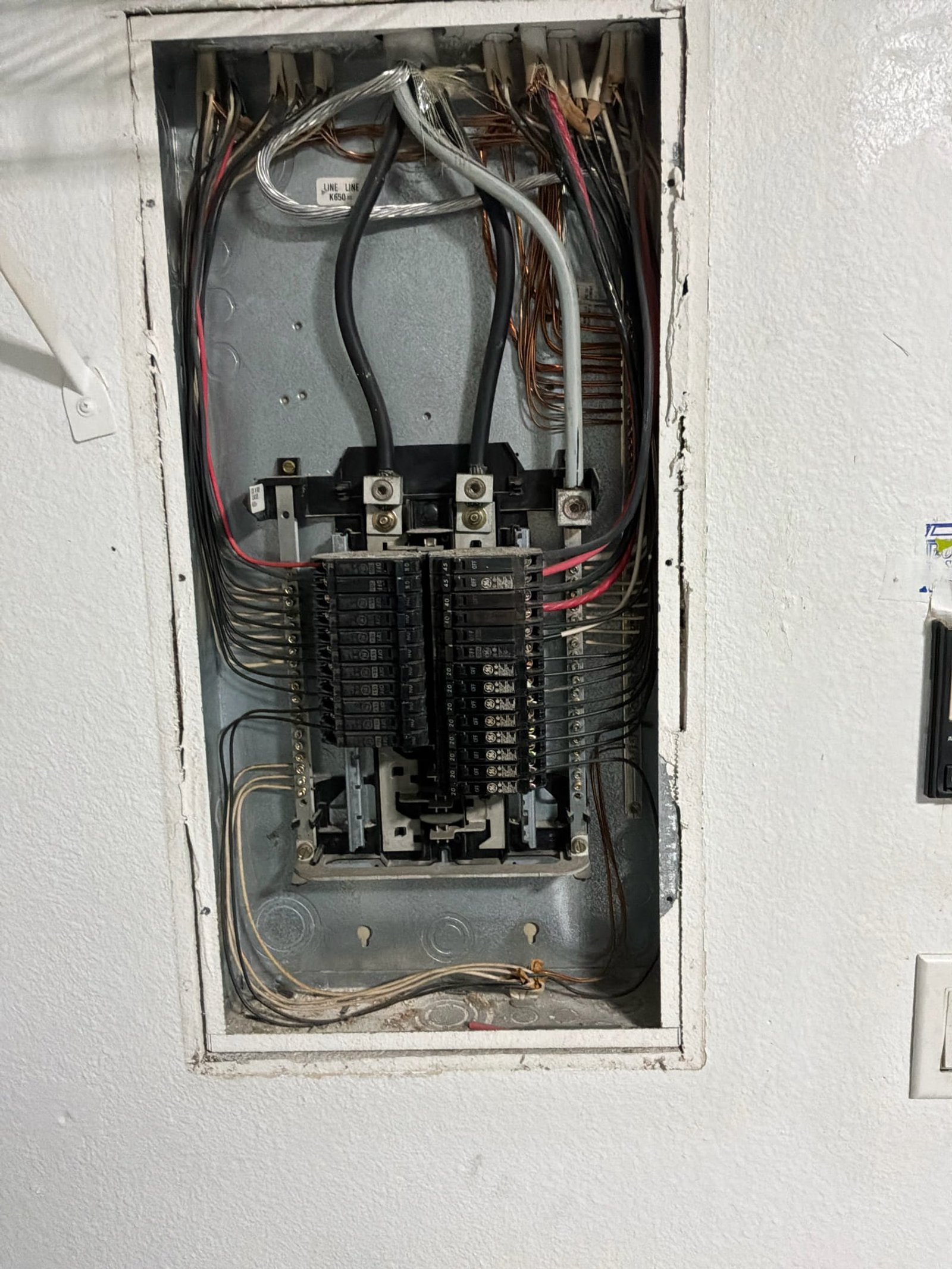
The fix is the right box for the spot. Wash-down areas need sealed, gasketed enclosures. Rusty covers and green lugs are early warnings, and they show up in homes too, as this Orlando panel service call shows.
Lighting, Exits, and Alarms
Good light is a quality tool. Flash and short shots are easier to catch under even light, and color matters when you check parts by eye.
Most shops here have already moved to LED high bays. If yours has not, the summer math is friendly. You cut the lighting bill and you cut the heat those old fixtures dump into the building.
Exit signs and battery-backed lights are the other half. Test them on a schedule, and log it. A molten metal floor is the last place you want people feeling for a door in the dark.
Lightning Season Goes After Controls
Central Florida gets more lightning than anywhere else in the country. A strike a block away can send a spike down the utility line. The presses may shrug it off. The controls will not.
Good surge planning works in layers. Put a device at the service, another at the panel that feeds controls, and small units at each cabinet. That stack costs far less than one ruined drive.
Grounding is the quiet half of this. A bonded, tested ground gives that energy a path away from your boards. Without it, surge parts have nowhere to send the hit.
Storm Season Needs a Written Plan
Storm season runs June through November, and a plant cannot make that up on the fly. Write the steps down and post them by the door.
- The shut-down order for furnaces, presses, and dryers.
- Which loads a generator must carry, and which can wait.
- Where the transfer switch is and who is allowed to work it.
- A checklist for restart, including motor rotation checks.
- Who to call if a panel or a drive comes back wet.
Melt loss is the expensive part of a bad shut-down. A furnace that freezes up costs more than the outage did. So the plan should protect the process first.
Planned Checks Beat Emergency Calls
Most failures give warning. A hot lug, a humming breaker, or a drive that faults once a week is telling you something. Regular checks catch those while the line is still running. That is why most casting molding Orlando plants we serve move to a set schedule.
Our crews use a thermal camera on panels under load, then torque and clean what looks off. We log it, so next year we can compare. That yearly electrical safety inspection often folds into a broader building maintenance plan.
Safe work practice matters as much as the hardware. The NFPA publishes the standards that shape how we approach live gear, and we follow them on every visit. Your own crew should know what they may and may not open.
Room to Grow
Shops rarely stay the same size. A new press, a robot cell, or a second shift will lean on the same service. Planning space now is cheaper than a full upgrade later.
We look at spare breaker space, feeder capacity, and where a new panel could land. Then we tell you what the building can take. If your shop is also weighing worker safety rules, our post on workplace electrical standards is a good next stop.
Thomas Edison Electric handles casting molding Orlando jobs across the metro, from Sanford and Longwood down to St. Cloud. Call (407) 490-0004 to set up a walk-through of your plant. Florida license EC13015487.