
You never think about a building’s wiring until it quits. Then it costs you a shift, a walk-in cooler, or a Saturday of sales. The electrical maintenance commercial Orlando relies on looks like a calendar, not an emergency call at closing time. Our climate also piles on strain that most other markets never see.
Heat and Humidity Set the Maintenance Calendar
Rooftop units, disconnects, and outdoor panels bake here for months. Gaskets dry out and crack. On humid mornings, water forms inside cabinets and drips onto the busbars.
Rust follows that damp. Heat hurts too. Wire and breakers carry less as the room gets hotter. A panel in a 100-degree closet is not working under lab conditions.
Check intervals here should therefore be tighter than the maker’s standard advice. Gear ages faster in this climate.
Rooftop gear needs its own look. Drain lines, disconnect covers, and flexible whips take direct sun and driving rain. A cracked cover today becomes a shorted disconnect after the next storm.
Lightning Is a Maintenance Item, Not a Fluke
Surge devices wear out. Each hit they take shortens their life, and we get plenty of hits from June through September.
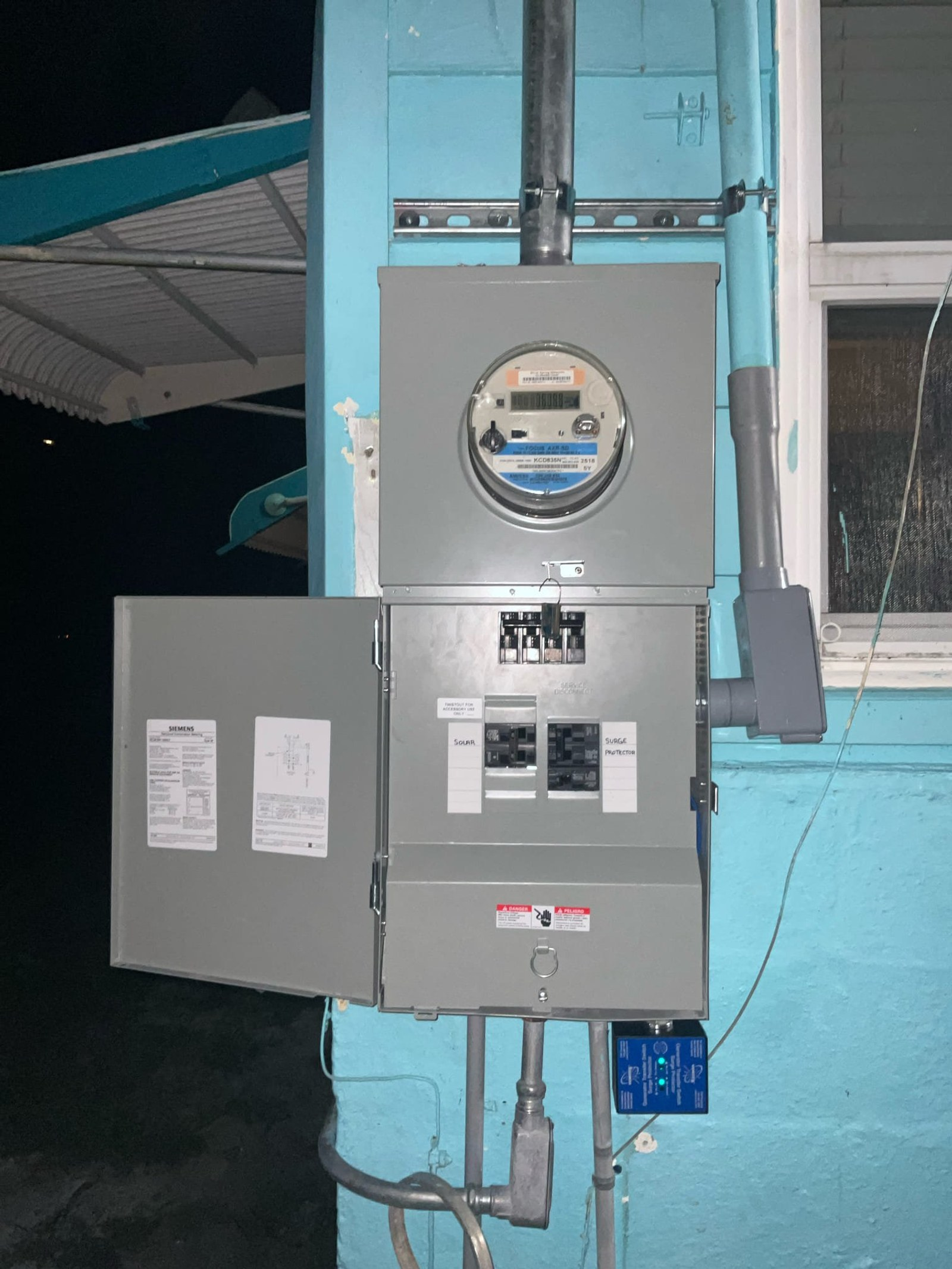
Most surge devices have a status light. Almost no one checks it. A yearly walk should confirm each device still guards the panel it is bolted to.
Grounding and bonding matter just as much. Loose ground wires show up after storms, and they make the rest of your surge plan weak. The National Weather Service posts plain lightning tips worth sharing with staff.
The Electrical Maintenance Commercial Orlando Cannot Skip
A useful program is boring and repeatable. At minimum, an annual visit should cover the following:
- Infrared scans of switchgear, panels, and motor starters under load
- Torque checks on lugs and terminations the scan flags as warm
- Testing GFCI outlets in kitchens, washdown areas, and rooftop boxes
- Confirming surge devices still work, not just that they are there
- Exercising breakers that have not been operated in years
- Monthly and yearly tests of exit signs and egress lights
- Load testing the generator and cycling the transfer switch
- Updating panel schedules so the next tech is not guessing
NFPA 70B now treats this upkeep as a standard, not a suggestion. That gives owners solid ground when an insurer or inspector starts asking questions.
Do the Storm Prep Before June, Not During
Hurricane season changes the list. Backup power either starts on the first try or it does not. You find out at the worst moment.
Test the transfer switch under real load. Check batteries, block heaters, and fuel. Confirm the auto exercise cycle really ran instead of trusting the display.
Walk the site for leak paths too. Roof cuts, conduit seals, and panel bottoms are common entry points. Put these checks in the spring budget, not in the panic week before a named storm.
Shops that cannot afford downtime should plan further ahead. Our look at backup power for fuel stations shows how this planning works when an outage halts the whole site.
What a Realistic Schedule Looks Like
Assets do not all need the same cycle. Life-safety systems want monthly checks, while switchgear does fine once a year.
Split the plan into monthly, quarterly, and annual tasks. Then assign each task to a person, not to a team. Shared duty tends to become no one’s job.
A small retail building can run the whole cycle in half a day. Larger sites around Orlando and Sanford often stagger the work across quarters, so no one visit stops the business.
Kitchens, Clinics, and Other High-Wear Spaces
Restaurants punish gear. Grease, heat, and constant washdown shorten the life of outlets, hood controls, and cooler circuits.
Medical and dental suites have the opposite problem. Their gear is touchy, so clean power and solid grounding matter more than raw size.
Match the check to the tenant. A generic list misses the faults that really shut these spaces down.
Where Buildings Quietly Waste Money
Summer demand charges punish waste. Aging lights, failing contactors, and worn motors all raise the bill quietly.
LED retrofits with occupancy sensors pay back fast in a building with long hours. So does replacing a motor that pulls high amps because a bearing is failing.
Metering helps you see the problem. Once you can watch use by circuit, spending is much easier to justify.
Safety and Compliance Are One Conversation
Florida adopts the National Electrical Code through the state building code. Older tenant build-outs often miss current rules, especially after a few remodels.
Workplace rules apply too, from arc-flash labels to safe work habits. Our guide to electrical standards in the workplace covers what most managers should know.
Routine checks find real problems early. During one Orlando panel service visit, we found double-tapped breakers and rust that no one could see from outside the cabinet.
Who Should Be Doing This Work
A licensed contractor should run a documented electrical safety inspection on a set cycle. In-house staff are rarely equipped for live gear.
Ask for photos, thermal images, and a written punch list. Real electrical maintenance commercial Orlando can count on leaves a paper trail you can hand to an insurer.
Then act on the findings. A report in a drawer protects no one, and the NFPA codes assume the fixes really get made.
A Quick Check You Can Do Yourself
You do not need a meter to spot trouble. Look for rust at the base of a panel. Listen for a hum that was not there last month. Smell for hot plastic near a breaker.
Write down what you find and when you found it. A short note with a date beats a memory every time. Your electrician can then work straight from that list.
Thomas Edison Electric serves businesses in Orlando, Maitland, Altamonte Springs, Sanford, and Kissimmee. Call (407) 490-0004 to set up a maintenance schedule with a licensed team, Florida license EC13015487.