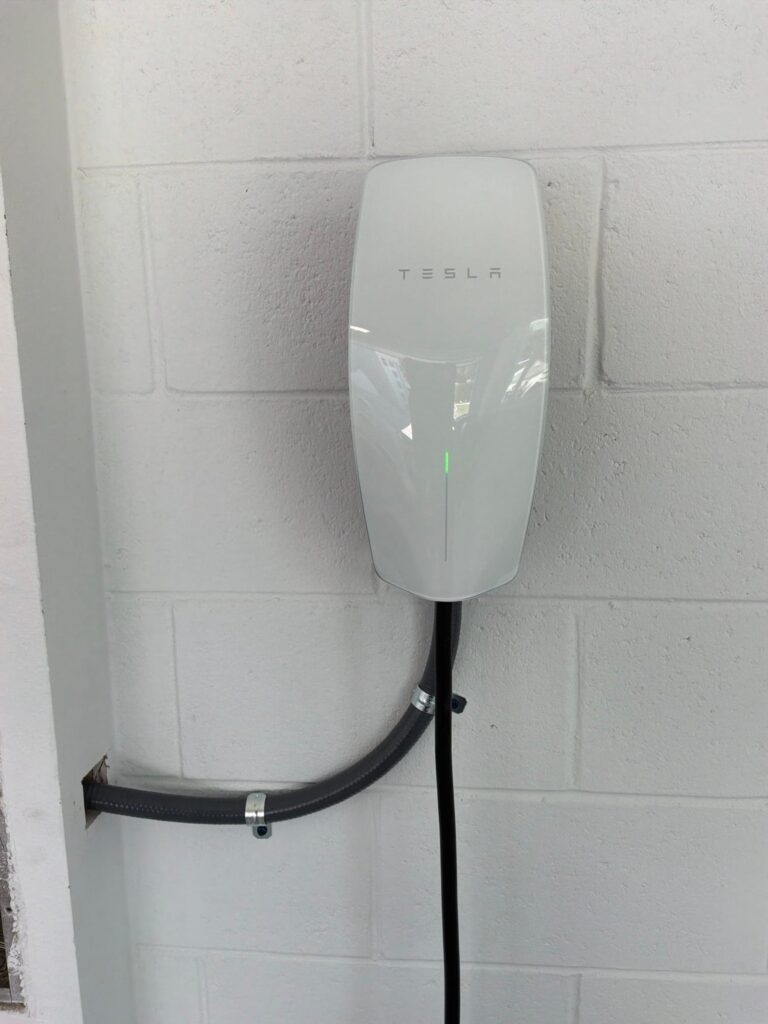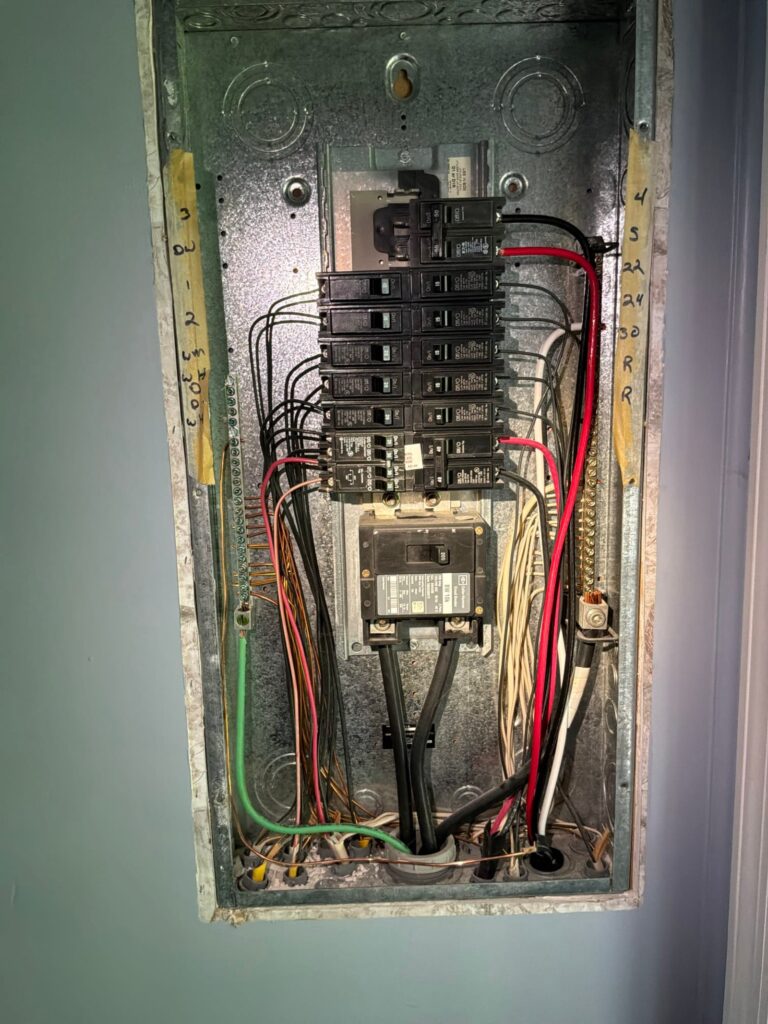
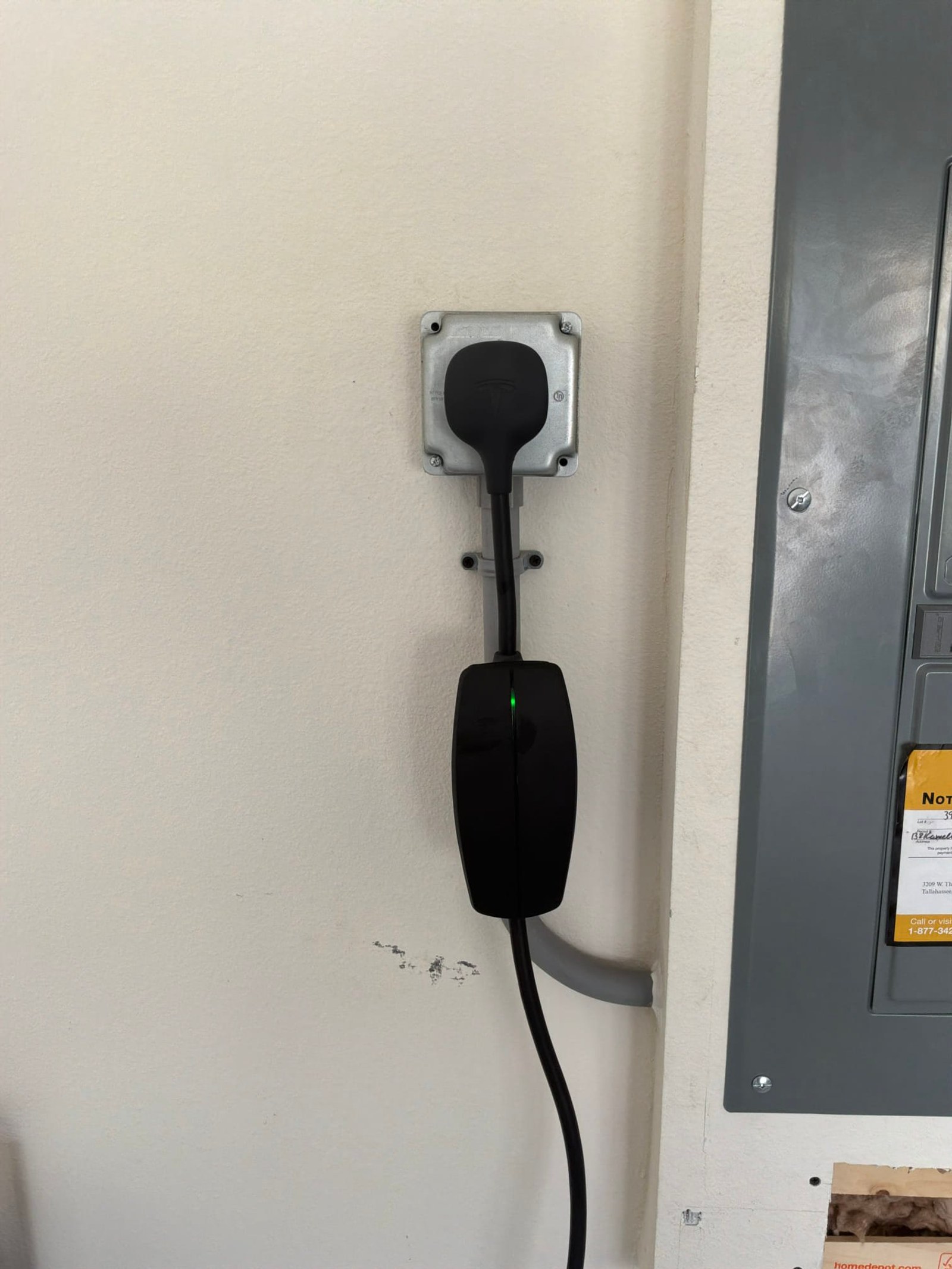
This Sanford outlet repair case study walks through the real diagnosis, the fix, and the code details from a recent service call. A homeowner in Sanford, FL wanted two electric-vehicle charging outlets installed so both household vehicles could charge reliably at home. Our licensed field team ran black exterior conduit, wired the customer-supplied number-six conductors, and connected two customer-supplied two-pole 50-amp GFCI breakers, all under permit and with a final inspection on record.
Customer’s Problem
The homeowner already owned the wire, the double-gang box, and the 50-amp GFCI breakers. They needed a licensed crew to install everything correctly, pull the required permit, and pass the county inspection before using the outlets for daily charging.
What Our Electrician Found
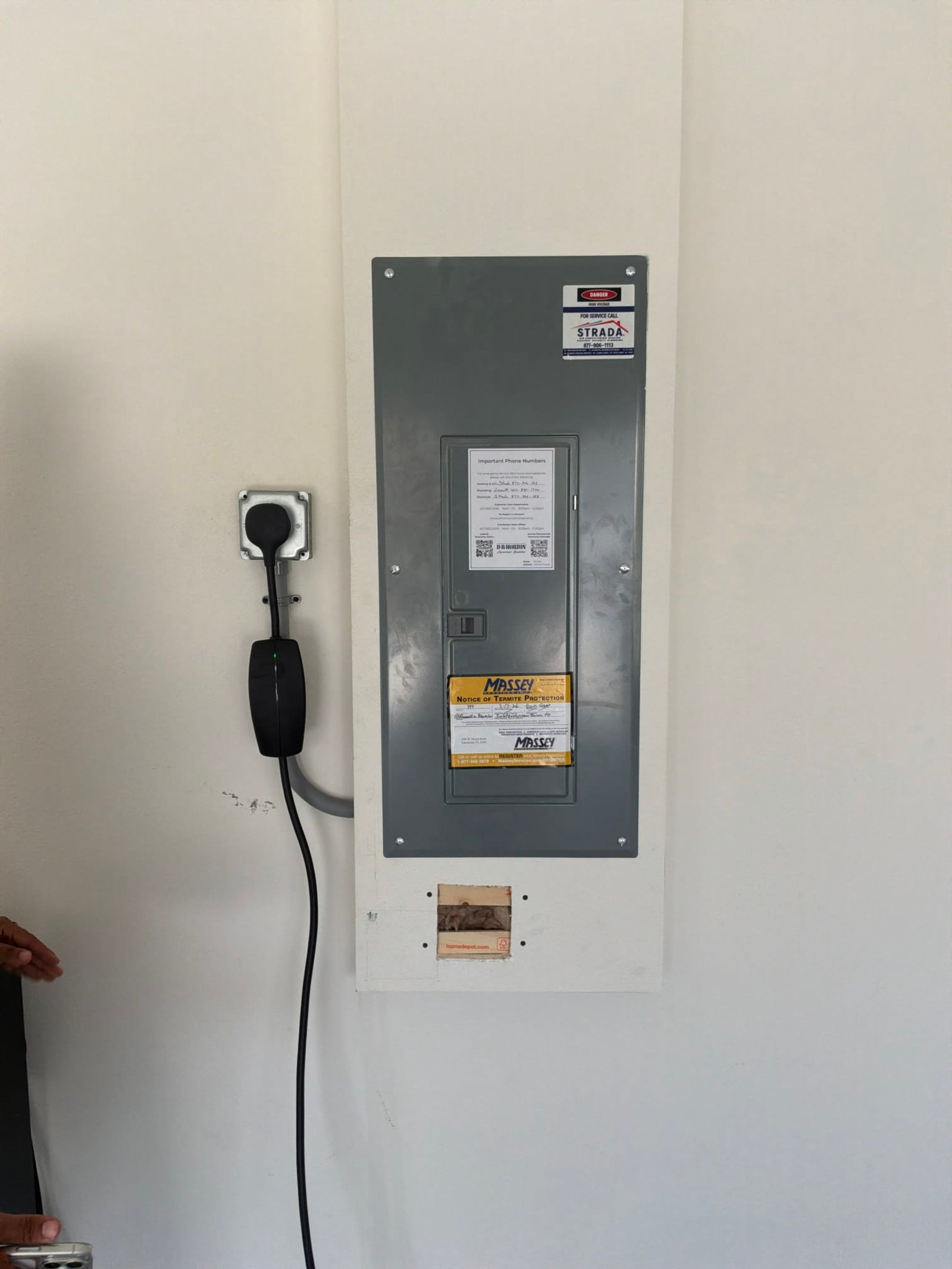
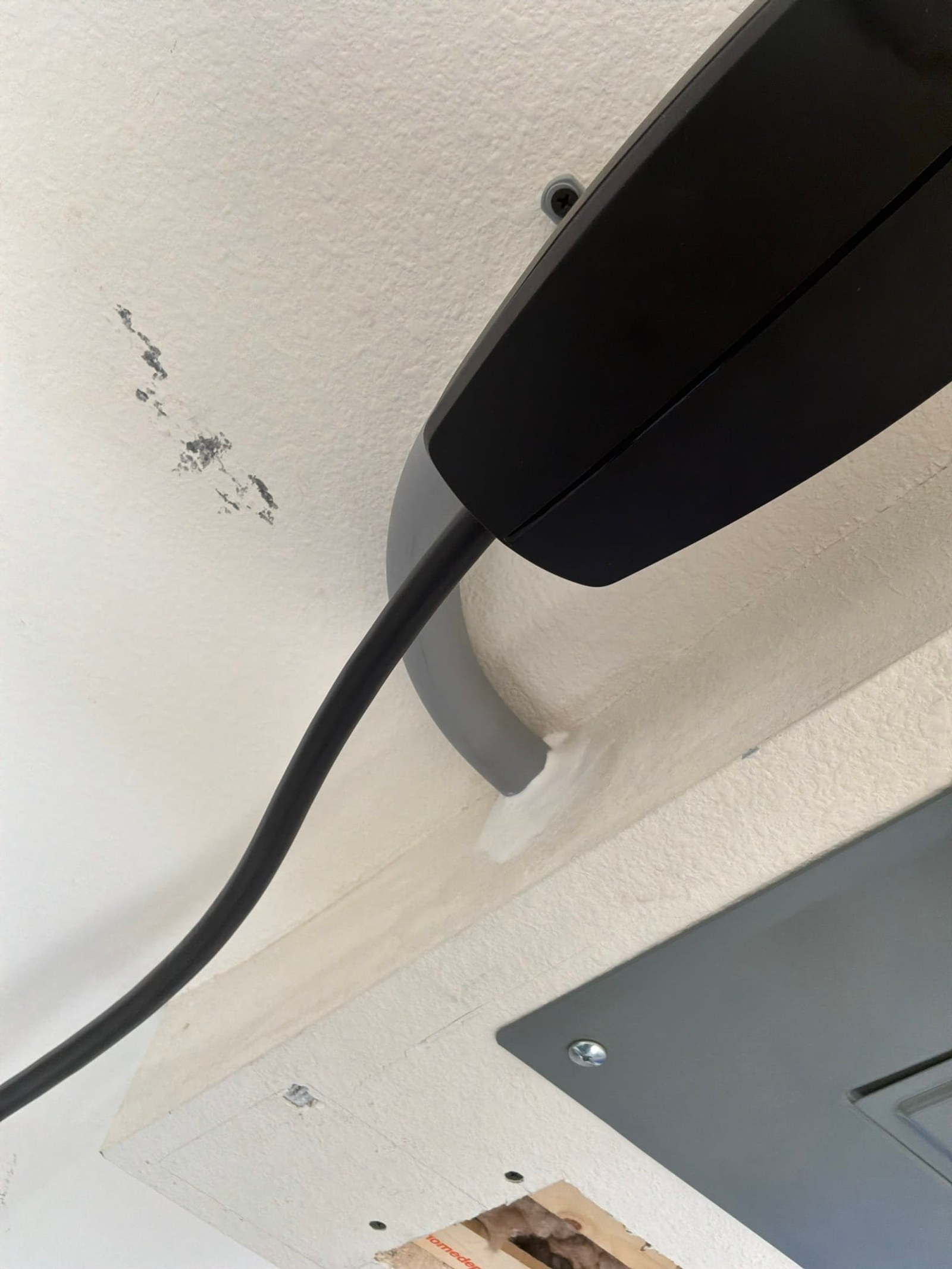
Our technician on-site reviewed the exterior installation area before starting work. One visible condition noted in the job photos was paint overspray on an adjacent surface near the device location, a cosmetic finding consistent with prior exterior work on the home. The team accounted for that during the final fit-up to keep the weatherproof enclosures seated cleanly against the wall.
The photos show a wall-mounted charging station with a green status LED, a coiled black cable, and a weatherproof enclosure on the exterior wall. A dedicated run of black conduit follows the exterior wall from the panel feed to the outlet locations. The weatherproof enclosures are appropriate for an outdoor installation and meet the intent of current code for EV supply equipment located outside.
Solution Selected
The homeowner chose to install both EV outlets in a single visit. Because the customer already supplied the number-six wire, the two-pole 50-amp GFCI breakers, and the double-gang box, our team focused on the conduit run, the connections, the permit, and the inspection, delivering a complete, code-documented result in one trip.
Work Performed
- Installed two customer-supplied EV outlets using a customer-supplied double-gang box
- Pulled customer-supplied number-six conductors through new black exterior conduit
- Connected two customer-supplied two-pole 50-amp GFCI breakers to feed each circuit
- Completed the work under permit with a final county inspection
Why Pricing Can Vary
Two homes with the same job on the invoice can land at different totals. On projects like this one, the total is driven by:
- Number of devices replaced
- Device type (standard, GFCI, AFCI, tamper-resistant, USB, smart or dimmer)
- Condition of the boxes and wiring behind the devices
- Backstabbed or aluminum connections that need correction
- Access and the number of rooms involved
Why This Sanford Outlet Repair Matters for Homeowners
Charging two electric vehicles at home is one of those upgrades that quietly changes the daily rhythm of a household. Instead of stopping at a public charger on the way home from work or school, both vehicles are simply full every morning, ready to go without a second thought.
A dedicated 50-amp circuit for each outlet gives each vehicle the full charge rate the manufacturer recommends. Additionally, placing GFCI protection at the breaker level means the circuit meets NEC 625.41 requirements for EV branch-circuit ampacity and adds a layer of protection well-suited to an exterior, weatherproof installation.
Finally, having a permit and a passed inspection on record is worth more than it might seem at first. It keeps the home’s electrical documentation current, it satisfies insurance and future-sale disclosure requirements, and it gives the family confidence that the work meets today’s standards rather than just looking finished. That kind of peace of mind, knowing the paperwork is clean and the circuits are right, is something a household can simply stop thinking about.
“William did an excellent job. I had a slight change scope of work to the installation. He was still able to initiate his professional expertise to get the job done. Would highly recommend him again.”
Code Compliance Cited in This Job
Every fix above maps to a specific section of NEC 2020. Each card links to NFPA’s public NEC index.
EV Charging Branch-Circuit Ampacity
NEC 625.41 sets the minimum branch-circuit ampacity for electric-vehicle supply equipment. For this job, each of the two outlets was fed by a dedicated two-pole 50-amp circuit, sizing that satisfies the continuous-load requirements for the customer-supplied EV charging equipment and gives each vehicle its full rated charge rate. NFPA reference ›
EV Charging Continuous-Load Rating
NEC 625.42 treats EV charging as a continuous load, meaning the circuit must be rated at 125 percent of the equipment’s rated current. Installing 50-amp circuits for the customer-supplied outlets addresses this requirement and ensures the breakers and conductors handle sustained charging sessions without nuisance trips. NFPA reference ›
GFCI Protection for Personnel
NEC 210.8 requires GFCI protection for receptacles installed in locations such as outdoors and garages. The two-pole 50-amp GFCI breakers installed on these exterior EV circuits satisfy this requirement and are consistent with best practice for outdoor EV supply equipment exposed to weather. NFPA reference ›
Common Questions
Questions homeowners ask after seeing this kind of work.
Why does an EV outlet need its own dedicated circuit instead of sharing an existing one?
EV charging draws power continuously for several hours at a time, which is very different from a typical appliance that cycles on and off. NEC 625.42 classifies EV charging as a continuous load, so the circuit must be sized at 125 percent of the charger’s rated current. Sharing a circuit with other loads would mean the breaker sees more than it is rated for during long charging sessions. If your current setup shares a circuit, our team can schedule a quick assessment to size a proper dedicated run.
Can I supply my own wire and breakers the way this Sanford homeowner did?
Yes, customer-supplied materials are common on EV outlet installations. The important thing is that the wire gauge and breaker amperage match the charger’s requirements and that a licensed electrician makes all the connections under permit. Our crew verified that the customer-supplied number-six conductors and two-pole 50-amp GFCI breakers were appropriate for this scope before proceeding. If you have equipment on hand and want us to do the install, reach out to schedule and we can review the specs first.
Why does an exterior EV outlet installation need a permit and inspection?
A permit creates an official record that the work was reviewed against the current electrical code before and after installation. For EV circuits in particular, the county inspector verifies circuit sizing, GFCI protection, conduit installation, and weatherproofing. That record matters for homeowners insurance accuracy and for real-estate disclosure if the home is ever sold. If you are unsure whether a previous EV install was permitted, our team can book an inspection to check.
How often should I have my home’s electrical system inspected?
A yearly inspection is a solid baseline for most households, giving you a current picture of how the panel, circuits, and devices are holding up. Homes built before 1990 and homes that have come through recent storms may benefit from checks more often, since older wiring and weather stress can show up gradually. Schedule your annual inspection and our licensed team will walk through the whole system with you.
What is the benefit of running conduit on an exterior EV outlet installation rather than just running cable directly?
Conduit protects the conductors from UV exposure, physical contact, and moisture infiltration over the life of the installation. On an exterior wall, those factors add up over years of Florida weather. Black conduit also gives the installation a clean, finished look that holds up alongside the weatherproof enclosures. If you are planning an outdoor EV outlet and want to understand the best routing for your home, book a site visit and our crew can walk the exterior with you.
Project Photos
Electrician and Technical Reviewer
Work performed by the Thomas Edison Electric field team serving Orlando.
Location
This project was completed in Sanford, Florida, in our Sanford service area.