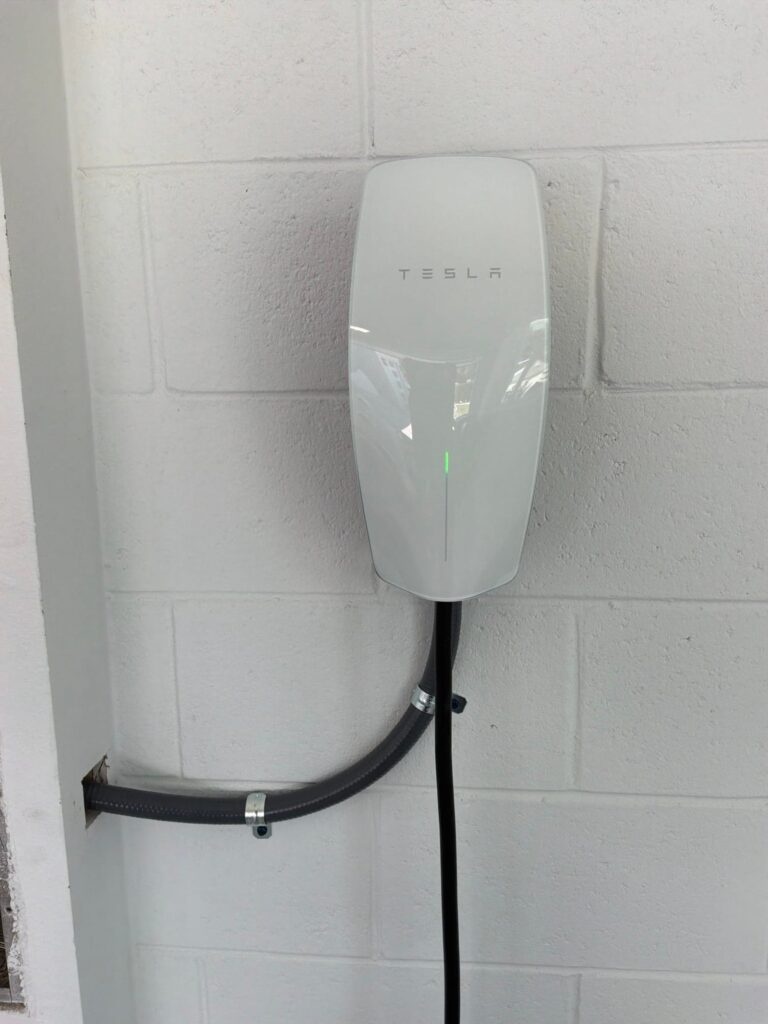
This Orlando EV charger installation case study walks through the real diagnosis, the fix, and the code details from a recent service call. What follows is a real EV outlet repair story from Orlando, FL: the symptoms, the diagnosis, and the finished work. A homeowner in Orlando, FL (32827) reached out about a 50-amp, 125/250V outlet serving their EV charger. The receptacle wasn’t performing reliably, and they’d already ordered a replacement. What started as a straightforward outlet call turned into a full-home electrical walkthrough that revealed several conditions worth addressing to keep the household running smoothly for years to come.
The Problem: A EV Outlet Repair Call in Orlando
The homeowner had ordered a new receptacle and suspected the issue was either the outlet itself or the wiring behind the wall. They needed a licensed electrician to inspect the circuit, confirm the root cause, and get their EV charger back online.
“I ordered a new receptacle for my EV charger, not sure if it’s the outlet or the wiring. Can someone inspect and repair it?”
Investigation
Our field team started at the EV outlet and then worked back through the home’s electrical system. What they found painted a clear picture of a house whose wiring pre-dates several current code cycles, and one that’s ready for some meaningful modernization.
The Panel and Service Equipment
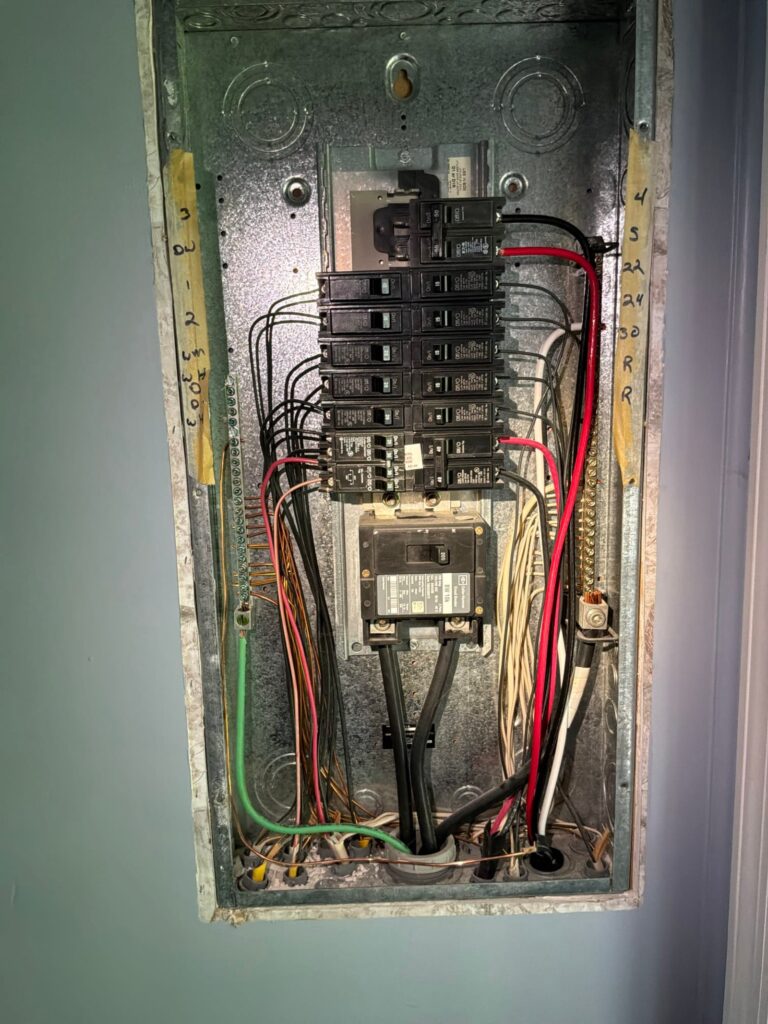
The home is served by a Square D QO 100-amp panel, a reliable platform. However, the inspection flagged two conditions that don’t meet current standards. First, neutrals and grounds share the same bus bar inside the panel without proper separation, a configuration that predates the bonding rules in today’s NEC. Second, double-tapped breakers were present, meaning more than one circuit conductor was landed on a single breaker terminal not rated for that use. Both conditions are common in homes of this era and are straightforward to correct.
The inspection also noted open knockouts in the panel enclosure, paint or rust on the busbar, and no whole-home surge protection, all worth addressing on a home with EV charging equipment and modern electronics.
Branch Circuits and Devices
The receptacles and switches throughout the home appear original. Many were wired using the backstab (push-in) method, a quick wiring shortcut widely used before roughly 2005. Over time, the spring tension on backstabbed connections eases, contact resistance climbs, and you get the kind of intermittent behavior this homeowner was already noticing at the EV outlet. Replacing them with properly torqued, screw-terminal connections is a durable, lasting fix under NEC 110.14 (B).
Additionally, AFCI protection was not present on branch circuits where today’s code requires it, and tamper-resistant receptacles, now standard for all dwelling-unit receptacles under NEC 406.12, had not been installed. The grounding system also showed items that don’t fully meet current requirements.
EV Circuit Specifically
The 50-amp outlet circuit itself was assessed for wire sizing and breaker sizing relative to the EV load. Per NEC 625.42, EV charging circuits must be rated for continuous duty, meaning the circuit must be sized at 125% of the charger’s rated current. The field team verified the circuit against this requirement and confirmed the new receptacle the homeowner ordered was the correct spec for the installation.
What We Fixed
Our technician on-site installed the homeowner’s new 50-amp receptacle, verified the wiring behind the wall, and confirmed the circuit is correctly sized for continuous EV charging duty. The team documented every connection and reviewed the full inspection report with the homeowner, walking through each flagged item so the family could prioritize next steps on their own timeline.
The inspection report provides a clear roadmap: panel corrections (neutral/ground separation, double-tapped breakers, open knockouts, busbar cleaning), whole-home surge protection, AFCI protection on branch circuits, tamper-resistant receptacles throughout, and a grounding system upgrade, each of which can be scheduled as a discrete project.
Why This Matters for Homeowners
For a household that charges an EV at home, the electrical system is doing more work than it was originally designed for. Adding a dedicated 50-amp circuit is a great step, and it’s also the moment when the rest of the system deserves a closer look. A panel carrying modern loads (EV charger, central AC, kitchen appliances) runs best when every connection is solid and every circuit is properly protected.
Backstabbed connections are one of the more common causes of intermittent outlet and charger behavior in homes of this vintage. They were standard practice when the home was wired, nothing unusual about finding them. Replacing them with screw-terminal connections means the whole family gets outlets and switches that simply work, every morning, without thinking about it.
Whole-home surge protection is another straightforward addition that pays dividends every storm season. Florida’s lightning environment puts real stress on electronics, the EV charger, the refrigerator, the home office gear. A properly installed Type 2 SPD at the Square D QO panel, per NEC 230.67, means those devices keep running through whatever the weather brings. For a family with an EV, that kind of quiet reliability is exactly what the system should deliver, every season, every year. Learn more about electrical safety for modern homes at ESFI.org.
Thomas Edison Electric holds Florida electrical contractor license EC13015487, so every inspection and repair is backed by a licensed, insurable team, and a documented record the homeowner can keep on file.
Code Compliance Cited in This Job
Every fix above maps to a specific section of the 2020 NEC, the edition Florida enforces under the 8th Edition Florida Building Code. Florida adopts the 2023 edition of the NEC when the 9th Edition takes effect on December 31, 2026. Each card links to NFPA’s public NEC index.
EV Charging Continuous-Load Rating
EV charging equipment must be treated as a continuous load, requiring the branch circuit to be rated at no less than 125% of the charger’s maximum rated current. On this job, the field team verified the 50-amp circuit met this requirement before the new receptacle was installed. This ensures the circuit won’t be thermally stressed during a full overnight charge. NFPA reference ›
EV Charging Branch-Circuit Ampacity
NEC 625.41 requires the branch-circuit ampacity to match the EV supply equipment’s rated input. The homeowner’s 50-amp, 125/250V outlet was assessed against the charger’s load to confirm the wiring and breaker sizing were appropriate. Correct sizing is what allows the charger to deliver a full charge reliably and consistently. NFPA reference ›
AFCI Protection for Dwelling Units
NEC 210.12 requires arc-fault circuit-interrupter protection on branch circuits supplying outlets in bedrooms, kitchens, living areas, and other dwelling spaces. The inspection found AFCI protection absent throughout this home, consistent with wiring that predates the AFCI expansion cycles of 2014 and 2020. Adding AFCI breakers to the Square D QO panel is a direct path to bringing those circuits in line with current standards. NFPA reference ›
Terminal Connections and Torque
NEC 110.14(B) requires that conductors be connected using listed methods that ensure reliable, low-resistance contact. Backstabbed (push-in) connections found throughout this home were permissible under older code cycles but do not provide the durable, torque-verified termination that screw terminals offer. Replacing them restores the kind of stable connection that prevents the intermittent behavior the homeowner noticed at the EV outlet. NFPA reference ›
Surge Protective Device at Service
NEC 230.67 now requires a listed surge protective device at the service for new and upgraded dwelling-unit installations. This home currently has no whole-home surge protection, a condition worth correcting, especially given the continuous load an EV charger places on the system. A Type 2 SPD installed at the Square D QO panel would cover the entire home, including the EV circuit and sensitive electronics. NFPA reference ›
Tamper-Resistant Receptacles in Dwellings
NEC 406.12 requires tamper-resistant receptacles throughout dwelling units. The inspection found that the existing receptacles, original to the home, do not meet this requirement. When receptacles are replaced as part of the backstab-correction work, installing tamper-resistant devices brings each outlet into compliance with current code in a single step. NFPA reference ›
Common Questions
Questions homeowners ask after seeing this kind of work.
Can a standard home electrical panel handle an EV charger on top of existing loads?
It depends on the panel’s available capacity and the total connected load. A 100-amp Square D QO panel like this one can support a Level 2 EV charger in many cases, but a licensed electrician should perform a load calculation first to confirm there’s enough headroom. If the panel is already close to capacity, a service upgrade may be the right call before adding the EV circuit. Schedule an EV readiness check to get a clear answer before you install.
What does it mean when an outlet or EV charger behaves intermittently?
Intermittent behavior, where a charger works sometimes but not reliably, is often a connection issue rather than a failed device. Backstabbed connections, loose terminal screws, or a worn receptacle can all cause the kind of inconsistent contact that interrupts a charge session. The fix is usually straightforward once the root cause is confirmed. If your EV charger is acting up, our team can diagnose the circuit and get it working reliably.
How often should I have my home’s electrical system inspected?
A yearly inspection is a good baseline for most homes. Older homes built before 1990, or any home that has been through recent storms, often benefit from inspections more frequently, since aging wiring and weather events can accelerate wear on connections and equipment. An annual check is also a smart habit after adding high-demand loads like an EV charger. Book your annual inspection and we’ll document everything so you have a clear picture of where things stand.
Are backstabbed outlets something I need to fix right away?
Backstabbed connections were a common wiring method for decades and are still in use in millions of homes, so finding them doesn’t mean an immediate emergency. That said, replacing them with screw-terminal connections is an inexpensive improvement that adds reliability, especially in circuits carrying heavier or continuous loads like an EV charger. Our team can work through the home circuit by circuit on a schedule that fits your household. Get on the calendar for a quote.
Is whole-home surge protection worth adding to a home with an EV charger?
Yes, EV chargers, along with modern appliances and electronics, are sensitive to the kind of voltage spikes that Florida’s storm seasons deliver regularly. A Type 2 surge protective device installed at the main panel covers every circuit in the home in a single installation, including the EV outlet. NEC 230.67 now requires it on new service installations, and retrofitting it to an existing panel is straightforward. Schedule the install and your whole home, charger included, rides out the next storm without skipping a beat.
Curious how this compares to your own home? Learn more about our EV outlet repair service.