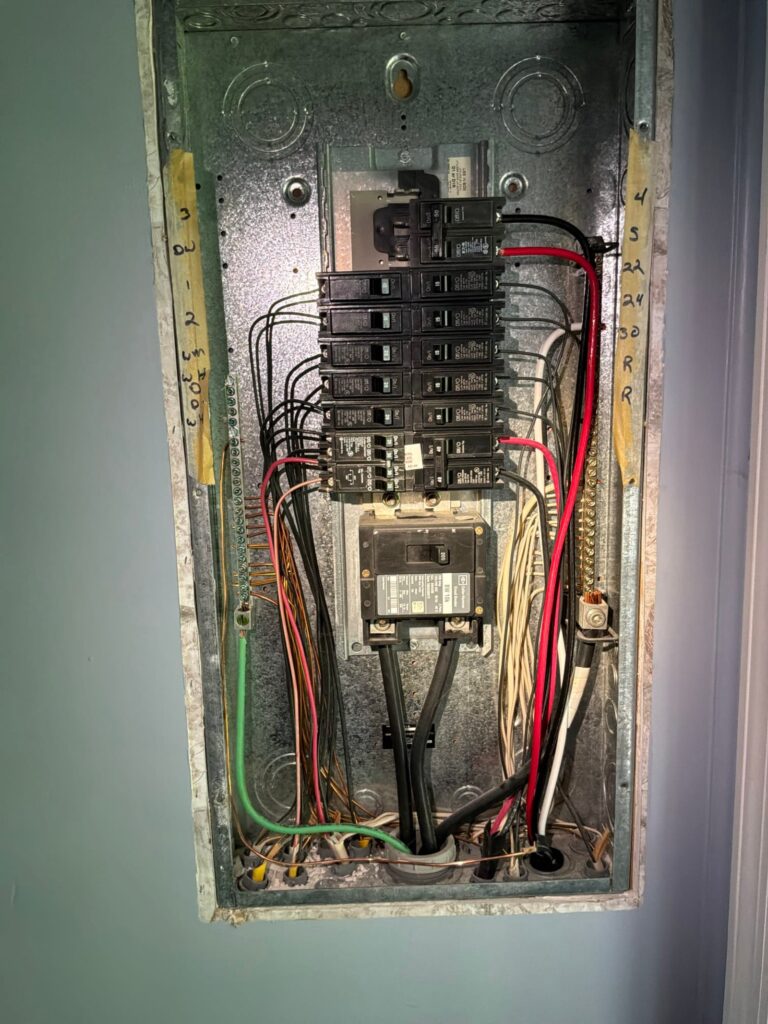
This Lake Mary EV charger installation case study walks through the real diagnosis, the fix, and the code details from a recent service call. A homeowner in Lake Mary, FL wanted to charge their electric vehicle at home, on their schedule, without relying on a public station. Our field team arrived, assessed the existing 200-amp Eaton CH panel, and installed a dedicated 60-amp Level 2 circuit, complete with permit and inspection, so the charger was ready to use the same week.
Customer’s Problem
The homeowner had already purchased their EV charging unit and needed a licensed electrician to supply and connect a proper dedicated circuit. The goal was straightforward: a safe, code-compliant Level 2 charging setup that would keep the vehicle topped off every night without putting any strain on the rest of the home’s electrical system.
What Our Electrician Found
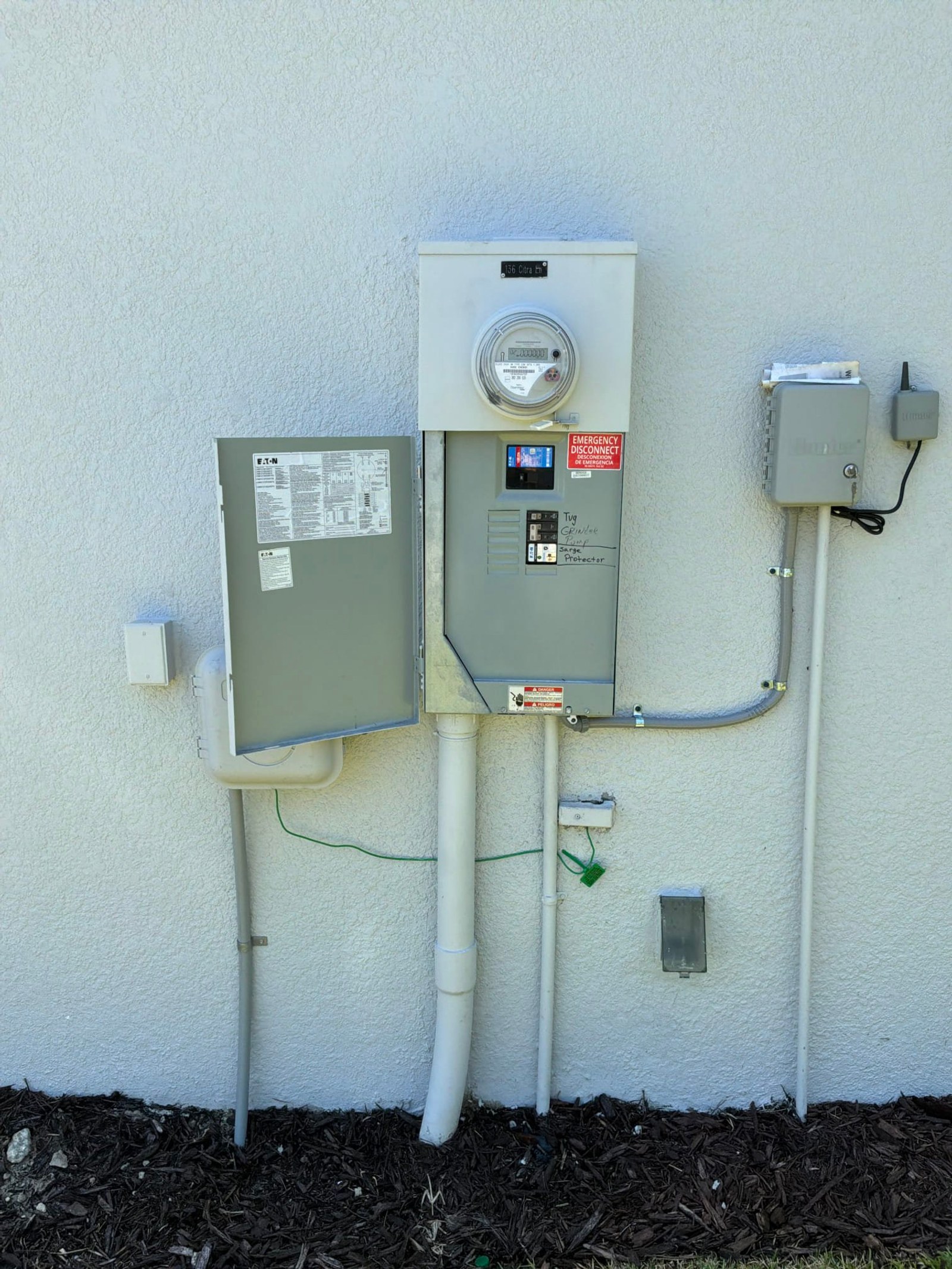
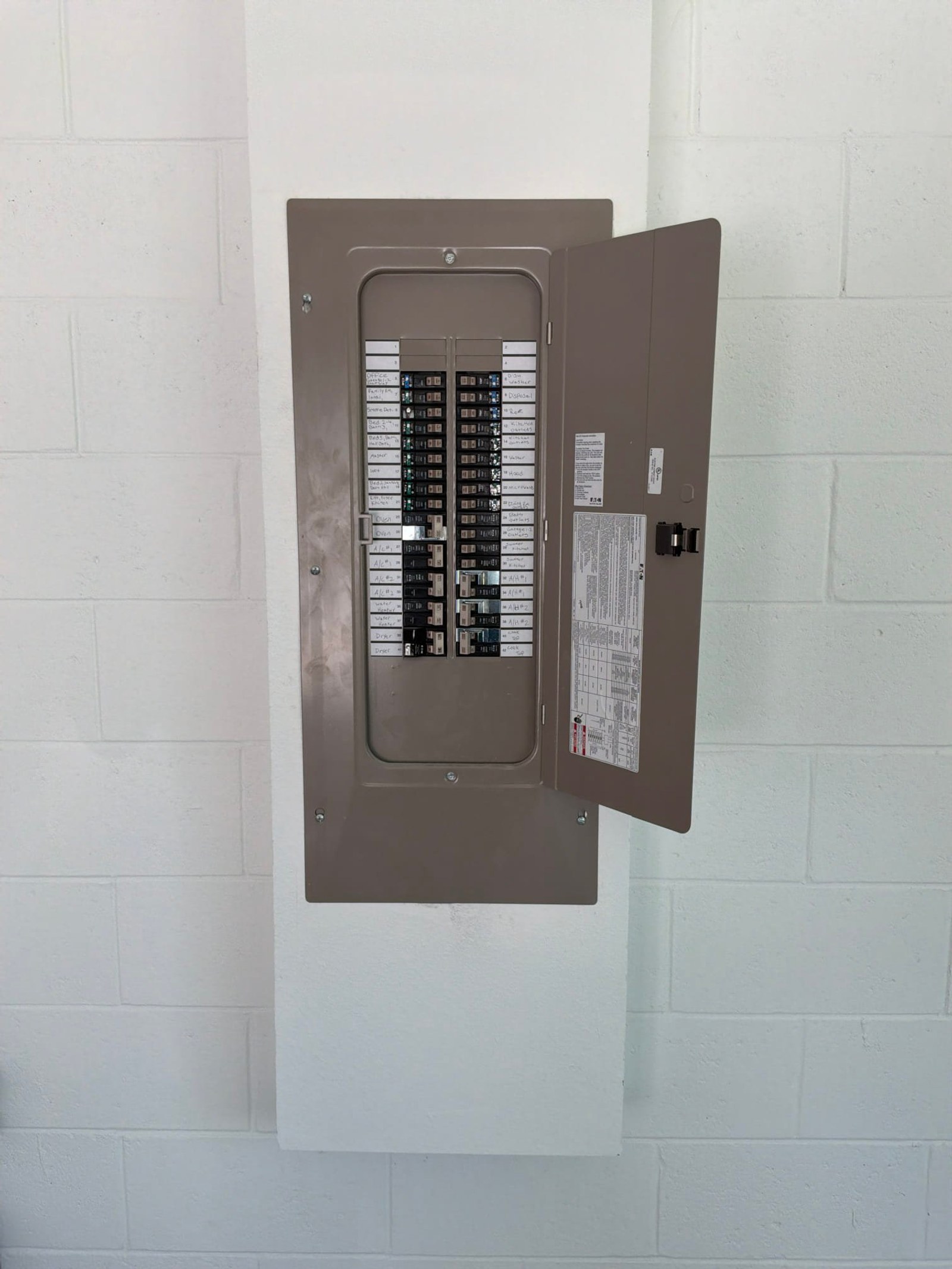
On arrival, our technician on-site reviewed the exterior service equipment and the Eaton CH panel before beginning any work. The meter can and utility disconnect visible on the exterior wall gave the crew a clear picture of the available service capacity. The panel’s circuit directory confirmed that space was available for a new dedicated double-pole breaker.
The inspection also noted several items worth a follow-up conversation. The grounding system, meter can condition, weatherhead mounting, and wire sizing across several circuits all showed as concerns. These conditions are common in homes of this era and were not a barrier to the EV charger installation. However, they represent opportunities to bring those areas in line with current NEC standards on a future visit.
Additionally, the checklist flagged items such as breaker sizing for existing equipment, the AC disconnect arrangement, and whether attic fan switches were properly configured. None of these affected the EV circuit work performed today, but our crew documented them so the homeowner has a full picture of the home’s electrical landscape.
Solution Selected
The homeowner chose to move forward with the EV charger installation using their own supplied charging unit. Our crew handled everything needed to support it: the dedicated circuit wiring, the protective conduit system, and the new double-pole breaker in the panel. A permit was pulled before work began, and the job passed inspection, so the installation is fully documented and on record with the local authority.
Work Performed
Our team installed one new dedicated circuit to support the homeowner-supplied EV charger. Specifically, the work included:
Panel-Side Work
We installed a new Eaton CH260 60-amp two-pole breaker into the existing 200-amp Eaton CH panel. This breaker is matched to the panel’s tan-handle CH series, so it seats correctly and coordinates with the panel’s internal bus. The circuit directory was updated to reflect the new circuit.
Branch Circuit Wiring
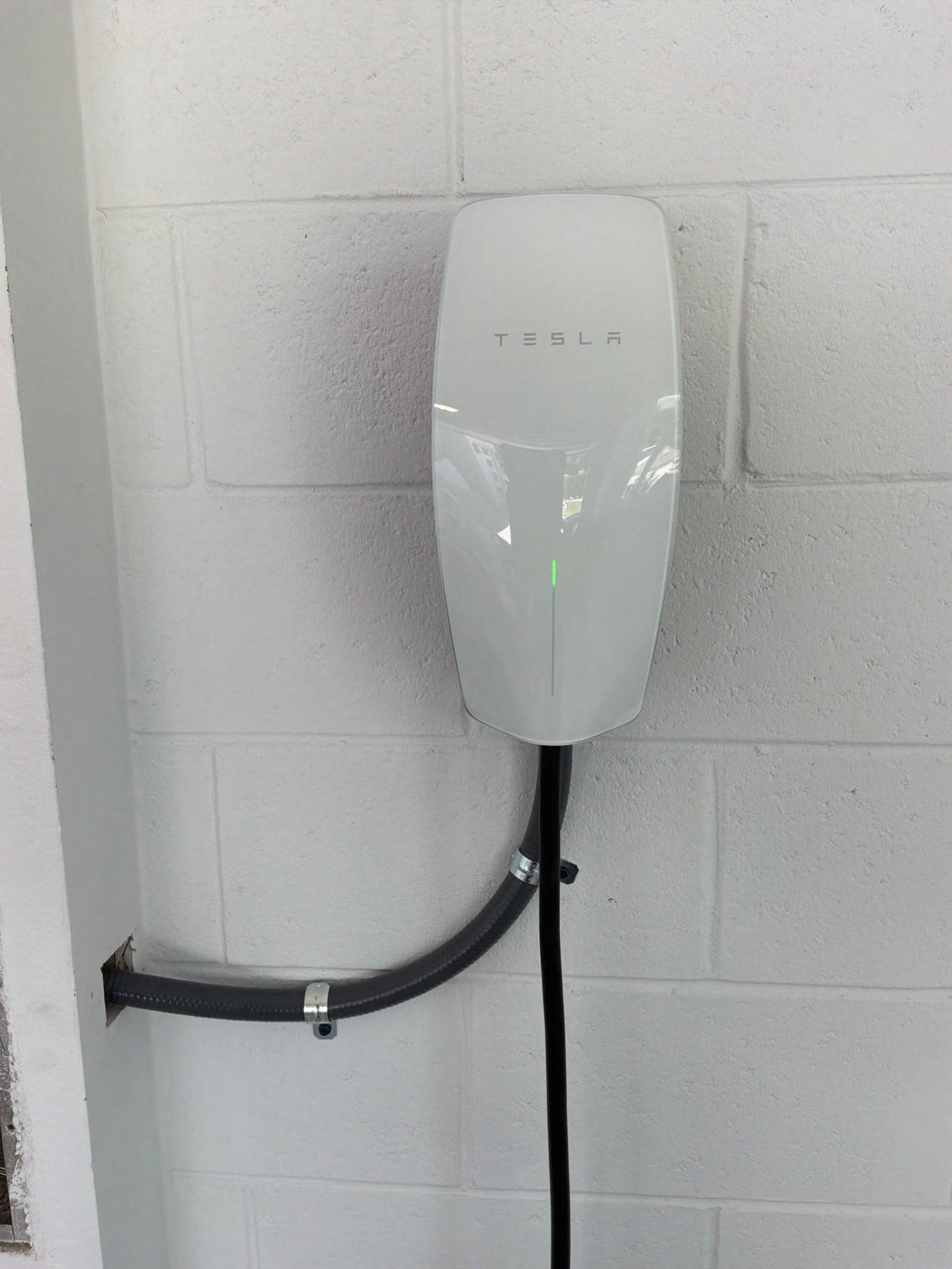
The circuit runs on 6/3 NM (Romex) cable, correctly sized for a 60-amp continuous EV charging load under NEC 625.41. Our crew used Carflex 3/4″ liquid-tight flexible conduit with straight connectors at the transition points, protecting the wiring where it exits the structure and connects to the charger mount.
Charger Connection
The homeowner-supplied Tesla Wall Connector was mounted on the exterior wall and connected to the new circuit. The green status indicator visible in the completed installation photo confirmed the charger powered up and recognized the circuit correctly. The exterior wall-mount location keeps the connection accessible and out of the way.
Why Pricing Can Vary
Two homes with the same job on the invoice can land at different totals. On projects like this one, the total is driven by:
- Charger amperage and whether it is hardwired or plugged into a receptacle
- Distance and route from the panel to the parking location
- Available capacity in the existing panel and whether a load calculation allows the new circuit
- Load management or a panel upgrade when capacity is not available
- Wall material, attic or crawlspace access and any conduit runs outdoors
- Charger brand, model and any smart features
- Permit and inspection requirements
- GFCI and disconnect requirements for the location
Why This Lake Mary Ev Charger Installation Matters for Homeowners
Level 2 home charging typically delivers a full charge overnight, which means the family wakes up to a full battery every morning without planning around public station availability. That kind of quiet reliability, plugging in at home like any other appliance, is what most EV owners say they appreciate most after making the switch.
A dedicated 60-amp circuit also means the charger is not sharing load with other household circuits. As a result, the rest of the home keeps running normally during charging sessions: the AC, the kitchen appliances, and anything else the household uses in the evening all stay unaffected. Furthermore, a permitted and inspected installation means the work is on record, which matters at resale and for homeowner’s insurance documentation.
Finally, the inspection notes our team compiled give the household a starting point for future improvements. Items like grounding system condition, weatherhead mounting, and wire sizing for existing equipment are worth scheduling a dedicated review. Addressing those areas one step at a time keeps the home’s electrical system growing with the family’s needs, comfortably and on their timeline.
“George was terrific, got my Tesla charger installed promptly and efficiently”
Code Compliance Cited in This Job
Every fix above maps to a specific section of NEC 2020. Each card links to NFPA’s public NEC index.
EV Charging Branch-Circuit Ampacity
NEC 625.41 requires that EV charging equipment branch circuits be sized for the continuous load the charger draws. On this job, the 60-amp Eaton CH260 breaker and 6/3 NM wiring were selected to meet the continuous-load rating of the homeowner-supplied Level 2 charger, providing the full capacity the charger is designed to use. NFPA reference ›
EV Charging Continuous-Load Rating
NEC 625.42 classifies EV charging as a continuous load, meaning the circuit must be rated at 125 percent of the charger’s operating current. The 60-amp circuit installed here accommodates the charger’s rated draw with the required headroom, so the breaker and wiring stay well within their rated limits during long overnight charging sessions. NFPA reference ›
Grounding Electrode System
NEC 250.50 defines the required grounding electrode system for a dwelling service. Our inspection noted the grounding system as a concern on this property, which is common in homes of this vintage. A dedicated grounding system review would confirm whether all electrodes meet current standards and whether any bonding connections need to be updated. NFPA reference ›
Circuit Directory and Identification
NEC 408.4 requires that every circuit in a panelboard be legibly identified in the circuit directory. After installing the new 60-amp EV charging circuit, the crew updated the panel’s circuit directory card so the new breaker is clearly labeled, keeping the panel easy to navigate for any future service work. NFPA reference ›
Common Questions
Questions homeowners ask after seeing this kind of work.
Why does an EV charger need its own dedicated circuit instead of sharing an existing one?
Level 2 EV chargers draw current continuously for several hours, which is a heavier sustained load than most household circuits are designed to share. A dedicated 60-amp circuit, like the one we installed with an Eaton CH260 breaker and 6/3 NM wiring, keeps that load separate so the rest of the home runs normally during charging. NEC 625.42 classifies EV charging as a continuous load, which is why the circuit must be sized and dedicated accordingly. If you are planning a home EV charger installation, schedule online and we will confirm the right circuit size for your specific charger and panel.
Do I need a permit to install a Level 2 EV charger at my home in Lake Mary, FL?
Yes. A dedicated 240-volt circuit for EV charging requires an electrical permit and inspection in Lake Mary and throughout most of Florida. Pulling a permit ensures the work is reviewed by the local authority, documented for your records, and valid for insurance and resale purposes. On this job, our team handled the permit process from start to finish before any work began. To get your own permit-backed EV charger installation on the schedule, book online and we will take care of the paperwork.
Can my existing electrical panel handle the additional load from a Level 2 EV charger?
Most 200-amp panels, like the Eaton CH panel at this Lake Mary home, have enough total capacity to support a Level 2 EV charger as long as a breaker slot is available and the existing load is within range. Our team checks the panel’s available capacity and existing load before recommending a circuit size, so there are no surprises after installation. If your panel is older or already heavily loaded, we can walk you through options. Schedule a panel review and we will give you a clear picture before any work begins.
How often should I have my home’s electrical system inspected?
A yearly inspection is a good baseline for most homes. Older homes, particularly those built before 1990, and homes that have weathered recent storms may benefit from inspections more frequently, since those conditions can accelerate wear on service equipment, grounding connections, and wiring. On this job, our crew noted several items worth a follow-up review alongside the EV charger installation. An annual check keeps everything current and gives the household peace of mind. Book a safety check to get on the calendar.
What is the difference between Level 1 and Level 2 EV charging at home?
Level 1 charging uses a standard 120-volt outlet and adds roughly 3 to 5 miles of range per hour, which works for low-mileage drivers but leaves most EV owners waiting days for a full charge. Level 2 charging runs on a dedicated 240-volt circuit, like the one installed at this Lake Mary home, and typically delivers a full charge overnight. For a family that drives daily, Level 2 is the practical choice because the car is ready every morning without any extra planning. Curious whether your panel supports a Level 2 upgrade? Schedule online and we will take a look.
Project Photos
Electrician and Technical Reviewer
Work performed by the Thomas Edison Electric field team serving Orlando.
Location
This project was completed in Lake Mary, Florida, in our Lake Mary service area.