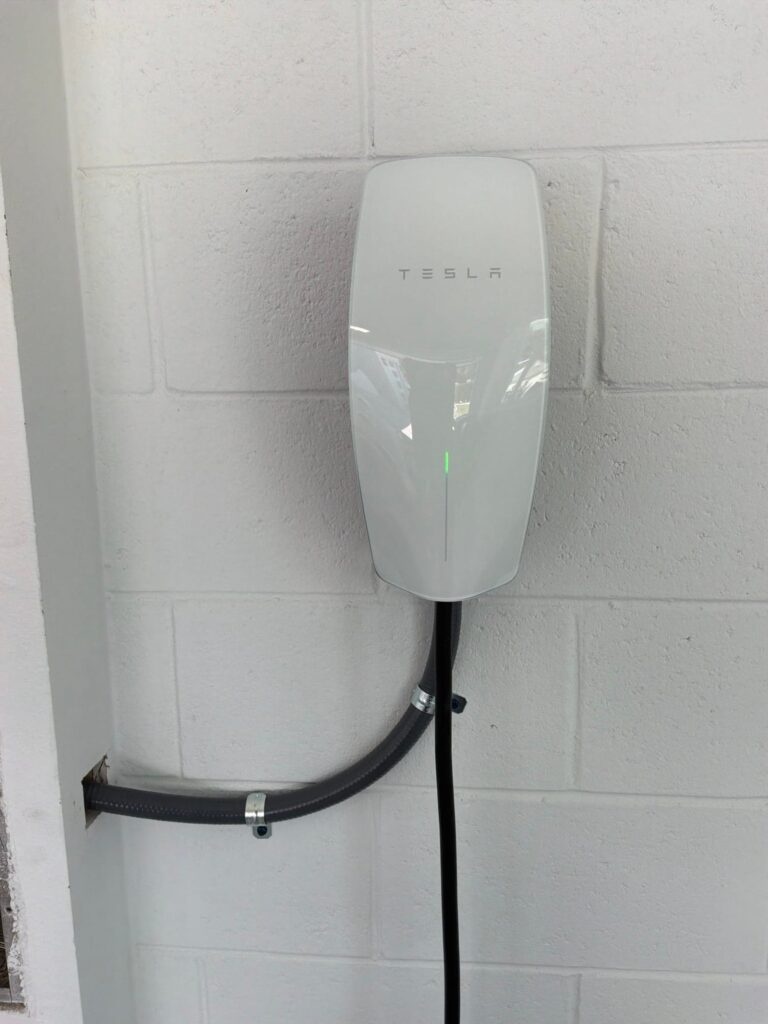
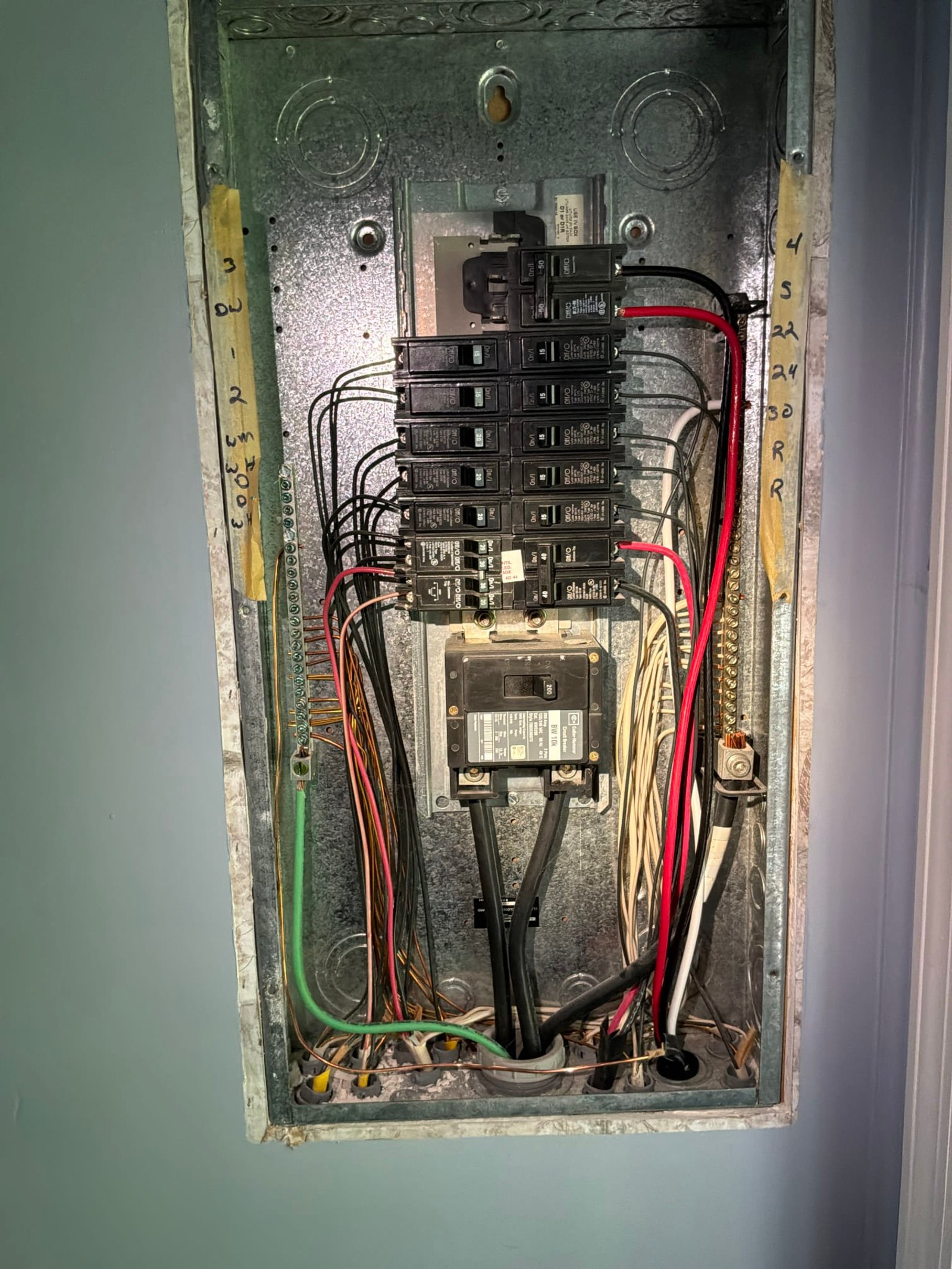
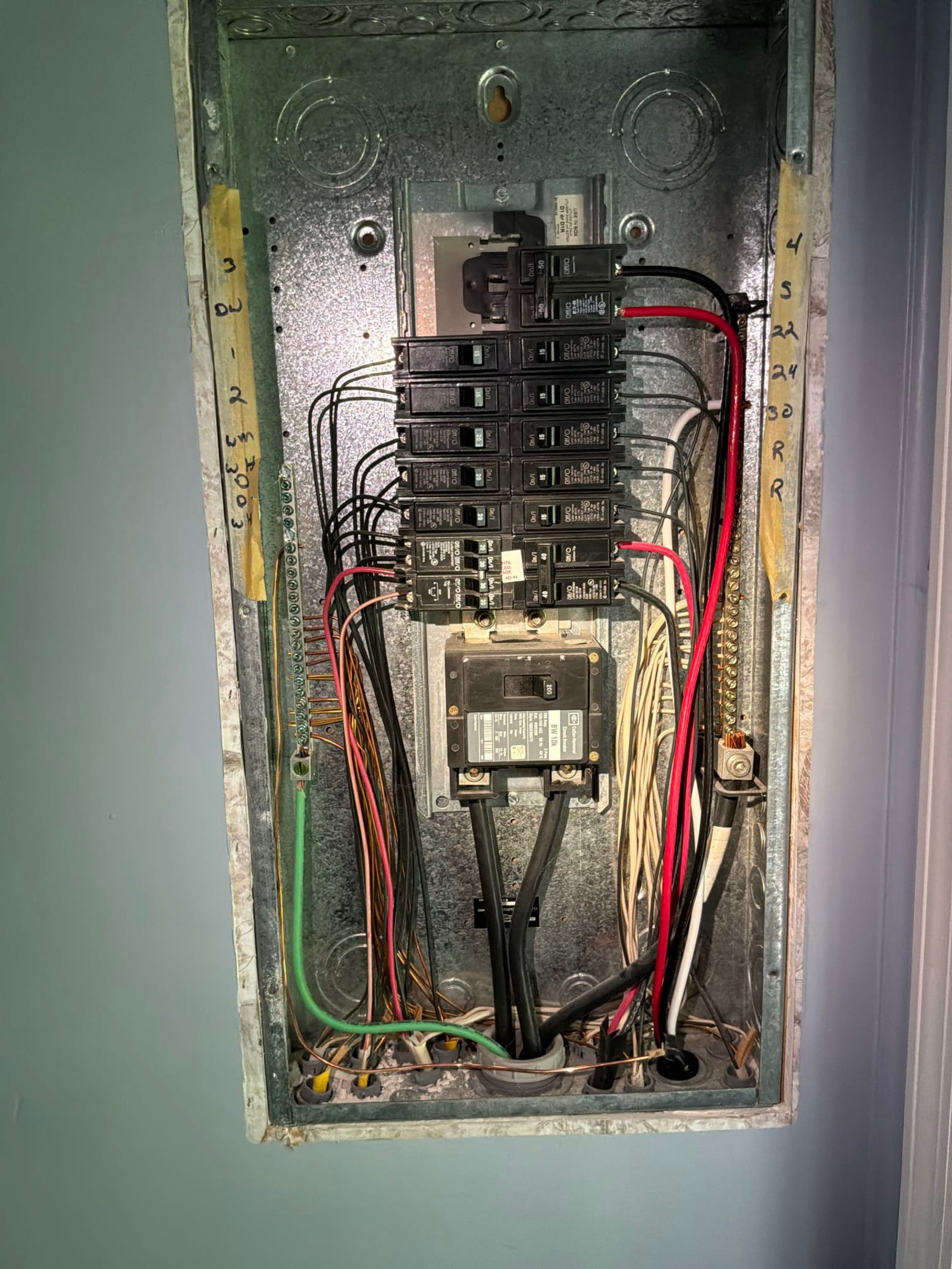
This Mount Dora case study walks through the real diagnosis, the fix, and the code details behind a recent 50-amp EV charging outlet installation. The homeowner wanted a dedicated 50-amp outlet for EV charging, and our field team delivered exactly that. During the visit, the crew also noted that the home’s outlets and switches were more than 50 years old and flagged two items worth addressing: backstabbed receptacle connections and the absence of AFCI protection on branch circuits. The panels, however, were brand new and correctly installed, giving the home a solid foundation to build on.
The Problem
The homeowner reached out to add EV charging capability at home. Plugging into a standard outlet is slow and ties up a shared circuit. A dedicated 50-amp circuit changes the experience entirely: faster charging, no shared load, and a setup that matches the way modern households actually use power.
“We just got an electric vehicle and wanted a proper outlet in the garage, something built for it, not just an extension cord situation.”
Once our technician arrived and opened the panel and walked the home, a fuller picture emerged.
Investigation
The Square D QO 200-amp panel was recently upgraded and in excellent shape. Neutrals and grounds were properly separated. Every breaker was correctly sized. The grounding system passed. Surge protection was already present. The meter can, weatherhead, and service entrance all looked solid.
However, two findings stood out during the walk-through.
Backstabbed Receptacle Connections
The home’s outlets, many of them original to the structure and 50-plus years into service, showed backstabbed connections throughout. Backstabbing was a common installation shortcut for decades: the wire clips into a spring-loaded slot in the back of the receptacle instead of wrapping around a screw terminal. Over time, that spring tension relaxes. Contact resistance climbs. You get the kind of intermittent behavior (lights that flicker, outlets that feel sluggish) that homeowners often chalk up to “the house being old.” Replacing them with proper screw-terminated connections is a straightforward, durable fix.
AFCI Protection
The inspection also confirmed that AFCI (arc-fault circuit interrupter) protection was not present on the branch circuits. This is consistent with homes wired under older code cycles. AFCI requirements for bedrooms were introduced in the 1999 NEC and have expanded with each cycle since. Under NEC 2020 Section 210.12, the edition adopted by the Florida Building Code, 8th Edition, AFCI protection is required on 15- and 20-amp, 120-volt branch circuits serving most living areas of a home. The homeowner was informed and the upgrade was strongly recommended for a future visit.
What We Fixed
The primary work centered on the new EV charging circuit. Our crew ran 6/3 NM copper wire, rated for 50-amp service, through a concealed path to the garage, secured with 3/4″ liquid-tight flexible conduit and straight connectors at the transition points. At the panel, the team installed an Eaton BR250 50-amp, 2-pole breaker into the Square D QO panel. The inspection turned up no double-tapped breakers, so the new circuit landed in a panel that was already clean and correctly organized.
At the outlet end, the crew installed a Leviton 1450R 50-amp heavy-duty EV charging receptacle, a purpose-built outlet designed for the continuous high-amperage load that EV charging puts on a circuit. A two-gang in-use weatherproof cover (Intermatic WP1020C) protects the outlet from the elements, and a two-gang metal range/dryer plate completes the finish at the interior face.
The result: a dedicated, properly protected, weather-resistant 50-amp EV outlet, fed by a correctly sized breaker, on a panel that was already in great shape.
Why This Mount Dora EV Outlet Matters for Homeowners
EV charging at home is one of those upgrades that quietly transforms a household routine. Instead of hunting for a public charger or watching a slow trickle charge overnight on a shared outlet, the car is simply ready every morning. For a family with an electric vehicle, that kind of reliability, plug in when you get home and wake up to a full charge, is comfort that adds up every single day.
Additionally, the surge protective device already present at the service gives the vehicle’s onboard charger and the home’s other electronics a first line of defense during Florida’s frequent summer storms. Surge events that would otherwise stress sensitive components pass through the panel’s protective device instead of reaching the loads. Your fridge, AC, computers, and the EV charger itself keep running the way you expect them to through storm season.
Finally, the backstabbed-outlet finding is worth keeping in mind. Most of the home’s receptacles predate current standards, and that’s not a reflection on how the home was maintained, just on how long it’s been since they were installed. Bringing them up to current screw-terminal connections, alongside AFCI protection on the branch circuits, is the kind of modernization that gives a household genuine peace of mind: the wiring works the way current code intends, quietly and reliably, while the family goes about their day.
Code Compliance Cited in This Job
Every fix above maps to a specific section of NEC 2020, the edition adopted by the Florida Building Code, 8th Edition. Each card links to NFPA’s public NEC index.
EV Charging Branch-Circuit Ampacity
NEC 625.41 requires the branch circuit supplying EV charging equipment to have an ampacity not less than 125% of the EV charging load. On this job, the 50-amp circuit was sized for the Leviton 1450R receptacle’s continuous charging load, and the Eaton BR250 breaker was selected to match. The 6/3 NM copper wiring supports the full 50-amp rating with appropriate headroom. NFPA reference ›
EV Charging Continuous-Load Rating
NEC 625.42 classifies EV charging as a continuous load, meaning the circuit and overcurrent device must be rated at 125% of the maximum load. The Eaton BR250 50-amp breaker and 6 AWG copper conductors installed on this job satisfy that continuous-load requirement, ensuring the circuit handles a full charging session without thermal stress on the wiring or breaker. NFPA reference ›
AFCI Protection for Dwelling Units
NEC 210.12 requires arc-fault circuit interrupter protection on 120-volt, 15- and 20-amp branch circuits serving most living areas of a dwelling unit. The inspection confirmed AFCI protection was not yet present on the home’s existing branch circuits, consistent with the era in which they were wired. The homeowner was informed and an upgrade was strongly recommended to bring those circuits in line with current standards. NFPA reference ›
Surge Protective Device at Service
NEC 230.67 requires a listed surge protective device (SPD) at the service for new dwelling-unit installations. The inspection confirmed surge protection was already present at this home’s Square D QO 200-amp panel. This means the EV charging circuit, along with all other loads, benefits from that upstream surge protection on every use. NFPA reference ›
Terminal Connections
NEC 110.14 requires that connections and splices be made in a manner that ensures a reliable mechanical and electrical joint. The backstabbed receptacle connections found throughout the home, common on devices installed 50-plus years ago, use spring-clip retention rather than screw terminals, which can loosen over time. Replacing these with properly screw-terminated devices is the standard path to meeting current connection requirements. NFPA reference ›
Common Questions
Questions homeowners ask after seeing this kind of work.
What size circuit do I need to charge an electric vehicle at home?
Most EV manufacturers recommend a dedicated 50-amp, 240-volt circuit for Level 2 home charging. That circuit needs 6 AWG copper wiring, a properly rated two-pole breaker, and a purpose-built receptacle or hardwired EVSE, not a shared outlet. NEC 625.41 and 625.42 classify EV charging as a continuous load, so the circuit must be sized at 125% of the charging load. If you’re not sure what your vehicle and panel can support, our team can assess your setup and size everything correctly. Schedule online to get on the calendar.
My home has original outlets from the 1970s: do they need to be replaced?
Outlets from that era were installed to the code of their time and many still function. However, devices that old often have backstabbed connections, no tamper-resistant feature, and contact surfaces worn from decades of use. Replacing them with modern screw-terminated, tamper-resistant receptacles is a straightforward upgrade that brings the home in line with current standards and adds daily reliability. Book a whole-home device assessment and we’ll walk through every circuit with you.
What are backstabbed outlets and why do electricians recommend replacing them?
Backstabbed outlets use a spring-clip slot in the back of the device rather than a screw terminal to hold the wire. This method was widely used through the 1980s and 1990s, but the spring tension can ease over years of thermal cycling, raising contact resistance and causing intermittent outlet performance. Screw-terminated connections maintain consistent contact and are the current standard under NEC 110.14. If your home was built or last rewired before about 2005, it’s worth having a licensed electrician take a look at the devices.
How often should I have my home’s electrical system inspected?
A yearly inspection is a good baseline for most households. Homes built before 1990, or homes that have been through recent storm seasons, may benefit from inspections more often, since older wiring, devices, and panel components can change condition gradually. An annual check-in catches items like double-tapped breakers, missing AFCI protection, or worn devices before they become inconvenient. Schedule your annual electrical inspection and we’ll cover the whole system.
Does a whole-home surge protector actually protect an EV charger?
Yes. A Type 2 surge protective device installed at the service panel sits upstream of every circuit in the home, including the EV charging circuit. When a voltage spike arrives from a lightning event, utility switching, or a large motor starting, the SPD clamps the surge before it reaches your vehicle’s onboard charger, the charging receptacle, or any other load. Under NEC 230.67, new dwelling-unit services are required to include an SPD. If yours doesn’t have one yet, our team can schedule an installation visit and get it added.
Want to see more real jobs like this one? Browse our completed case studies or explore our services.