This Longwood outlet repair case study walks through the real diagnosis, the fix, and the code details from a recent service call. A homeowner in Longwood, FL wanted to add bidet seats in two bathrooms and needed a dedicated outlet in each room to make it happen. Our field team tapped into existing wiring, installed new old-work boxes, and finished each space with tamper-resistant duplex receptacles. Both bathrooms now have the power they need for modern fixtures, right where the homeowner wanted them.
Customer’s Problem
The homeowner was planning bidet upgrades in the primary bath and a powder room near the toilet area. Each wall already had wiring nearby, which made the project straightforward. The goal was simply to add a properly wired outlet in each location so the bidets could be plugged in safely and conveniently.
What Our Electrician Found
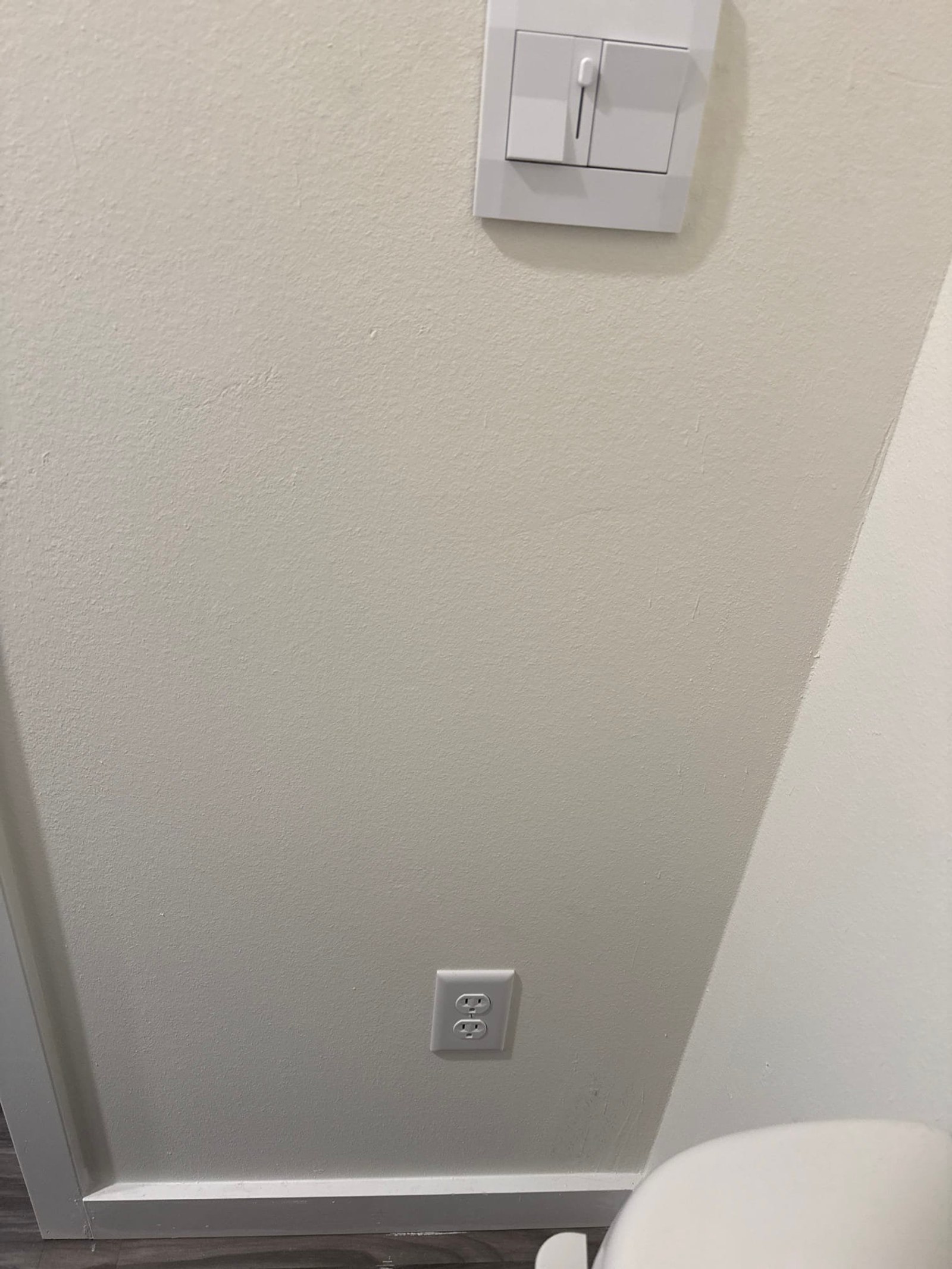
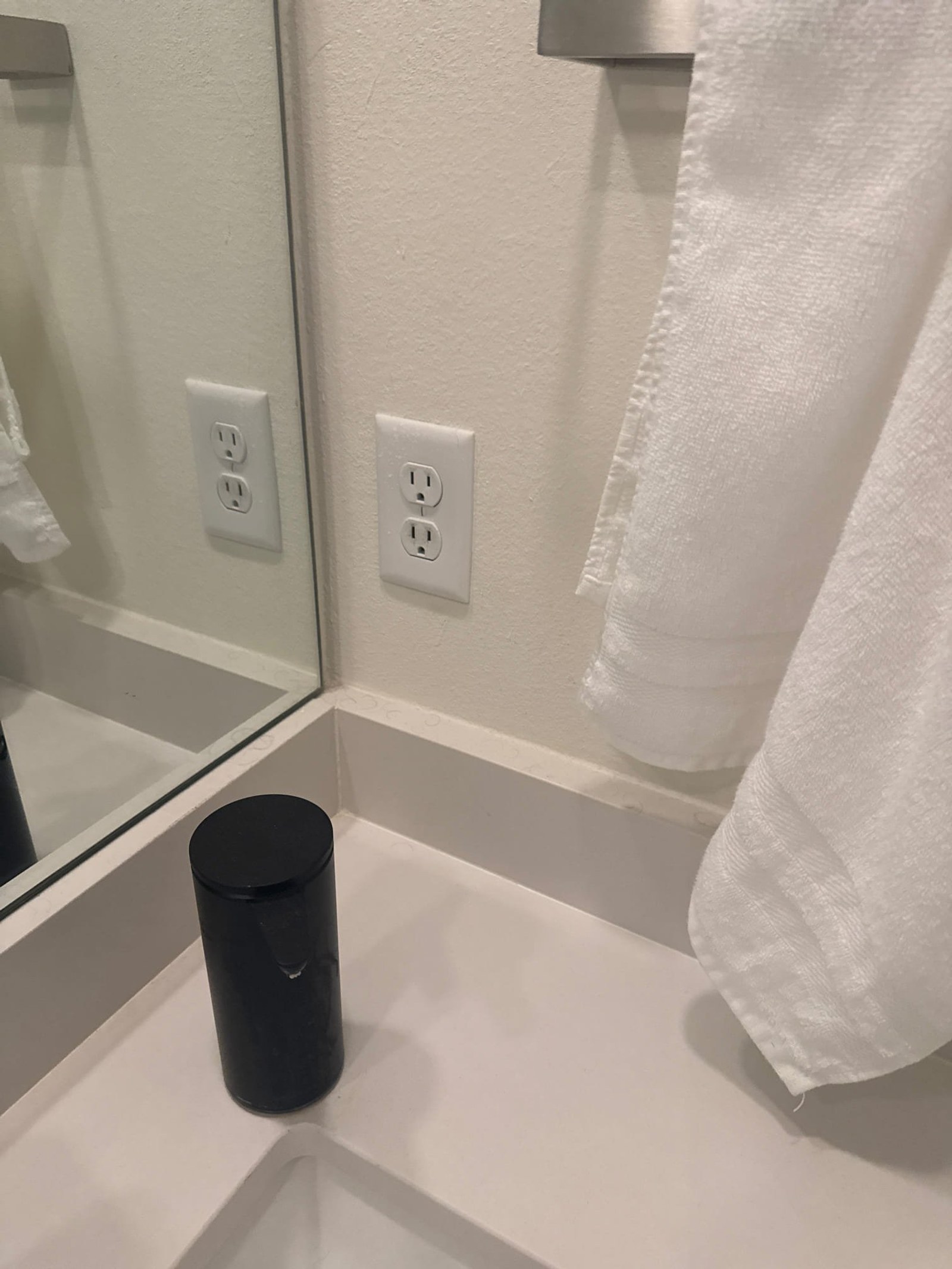
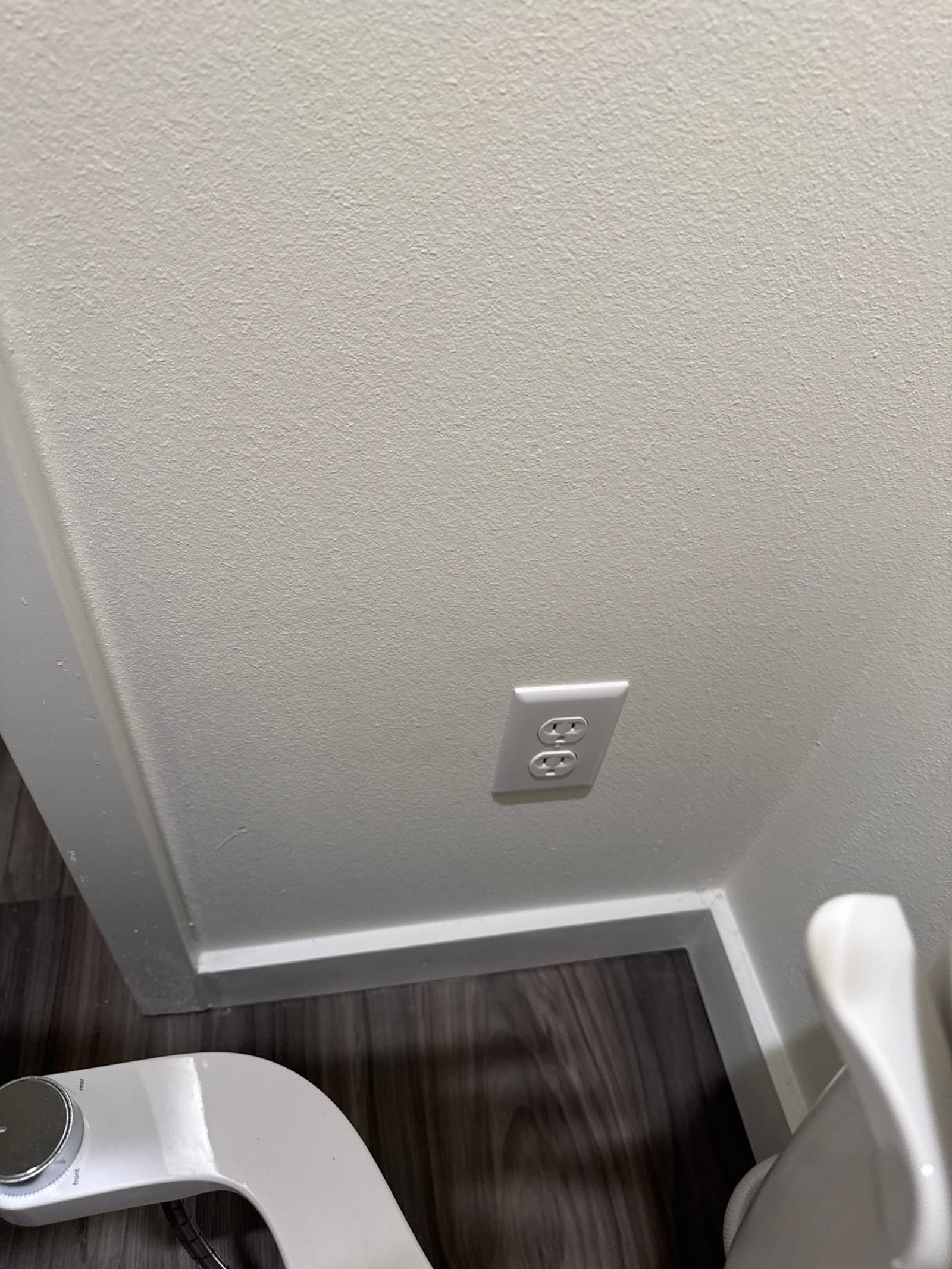
Neither bathroom had an outlet positioned where the homeowner needed it. The existing wiring in each wall provided a practical tap point, so no major runs were required. Our technician on-site confirmed the layout and planned a clean, minimal-disruption installation for both spaces. The completed work is visible in the job photos: white duplex outlets installed flush against the bathroom walls, including one positioned above a sink counter and another on an interior wall, all with matching white cover plates.
Solution Selected
The homeowner chose to have both outlets installed in the same visit. That made sense given the similar scope in each room and the fact that the existing wiring could support the new loads without panel-side changes. Installing both at once also kept disruption to a minimum.
Work Performed
In each bathroom, our crew cut in a Pass & Seymour single-gang old-work remodeler box sized at 18 cubic inches, which is the right fit for a clean, low-profile installation in an existing wall. We ran 14/2 NM cable from the tap point to each new box. We then installed tamper-resistant 15-amp, 125-volt duplex receptacles at both locations. Tamper-resistant receptacles are the current standard for all new and replacement receptacles in dwelling units, so the homeowner gets outlets that meet today’s code right from the start.
Why Pricing Can Vary
Two homes with the same job on the invoice can land at different totals. On projects like this one, the total is driven by:
- Number of devices replaced
- Device type (standard, GFCI, AFCI, tamper-resistant, USB, smart or dimmer)
- Condition of the boxes and wiring behind the devices
- Backstabbed or aluminum connections that need correction
- Access and the number of rooms involved
Why This Longwood Outlet Repair Matters for Homeowners
Adding outlets in the right spots is one of those quiet upgrades that makes everyday routines noticeably better. For this household, that means the bidet seats work exactly as designed, without extension cords running across the floor or the inconvenience of reaching a distant outlet. The morning routine in both bathrooms is simply easier now.
Tamper-resistant receptacles are the current standard under NEC 406.12 for dwelling units. The spring-loaded shutter mechanism inside each outlet means the receptacle only opens when a plug is inserted squarely, which is especially useful in households with young children. It is a small detail built right into the outlet, so the family does not have to think about it.
Old-work remodeler boxes let us add outlets to finished walls without tearing out drywall. The result is a clean, professional installation that looks like it was always there. For a homeowner who simply wanted their bathrooms to function better, that kind of tidy finish matters just as much as the electrical work behind it. If you are planning a similar upgrade, our team is glad to schedule a visit and walk through the options.
“Got my bidet outlets installed quick and easy. George was great.”
Code Compliance Cited in This Job
Every fix above maps to a specific section of NEC 2020. Each card links to NFPA’s public NEC index.
GFCI Protection
NEC 210.8 requires GFCI protection for all receptacles installed in bathrooms of dwelling units. Because these new outlets were added in a primary bath and a powder room, GFCI protection applies to ensure the circuits meet current personnel-protection requirements. NFPA reference ›
Tamper-Resistant Receptacles in Dwellings
NEC 406.12 requires tamper-resistant receptacles in all areas of a dwelling unit. The 15-amp duplex receptacles installed in both bathrooms include the spring-loaded shutter mechanism required by this section, bringing the new outlets in line with current standards. NFPA reference ›
Replacement and New Receptacle Requirements
NEC 406.4(D) states that replacement or newly installed receptacles must meet current code requirements for the location. Installing tamper-resistant, properly rated receptacles at both new bathroom locations satisfies this requirement for dwelling-unit installations. NFPA reference ›
Receptacle Outlet Placement
NEC 210.52 governs where receptacle outlets must be placed in dwelling units, including bathrooms. Adding outlets at both bathroom locations ensures the homeowner has code-compliant receptacle access in each space. NFPA reference ›
Common Questions
Questions homeowners ask after seeing this kind of work.
Do bathroom outlets in a home need to be GFCI protected?
Yes. NEC 210.8 requires GFCI protection for all receptacles in dwelling-unit bathrooms, regardless of whether they are new installations or replacements. GFCI protection is built into either the outlet itself or the upstream circuit breaker. If you are adding or replacing a bathroom outlet, our team can confirm the right approach for your setup. Schedule online to get on the calendar.
What is a tamper-resistant receptacle and do I need one in my bathroom?
A tamper-resistant receptacle has a built-in shutter that only opens when both prongs of a plug are inserted at the same time. NEC 406.12 requires them throughout dwelling units, so any new outlet installed in a home today should be tamper-resistant. They look identical to standard outlets but add a layer of protection that works automatically. If you have older outlets you would like updated, our team can book a quick visit to take care of them.
Can I add an outlet to a finished bathroom wall without major drywall work?
In most cases, yes. When existing wiring runs nearby, an old-work remodeler box can be installed through a small cutout in the drywall, keeping the repair minimal and the finished look clean. The result is a flush-mounted outlet that blends right in. Every situation is a little different, so it helps to have a licensed electrician assess the wall first. Schedule online and we can confirm what your bathroom will need.
How often should I have my home’s electrical system inspected?
A yearly inspection is a good baseline for most households. Homes built before 1990 or those that have been through recent storm activity may benefit from inspections more often, since aging wiring and weather stress can introduce conditions worth catching early. A quick annual check keeps everything running smoothly and gives you peace of mind through every season. Book a safety check to get your home on the schedule.
Is a 15-amp outlet sufficient for a bidet seat?
Most residential bidet seats draw well under 15 amps during normal use, so a standard 15-amp, 125-volt duplex receptacle is typically the right fit. That said, it is always worth confirming your specific bidet model’s requirements before installation. Our field team can review the load and the existing circuit to make sure everything is properly matched. Schedule online so we can take a look before your bidet arrives.
Project Photos
Electrician and Technical Reviewer
Work performed by the Thomas Edison Electric field team serving Orlando.
Location
This project was completed in Longwood, Florida, in our Longwood service area.