
A dark office is annoying. A dropped rack is expensive. One honest question shapes every choice about the backup power server Orlando needs: how long do the machines have to stay up? That answer drives battery size, generator choice, and the breaker feeding the room.
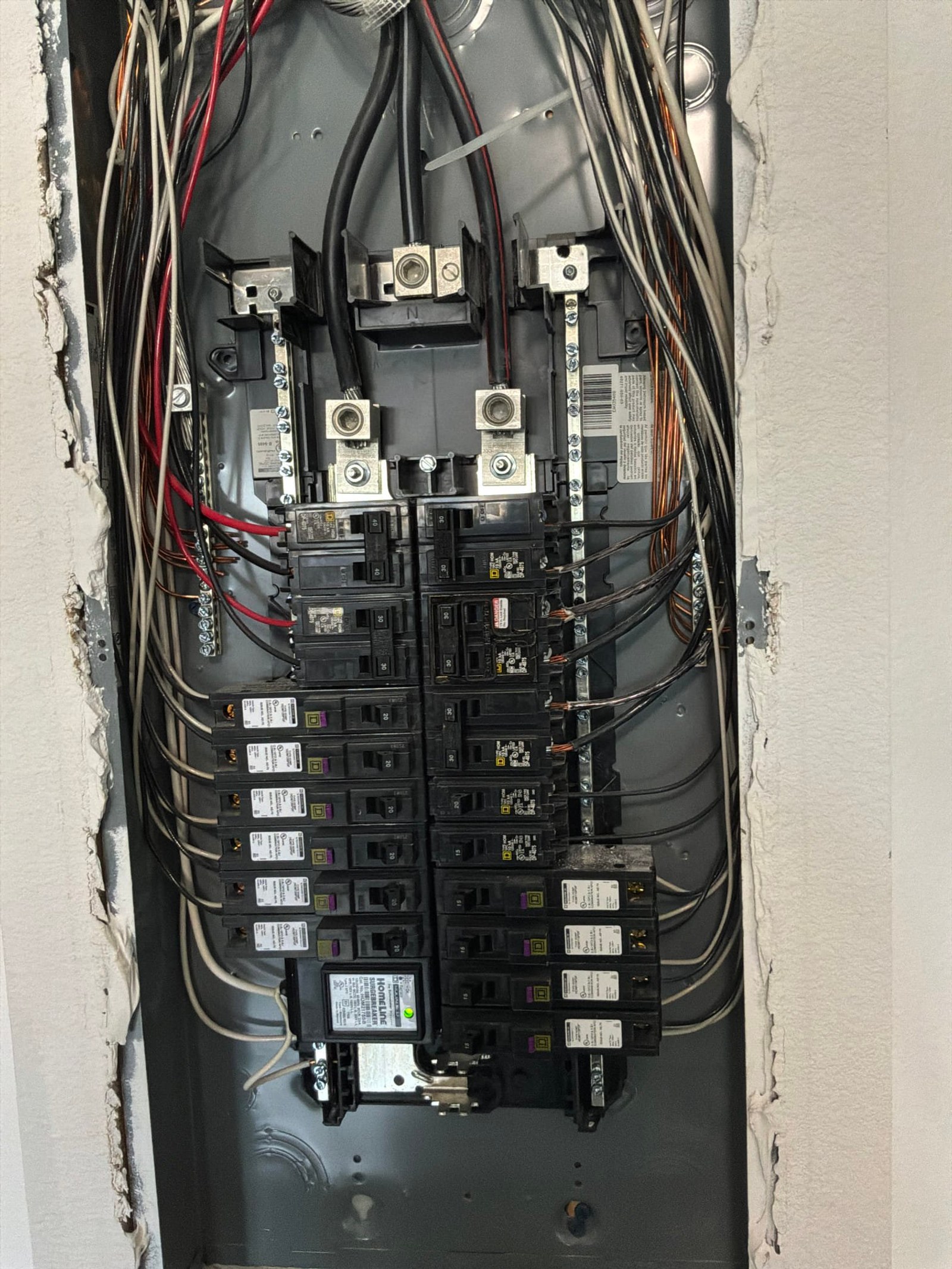
Two Threats, Not One
Central Florida hands server rooms two very different problems. One is the long outage after a storm. The other is the quick hit from a lightning strike.
We see more lightning here than any other part of the country. A near strike can push a spike down the line and take out a switch, a drive, or a power supply. The room never goes dark, yet gear dies anyway.
Long outages arrive with hurricane season, June through November. Those need fuel, not batteries. A good design covers both.
The Backup Power Server Orlando Needs, Layer by Layer
Most small sites end up with layers. Each layer covers what the one before it cannot.
- Surge protection at the panel, plus a second stage at the rack
- A UPS that carries the load for minutes, not hours
- A generator for anything that must ride out a storm
- Dedicated circuits, so a copier never shares the rack feed
- Clear labels and a one-page map of what feeds what
The UPS buys you time. The generator buys you days. Skip either one and you leave a gap you will find at the worst hour.
Five Questions to Answer First
Before we price anything, we ask the same short list. Your answers set the whole design.
- What breaks first when the racks go down, and who feels it?
- How many minutes can the business lose without real harm?
- Does anything have to keep running through a multi-day storm?
- Who is on site to respond at night or on a weekend?
- How much growth do you expect over the next three years?
A dental office in Winter Park and a small hosting shop off I-4 give very different answers. The gear should follow the answers, not the other way around.
Sizing the UPS Honestly
Start with a real measurement, not the sticker on each box. We meter the actual draw over a normal week, then plan around that number.
Next comes a run time goal. Five minutes covers a clean shutdown. Thirty minutes covers a generator start plus a short ride-through.
Heat shortens battery life, and heat is easy to find here. A closet that runs warm will not hold its rated time for long. That shows up fast in older buildings where the rack sits in an interior room with poor airflow.
Cooling Counts as a Critical Load
Cooling belongs on the backup source, not on a list of nice-to-haves. A closed room with a full rack heats up within minutes once the air handler stops.
So we put the cooling unit or the mini split on the backup source along with the racks. Otherwise the servers stay on, then shut down on high temperature.
Humidity is the other half of the story. Damp air plus cool metal makes condensation. Keep the dehumidifier or mini split powered as well.
Wiring and Code Basics
Server gear likes circuits of its own. We run dedicated feeds, size the wire with growth in mind, and match receptacles to the plugs on your equipment.
Grounding gets special care. A clean ground path lowers noise and gives surge devices somewhere to send energy. Surge damage is not theoretical either, as this Sanford surge repair visit showed.
Everything gets a permit and an inspection. Guidance from the NFPA and the National Electrical Code drives clearance, labeling, and working space at the panel.
Clean Power Between Outages
Not every power problem is an outage. Voltage sags, flicker, and noise wear gear down over months.
Older strip centers and mixed-use buildings around Orlando often share a service with heavy motors next door. If your gear reboots for no clear reason, our notes on power conditioners explain what to check first.
Monitoring So You Hear About It First
Modern gear reports on itself. Battery health, load, run time, generator status, and room temperature can all send an alert to a phone.
We set those alerts up during the install. The goal is simple. Your team learns about a weak battery in April, not during the first storm in July.
Test the system on purpose, too. A scheduled pull-the-plug drill once a year tells you more than any spec sheet. Write down what stayed up, what dropped, and how long the batteries really lasted.
Leave Room to Grow
Rack counts rarely shrink. We leave panel space, spare conduit, and open breaker slots so the next machine does not force a rebuild.
The same thinking applies to design studios and lab spaces, where the load climbs every year. See how we approach wiring a computer lab for a closer look.
Sizing Battery Backup for a Small Site
Not every office needs a generator on a pad. A wall-mounted battery can cover a small rack, the switch, and the modem for hours.
We size battery backup systems around the load you measured, plus room for the next two years. Batteries also like a cool, dry spot, which rules out most garages here.
Ready to Protect Your Racks?
Thomas Edison Electric plans, wires, and tests the backup power server Orlando businesses run on, under Florida license EC13015487. We cover Orlando, Winter Park, Maitland, Lake Mary, Altamonte Springs, and the towns nearby. For a plain refresher on office power safety, the Electrical Safety Foundation is a solid read. Then call (407) 490-0004 and we will walk your space with you.