
Lights dim when the air handler kicks on. A soundbar hums. The router reboots for no clear reason. Those are power quality problems, and they are the reason homeowners ask us about a power conditioner Orlando homes may not even need.
What a Power Conditioner Actually Does
A conditioner sits between your wiring and the gear plugged into it. It cleans up and steadies the power that reaches that gear. Most models bundle several jobs into one box.
- Voltage control, which holds output near 120 volts when the supply sags or climbs.
- Noise filtering, which strips out hash created by motors, dimmers and LED drivers.
- Spike clamping, which catches small surges before they reach a circuit board.
- Isolation, which stops one device from feeding noise back into another.
A basic surge strip only does the third job, and only for large, fast spikes. That difference matters when you are chasing a hum or a flicker rather than storm damage.
Why Central Florida Power Gets Messy
Our grid works hardest exactly when everyone needs it. On a July afternoon, thousands of air conditioners cycle at once across Orange and Seminole counties. Voltage dips a little under that load, then recovers.
Storms add a second layer. Daily summer storms cause brief blinks as line equipment opens and closes. Your gear feels those events as short outages and voltage swings.
Homes with well pumps, pool pumps and big motors also make their own trouble. Every motor start pulls a heavy jolt of current. In practice, that is what dims the kitchen lights for half a second.
When to Buy a Power Conditioner Orlando Homes Can Use
Conditioning earns its cost when the gear is both fragile and pricey. It is rarely worth buying as a blanket upgrade for a whole house.
- A home theater or recording setup where you can actually hear noise in the signal.
- Medical gear a household leans on every day.
- A home office running a server, a NAS or lab tools.
- A detached workshop at the end of a long feeder, where voltage drop is easy to measure.
- Studio lighting or camera gear used for work.
Notice the pattern. In each case, one circuit feeds gear worth far more than the conditioner guarding it.
Simple Checks You Can Do Today
Some tests take five minutes and cost nothing. Start there before you spend money.
- Note when the lights dim. If it lines up with the AC or the well pump, it is a start-up load.
- Watch a lamp on a different circuit. If it dims too, the cause is upstream.
- Unplug a dimmer or LED lamp that buzzes and see if the noise stops.
- Feel your outlet covers. Warm plastic points to a bad connection.
- Write down the time and date each time it happens.
That log helps a lot. It tells us whether to look at your wiring or at the utility side of the meter.
When the Real Fix Is Something Else
Flicker and buzz usually point at a fault, not at the grid. No filter repairs a loose neutral, and neither does the power conditioner Orlando electronics stores sell for a media rack.
Before you buy anything, have an electrician check the basics.
- Loose or push-in connections at outlets and switches.
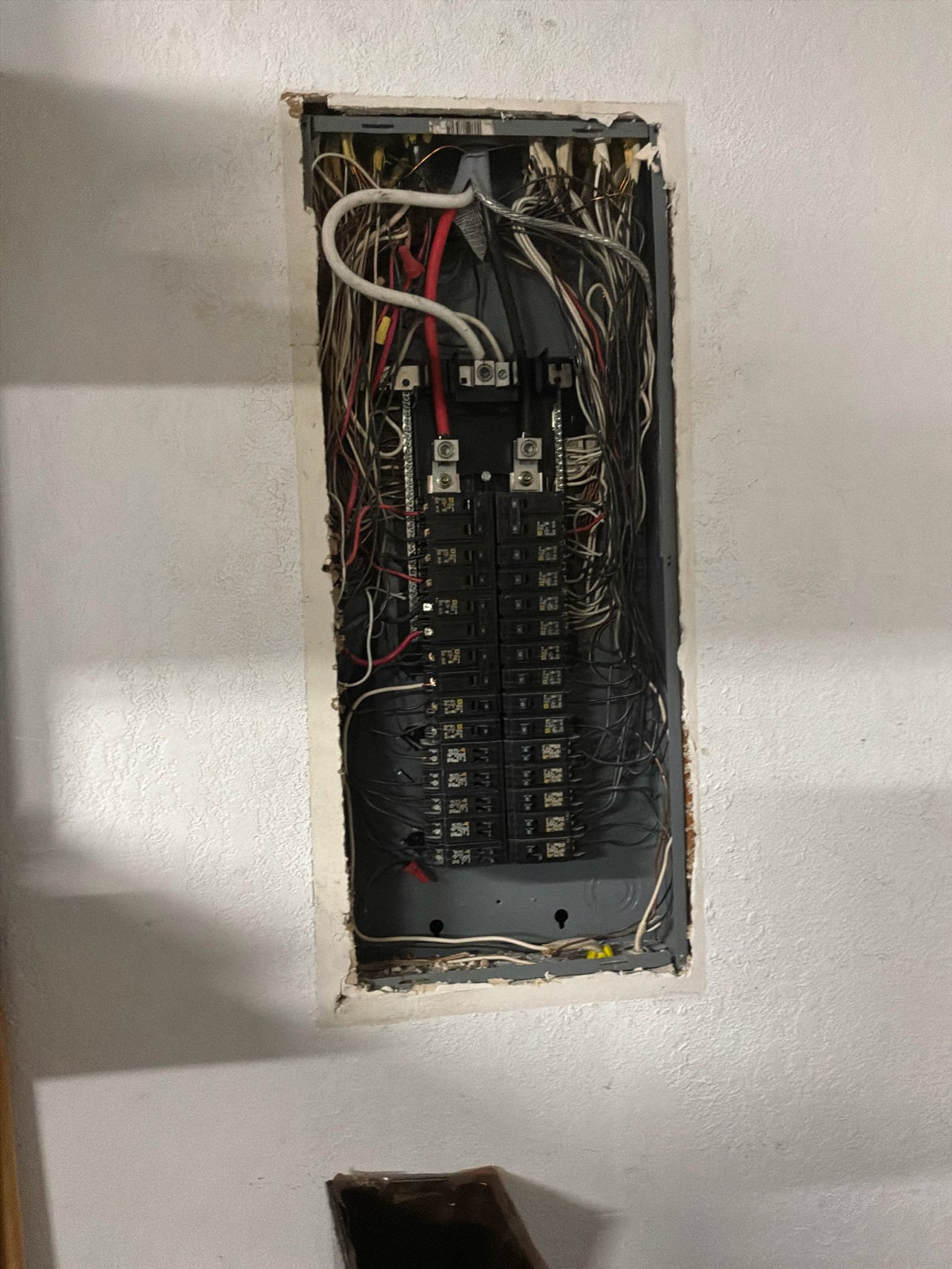
- A loose neutral at the meter or panel, which makes lights brighten and dim across the house.
- Dimmers that were never rated for the LED lamps under them.
- Shared or undersized circuits feeding heavy loads.
- Rusted lugs and double-tapped breakers inside an older panel.
A loose neutral is a real safety hazard, not a nuisance. Masking it with a filter leaves the danger in place. The Electrical Safety Foundation International shares clear guidance on hazards like these, and our guide to preventing dirty power in your Orlando home goes deeper on flicker.
What Happens on a Power Quality Visit
We start at the meter and the main panel. We read voltage on each leg, then read it again while a large load runs.
Next we look at the grounding and bonding. A weak ground path shows up as noise on sensitive gear.
Then we test the branch circuit that feeds the gear you are worried about. Loose screws and worn outlets show up fast.
Costs and Trade-Offs
A solid plug-in conditioner for a media rack runs a few hundred dollars. A panel-level surge device costs more, but it guards the whole house.
A rack unit does nothing for the rest of your home. So think about what you would replace first after a bad storm, then protect that item.
Also weigh the repair option. Tightening a bad connection often costs less than any box you can buy, and it removes the hazard for good.
Layering Protection in the Right Order
Start at the panel. A device installed at your service equipment takes the first hit from lightning and utility events. That is the job of our whole-house surge protection work.
Then add plug-in protection at the gear you care about most. Finally, add conditioning only where you can hear or measure a problem. That order costs less and solves more.
If storm damage is your main worry, read our article on whole-house surge protection for Orlando homes first. Surge energy and power quality are related, but they are not the same problem.
Get a Straight Answer About Your Power
We test before we sell hardware. That means reading voltage under load, checking the neutral and looking inside the panel for heat damage. Sometimes a plug-in conditioner turns out to be the right call. Just as often, one small repair fixes the whole complaint.
You can see how a whole-home protection upgrade came together for one Orlando family and what it covered. Call Thomas Edison Electric at (407) 490-0004 to book a visit in Orlando, Sanford, Ocoee or Altamonte Springs. Our Florida license number is EC13015487.