
Workstations, wide monitors, render nodes, and resin printers all pull power at the same time. A 3D modeling lab Orlando studios run every day can draw far more than the office wiring around it was built to carry. Add Central Florida heat and near-daily summer storms, and the wiring behind that room matters as much as the gear inside it.
We plan these rooms for design shops, schools, and small studios across the Orlando area. Here is how we size the power, guard the gear, and leave space to grow.
Why Local Design Labs Push Circuits So Hard
Orlando has deep roots in simulation, game art, and attraction design. Shops cluster near the research park off Alafaya, around Creative Village downtown, and out toward Lake Nona. Many of them move into leased space that was wired for desks and copy machines.
A loaded workstation can pull well over 1,000 watts while it renders. Put six or eight of those on shared 20-amp circuits, and breakers start tripping by mid-afternoon. The gear is fine. The branch circuits are not.
That is the moment most owners call us. The fix is rarely one outlet. It is a plan for the whole room.
What We Find in Leased Space
Most rooms we walk into share the same short list of problems. None of them are hard to fix once you can see them.
- One 20-amp circuit feeding a whole wall of desks
- Power strips plugged into other power strips
- Extension cords run under rugs and across door thresholds
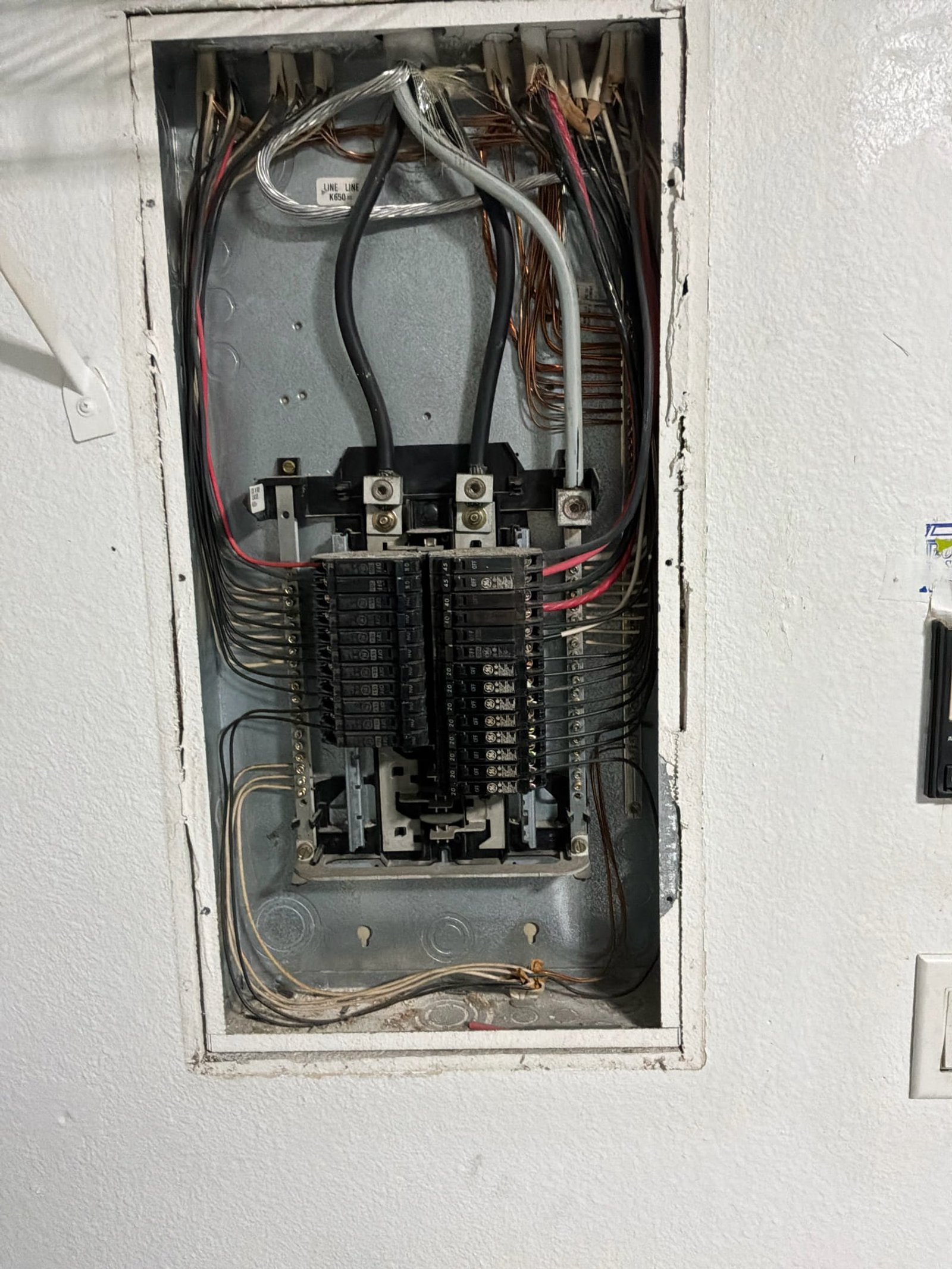
- No spare breaker spaces left in the panel
- Network gear sharing a circuit with a printer or a portable AC unit
Each one is a load problem, not a gear problem. Sort out the circuits and the room settles down.
Sizing Power for a 3D Modeling Lab Orlando Teams Use
We start with a load calculation instead of a guess. That means counting every machine, monitor, printer, and switch, then leaving headroom for the next hire. We also ask what the room will hold in two years, not just today.
- Dedicated 20-amp circuits for small groups of workstations
- Separate circuits for resin and filament printers, since their heaters cycle on and off
- A clean circuit for network gear, so a printer trip never drops the switch
- Open breaker spaces so the room can grow without a rewire
- Outlets at desk height and in the floor, not just along the baseboard
Often the panel sets the ceiling. If the space still runs on a crowded 100-amp panel, an electrical panel upgrade comes first. Everything else gets easier once there is real capacity behind the wall.
Lightning Is the Biggest Threat to Your Gear
Central Florida sees more lightning than any other part of the country. Storms build most summer afternoons and move through fast. A strike does not have to hit your building to send a spike down the service line.
The National Weather Service shares clear lightning safety guidance for storm season. On the electrical side, we work in layers instead of trusting one device.
A surge protective device at the panel takes the big hit. Point-of-use protection at each desk or rack catches what slips past. Both matter here, because storms roll over Orlando all summer.
Want to see how that plays out on a real job? Read how a whole-home surge protector now guards this Oviedo panel after a close call. Our guide to whole-house surge protection walks through the same idea in plain terms.
Heat, Humidity, and Uptime
Ten graphics cards throw off a lot of heat. In an Orlando summer, that load can beat a small office air handler by the middle of the day. So we plan power and cooling together with your HVAC contractor.
Mini-splits and portable units need their own circuits. Sharing one with workstations is a quick way to brown out a render. Humidity matters too, because damp air and warm metal invite rust at terminals and lugs.
Attic runs get hot here as well. We keep wire sizing honest for that heat, so nothing runs warm inside a ceiling all summer.
Backup Power for Storm Season
Hurricane season runs June through November, and outages come with it. Even a short blink can cost hours of unsaved work and a ruined print. A little backup goes a long way.
Most labs start with a battery unit at each critical station, sized for a clean shutdown. Larger rooms add a transfer switch and a standby generator. Our guide to backup power for server rooms covers the same choices at a bigger scale.
Keep Data and Power Apart
Power and data lines do not belong in the same raceway. Run them together and you invite noise on the network. We separate them, label both ends, and keep cords off the floor with conduit and surface raceway.
Tidy cable work is not just for looks. It keeps walkways clear, makes changes cheap, and helps the next tech find the right circuit fast. The Electrical Safety Foundation shares good workplace safety basics on this as well.
Build Room to Grow
Software gets heavier every year. A room wired for today’s load will feel tight in two seasons. So we leave spare conduit, spare breaker spaces, and extra outlets where the next bench will go.
Permits matter too. Work in Orange and Seminole County should be pulled and inspected, so the space passes cleanly when you expand or sublease it.
Planning a 3D modeling lab Orlando students or designers will share? Call Thomas Edison Electric at (407) 490-0004 for a walkthrough and a written quote. We hold Florida license EC13015487 and serve Orlando, Winter Park, Oviedo, Lake Mary, Maitland, and nearby towns.