
Laundry rooms in Central Florida often sit in the garage. That means heat, damp air, and a circuit that works hard. Picking a washer Orlando homes can power takes a little planning. Start with the outlet and the breaker, not the color.
Machines have changed a lot in ten years. Today they hold more, spin faster, and run on control boards.
What the Laundry Circuit Has to Do
Most washers run on a standard 120-volt outlet. Code calls for a dedicated 20-amp circuit for laundry outlets. Sharing that circuit with a freezer or a work bench invites trips.
The outlet must be grounded and easy to reach. If you have to drag the machine out to unplug it, that is a problem during a leak.
A Washer Orlando Garages Can Handle
Garage laundry is normal here, and it brings trade-offs. Summer heat is hard on electronics and on rubber seals. Damp air rusts terminals and the back panel of the machine.
Keep the outlet up off the floor and out of splash range. A weather-tight cover helps in a carport or an open bay. Good airflow around the machine helps as well.
GFCI and AFCI Protection
Recent code cycles call for GFCI protection on laundry outlets. Many homes also need arc-fault protection on those circuits. Both add real safety in a room with water.
Some older machines trip a GFCI on the spin cycle. Test that rather than bypass it. A licensed electrician can tell a faulty machine from a faulty circuit.
Front-Load, Top-Load, or a Combo Unit
The washer Orlando shoppers pick changes the circuit you need:
- Front-load washers: a standard 120-volt outlet, with a high spin speed
- High-efficiency top-loaders: also 120 volts, with more onboard electronics
- Washer-dryer combo units: often a 240-volt circuit of their own
- Stacked pairs in a closet: check the ratings on both machines
- Older basic top-loaders: simple motors that tolerate voltage dips better
Combo units show up often in downtown condos and small Winter Park bungalows. They save space but change the wiring plan.
Storm Season and Surge Damage
Afternoon storms cross Orange and Seminole counties most summer days. Lightning does not have to hit your house to hurt it. A spike down the line can take out a control board.
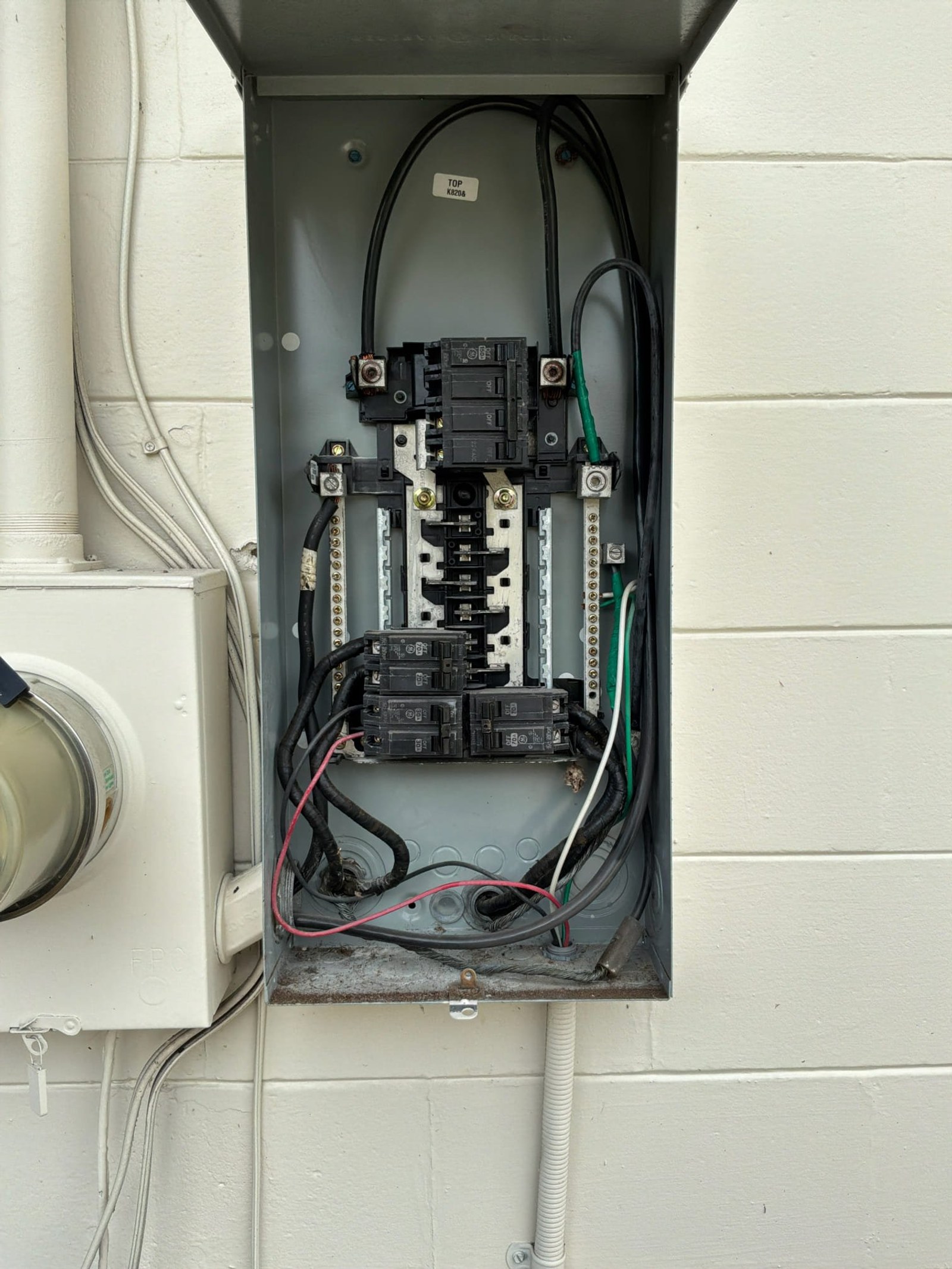
A whole-home surge device at the panel guards every appliance at once. We still open panels every week with no protection installed at all.
In Maitland we traced shock complaints back to grounding gaps, so see how we handled that home.
Humidity, Rust, and Outlet Care
Damp garage air is rough on metal. Look at the outlet and the cord once a year for green or white crust. Rust on the back panel is another early clue.
A short, clear dryer vent helps the whole room. A clogged vent dumps heat and moisture back into the garage.
Signs the Laundry Circuit Is Overloaded
Garage circuits pick up extra work over the years. Watch for these warning signs:
- The breaker trips during the spin cycle.
- Lights flicker when the machine fills or drains.
- The plug or outlet face feels warm after a load.
- You smell hot plastic near the receptacle.
- A power strip or splitter is feeding the machine.
Any one of those calls for a look. A warm outlet calls for a look today.
Smart Washers and Wi-Fi in the Garage
Many machines now send a text when the load is done. Some run diagnostics through an app. The catch is signal, since garages sit at the edge of most home networks.
A mesh point in the garage solves it and helps the door opener too. Steady voltage helps as well, because control boards do not like sags.
Condos, Rentals, and Shared Laundry
Downtown condos and older Orlando duplexes often share one laundry circuit. Two machines on one breaker is a common find. Landlords also inherit whatever the last owner installed.
If you rent out a property, have the laundry area checked between tenants. It is a cheap visit that heads off a call at midnight.
Efficiency Cuts the Load
An efficient machine draws less and spins clothes drier. That shortens dryer time, and the dryer is the real power hog. You can compare certified models at energystar.gov.
If you are buying both at once, read our guide to picking a dryer for your electrical system. Sizing the pair together saves a second service call.
Have the Whole Space Checked
Garage laundry areas tend to grow over time. Someone adds an outlet, then a freezer, then a work light. Our post on garage and workshop electrical safety covers what to look for.
If the panel is full, a panel upgrade makes room for a clean laundry circuit. It also opens space for an EV charger later.
Leaving Room for the Dryer
The dryer is the other half of the job. An electric dryer needs its own 240-volt circuit and a four-wire outlet. Older homes may still have a three-wire setup that needs updating.
Heat pump dryers are showing up more here. They run on 120 volts and put less heat into the garage. That is a real win in July.
Permits and a Licensed Install
New circuits need a permit and an inspection in our counties. That record helps at resale and with insurance claims. A licensed contractor handles the filing.
Skip the temporary fixes. A splitter or a long cord in a damp garage is asking for trouble.
Ready to Wire Your Laundry Room?
Thomas Edison Electric serves Orlando, Maitland, Winter Park, Ocoee, and St. Cloud. We add the dedicated circuit, set GFCI protection, and place the outlet right. That covers the washer Orlando homeowners are about to buy.
Call (407) 490-0004 to book a visit. Florida license EC13015487.