
Picking a dryer Orlando homes can actually power starts at the panel, not the showroom floor. Electric models need a 240-volt circuit all to themselves. Gas models need a gas line, which plenty of neighborhoods here simply do not have. A little homework saves a lot of hassle on delivery day.
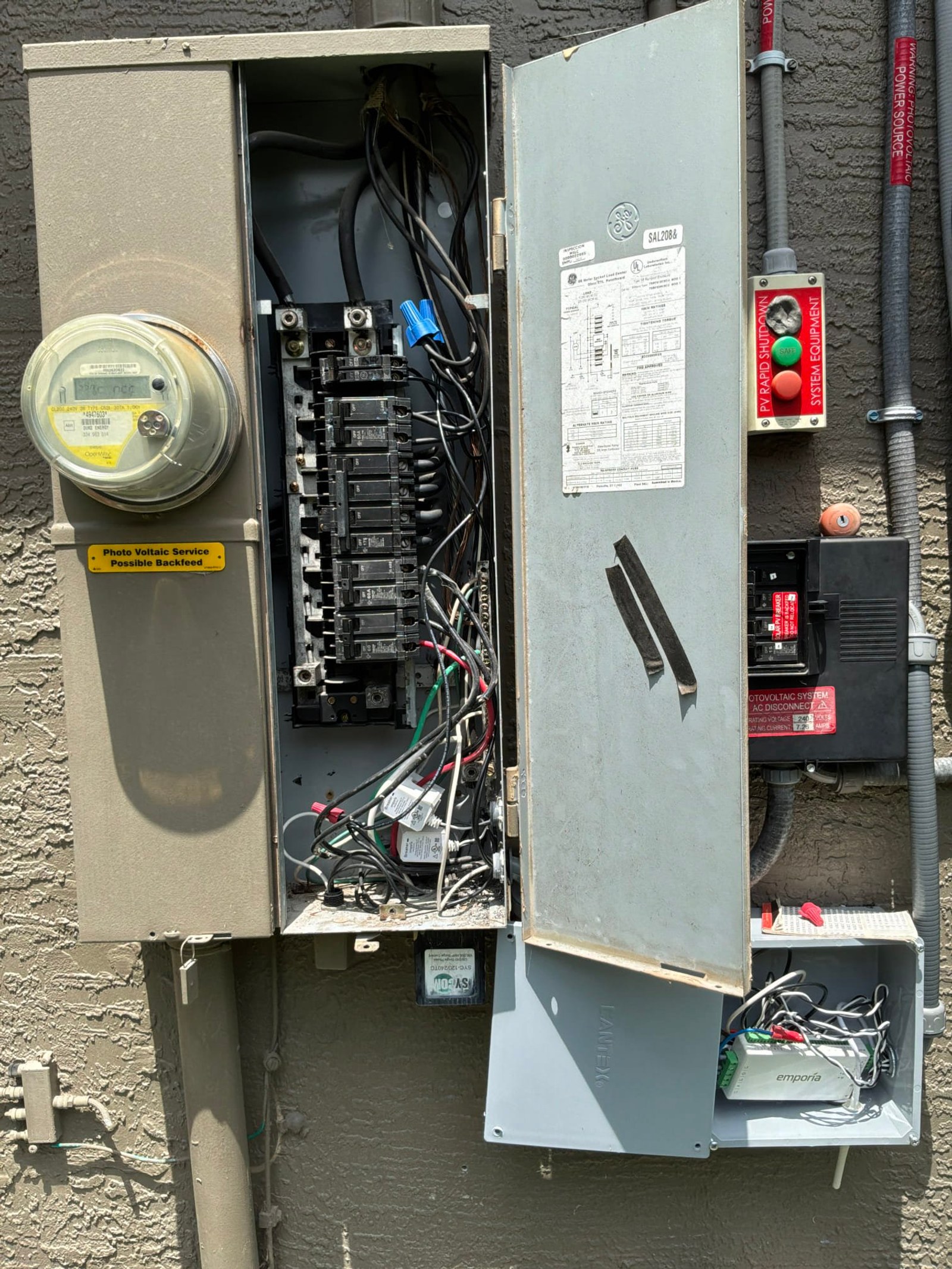
The Circuit an Electric Model Needs
Most electric units want a dedicated 240-volt circuit, usually rated at 30 amps. Dedicated means nothing else shares it.
If the laundry area has no 240-volt outlet, that circuit has to be run and a breaker has to fit in the panel. In a full panel, we make room first.
Our guide to dedicated circuits for appliances explains why sharing a feed causes trouble later.
Three-Prong or Four-Prong?
Look at your outlet before you shop. Older homes here often have a three-prong 30-amp outlet, while newer ones use a four-prong.
The four-prong style keeps the neutral and the ground on separate paths, which is safer. New homes and remodels use it.
Do not fix a mismatch with a random adapter or a blind cord swap. The cord, the outlet, and the wiring behind the wall all have to agree.
Will Your Panel Support the Dryer Orlando Homes Buy Today?
Panel space is the quiet issue. Older bungalows near downtown, plus many 1970s and 1980s homes in Casselberry and Altamonte Springs, still run modest services.
If your service already carries central AC, a pool pump, and a car charger, another 30-amp load deserves a load calculation. Our panel upgrade work often starts with exactly this request.
One Winter Park homeowner called about a single problem and got a full fix instead. You can read how that visit unfolded.
Gas Models in Central Florida
Gas units still need power. A standard 120-volt outlet runs the drum, the controls, and the igniter.
Natural gas is not everywhere here. Many streets in Oviedo, Winter Garden, and St. Cloud have no main, so a gas unit means a propane tank and a licensed gas fitter.
For most homes in our area, electric is the simpler path. The trade-off is that 240-volt circuit.
Heat, Humidity, and the Vent Run
Most laundry areas here sit in the garage, and a garage in August is hot. That warm, damp air makes every cycle longer.
Humidity is the other factor. Every cycle has to push a load of moisture out of the drum and outside, and a long or crushed vent run cannot keep up. That is why the duct path matters more here than most people expect.
Keep the duct run short and smooth. Clean the lint trap every load and have the duct cleaned once a year. The Electrical Safety Foundation has good reminders on appliance fire risk.
Garages, Closets, and Stacked Units
Where the laundry lives changes the whole plan. Three layouts cover most homes around here.
- Garage laundry: hot, humid air and a long vent run to the outside wall
- Interior closet: tight clearances and often no easy vent path
- Stacked units in condos and townhomes: one shared space and strict size limits
Stacked pairs sometimes run on a single 30-amp circuit, and sometimes need two. Read the nameplate before you buy, because guessing here gets expensive.
Condo owners have one more step. Many boards want written approval before any circuit work starts inside the unit.
Ventless and Heat Pump Models
Condo and townhome owners often have a laundry closet with no outside wall. Ventless condenser and heat pump models solve that problem.
Heat pump units use less energy, and many run on a normal 120-volt outlet. Cycles take longer, so it is a trade. Check the ENERGY STAR listings to compare before you buy.
Lightning and the Control Board
A dryer Orlando shoppers pick today almost certainly has a circuit board inside. A surge can kill that board while the motor stays fine.
Whole-home surge protection at the panel covers every large appliance at once. In a place with this much lightning, that is cheap insurance for the washer, the range, and the AC too.
Our guide to washer wiring and hookups walks through the matching side of the laundry pair.
Warning Signs From an Older Circuit
A laundry circuit rarely fails without notice. Call someone if you see any of these.
- A warm or discolored outlet face
- A scorch mark or melted spot on the cord end
- A breaker that trips partway through a cycle
- Lights that dim each time the drum starts
- A loose outlet that wobbles when you unplug
None of those are normal. Older three-prong outlets in particular deserve a look, since the neutral carries more than people expect.
What Installation Day Involves
If the circuit already exists and matches, the swap is quick. If it does not, the work is still routine.
We run the new 240-volt line, set the outlet, land the breaker, and test under load. Permits get pulled where the work calls for them, and we meet the inspector ourselves.
Before Delivery Day
Five quick checks keep the install smooth.
- Confirm the outlet type, three-prong or four-prong
- Confirm the breaker size matches the wire behind it
- Measure the space, including the door swing and vent room
- Check the panel for an open slot if a new circuit is needed
- Ask the store whether a power cord ships with the unit
Need the Circuit Handled?
Thomas Edison Electric runs laundry circuits, replaces outlets, and upgrades panels across Orlando, Winter Park, Ocoee, Apopka, and Sanford. We work under Florida license EC13015487 and pull the permits ourselves. Call (407) 490-0004 before the truck shows up, and your new unit can run the same day.