
Under cabinet lighting is one of the highest-value upgrades in a kitchen remodel. It puts light exactly where you chop, read labels, and clean up. Done well, the source hides and only the glow shows; done poorly, you get hot spots, a visible cord, and a dimmer that hums. Below, we get into the under cabinet lighting Orlando kitchens deserve: fixture choice, wiring routes, the circuit rule most kits ignore, and dimmers that behave.
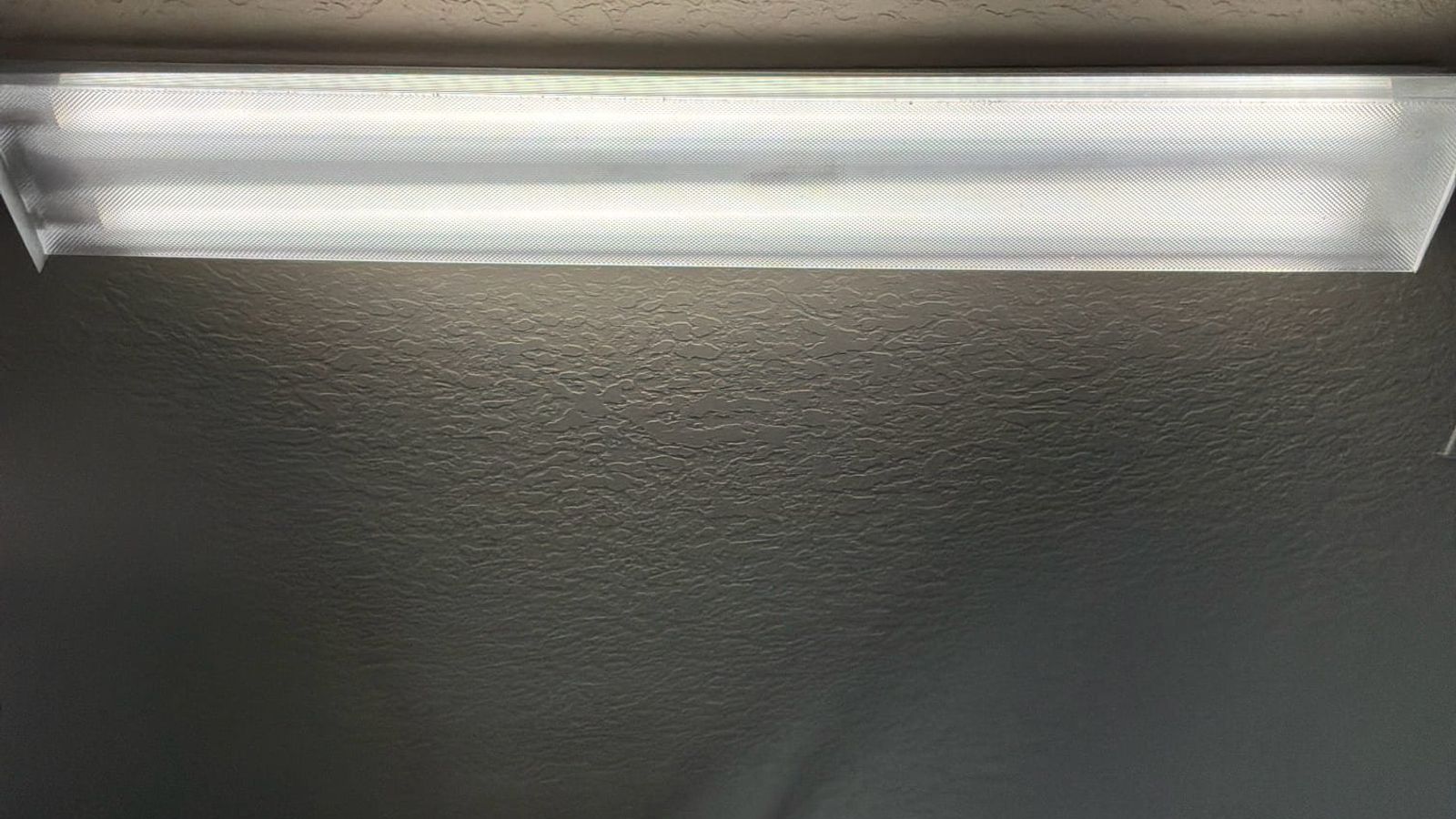
Under Cabinet Lighting Orlando Kitchens Actually Need
Aim for an even wash across the counter, with no visible dots. Mount the fixture to the front edge of the cabinet, not the back wall. That one choice removes most of the glare people notice on quartz and polished granite.
Light color matters just as much as placement, though. Warm white near 2700K to 3000K blends with most Orlando kitchens. A color rendering index of 90 or higher keeps produce, tile, and paint looking honest.
Fixture Options at a Glance
- Linear LED bars: bright, even, and easy to link end to end.
- LED tape: slim and flexible, but it needs a channel and a driver.
- Puck lights: cheap and quick, though they can dot the counter.
- Rail with a lens: the cleanest look on glossy stone.
We steer most local kitchens toward linear bars or tape in a channel. Both hide well behind a cabinet lip. Both also dim smoothly when paired with the right driver.
Hardwired or Plug-In?
Plug-in kits go up fast, but you see the cord and you lose a counter outlet. A hardwired run hides everything and answers to a wall switch or dimmer. Most people who have lived with both prefer the hardwired version.
Nearly every job we take on is hardwired for exactly that reason. Hardwiring is licensed work, though. It means opening walls, adding boxes, and tying into the right circuit. That last part trips up more weekend projects than anything else.
The Circuit Rule Most Kits Ignore
Here is the detail that surprises people. The two small-appliance circuits that feed your counter outlets are not allowed to serve anything else. So your new task lighting cannot simply tap the nearest outlet.
Lights belong on a general lighting circuit instead. Tap the wrong one and the breaker trips every time the toaster runs. Our recessed and specialty lighting services include the circuit and panel work that keeps that from happening.
Fishing Wire Through Central Florida Construction
Orlando homes are built differently than homes in colder states, and it changes the work. Outer walls are generally concrete block with furring strips and a very shallow cavity. Kitchen sinks and counters often sit against exactly those walls.
That shallow space limits where wire can travel. So we plan routes through inner walls, cabinet soffits, or the attic where possible. In older bungalows near downtown, we also check for ungrounded two-wire circuits before we tie anything new into them.
Dimmers, Drivers, and Flicker
Most complaints about LED lighting are really dimmer complaints. Every LED driver needs a matching dimmer, and not every pairing behaves. Mismatched combos buzz, flicker, or refuse to dim below half brightness.
So we match the dimmer to the driver and leave the driver easy to reach. A driver sealed behind a tile backsplash is a repair bill waiting to happen.
Low-Heat LEDs and Your Cooling Bill
In Central Florida, heat you make indoors is heat your air conditioner has to remove. Old halogen pucks ran hot enough to soften butter left on the counter below. A modern LED run stays cool and draws a fraction of the power.
That matters when cooling already leads your summer bill. Choosing ENERGY STAR-rated LED products pays off twice, in what they draw and in how long they last.
Safety, GFCI, and What We Find in Kitchens
Kitchens mix water, heat, and heavy loads in a small space. Counter outlets need GFCI protection, and many older Orlando kitchens still lack it. So lighting work turns up those gaps often.
For a real example, see how a straightforward GFCI outlet repair unfolded in one Orlando kitchen. We test what we find, then tell you plainly what needs attention and what can wait.
Permits, Zones, and Cost Drivers
Adding a lighting run to an existing circuit is usually simple work. A brand-new circuit needs a permit in Orange and Seminole counties, and an inspector signs off on it. So plan for that step if your kitchen needs more capacity.
Beyond permits, a few things move the price of an under cabinet LED installation in Orlando:
- Total cabinet run length and how many switched zones you want.
- Whether usable power sits nearby or a new circuit is needed.
- Tile or stone backsplash, which narrows the paths wire can take.
- Smart controls, scenes, or ties into the rest of the house.
- Fixture type, from linear bars to tape with a remote driver.
Most kitchens take a day or less once the plan is set. Bigger jobs with new circuits run longer, because the permit and inspection add a step.
Kitchen Task Lighting That Works With the Whole House
Counter lighting is one layer of a plan, not the whole plan. So pair it with dimmable ceiling fixtures and a pendant or two over the island. Then the room can go bright for cooking and soft for the evening.
For the wider view, read our Orlando home lighting guide. If you are lighting the yard in the same project, our overview of outdoor lighting installation for Orlando homes covers what changes outside.
Done Once, Done Right
This upgrade rewards planning far more than spending, whether you want a simple run in a Casselberry condo or a fully controlled kitchen in Lake Mary. Either way, we install under cabinet lighting Orlando homeowners never have to think about again. Thomas Edison Electric is licensed in Florida under EC13015487. Call (407) 490-0004 to brighten your counters safely.