
Solar flares Orlando homeowners read about online sound apocalyptic. Headlines promise fried laptops and dark cities for months. The reality is calmer, and far more useful to understand. Your electronics face a much more common threat every summer afternoon.
Still, the question is fair. Large solar events really do affect power grids. Here is what the science supports, and what actually protects a Central Florida home.
What a Solar Flare Really Does
A flare is a sudden burst of radiation from the surface of the sun. The biggest ones arrive with a coronal mass ejection, which throws charged particles toward Earth. Those particles can stir up our magnetic field.
The result is a geomagnetic storm. A storm like that pushes current into very long wires, such as power lines and pipelines. In 1989 one knocked out the Quebec grid for about nine hours.
Notice what failed there. Utility transformers took the hit, not the outlet behind somebody’s TV. The grid is the target, not your house.
Solar Flares Orlando Homeowners Ask About
These effects are strongest near the poles. Central Florida sits well south of the worst of it. Meanwhile, we live under more lightning than any other part of the country.
A single nearby strike can push thousands of volts into your service wires in a flash. That is the surge that kills fridges in Apopka and pool controls in Kissimmee. The National Weather Service publishes strike safety guidance worth reading before storm season.
How Damage Actually Reaches Your Devices
The solar flares Orlando news anchors mention rarely change anything at your outlet. Local weather does. Both work the same way in the end, by putting voltage where equipment was never designed to see it.
- A direct strike on the utility line or a nearby tree
- Voltage induced in long wire runs, including coax and network cable
- Utility switching as crews restore power after an outage
- Large motors on your own service, such as pool pumps and air handlers
- Loose neutral connections that let voltage swing on one leg
Circuit boards fail first. Smart thermostats, LED drivers, garage openers, and TVs fill our repair calls after a rough storm week.
Layered Protection Beats One Power Strip
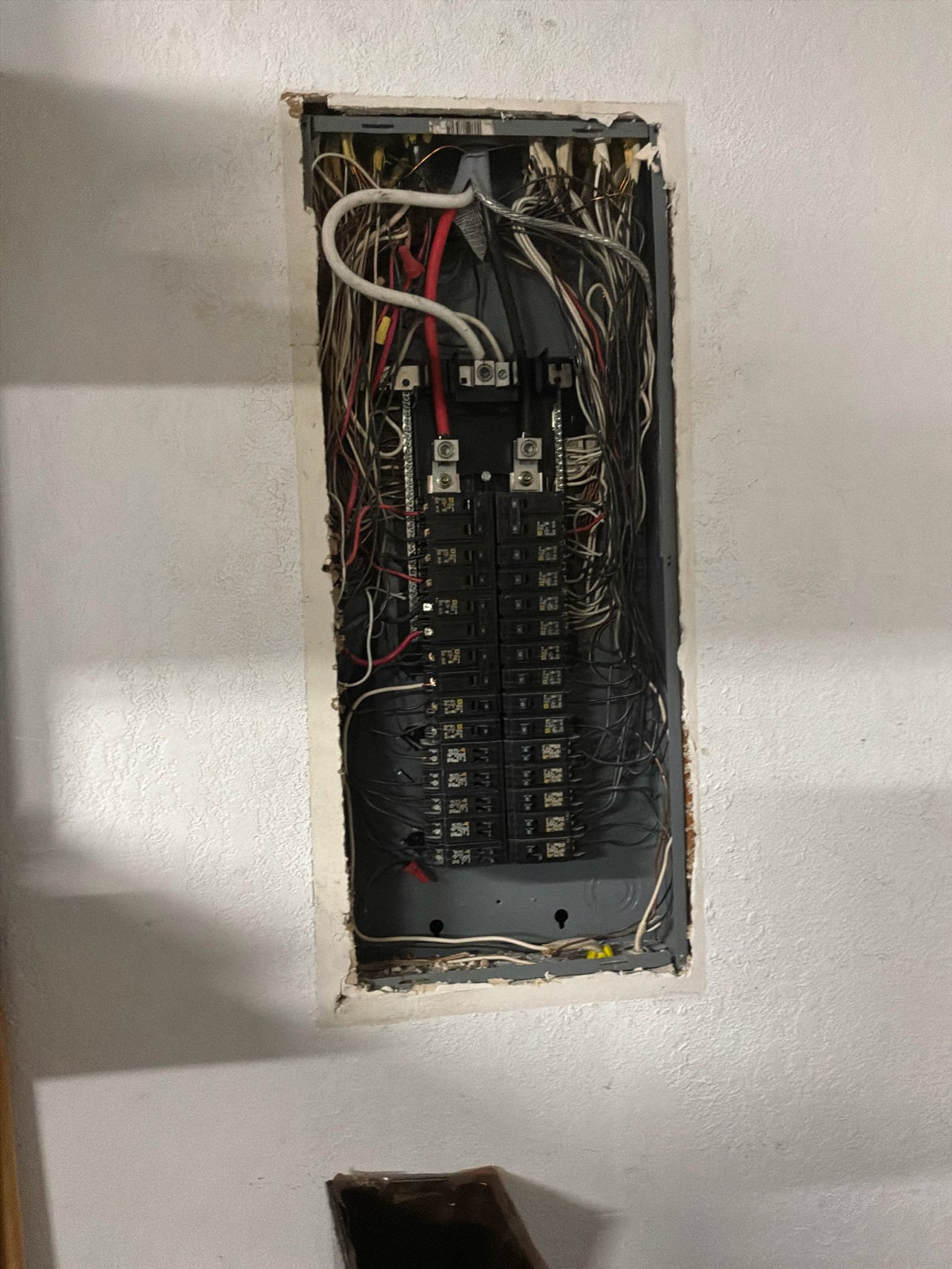
A single plug-in strip is not a plan. Real protection works in layers, and it starts at the service panel.
- A panel-mounted device to catch the big events
- Plug-in protection at computers, televisions, and network gear
- A ground rod system that is bonded and in good shape
- Protection on coax, data, and pool control wiring
- Cover for well pumps and sprinkler timers where they exist
Grounding is the part people skip. A surge device can only divert energy if the ground path is solid. Plenty of older homes here still rely on one corroded rod and a loose clamp.
See how a Belle Isle panel modernization added whole-home protection and corrected the grounding in the same visit. Our whole-house surge protection work always begins with that inspection.
What Grid Operators Already Do About This
Utilities watch space weather the same way they watch the tropics. When a big storm is forecast, they can ease the load on transformers and put off planned work.
That planning is one reason a 1989-scale failure has not happened again. None of it depends on your household wiring, though. Your job is smaller and far more practical.
Signs Your Home Is Already Vulnerable
Most surge damage we see traces back to something ordinary. Look for these before June arrives.
- Two-prong outlets with no ground wire
- A panel with no surge protective device installed at all
- Corroded lugs or rust streaks inside the enclosure
- Coax and network lines that come in with no bonding
- The same appliance failing again after every rough storm
Any one of those is worth an inspection. Fixing them costs less than replacing a kitchen full of electronics.
If the Grid Goes Dark Anyway
Big grid events cause outages far more often than they damage homes. Hurricane season teaches the same lesson every year. Backup power and a safe transfer method matter more than worrying about the sun.
Portable generators need an interlock or a transfer switch. Backfeeding a dryer outlet puts line crews and your own family at risk. Our guide to generator safety for storm season walks through the safe setups.
Simple Steps Before the Next Storm Season
- Photograph the panel directory so you know what feeds what
- Learn where the main breaker is and which way it moves
- Check the indicator light on any existing surge device each spring
- Replace a surge device after it has taken a big hit
- Unplug sensitive gear when a storm sits directly overhead
Power quality between storms matters too. Flickering lights and buzzing dimmers point at other problems, which our article on dirty power in local homes explains in plain terms.
The Honest Answer
Could a huge geomagnetic storm damage electronics? Yes, in a rare event that strains the grid itself. Is that the risk that should shape your budget this year? No.
Protection built for a summer lightning surge also covers the solar flares Orlando homeowners ask us about. One investment handles both problems. Surge devices are covered in the National Electrical Code from the NFPA.
Want a straight answer about your own panel? Call Thomas Edison Electric at (407) 490-0004 for an inspection in Orlando, Maitland, Longwood, or anywhere nearby. We hold Florida license EC13015487 and put every finding in writing.