
Pest electrical damage almost always starts somewhere nobody looks. In an Orlando home, that means the attic, the soffits, and the equipment sitting outside for years. Meanwhile roof rats, squirrels, and ants treat that space as prime real estate. By the time a light flickers or a breaker trips, the chewing has been going on for months.
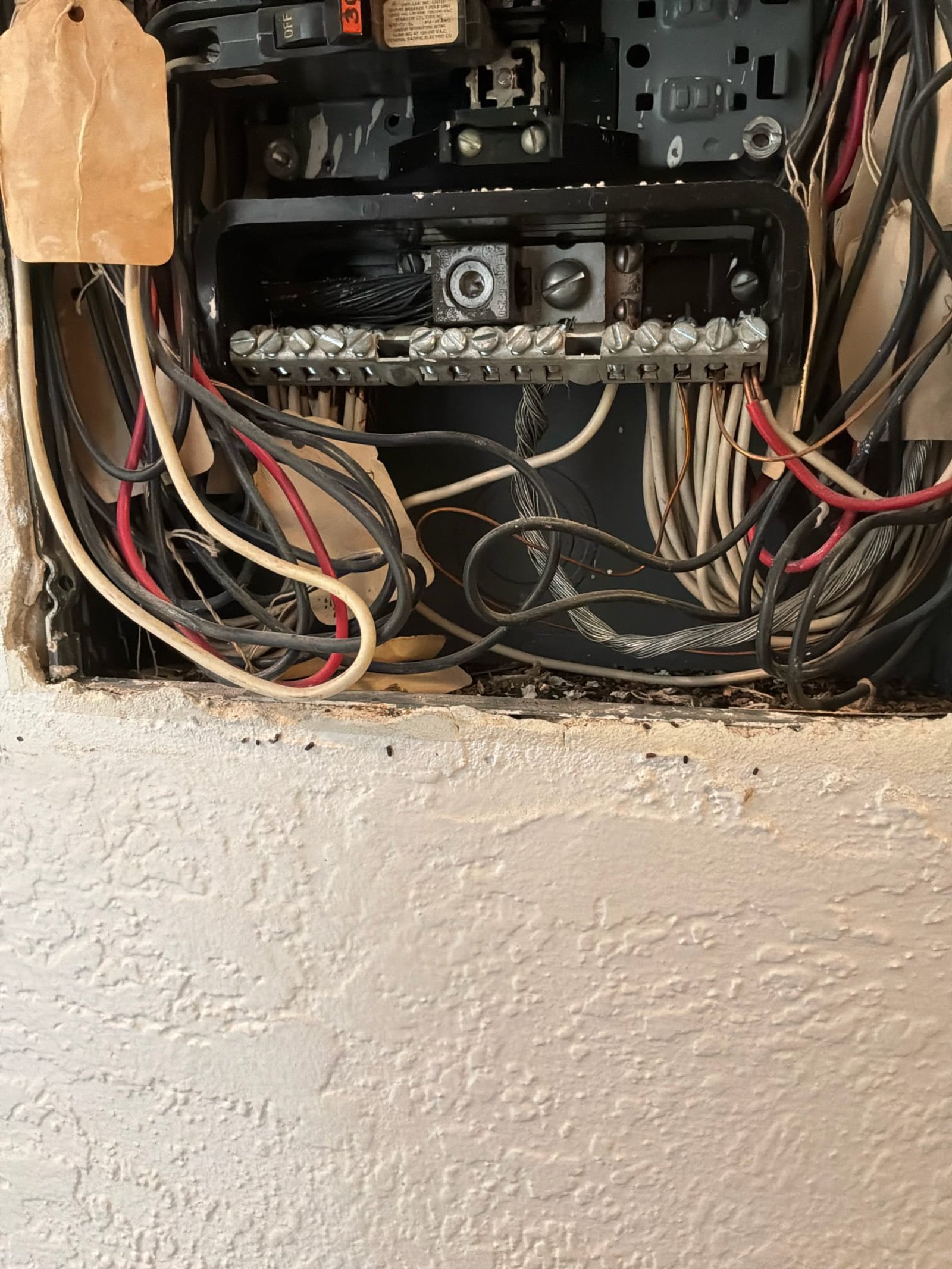
Central Florida makes the problem worse than most regions. We never get a hard freeze, so pest populations run year-round. Add mature oaks, palms, and warm attics, and your wiring becomes a target.
Why Our Attics Are Prime Real Estate
Roof rats are the dominant rodent across the Orlando metro. They climb, and they prefer height over basements, which our homes do not have anyway. Palm fronds and oak limbs touching a roofline work like an on-ramp.
Once inside, they follow the warmest, softest paths. In a slab-built Florida house, that means the attic, where nearly all branch wiring runs. Insulation gives them nesting material, and cable jackets give them something to gnaw.
What Pest Electrical Damage Does to Your Wiring
Rodent teeth grow continuously, so chewing is maintenance rather than appetite. Cable sheathing is the perfect hardness for that job. Once the outer jacket opens, the copper conductors sit exposed against wood, insulation, or metal.
Two failure modes follow. A stripped hot conductor can arc against a truss and start a fire, and a nicked neutral can create flicker and heat without ever tripping a breaker. Neither one announces itself clearly, which is why they linger.
Nesting causes a quieter kind of harm. Debris packed into a junction box or around a panel blocks airflow and holds moisture, and our humidity does the rest. The National Fire Protection Association keeps useful homeowner material on electrical fire risk.
Fire Ants Get Into the Gear Too
Rodents get the headlines, but ants cause plenty of service calls here. Fire ants are drawn to the electromagnetic fields around contactors and relays. They pile into AC disconnects, pool pump controls, irrigation timers, and low-voltage transformers.
The result is a contactor welded shut or a control board that simply quits. Homeowners usually blame the equipment. In practice, opening the enclosure tells the real story within seconds.
Signs You Can Check This Week
Most pest electrical damage leaves clues long before anything fails. You do not need tools to notice several of them.
- Scratching or scurrying overhead, mostly at dusk and dawn
- Droppings on top of attic insulation or along wall plates
- Lights that flicker on one circuit only
- A faint burning or urine odor near outlets or the panel
- Breakers that trip with no obvious load change
- Chewed weatherstripping, soffit gaps, or a torn attic vent screen
- Ant trails climbing an AC disconnect or pool equipment pad
Any single sign can have another explanation. Two or three together deserve a look from a licensed electrician.
Seal the Roofline Before Anything Else
Exclusion beats trapping every time. Walk your perimeter and look up, because most entries happen above eye level. A gap the width of a quarter is enough for a young roof rat.
Trim tree limbs and palm fronds back several feet from the roof. Close soffit and gable vent gaps with metal mesh rather than foam. Also check the roof jacks, the dryer vent, and the point where cable and service conductors enter the wall.
Harden the Wiring Itself
Sealing helps, yet exposed runs still deserve protection. Where cable crosses open attic space or a garage wall, conduit adds a real barrier. Metal conduit resists chewing better than plastic in high-traffic areas.
Outdoors, the same thinking applies to pool pumps, well pumps, and landscape lighting. Keep plants off the equipment pad and use gasketed, in-use covers. A routine visit once turned up rust and double-tapped breakers in a panel that looked fine from three feet away. You can read how that Orlando panel service went.
Squirrels deserve a mention as well. They favor the roof edge, the soffit, and the area near the weatherhead where service conductors enter. Damage there is not always yours to repair, so ask the utility before anyone climbs a ladder. The Electrical Safety Foundation International offers free homeowner guidance on hazards like these.
Do Not Just Tape It and Move On
Chewed cable is not a repair you patch with electrical tape. Damaged sections need proper splicing inside an accessible junction box, or replacement of the whole run. Anything less leaves a hidden hot spot in an attic that reaches well past 120 degrees in July.
An electrician will also check the panel, since that is where the evidence collects. If yours shows scorching, corrosion, or crowded conductors, our guide to the signs your home needs a panel replacement is a good next read.
Pair Pest Control With an Electrical Check
Pest control removes the animals, but it does not evaluate the wiring they left behind. That is a separate trade and a separate inspection. Schedule both, ideally in the same week.
Ask the electrician to document what they find with photos. Insurers sometimes cover sudden rodent-caused damage, and clear images help. Our home electrical safety checklist covers the rest of what a full walkthrough should include.
Get the Attic Looked At
Pest electrical damage is largely preventable in an Orlando home. Seal the roofline, protect exposed runs, and have someone qualified inspect what is already up there. Waiting only raises the cost.
If you have heard scratching overhead or found droppings on the insulation, book an electrical safety inspection and we will trace it out. Call Thomas Edison Electric at (407) 490-0004. Our Florida license is EC13015487, and we serve Orlando, Apopka, Longwood, Kissimmee, and the surrounding area.