
A backyard pool is one of the real perks of Central Florida living. Here it runs close to year-round, which puts steady demand on the pump and its circuit. Heat, water, and long run hours punish that circuit, so we field plenty of calls about pool pump wiring Orlando homeowners never think about until it quits. Old or corroded conductors bring tripped breakers, wasted power, and a genuine shock risk.
How Hard Orlando Pools Actually Work
Our swim season never really ends. Warm water, heavy rain, and summer pollen all raise the turnover a pool needs. Variable-speed pumps answer that by running longer at lower speed. So the circuit carries load for many more hours than a northern pool ever would.
Screened lanais change things as well. A pool cage keeps leaves out, yet it traps humid air around the pad. Conduit and terminals inside that cage then sit in warm, damp conditions nearly every day of the year.
Signs the Pump Circuit Needs Attention
In practice, most failures announce themselves first. So watch for these around the equipment pad.
- The pump shuts off on its own and restarts a few minutes later.
- The motor runs hot or smells like scorched varnish.
- The breaker trips every time the pump starts.
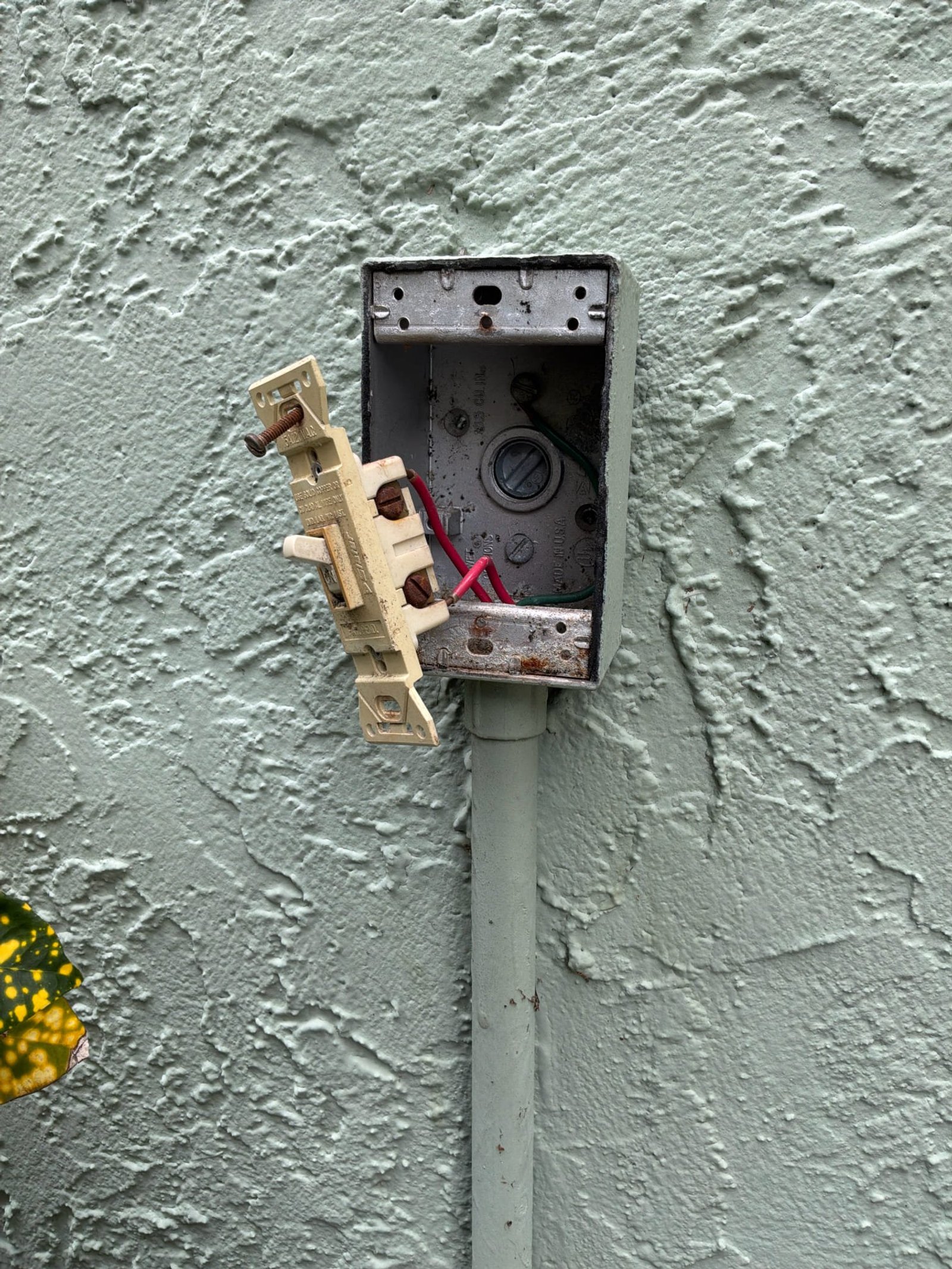
- Green or white crust has built up on the lugs and terminals.
- Conduit is cracked, sun-bleached, or pulling away from the wall.
- The timer or contactor box is full of ants and grit.
Fire ants love a warm contactor, and they short one out surprisingly often. Humidity does the slower damage, eating terminals here in a couple of years.
Pool Pump Wiring Orlando Homes Actually Need
Federal efficiency rules pushed the market toward variable-speed pumps. Many of them want a dedicated 240-volt circuit, sized from the motor nameplate. Older conductors often cannot carry that load, which causes heat and poor performance. A disconnect also belongs within sight of the pump and set back from the water.
Our licensed electricians size the wire and breaker to the pump you actually bought. That work falls under our hot tub and pool wiring service, and we confirm the panel has room before we start.
Do Not Break the Bond During a Pump Swap
Bonding sits right beside the pump circuit, and the two jobs are not the same. Grounding gives fault current a path back to the source. Bonding ties the metal parts together, so no voltage difference can build between them.
Every pool motor carries a bonding lug on its housing, and a solid copper conductor lands there. Swap a pump and skip that lug, and the bond quietly loses a link. Inspectors test that path, and the NFPA publishes the National Electrical Code that sets the rules.
One Orlando yard needed a targeted fix rather than a rebuild. You can see how a new GFCI outlet protected pool equipment in an Orlando yard.
GFCI Protection Is Not Optional
Ground-fault protection is part of any compliant pool circuit today. It watches for current leaking off the intended path and cuts power in a fraction of a second. On a wet deck or screened lanai, that speed is the whole point. So test the device monthly with its own button.
The Electrical Safety Foundation International publishes clear guidance on staying safe around pools and outdoor circuits.
Heat, Humidity, and Sun Take a Toll
Pool gear lives outdoors in a punishing climate. Sun and rain age outdoor conductors faster here than in most of the country, because ultraviolet light makes conduit brittle. Driving rain then finds every unsealed fitting, and condensation settles on the terminals.
Good installs answer that with UV-rated parts, rain-tight fittings, and a drain point where water can escape.
Lightning and the Equipment Pad
A variable-speed pump is really a motor with a computer attached. That drive board sits at the far end of the circuit, and it is exactly what a nearby strike destroys. Surge protection at the main panel is the first layer, and a device at the pool subpanel adds a second. Given how often storms cross the area, both are cheap insurance.
Permits, Inspections, and What They Cover
New circuits and buried runs usually require a permit. However, a straight motor swap on sound wiring often does not. Ask who pulls the permit and who meets the inspector before work begins. Inspectors check conductor size, bond continuity, and the disconnect location, so shortcuts show up fast.
That said, we handle the paperwork and the inspection for you. Every job is completed under Florida license EC13015487.
What to Ask Before a Pump Swap
A few questions prevent a second trip charge.
- What voltage and amperage does the new pump require?
- Does the existing wire size match that rating?
- Is the disconnect in the right place and still weather-tight?
- Will the bond be tested and documented at inspection?
- Is there panel space for a heater or pool lights later?
Timers, Run Schedules, and Freeze Guard
Still, the circuit is only half the job. A timer or automation panel decides when the pump actually runs. Splitting turnover into two shorter blocks often trims cost without hurting water quality. Many controllers also offer a freeze guard that runs the pump on a rare cold night.
Salt systems and heaters usually share that same control panel. Plan those circuits together, so one clean subpanel feeds the whole pad.
Plan for Heaters, Lights, and Spa Jets
In practice, wiring is cheapest while the trench is open. So if a heat pump, LED pool lights, or spa jets might follow, run the conduit now. Extra capacity today beats a second dig next year.
Our guide to how many dedicated circuits your home needs helps you plan the panel. For spa circuits in particular, read our guide to hot tub and pool wiring in Orlando.
Safe swimming starts with wiring nobody ever sees. Are you replacing an aging pump, or chasing a breaker that keeps tripping? Call Thomas Edison Electric at (407) 490-0004 for pool pump wiring Orlando inspectors sign off on the first time. We serve Orlando, Windermere, Oviedo, and nearby towns under Florida license EC13015487.