
Central Florida sun is relentless. It bleaches mailboxes, cracks dashboards, and quietly ages anything bolted to a west-facing wall. An outdoor EV charger Orlando homeowners install today faces that same punishment, plus a downpour most summer afternoons. Placement matters as much as the brand you choose.
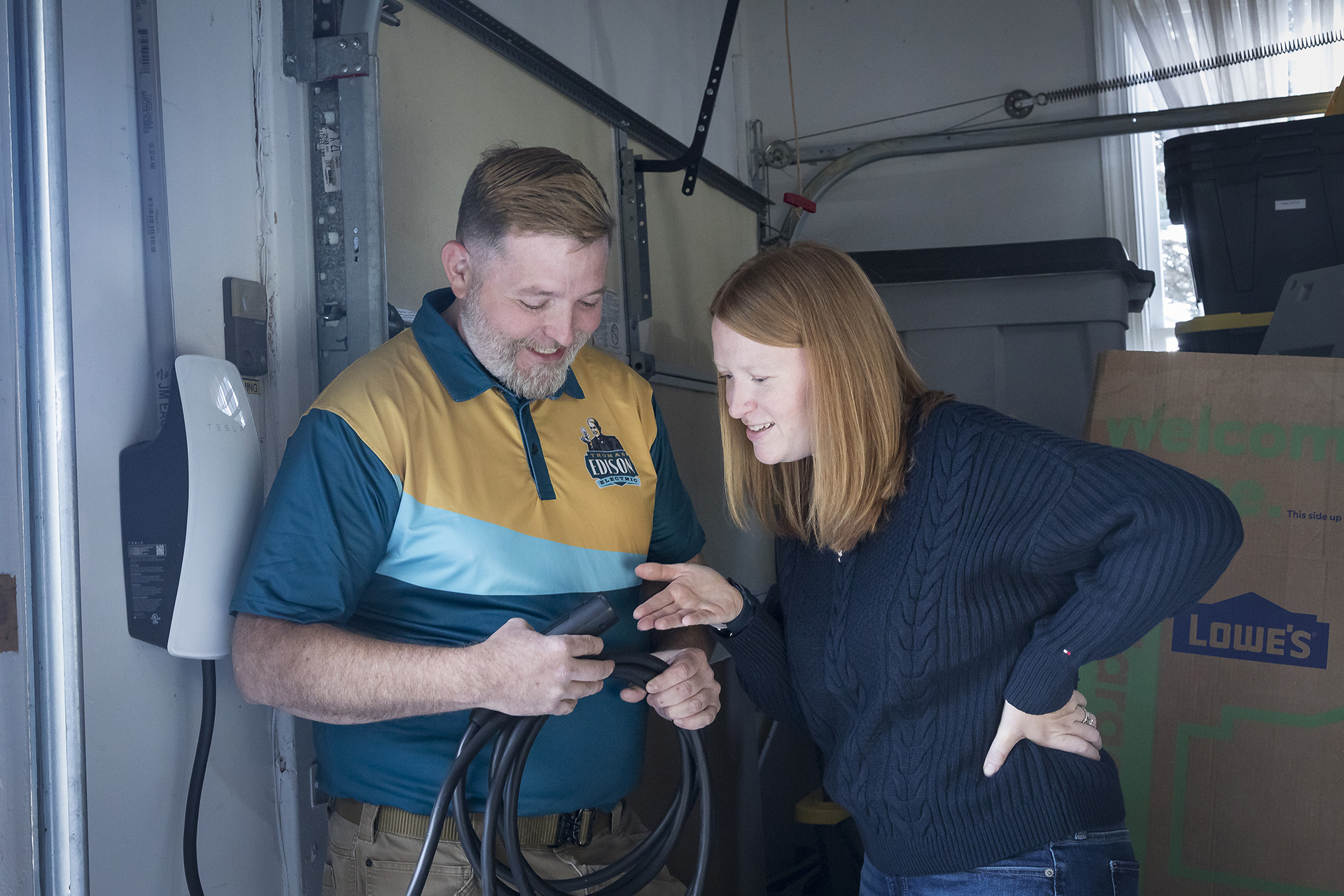
Manufacturers build these units for outdoor duty. However, rated for rain is not the same as comfortable in 95-degree heat. Here is how we think about sun, shade, and shelter on Central Florida installations.
Heat Slows Charging More Than People Expect
Charging generates heat inside the unit and along the cable. Now add a stucco wall that reaches 130 degrees on a July afternoon. The electronics end up fighting the weather instead of moving power.
Most Level 2 chargers include thermal protection. When internal sensors read high, the unit throttles its output to protect itself. You rarely see an error message. You simply notice the car gained fewer miles overnight.
For a household commuting from Oviedo or St. Cloud, that gap adds up over a week. Shade is the cheapest fix available.
Weather Rated Does Not Mean Sun Proof
Enclosures shrug off rain because they are designed to. Ultraviolet light is a slower enemy. Florida sits under a high UV index most of the year, not only in summer.
Over time, UV exposure chalks plastic housings and fades displays. Cable jackets stiffen, then crack. Humidity works into every hairline opening, and corrosion follows at the contacts. All of it shortens the life of an outdoor EV charger Orlando sun hits all afternoon.
- Screens that are hard to read on a west-facing unit
- Cable jackets cracking near the strain relief
- Covers that no longer seal against blowing rain
- Green or white corrosion inside a connector left hanging in the sun
- Mounting screws that rust and stain the wall below
Shade Options for an Outdoor EV Charger Orlando Drivers Depend On
North- and east-facing walls take the least direct sun here. A garage wall is better still, when the circuit run allows it.
- Mount under a carport, soffit, or deep eave whenever possible
- Choose a north or east exposure over a west wall
- Avoid dark stucco and bare metal, which hold heat into the evening
- Leave the clearance the manufacturer lists so warm air can move
- Keep the connector holster out of standing sun and driving rain
Screened lanais and pool cages rarely work well. They sit far from the driveway and complicate required clearances. A short, sheltered run beside the parking pad is usually the practical answer. Our guide to choosing a charger location covers those tradeoffs in detail.
Protecting the Cable and Connector
The cable takes more abuse than the charger body. It gets dragged, coiled, and left lying across hot concrete.
- Install a hook or reel so the cable never rests on the driveway
- Coil it loosely in the shade once charging finishes
- Seat the connector fully in its holster to keep water out
- Rinse lawn chemicals and pool splash off the connector face now and then
Small habits like these add years to a cable. Replacement cables are not cheap, and some are sold only as a full assembly.
Mounting Surfaces and the Run Back to the Panel
Concrete block is the norm for exterior walls on homes here. Anchoring into block calls for different fasteners than wood framing, and drilling produces dust that must stay out of the enclosure.
Exposed conduit outdoors needs to be rated for sunlight exposure. Ordinary fittings chalk and grow brittle after a few Florida summers.
Distance matters just as much. A long run from a panel on the far side of the house adds voltage drop and material cost. Moving the charger ten feet closer sometimes saves several hundred dollars.
Irrigation lines complicate any trench near a driveway edge. We locate sprinkler heads, landscape lighting, and the water service before a shovel comes out.
Lightning Is the Other Half of the Problem
Our region records more lightning than anywhere else in the country. A nearby strike can push a large voltage spike into service conductors. Anything connected at that moment is exposed, including your car.
Surge protection at the panel is the first layer of defense. The National Weather Service publishes practical guidance for storm days. Our charger safety tips for local homeowners cover the household habits that matter most.
What a Licensed Installation Includes
Good placement is only part of the job. The circuit behind the unit does the heavy lifting.
- A load calculation for the whole service before anything is added
- A dedicated 240-volt circuit sized for continuous duty
- Conductors sized with attic and ambient temperature in mind
- A disconnect and proper bonding where the code requires them
- A permit and inspection with your local building department
Attic temperature is not a small detail here. Conductor ampacity drops as ambient heat rises, which changes wire size on some runs. Inspectors sign off on that math, not on the sticker on the box.
Panel space is the other common surprise. See how we cleared a crowded panel for a Belle Isle home before new circuits went in. Our EV charger installation team handles the permit and the inspection so you do not have to.
Ask about mounting height too. The unit should land where the connector is easy to reach, with clear working space in front of it. The U.S. Department of Energy keeps a plain-language overview of home charging if you are still comparing models.
Plan Once, Charge for Years
Sun, humidity, and lightning are constants here, not seasonal problems. A shaded location, a properly sized circuit, and surge protection handle all three. Spend the extra thought before the drill comes out.
Ready to pick a spot? Call Thomas Edison Electric at (407) 490-0004 to schedule a site visit anywhere from Winter Garden to Sanford. We are licensed in Florida under EC13015487, and we will walk the options with you first.