
Home charging is the quiet perk of owning an electric car. Where you mount the unit decides how easy that perk feels every single day. The EV charger location Orlando homeowners settle on comes down to wall construction, panel distance, garage heat, and afternoon storms. Once that spot is fixed, the wire run, the breaker, and the inspection are what an EV charger installation actually covers.
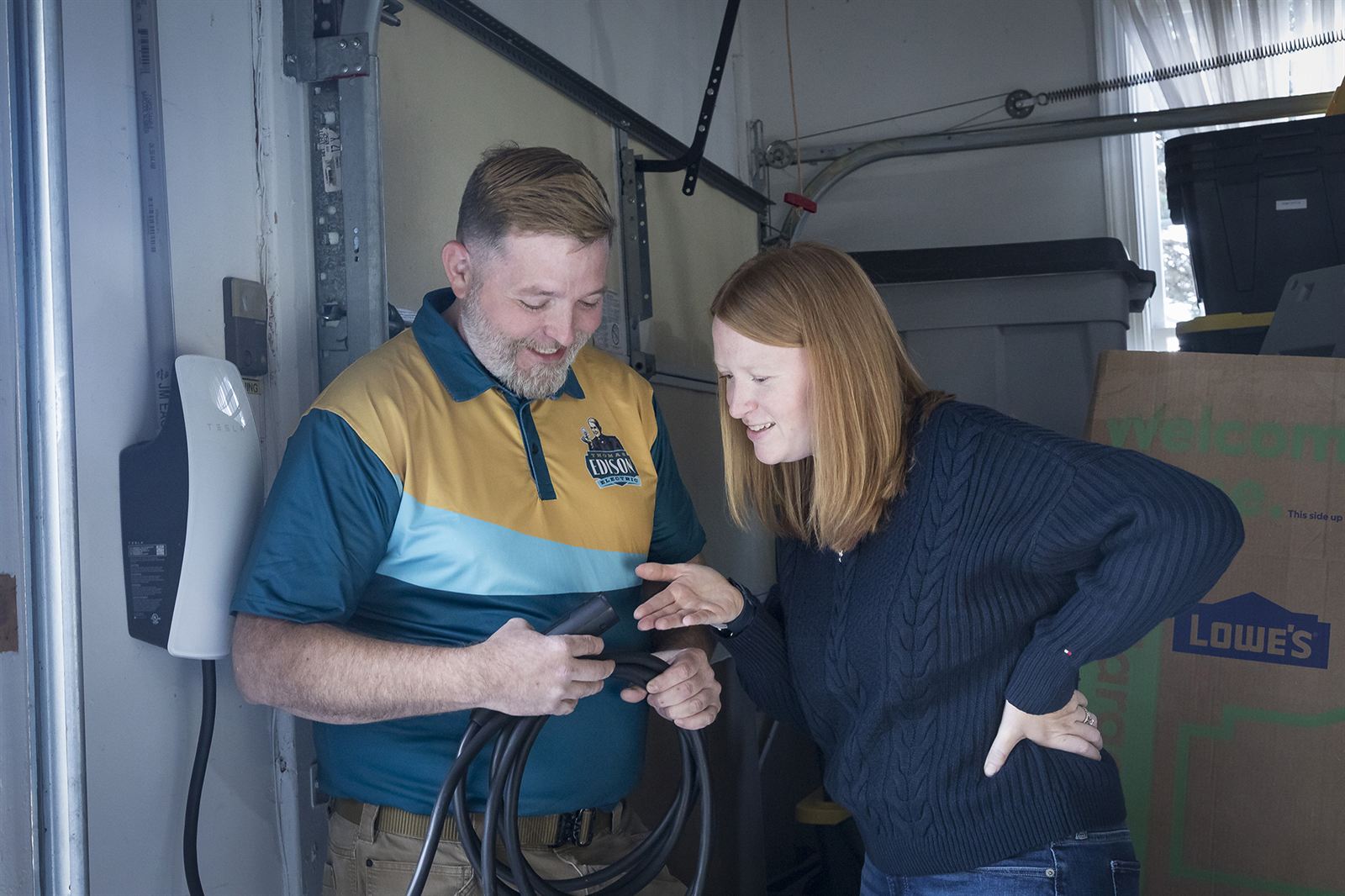
Placement is not a design choice. Instead, it drives the cost of the wire run, the life of the equipment, and whether you ever trip over a cable. Here is the decision path we walk with homeowners.
Choosing an EV Charger Location Orlando Homes Can Live With
Every placement conversation comes back to the same three questions. What is the wall made of? How far is the panel? And how hot does that spot get in August?
Answer those and the rest is detail. Because a 1960s block ranch in Winter Park and a 2020 two-story in Winter Garden give different answers, the unit rarely lands in the same place twice.
Block Wall or Stud Wall?
Most homes here are concrete block, with stucco outside and furring strips inside. That single fact changes how the unit gets mounted.
Anchoring into block means masonry anchors and standoffs, not drywall screws into a stud. It also means the wire usually runs on the surface in conduit, because there is no cavity to fish.
How Far Is the Panel, Really?
Measure from the panel to your parking spot along the path the wire would actually take, not in a straight line. Short runs cost less, drop less voltage, and look far cleaner.
A Level 2 unit needs its own 240-volt circuit. In many newer homes the panel already sits in the garage, so the job stays simple. In older houses it hangs on an exterior wall, however, and the run may cross an attic that hits 130 degrees in summer.
Garage Heat Is the Hidden Variable
A closed Central Florida garage can pass 100 degrees in August. Because power electronics age faster in that kind of heat, the charger should not sit on the wall that takes the worst of the afternoon sun.
Leave air around the unit. Do not box it in behind shelving or a chest freezer. If the only workable wall faces west, a small awning or a shift of a few feet drops the surface temperature noticeably.
Rain, Lightning, and Outdoor Mounting
Mounting outside is common where the driveway is the only parking. Confirm the enclosure carries a rating built for outdoor use, since our summer rain arrives sideways.
Lightning is the other factor. Because Central Florida takes more strikes than anywhere else in the country, surge protection at the service belongs in the same conversation. The Department of Energy home charging guide is a useful primer on the equipment itself.
Park the Car First, Then Pick the Wall
The car decides more than the wall does. Charge ports sit front left on some models, rear right on others, and in the nose on a few.
So walk the bay with the car parked exactly the way you park it. If you back in, plan for that now. Otherwise a cord gets stretched across the bay every night, stepped on, and eventually pinched by a tire.
Mount Height and Cable Management
Mount the unit roughly 42 to 48 inches off the floor. That height keeps the connector out of standing water and still easy to reach. Afternoon storms push water under garage doors here more often than people expect.
Keep the unit clear of the door track and the door’s swing. Then leave room for a cable hook, so the cord hangs instead of coiling on the slab. In a two-car bay, mounting toward the middle wall lets either side reach.
Permits and HOA Rules Before You Mount It
Charger work is permitted work in Orange and Seminole counties. Your electrician pulls the permit and meets the inspector, so you do not have to.
The National Electrical Code sets the rules for the circuit, the grounding, and the breaker size. In master-planned neighborhoods around Winter Garden and Lake Mary, however, HOA boards often want written approval first if the unit will be visible from the street. Ask before the wire goes in.
Hardwired or Plug-In in Our Humidity
Some units wire straight to the circuit. Others plug into a heavy-duty 240-volt receptacle. Plug-in models are easier to swap later, though the receptacle itself has to be a quality part.
Outdoors, a hardwired unit generally holds up better against humidity. Plug-in setups also call for ground-fault protection at the receptacle, while hardwired units build that protection in.
Capacity Before Convenience
The perfect wall does not help if the panel cannot carry the load. Every home charger counts as a continuous load, so the circuit behind it carries a built-in margin above the unit’s rating.
Your electrician confirms the service can carry it alongside the AC, the pool pump, and the water heater. Sometimes the honest answer is circuit work first. On one local job, an overheating hardwired appliance needed a properly sized circuit of its own. You can see how we handled that for an Orlando-area home.
Leave Room for a Second Car and Solar
Households add a second electric car sooner than they expect. Pulling a slightly larger feeder now, or leaving a spare breaker space, saves an entire project later.
Rooftop solar is common here too, so place the unit where it can tie into a future system cleanly. Our overview of how home EV chargers work explains the levels and the smart features behind that choice.
A Quick Placement Checklist
Settle these before the install date:
- Wall construction at the mount point: block, stud, or block with furring.
- Measured distance from the panel along the real conduit path.
- Whether that wall takes direct afternoon sun.
- Where the charge port sits when you park the way you normally do.
- Mount height and clearance from the garage door track.
- Written HOA approval, if the unit will be visible from the street.
- Spare capacity for a second charger later, plus surge protection at the service.
Get Your Charger Placed Right
Good placement balances convenience, heat, and room to grow. Once you have settled on an EV charger location Orlando heat will not punish, review our EV charger safety tips for Orlando homeowners to keep it working for years.
Thomas Edison Electric plans and installs home charging equipment in Orlando garages and driveways, along with Oviedo, Winter Park, Kissimmee, and Winter Garden. Call (407) 490-0004 to walk your garage with us. Florida license EC13015487.