
Electric cars fill more Orlando driveways every year, and the box on the garage wall is what makes daily ownership painless. Once you know how the home EV chargers Orlando homeowners buy actually work, picking the right one gets much simpler. Here is a plain-language walkthrough, plus what a proper EV charger installation really involves.
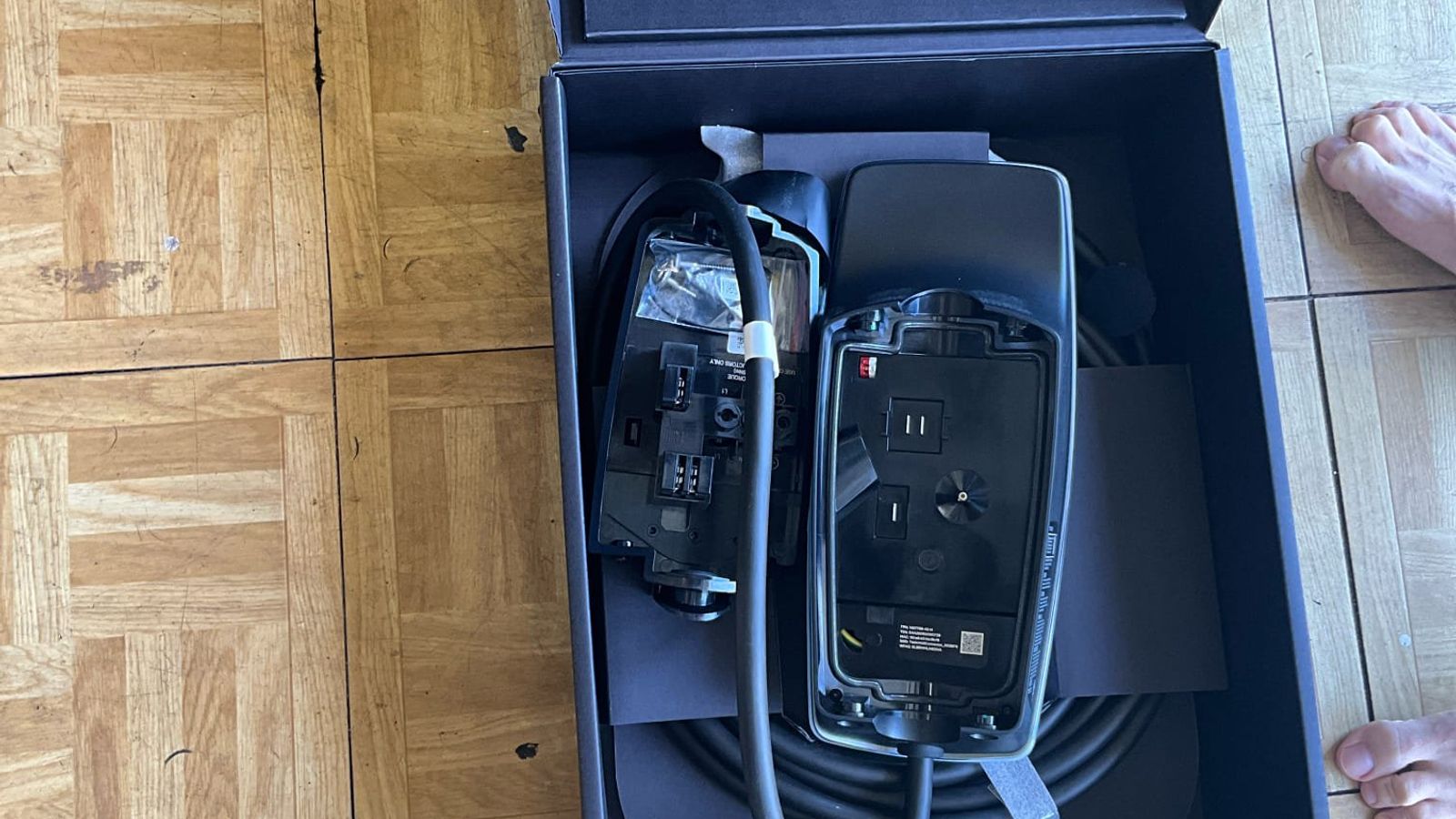
None of this needs an engineering degree. It does help to know which part does what, however, so you can read a quote and ask sharper questions.
The Wall Unit Is Not the Charger
Here is the part that surprises people. The box on your wall is not actually the charger. The real charger lives inside the car.
Electricians call the wall unit EVSE, short for electric vehicle supply equipment. It delivers AC power safely and talks to the vehicle. The car’s onboard charger then converts that AC into the DC the battery stores, and that division of labor explains most of what follows.
Home EV Chargers Orlando Drivers Use, Step by Step
Plug in, and the two devices shake hands first. The car states how much current it can accept. The unit answers with what the circuit can supply. Then the lower number wins, every time.
From there the flow is steady and closely managed. The unit watches voltage, current, and temperature for the whole session. When the battery fills, power stops, and most units send a note to your phone.
The Three Charging Levels
Levels are simply shorthand for how fast a unit can move power into the car:
- Level 1 uses a standard 120-volt outlet. It adds roughly 3 to 5 miles of range per hour and needs no installation.
- Level 2 uses a 240-volt circuit, much like a dryer or a range. Depending on the circuit size and what the car accepts, it adds roughly 20 to 30 miles of range per hour.
- Level 3, or DC fast charging, bypasses the car’s onboard charger entirely. It needs commercial-grade service and does not belong at a house.
The Department of Energy home charging overview lists the same three tiers. For almost every household, Level 2 is the practical answer.
Why Level 2 Suits Central Florida
Plenty of commutes here fall somewhere in the 30 to 50 mile range, though yours may look different. At Level 2 speeds, an evening of charging covers that with hours to spare.
Level 1 can keep pace with a short commute. However, it falls behind the moment you add a theme-park run or a second driver. Summer heat nudges consumption up too, since the cabin AC pulls from the same battery.
Amps, Miles, and Simple Math
Chargers are sold by amperage, and that number is where the arithmetic gets practical. A 40-amp unit on a 50-amp circuit delivers about 9.6 kilowatts.
Divide that by roughly 0.3 kilowatt-hours per mile, and you land near 30 miles of range per hour. A 32-amp unit gives about four fifths of that, or close to 24. So buying more amps than your car can accept adds cost and no speed.
Smart Features Worth Paying For
Smart features do not change the physics of charging. Instead, they change when it happens and how much of it you can see.
A Wi-Fi connection lets you schedule sessions and track energy use. Load management tells the unit to throttle down while the air conditioning is working its hardest, which keeps the main breaker happy. Just pick a mount spot with a solid signal, or those features go quiet.
What Charging Costs Here
Figure roughly 0.3 kilowatt-hours per mile for a typical sedan. Multiply that by your rate per kilowatt-hour, and you have your cost per mile.
For most commuters, a full week of driving costs less than a single tank of gas. Off-peak scheduling trims it further where time-of-use rates are offered. If you are chasing savings elsewhere in the house, the Department of Energy Energy Saver site is worth an hour of reading.
What Install Day Looks Like
Install day is where all of that theory meets your garage wall. Most jobs take three to five hours.
The electrician kills power, lands a new breaker, runs the circuit, mounts the unit, and tests it under load. An inspector visits afterward in most local jurisdictions, so file the permit and the inspection card somewhere safe. Manufacturer warranties and some utility rebate programs will ask to see them.
Lightning Is the Local Variable
Central Florida is the lightning capital of the country, and every summer afternoon proves it. A nearby strike can push a spike down the service and into anything connected, including the control electronics that run the handshake.
That is worth knowing, because it explains how a charger can quit with no visible damage to the wire. Surge protection at the service and correct bonding are the two defenses, and our EV charger safety tips for Orlando homeowners covers the habits that back them up.
What Your Panel Has to Provide
A home charger pulls its full current for hours at a stretch. Because that counts as a continuous load, the circuit is deliberately sized with margin above the charger’s rating. Your electrician does that math before anything is ordered.
Older services around Orlando and Winter Park often need attention first. Opening an aging panel usually turns up more than expected, and on one Belle Isle job we found four separate problems in a single visit. You can see what that inspection turned up for an Orlando-area home.
If you have not chosen a mounting spot yet, our guide on where to install your EV charger in Orlando covers the trade-offs. Sorting the panel and the location together keeps the whole project to one visit.
Charge With Confidence in Orlando
Knowing how the equipment works makes every other decision easier. You can compare quotes, size the circuit sensibly, and skip features you will never use.
Thomas Edison Electric installs and services the home EV chargers Orlando families plug into each night, across Winter Park, Oviedo, Sanford, and Longwood. Call (407) 490-0004 and we will walk your garage with you. Florida license EC13015487.