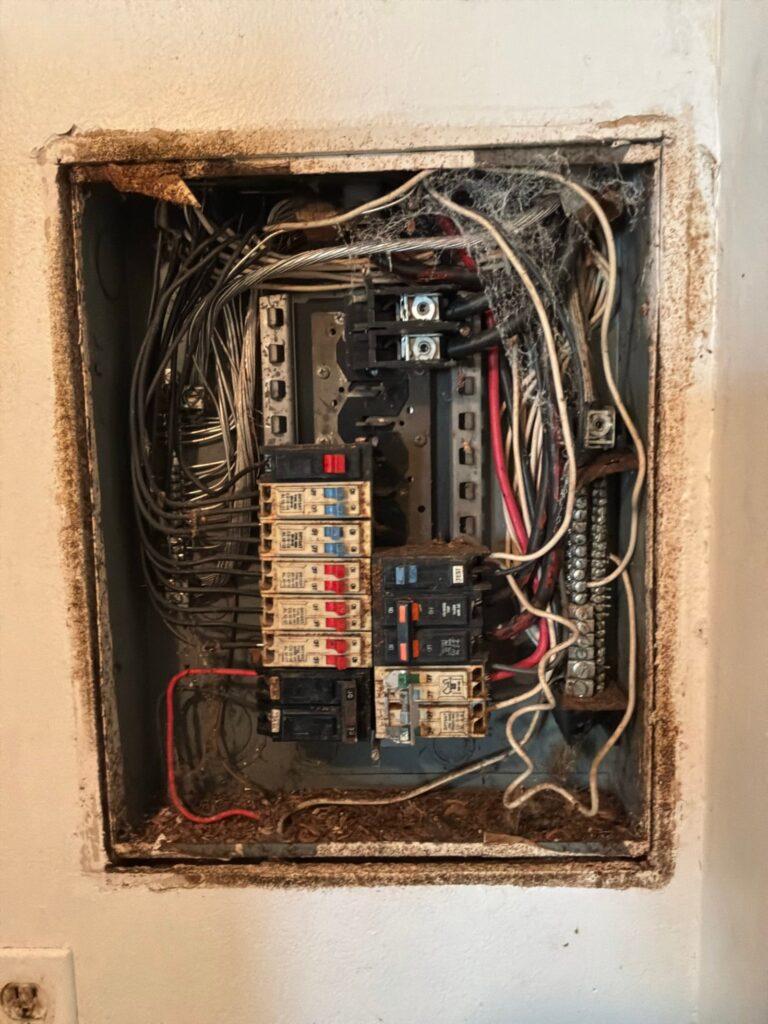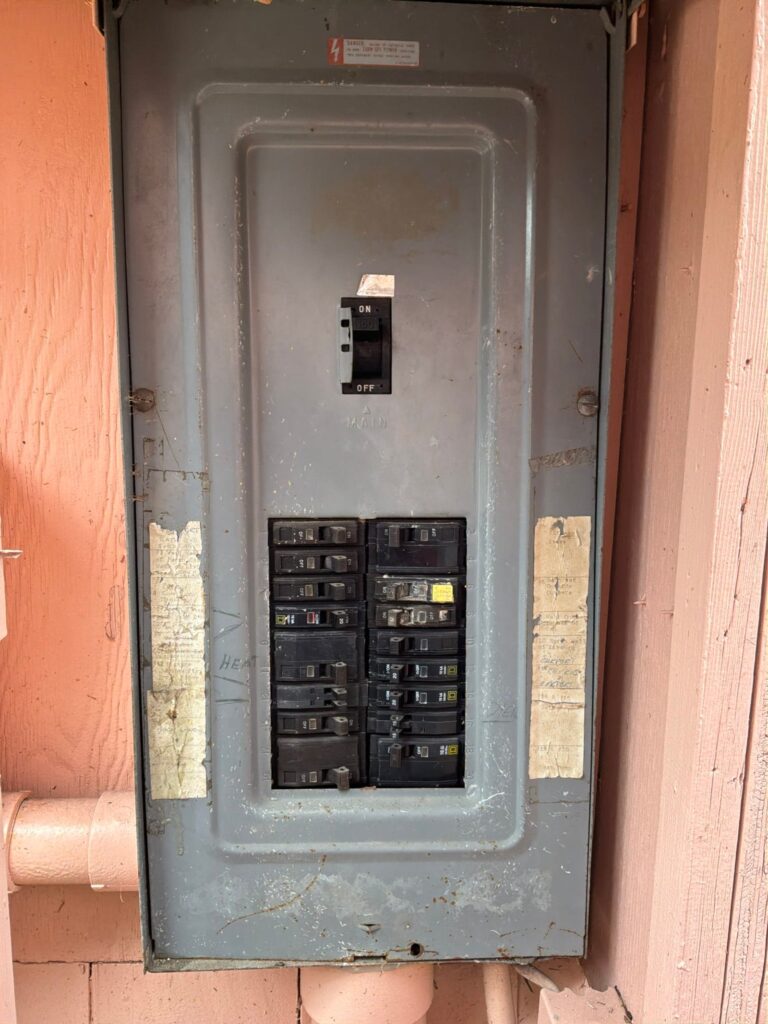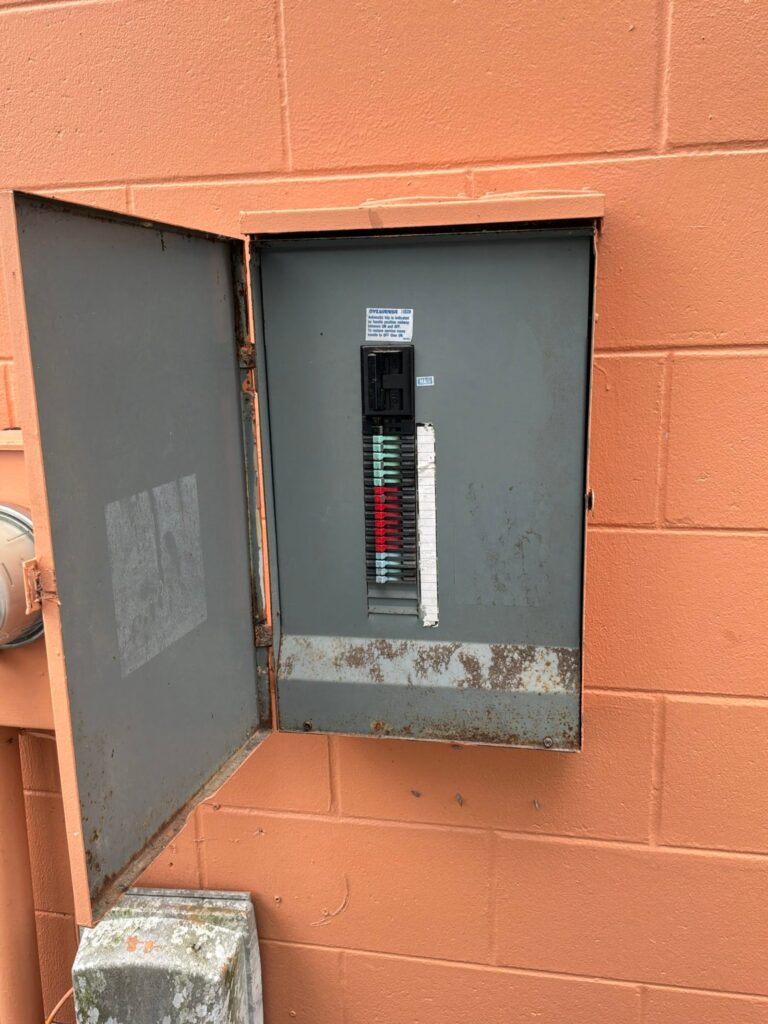
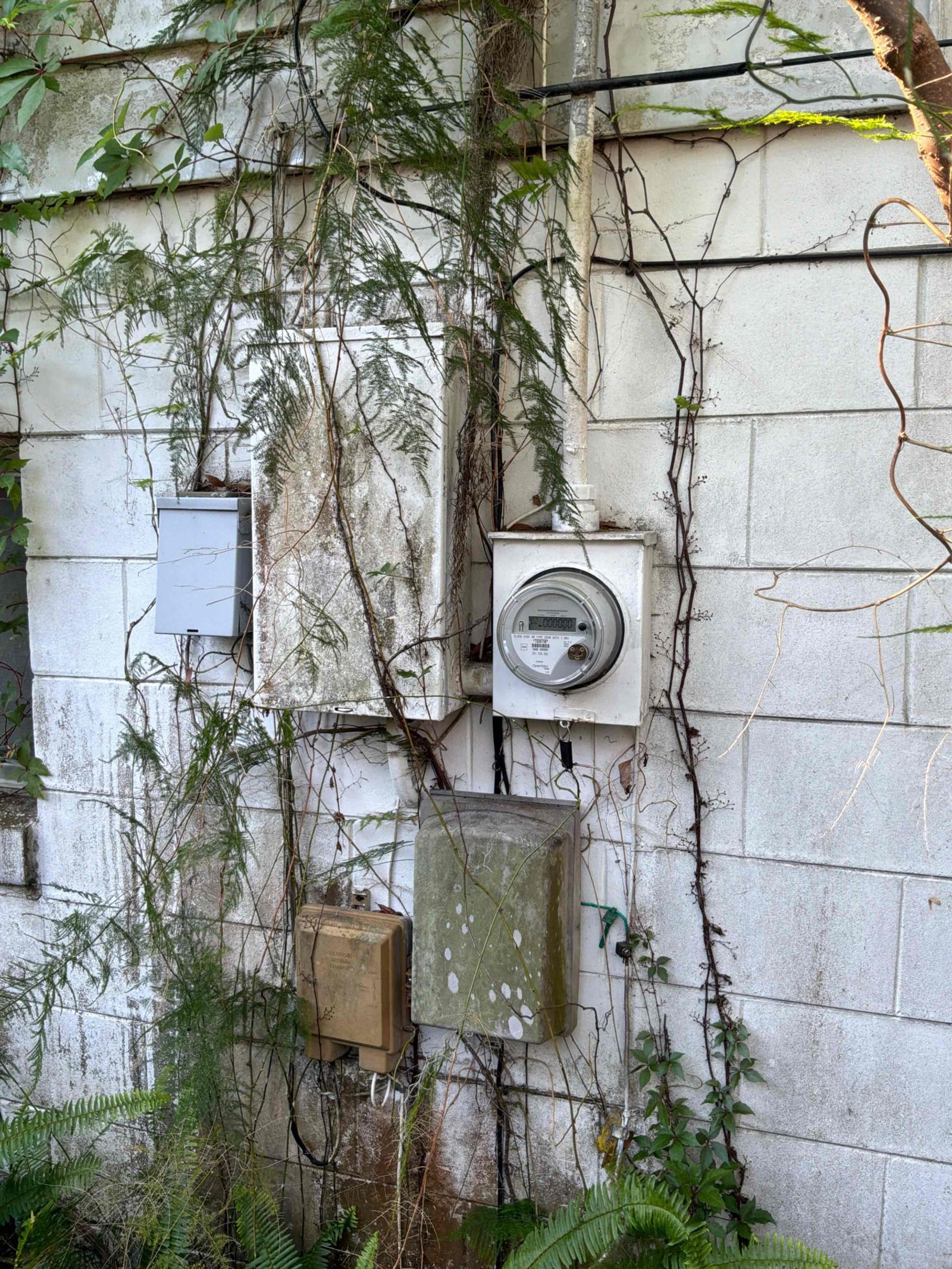
This Belle Isle panel upgrade case study walks through the real diagnosis, the fix, and the code details from a recent service call. A homeowner in Belle Isle, FL contacted Thomas Edison Electric for a comprehensive electrical system upgrade after our field team identified several areas where their home could benefit from modernization. The existing 200-amp GE panel served the home adequately but lacked current safety features and had some conditions worth addressing. We installed a complete three-panel system with modern Square D equipment, added whole-home surge protection, and brought all circuits up to the 2020 NEC standards Florida enforces.
The Problem
During an initial safety inspection, the homeowner learned their electrical system had several opportunities for improvement. Additionally, they wanted to ensure their home was prepared for future electrical needs and equipped with the latest safety features.
Investigation
Marc discovered several conditions common in homes of this era. The grounding system consisted of a single ground rod, which predates current NEC requirements for supplemental grounding. Furthermore, the home had no surge protection, leaving electronics and appliances vulnerable to voltage spikes. An open knockout in the existing panel created an opening that should be sealed. Most notably, many of the receptacles throughout the home used backstabbed connections – a wiring method that was perfectly acceptable when installed but has since been recognized as less reliable than screw terminals.
The existing 200-amp service provided adequate capacity, but the homeowner wanted to modernize the entire distribution system and add capacity for future needs.
What We Fixed
We designed and installed a comprehensive three-panel electrical system. The new configuration includes a Siemens 200-amp meter center with 8 spaces that serves as the service entrance point. From there, we installed a Square D Homeline 225-amp main lug panel with 30 spaces as the primary distribution panel, plus a secondary Square D Homeline 125-amp panel with 24 spaces for additional capacity.
All three panels received new Square D Homeline breakers sized appropriately for each circuit. However, the most significant safety upgrade involved installing ten HOM115PDF breakers – these are dual-function devices that provide both AFCI and GFCI protection in a single breaker. This technology represents the latest advancement in electrical safety, combining arc-fault protection with ground-fault protection.
We added a PSP Vortex 120 kA whole-home surge protector to shield the entire electrical system from voltage spikes. The grounding system was enhanced to meet current standards. Additionally, we ran new 4/0 SER cable in concealed areas and installed 75 feet of 3/4-inch PVC conduit with new THHN conductors for proper circuit distribution.
Throughout the installation, we replaced all backstabbed connections with secure screw-terminal connections and properly sealed the open knockout that had been identified.
Why This Belle Isle Panel Upgrade Matters for Homeowners
This type of comprehensive upgrade addresses multiple aspects of electrical safety and reliability. The dual-function AFCI/GFCI breakers provide protection against both arc faults (which can occur from damaged wiring) and ground faults (which help prevent shock). These devices represent a significant advancement over older electrical systems that may have had neither type of protection.
Whole-home surge protection has become increasingly important as homes contain more sensitive electronics. The PSP Vortex device protects against surges from lightning strikes, utility switching, and other sources that can damage everything from HVAC systems to computers. Meanwhile, proper grounding and bonding ensure that safety systems function correctly and provide a reliable path for fault currents.
Code Compliance Cited in This Job
Every fix above maps to a specific section of the 2020 NEC, the edition Florida enforces under the 8th Edition Florida Building Code. Florida adopts the 2023 edition of the NEC when the 9th Edition takes effect on December 31, 2026. Each card links to NFPA’s public NEC index.
Arc-Fault Circuit-Interrupter Protection
This section requires AFCI protection for most 15- and 20-amp branch circuits in dwelling units. The HOM115PDF breakers we installed provide this protection for all applicable circuits, helping prevent fires from arc faults in damaged or deteriorating wiring. NFPA reference ›
Ground-Fault Circuit-Interrupter Protection
Current code requires GFCI protection in kitchens, bathrooms, garages, and other specified areas. The dual-function breakers extend this protection throughout the home, providing an extra layer of safety beyond the minimum requirements. NFPA reference ›
Grounding Electrode System Installation
This section specifies requirements for grounding electrode systems, including provisions for supplemental electrodes when only a single ground rod is present. Our grounding system improvements ensure compliance with current standards. NFPA reference ›
Surge Protective Device Installation
While not universally required in residential applications, this section governs proper installation of surge protective devices. The PSP Vortex unit was installed according to these guidelines for maximum effectiveness. NFPA reference ›
Unused Openings
This section requires that unused openings in electrical panels be effectively closed. We properly sealed the open knockout that was identified during the inspection to maintain panel integrity. NFPA reference ›
Common Questions
Questions homeowners ask after seeing this kind of work.
What’s the difference between AFCI and GFCI protection?
AFCI (Arc-Fault Circuit Interrupter) protection detects dangerous electrical arcs that can start fires, while GFCI (Ground-Fault Circuit Interrupter) protection prevents electrical shock by detecting current leakage to ground. The dual-function breakers we installed provide both types of protection in one device. If you’re unsure what protection your home currently has, our team can schedule a safety inspection to evaluate your electrical system.
How does whole-home surge protection work?
A whole-home surge protector like the PSP Vortex unit installs at your main electrical panel and diverts excess voltage away from your home’s wiring during power surges. This protects all your electronics, appliances, and electrical systems simultaneously, unlike plug-in surge strips that only protect individual devices. Wondering if your home would benefit from surge protection? We can evaluate your current setup and explain your options.
Why are backstabbed connections a concern in older homes?
Backstabbed connections rely on spring tension to maintain contact, but over time this tension can weaken, leading to loose connections and potential overheating. While this wiring method was common and acceptable in the past, screw terminals provide a more reliable, long-term connection. If your home has backstabbed wiring and you’re experiencing flickering lights or warm outlets, it’s worth having an electrician take a look to assess the situation.
How often should I have my electrical system inspected?
We recommend yearly electrical inspections for most homes, with older homes (pre-1990) and homes that have weathered recent storms potentially benefiting from more frequent checks. Regular inspections can identify small issues before they become larger problems and ensure your system keeps pace with evolving safety standards. Ready to schedule your annual electrical checkup? You can book online or call us at (407) 298-1412.
Can I add more circuits to my existing panel instead of upgrading?
While it’s sometimes possible to add circuits to existing panels, a comprehensive upgrade like this Belle Isle project often makes more sense when multiple improvements are needed. Upgrading allows you to add modern safety features, increase capacity, and address multiple concerns simultaneously. Not sure which approach works best for your home? Our electricians can assess your current panel and recommend the most cost-effective solution.
Want to see more real jobs like this one? Browse our completed case studies or explore our services.