
Every December, Central Florida lights up. Downtown blocks, HOA gates, and whole streets in Winter Garden glow for weeks. The electrical planning holiday Orlando displays need is mostly math, and it starts in September. Wait until November and you are stuck with whatever power the site already has.
Warm weather helps in one way and hurts in another. Crews here hang lights in shirtsleeves. What they fight instead is water, humidity, and crowds.
Count the Watts, Not the Strands
Most groups plan by feel. Math works better. Add up the watts of every piece, then divide by the volts to get amps.
A 20-amp circuit should carry no more than 16 amps for hours on end. That rule matters when a show runs all night for six weeks. Blow-ups, motors, and sound gear pull far more than lights do.
LED strands change the math a lot. A run that once took four circuits may now take one. If you still hang old bulbs, spend on the swap before you spend on new power.
Write the number down and keep it with your site map. Next year’s team will thank you. It also makes the permit talk go faster.
The Electrical Planning Holiday Orlando Crews Handle
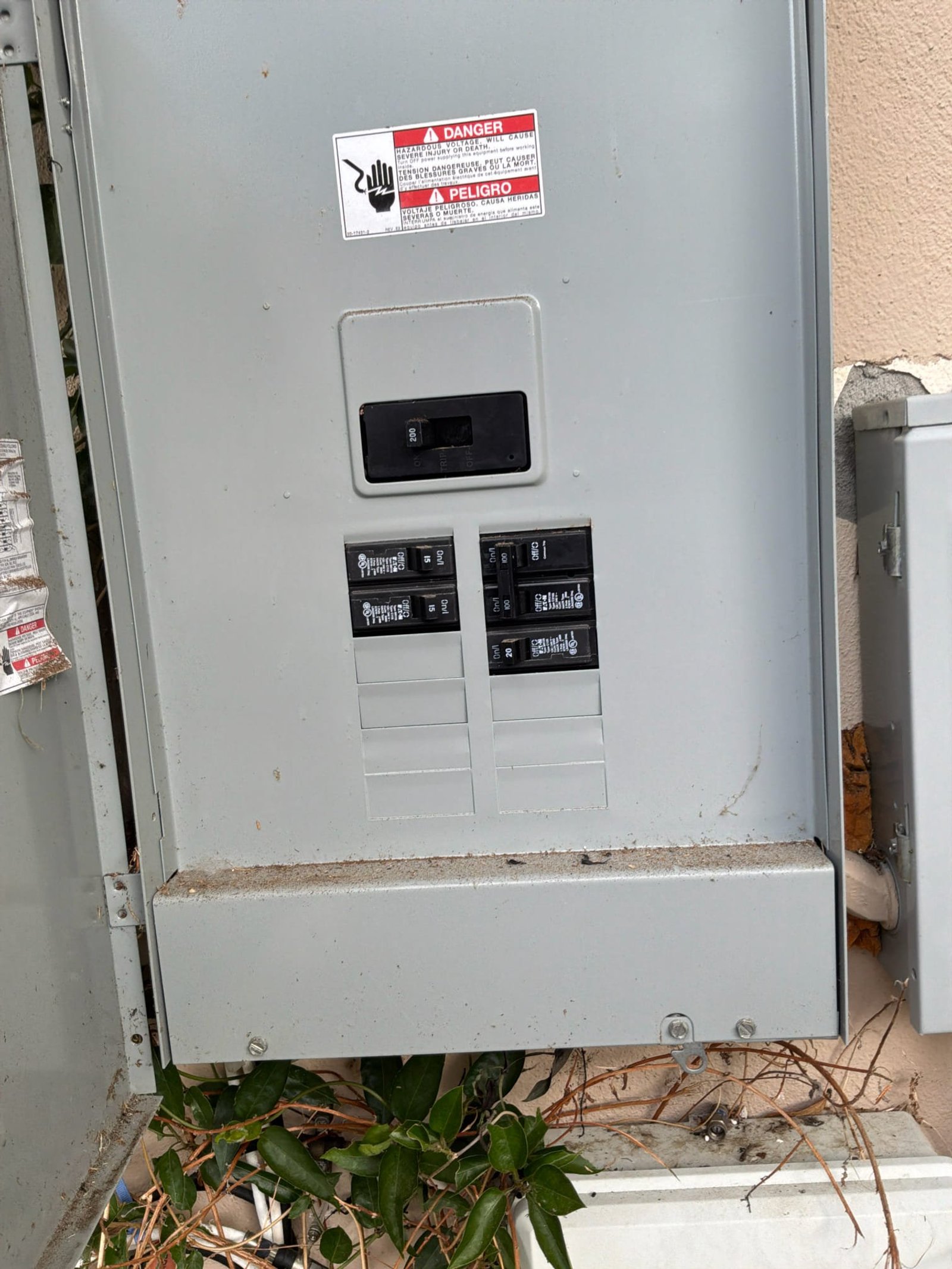
Once you know the load, you map the power. Most sites have fewer usable outlets than the plan calls for. Yard outlets often share one circuit with the sprinkler clock.
A licensed electrician lays out power points and adds circuits where you need them. That work tends to include:
- A load check of the panel and every outdoor outlet
- New wet-rated outlets placed where the display really sits
- Its own circuit for big draws like blow-ups and projectors
- Cord runs kept short so voltage stays where it should
- A walk-through before opening night, plus a tear-down plan
Our electrical safety inspection covers that last step for HOAs, churches, and shop owners.
Water Is the Real Risk Here
December is dry season, which fools people. Sprinklers still run a few nights a week, in the dark, on a clock. A plug lying in the mulch will be soaked by 4 a.m.
Heavy dew adds to it. Cords and plugs sit wet for hours each morning, with no rain at all. Some years, storms roll through in December too.
So keep every joint off the ground. Use outdoor cords, close each joint inside a listed cover, and hang the joints where you can. Our guide to outdoor outlets built for this climate shows which covers hold up.
Ask the property manager to move sprinkler zones away from the display. Better yet, pause them for the season. It is the cheapest safety fix on the list.
Permits, Inspectors, and Who to Call
Public and commercial shows take more than good will. Temporary power may need a permit from the city or the county. Large events add a fire marshal review before opening night.
Generators bring their own rules. Where a unit sits, how it is fueled, and how it is grounded all get checked. A portable unit must never feed back into a building.
Volunteers can still hang most of the lights. Leave the power work with a licensed pro. Then hand your team a map of what plugs in where.
GFCI Protection and Temporary Wiring
Ground-fault protection is not optional outdoors. The National Electrical Code calls for GFCI protection on temporary wiring and outdoor outlets. Nothing else does more to stop a shock.
Wet-rated outlets also need in-use covers, the bubble kind. A flat flip lid will not close over a cord, so rain gets in. We fit the right cover as a matter of course, as in this outdoor GFCI outlet install at an Orlando pool.
The National Fire Protection Association also puts out seasonal decorating tips worth sharing with your crew.
Keeping the Public Safe
Crowds bring strollers, wheelchairs, and curious kids. No guest should see a cord or reach a plug. That is the whole goal.
Cover walkway crossings with rated cord ramps, not tape. Stake and weight every base, because open plazas gust hard. Keep boxes and transformers behind a fence or a hedge.
Lightning is worth a word too. This region leads the country in strikes, and storms can show up in any month. The National Weather Service lightning safety page sets clear rules for calling people inside.
A surge device at the panel is the other half of that answer. It guards the timers, controllers, and LED drivers that run the show. Those parts cost far more than the strands do.
Timers, Controls, and the Power Bill
An astronomic timer turns the show on at dusk and off at a set hour. Nobody has to drive out. Photocells work too, though nearby lights can fool them.
Smart relays let a coordinator change the schedule from a phone. Controls save real money over six weeks. They also cut wear, since fewer people plug and unplug in the dark.
If the site has year-round lighting as well, our notes on outdoor lighting installation pair well with a seasonal plan.
Plan Your Display With a Licensed Electrician
Maybe it is an HOA gate in Oviedo, a plaza in Sanford, or a storefront in Winter Park. In each case, the electrical planning holiday Orlando events call for is worth doing early. Panels fill up, and permits take time.
Call Thomas Edison Electric at (407) 490-0004 and we will walk the site with you. We are licensed in Florida under EC13015487.