
A service upgrade is one of those projects homeowners keep pushing down the list. Nothing looks broken from the outside, and the work is invisible once it is done. Still, an aging electrical panel quietly caps what your Central Florida home can run. It can also complicate your insurance renewal.
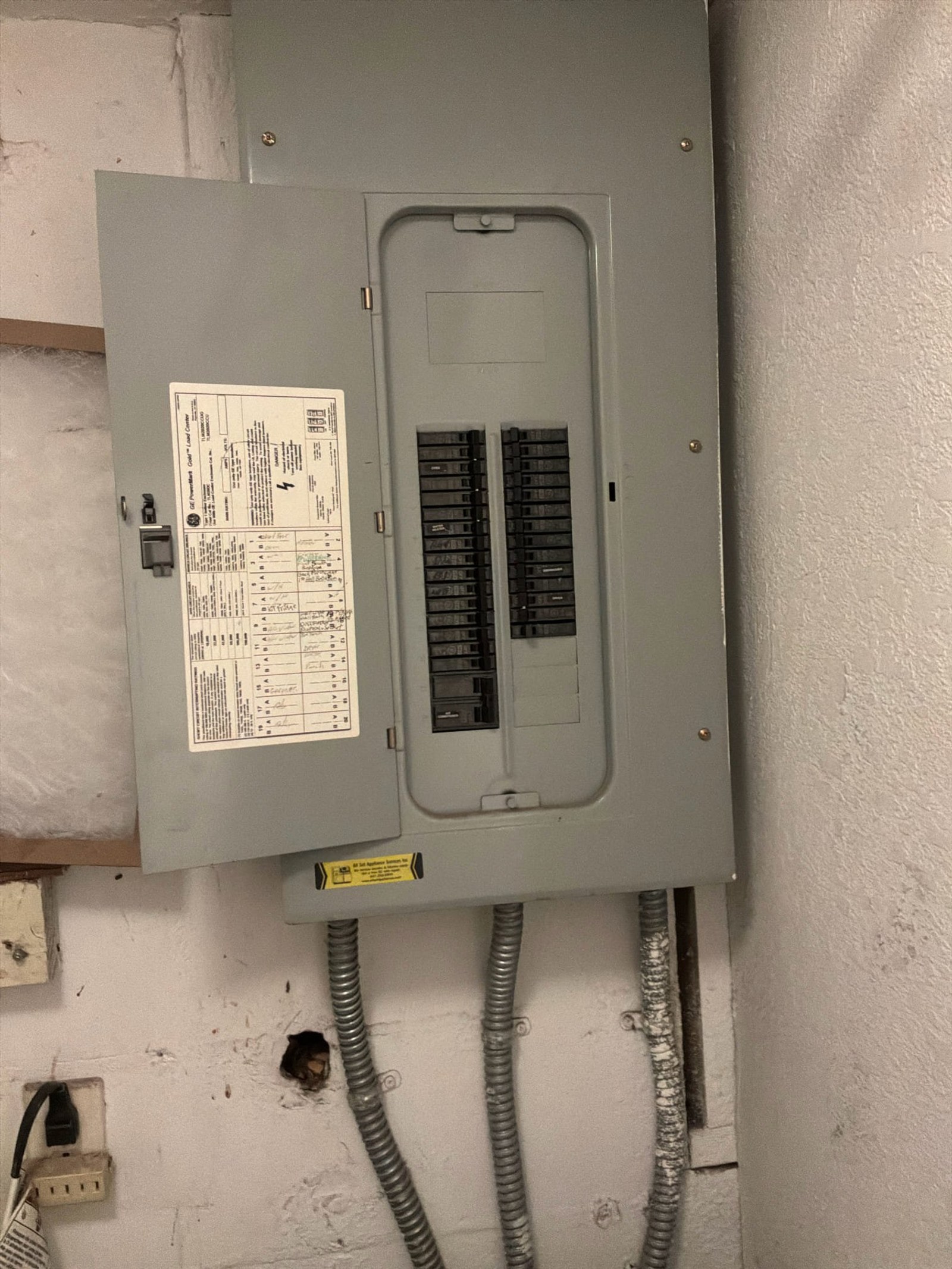
Here is how to tell whether yours has reached that point, and what the job actually involves.
Insurance Is Driving Many of These Calls
Florida carriers look closely at service equipment. Most require a four-point inspection once a home passes roughly 30 years old. The report covers roof, plumbing, HVAC, and electrical.
That inspection puts your electrical panel under a microscope. A rusted enclosure, double-tapped breakers, or a flagged brand can lead to a surcharge or a declined policy. Homeowners in Longwood, Casselberry, and Altamonte Springs run into this every renewal season.
A documented replacement, permitted and inspected, usually clears the file. Keep the paperwork, because underwriters ask for it. Timing helps too, since getting ahead of a renewal beats scrambling after a non-renewal notice lands.
Brands That Raise Red Flags
Some equipment has a poor field record. Federal Pacific Stab-Lok, Zinsco, Challenger, and certain Sylvania load centers show up often in homes built from the 1950s through the early 1980s. Breakers in these units have a documented history of failing to trip under fault conditions.
We swapped one of these after a homeowner’s inspection flagged it. You can read how that replacement went in Winter Springs and what we found behind the cover.
Age alone is not a verdict. Plenty of 1990s load centers are in fine condition, and we leave those alone. What matters is the condition inside the cabinet and whether replacement breakers are still manufactured.
The Electrical Safety Foundation International keeps plain-English resources on home electrical hazards if you want background reading.
When an Electrical Panel Upgrade Pays Off
Capacity is the other half of the story. Houses designed for a window unit and an electric range now run heat pumps, pool equipment, and car chargers at the same time. Consider an upgrade when any of these apply:
- You are adding a heat pump, a mini-split, or a larger condenser
- You want a Level 2 charger in the garage or carport
- You are wiring a pool, spa, or lanai kitchen
- You plan a generator interlock or transfer switch before storm season
- Every slot is full, with tandem breakers stuffed in to make room
- You are remodeling and adding circuits for a kitchen or an addition
One item on that list is worth a conversation. Two or three together usually means the service needs to grow. Our panel upgrade service page explains what we install and why.
How We Size the New Service
We do not guess at amperage. A standard calculation adds the general lighting load, fixed appliances, HVAC, and anything new you plan to add. That total decides whether 150, 200, or 320 amps is right.
Most homes in this area land on 200 amps. Larger properties with a pool, a shop, and two chargers occasionally need more. Our walkthrough on calculating your home’s electrical load uses the same method our estimators do.
What Upgrade Day Looks Like
A service change is permitted work. We pull the permit with the city or county, then coordinate a disconnect with your utility. Power is off for part of the day, so plan meals and remote meetings around it.
The crew sets the new enclosure, lands the feeders, and relabels every circuit clearly. We also install a surge protective device, which recent code editions require on replaced services. An inspector signs off before the meter goes back in.
Most single-family jobs finish within a day. Detached garages, meter relocations, or riser repairs can add time.
Plan for the heat during the outage. The house warms fast with the AC off, so close blinds early and keep pets somewhere shaded. A closed refrigerator holds temperature for several hours.
Storm Season Sets the Calendar
Timing matters in Central Florida. Permit offices and utility crews get slammed after a named storm, and generator work stacks up every spring. Scheduling a service change between January and April avoids that crunch.
New service equipment also makes backup power practical. An interlock kit or a transfer switch needs room and a compatible bus, which older cabinets rarely provide. Handling both together saves a second permit and a second outage.
Ask about the meter can and riser while planning. Humid air rusts them from the bottom up, and utilities will not reconnect to damaged equipment.
Efficiency, Resale, and Peace of Mind
New service equipment will not shrink your bill on its own. However, it makes room for gear that does, such as a heat pump water heater or a variable-speed pool pump. The Department of Energy keeps a useful home energy primer on those choices.
Buyers pay attention as well. Inspectors in this market call out dated service equipment on nearly every report. Clean documentation removes a negotiating point at closing, and our overview of panel upgrades for area homes covers what to expect on cost and timing.
Get a Straight Answer First
If you are unsure whether your electrical panel needs replacing, start with an evaluation instead of a quote. Sometimes the right call is a repair, and we will tell you that plainly. We serve Orlando, Oviedo, Sanford, Lake Mary, Apopka, Ocoee, and the surrounding communities.
Call Thomas Edison Electric at (407) 490-0004 to book a visit. Our Florida license is EC13015487, and every price is in writing before work starts.