
Your breaker box does quiet work every day. It takes utility power and splits it into the circuits that run your air conditioner, your pool pump, and every outlet in the house. Here, that job is harder than it looks. The electrical panel Orlando homes depend on usually hangs outdoors, in full sun, through a summer of daily thunderstorms.
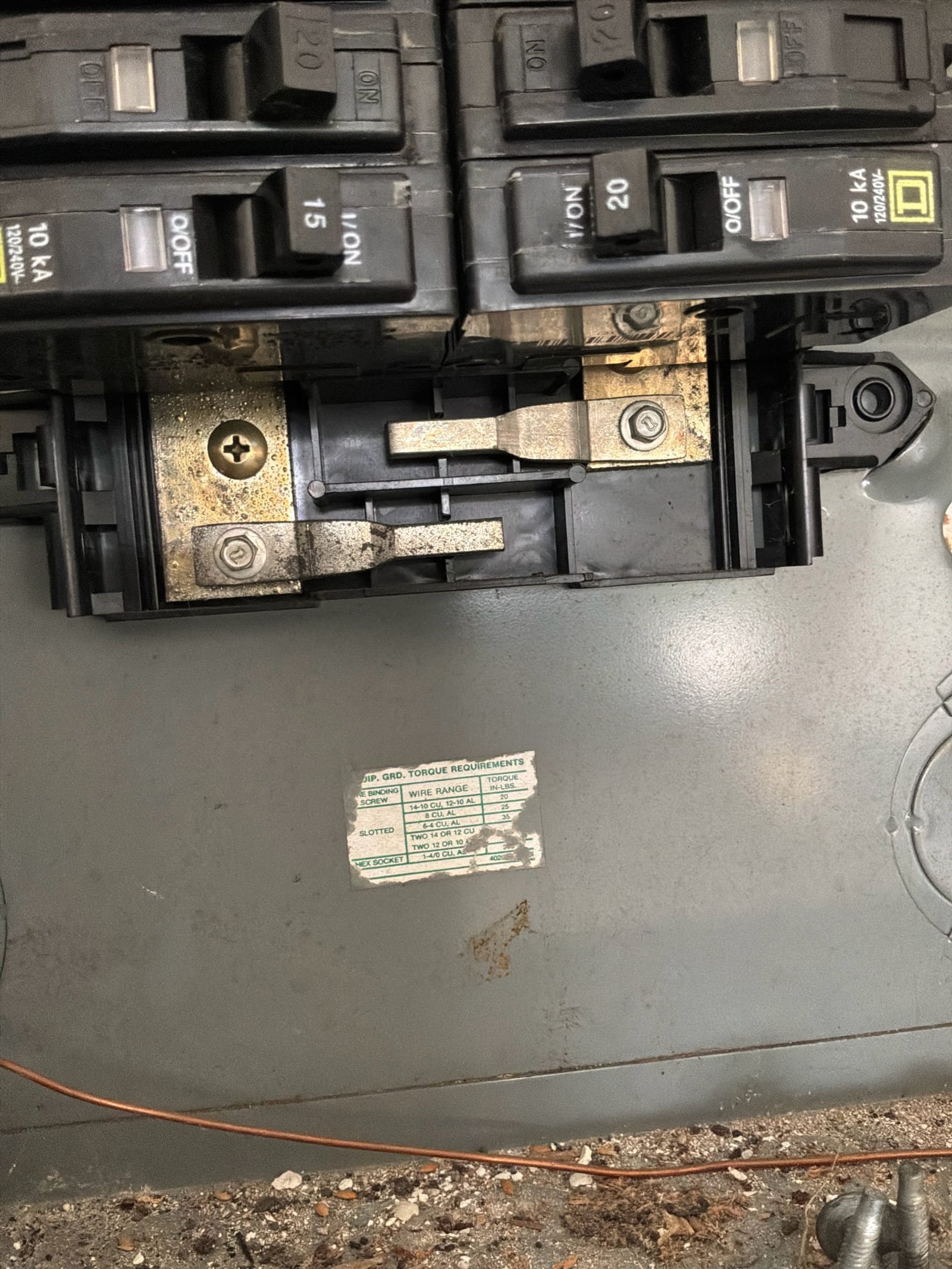
That exposure changes how service equipment ages. It also changes what a good evaluation should look for.
Why Central Florida Is Rough on Service Equipment
In much of the country, the panel lives in a dry basement. Homes here almost never have basements. Instead, the enclosure is bolted to an exterior wall or sits in a garage that hits 100 degrees by mid-afternoon.
Humidity does the slow damage. Warm, wet air moves in and out of the cabinet every day, and condensation forms on cool metal. Over the years that leaves rust on the deadfront, chalky corrosion on lugs, and pitting on the bus bars.
Storms do the fast damage. Wind-driven rain finds gaps around a warped cover, and ultraviolet light breaks down gaskets. Ants and roaches like the warmth inside, too, and their nesting debris can bridge parts that should never touch.
Warning Signs From the Electrical Panel Orlando Homes Rely On
Most trouble announces itself well before anything fails. You only need to know what to watch for. Call a licensed electrician if you notice any of these:
- Breakers that trip when the AC and the dryer run at the same time
- A panel cover that feels warm or looks discolored
- Buzzing, humming, or crackling from inside the cabinet
- Rust streaks, water stains, or ant trails around the door
- Lights that dip every time the compressor starts
- A sharp burning or fishy odor near the panel or an outlet
That last one deserves urgency. A fishy, acrid smell usually means overheated plastic somewhere in the enclosure. Shut off the main breaker if you can reach it safely, then get a professional out.
What a Real Panel Evaluation Covers
An evaluation is more than a glance behind the door. We remove the cover, check the torque on lugs and breaker terminals, and look for double-tapped connections. Loose terminations create heat, and heat is what starts fires.
Next comes grounding and bonding. Sandy soil and a high water table affect how well a ground rod actually performs, so we verify what is installed rather than assume. We also compare your real-world load to the service size feeding the meter.
Small findings are common, and most are cheap to fix early. You can see what a routine visit turned up in one Orlando panel, including double taps and early rust.
Repair Now, or Replace Later?
Not every problem calls for a new service. Swapping a failed breaker, correcting double taps, or fitting a proper rainproof cover can add years of safe use. When that is the honest answer, we say so.
Other panels are past saving. Burned bus stabs, an enclosure rusted through at the bottom, or a brand with a poor tripping record all point one direction. In those cases our panel replacement work covers permitting, the utility disconnect, and the final inspection.
If you are still weighing it, our list of signs a panel needs replacing lays out the deciding factors in plain language.
Older Wiring Behind the Panel
Some findings live outside the enclosure. Houses built here between the mid-1960s and the mid-1970s sometimes have aluminum branch circuit wiring. That metal expands and contracts more than copper, so terminations loosen over the years.
New service equipment alone does not solve it. The accepted repair is a listed connector or pigtail at every device, and insurers usually want that documented. We look for it during any evaluation.
We check the utility side as well. A rusted meter can, a leaning service mast, or a cracked weatherhead all invite water into the system. Those repairs often happen during the same visit, since the power is already off.
When a Larger Service Makes Sense
Homes in this market pull hard on power for eight months a year. A four-ton condenser, a variable-speed pool pump, and a lanai kitchen add up quickly. Add a car charger and a 100-amp service simply runs out of room.
So we run a load calculation before quoting anything. Sometimes the fix is a subpanel in the garage rather than a full service change. That distinction can save you a few thousand dollars.
Backup power is worth deciding at the same time. An interlock kit or a transfer switch needs both physical space and a compatible bus. Sorting that out now beats pulling a second permit in June.
Lightning, Surges, and the Panel
Central Florida sees more lightning than anywhere else in the country. Most strikes never touch the house. They induce voltage spikes on the utility line instead, and those spikes quietly shorten the life of anything with a circuit board.
A surge protective device at the panel is the first layer of defense. Current code editions require one on new and replaced services, and we install them as standard. Our guide to whole-house surge protection explains how the layers stack.
For storm-season habits, the National Weather Service publishes practical lightning safety guidance. The Electrical Safety Foundation International is another solid homeowner resource.
Talk With a Licensed Electrician
We service every electrical panel Orlando homes rely on, from 1960s ranch houses in Winter Park to new construction in Kissimmee and St. Cloud. Evaluations come with photos and a written summary, not a sales pitch.
Call Thomas Edison Electric at (407) 490-0004 to schedule yours. We hold Florida license EC13015487, and you see every finding before any work begins.